To Group, I previously asked about break-in oil, got no responses.
So, if I don’t hear otherwise, I will use straight 30W oil for the
first 3-5 hours then switch to Mobile One synthetic, maybe 20W-50W.
Thanks. Frank clementi
Rotary engines do not require break in. Stick with Mobile one or
Idemitsu rotary engine oil. Mix 2 cycle oil with the fuel one ounce
per gallon.
Paul Lamar
French users of Citroen GS Birotor were advised using Total 20W50
Mineral Oil, and they reported good results with it, as synthetic
oils seem producing more ashes and gums, below please find a comment
in 'Rotativement votre', a French forum on RCEs, Google translate
always gives acceptable translations into English, but in
translating for example, Spanish into Dutch, the system is much less
accurate, I suppose you're aware of the anecdote of one of the first
automatic translation computers ever tested, it was given the
sentence: 'The Spirit is strong, but the flesh is weak', translated
into Russian and back, the back translation said: 'Vodka is good, but
Goulash is inedible'
SAE papers 730048, by R D Behling and E Weise; 740160, by Jh du Jeu
and B Brandone; 840237, by Marcel Gutman; 890212, by C Kappos and S
Rajan. All deal with fuel and lubricants' issues of Wankel RCEs. For
Air Cooled engines, Shell Rotella 30 was said the best, and the
contemporary Aixro engines, charge cooled rotor and liquid cooled
housings, use Mobil 1 Racing 2T.
Typically, the top housing temperature, with an Aluminum housing, at
full open throttle, 5000 rpm, in the NSU Spider Single Rotor Engine
was 300º F [150º C] (SAE paper 650722, W Froede) and 500º F [260º C]
in the plug region of housing for a 120cc Yanmar Diesel air cooled
engine (SAE paper 720466, K Yamaoka and H Tado). I suppose more data
are available in the editions of the book on Wankel engines by K
Yamamoto published by Mazda in 1969, 1971 and 1981, some are
available for download in the web.
Have a good weekend. Best regards. Salut † Jose Gros-Aymerich,
Madrid, Spain
Mobile 1 and Idemitsu form no ashes and or gums. Minerla oil breaks
down at 250 F
Mobile 1 is good to 500 F.
Paul Lamar
Where did the note from 'Rotativement votre' go?
In accordance with Jean-Luc Jentel in the forum of the
abovementioned website,
the coking temp for a mineral oil is 220º C [482º F], but 270º C
[518º F]
for a Synthetic oil, so if the 220º C limit is surpassed, a Mineral
oil would leave
more ashes than a Synthetic one, but please notice that in liquid
cooled Wankel
RCEs, housing surface temp, as per the 1981 K Yamamoto book, with
Rotor cooling,
full throttle and 6000 rpm is less than 200º C [392º F], and without
Rotor cooling,
below 220º C [428º F]. K Yamamoto points that no cooling is rather
desirable in some range
of low rpm, some engines have a control of the amount of
cooling/lubricating oil
flowing through the Rotor. Higher Rotor surface temperatures give a
lower HC emissions,
and perhaps a better SFC. The K Yamamoto data in the same book
indicate that Rotor surface
temperatures are lower at around 3000 rpm (This is the usual range
of top torque and
best Volumetric Efficiency (MEP) and SFC in many Reciprocating
engines), Rotor surface
temperatures never being higher than 220º C [428º F] -In the center
of Rotor Recess-.
Synthetic oils are also more resistant to shear; for heat transfer,
both Mineral and Synthetic Oil
do well, apart from the higher top limit of the Synthetic oil.
There's another, less known function of Engine Lubricating Oils,
that is its ability of solving inside
the Oil itself, the Combustion residues, water one of it, and for
this purpose, Synthetic Oils do much
worse. To obtain a compromise between both extremes, many types of
partly-synthetic oils are on
the market.
There's nothing like experience and the measurements that can be
done in a test bench, but for
a private owner the risk of damaging the engine if testing a too
audacious modification is not
affordable; as a XX Century Spanish writer said. 'For Experiments,
Soda Water' -Not Champagne-
Thanks for your attention, have a good season. Best regards. Salut +
Jose Gros-Aymerich
If it was in French we don't publish French.
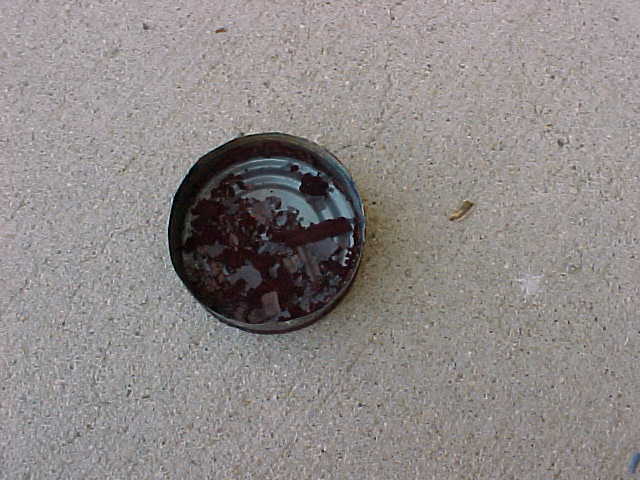
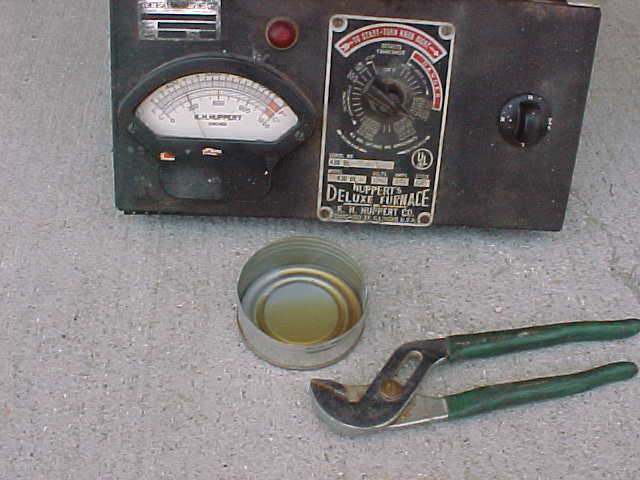
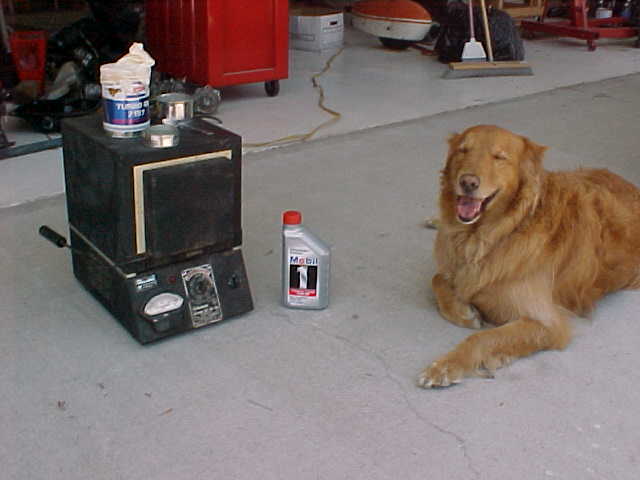
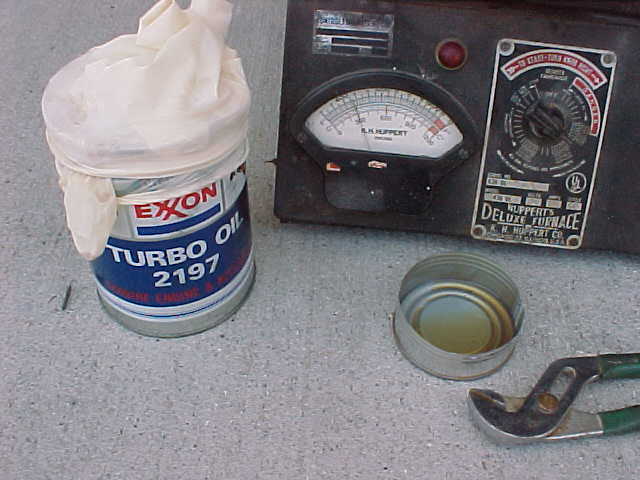
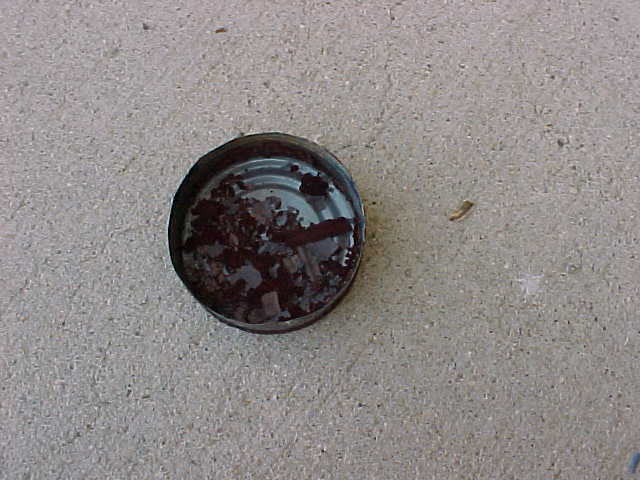
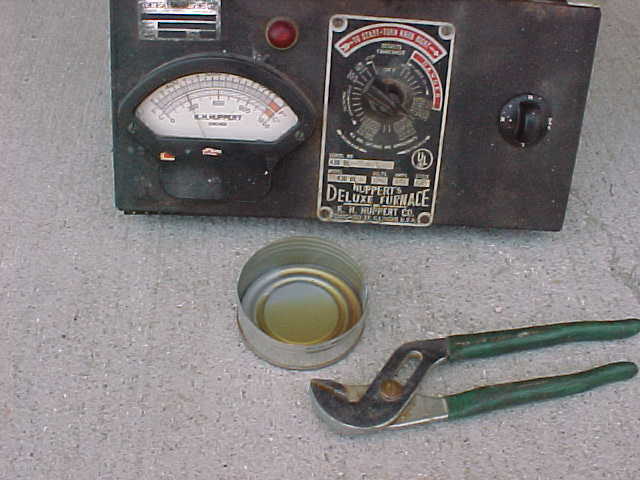
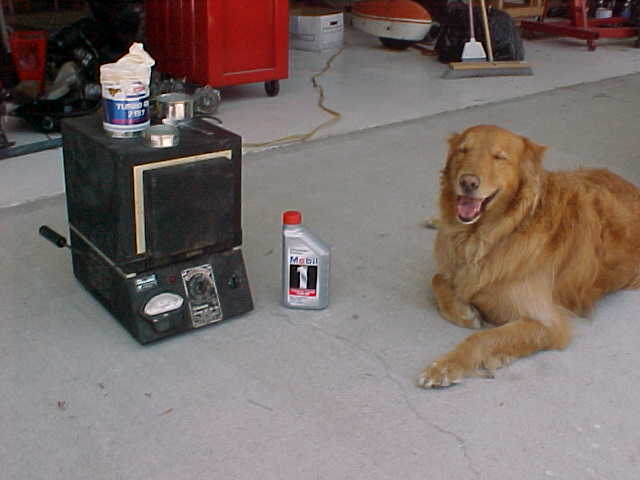
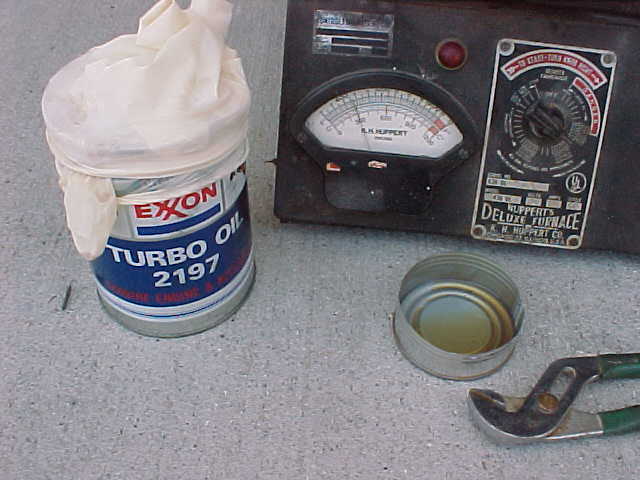
It is easy to check. Put a teaspoon of the oil in questions
in a old cat food can and bake it in your kitchen oven
for one half hour at 500F and get back to me. Make sure the
old ball and chain is out shopping :)
We did this test over 10 years years ago and Mobil 1 was head and shoulders
above all other oils tested. Turbine oil was the only stuff better than
Mobile 1.
Paul Lamar