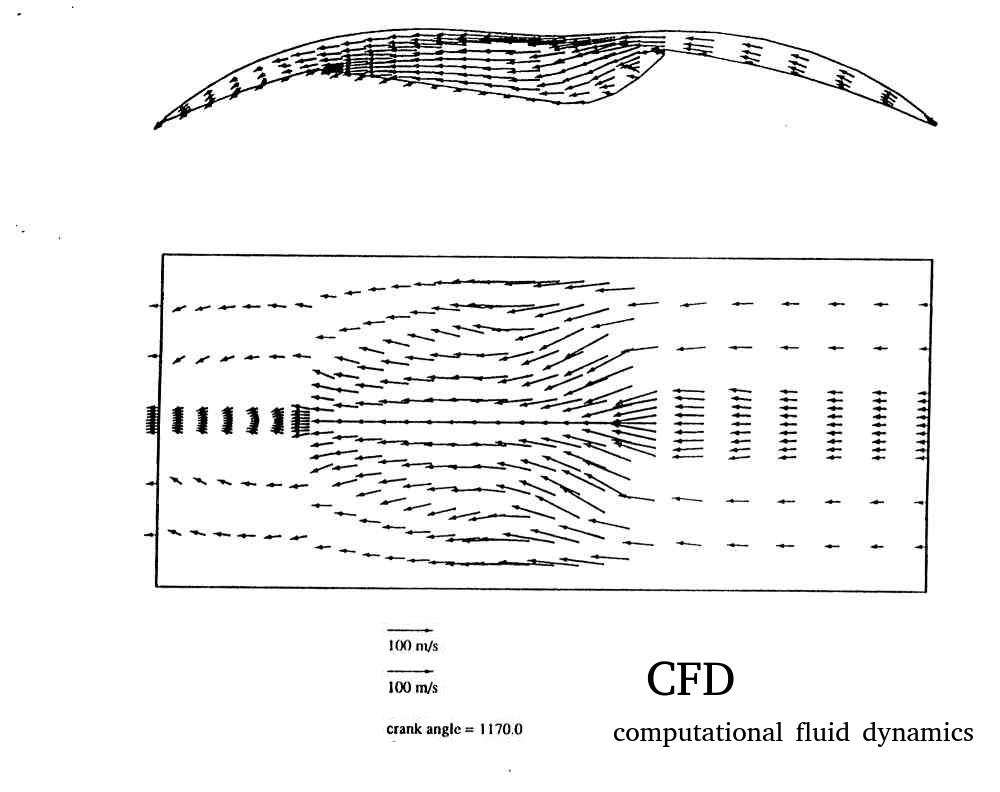
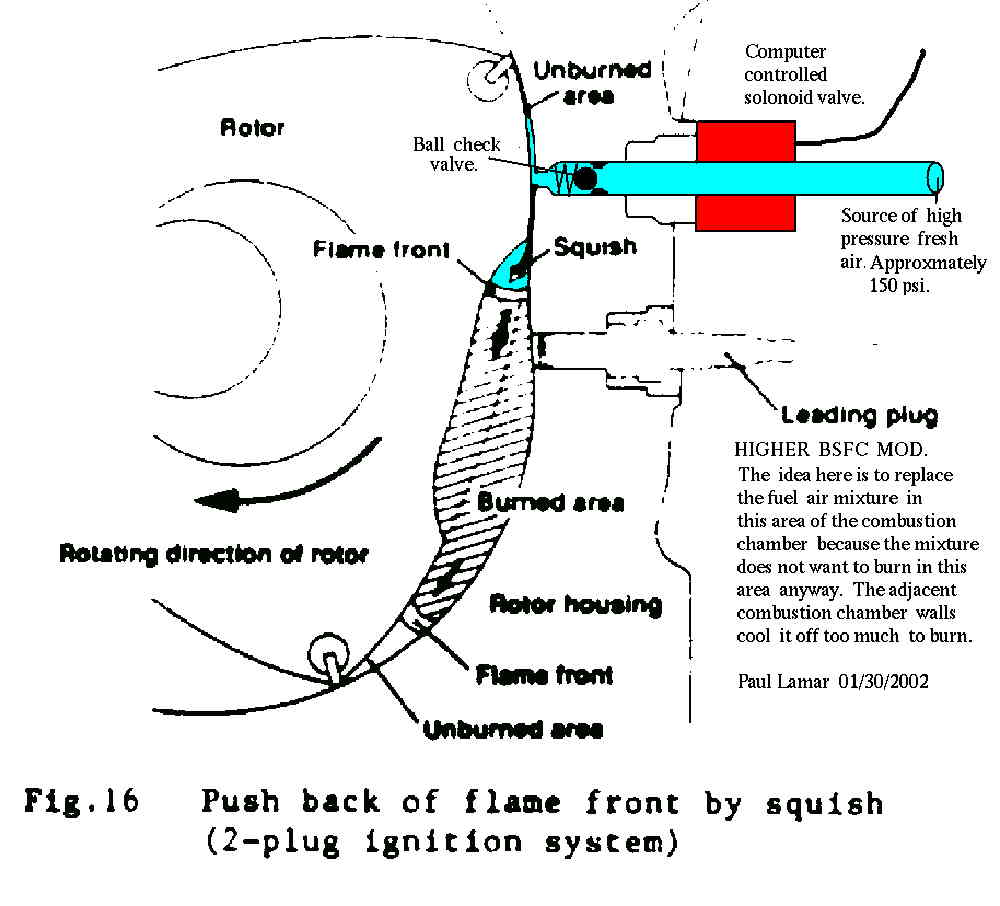
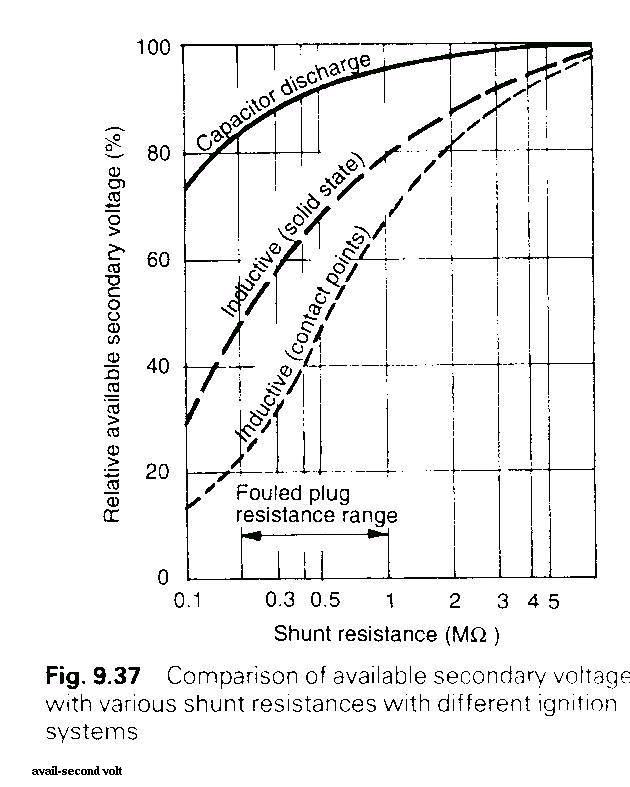
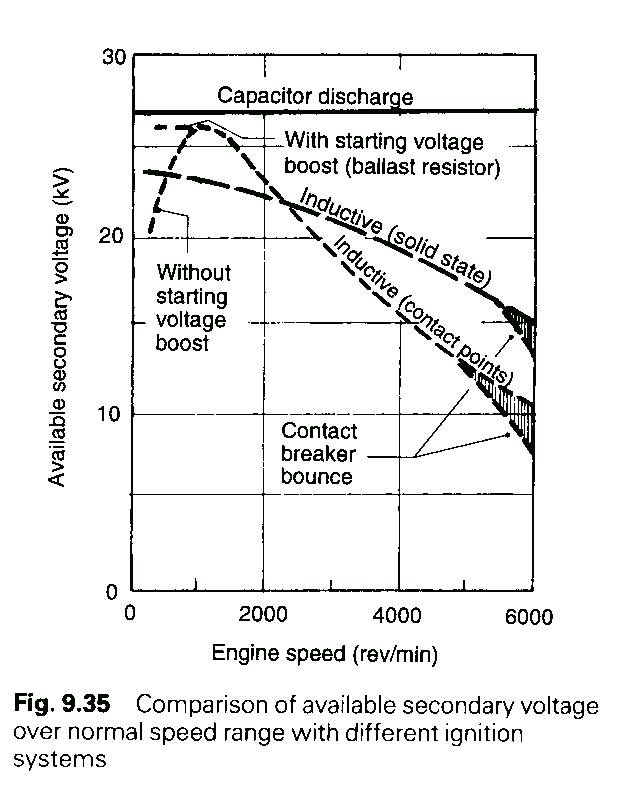
For those of you that could not make it.
The video itself is too big to publish.
This will give you a feel for what it was like.
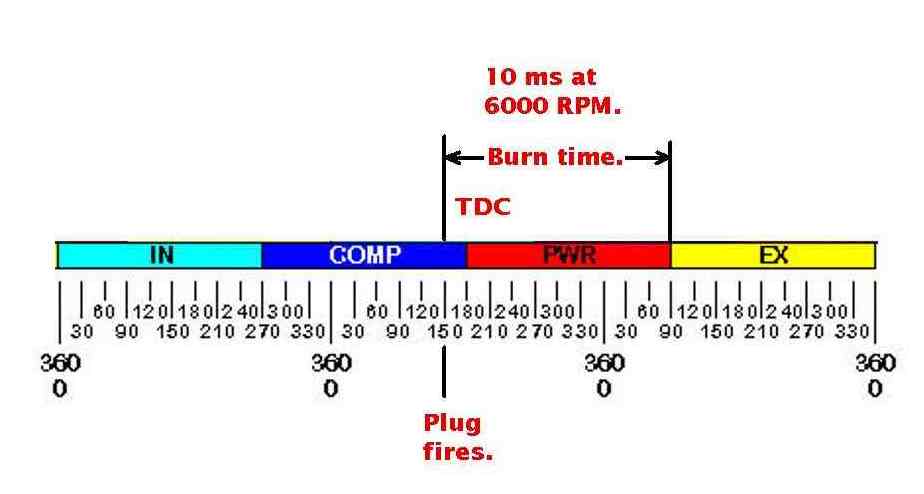
The slides are also included.
Paul Lamar
Looks impressive Paul, you mentioned an improvement in BSFC, how much of
an improvement would this ignition likely give the rotary
Alex
I don't know yet but I would be happy to see a BSFC drop from .47 to .46.
That would mean I was on the right track.
I suspect it is an internal aerodynamic problem in the combustion chamber
as well.
I would like to do some pressure measurement on the surface of the rotor
with blue tooth data transfer while the rotary was being rotated by
an electric motor. I think a sharp corner at the leading edge of the bath
tub rotor depression may have an effect. I'll do a 3D soon to illustrate.
Paul Lamar
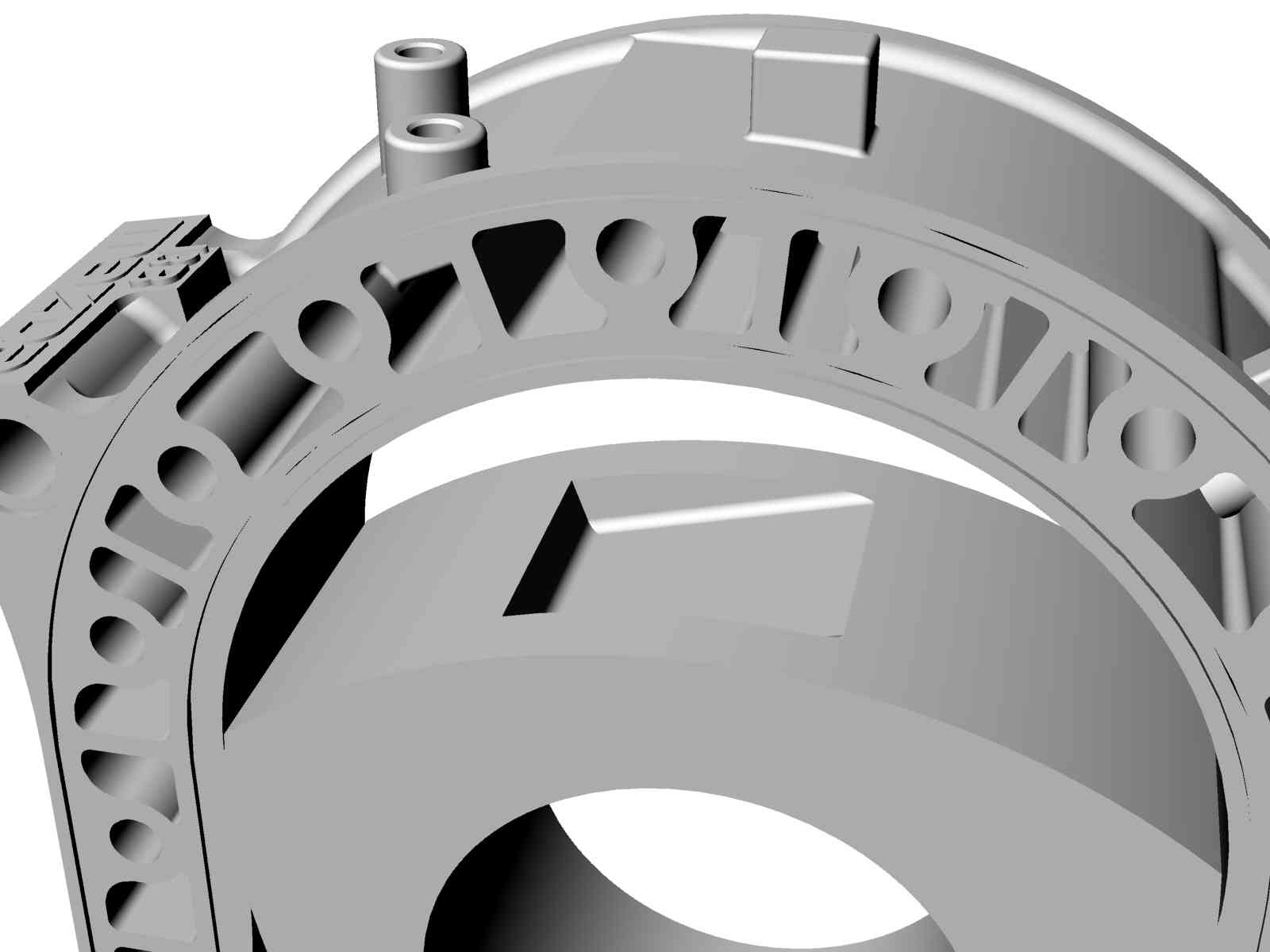
Here is the 3D.
And here is what I think is going on aerodynamically in the combustion
chamber.
The rotor is moving counter clockwise in this 3D.
The mixture next to the rotor housing is stationary. The mixture next to
the rotor
is moving with the rotor. This is analogous to a car moving on a road.
The air on the bottom of the
car is moving with the car and the air on the road is stationary. This
is a well known fact.
This shape of depression in the face of rotor and the shearing forces on
the mixture
will cause a vortex sheet as the mixture spills over the leading edge.
That turbulence
should better mix the raw fuel with the air better.
Hopefully that will make it easier to ignite the unburned hydrocarbons
mixture with multiple
sparks every 10 degrees of e-shaft rotation.
So far I have not seen any of this this tried.
Paul Lamar
The Rotary Engine News Letter. Powered by Linux.
ACRE NL web site.
http://www.rotaryeng.net.
You Tube
http://tinyurl.com/beqqxas.
Copyright 1998-2014 All world wide rights reserved.