Will
The fuselage is 27.5 inches wide so that is normal for a tandem cockpit.
My shoulders are only 20 inches across and I am not small.
Unless of course you are a really big guy :)
The tunnel only needs to be six inches wide and six inches tall.
I am sure the seat is at least six inches or taller as other wise the
pilot would
not be able to see out.
The tunnel will enhance the structural strength. It will decrease the
tendency to buckle.
I would also make it out of metal as you will need some metal down there
to protect
the composite from exhaust heat.
The P47 had a large tunnel for air ducting as the turbo charger was
in the aft fuselage.
It is not just power. The fuel burn (BSFC) is lower at the torque peak.
With 18 to 20 inch intakes the
torque peak is at 6,000 RPM. If you intend to cruise the airplane at a
lower RPM than
the intake runners should be even longer. That will reduce the top HP.
You have plenty of
room for longer runners.
The fuel burn is also a function of the back pressure
in the muffler.
The structural integrity of the universal mount depends on the tubes
converging to a point
in space close to the motor plate.
Apparently you are making a trade off for styling. That is something
they used to do in cars :)
Now all cars are beginning to look likethe Toyota Prius because that
has the lowest drag factor
and gives the lowest fuel burn. Of course that is your call. I just make
suggestions :)
I am glad that more people are starting to use Rhino. It enhances our
ability to share
ideas.
Paul Lamar
Paul,
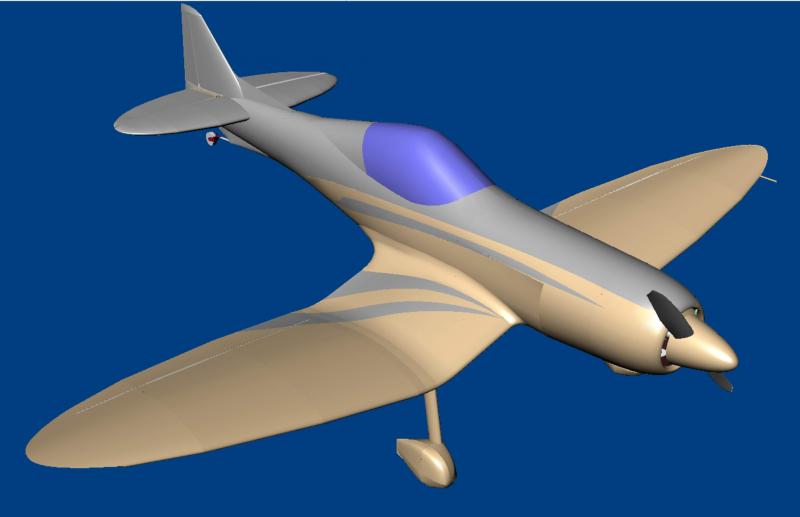
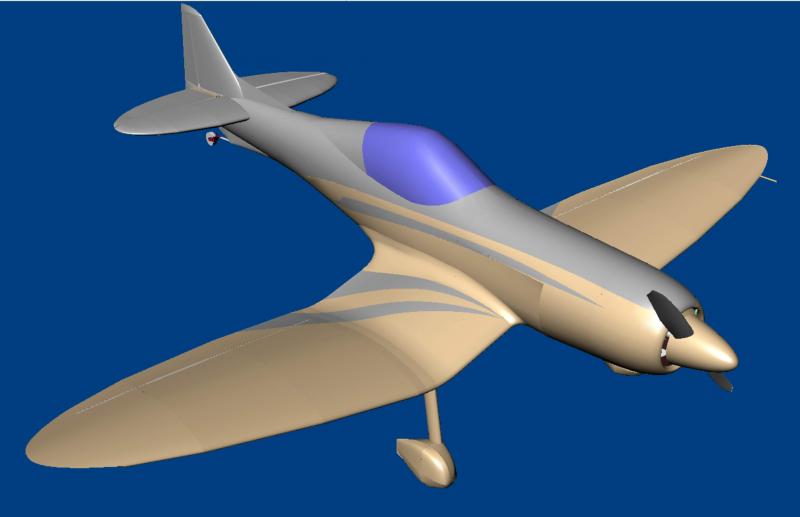
You hit the nail on the head. The look of this plane was 100% inspired
by what I thought would look good. Basically it's a WAR Replica
aircraft with a composite fuselage (as opposed to wood frame), and a
rotary instead of a 0-200 or comparable. I wanted a aircraft that was
uniquely my own so I picked the planes I liked the most (Corsair,
Spitfire, Mustang, Fw-190) and combined all the style elements that I
liked into one plane. And yes the cowling was most definitely inspired
by looks not practicality but the volume the radial style cowling offers
is it's own practicality. I tried raising the engine up until the
spinner was tangent to a curve that was drawn from the top of the
firewall and looked at component locations. About the only thing that
didn't give me an immediate headache trying to figure out where it would
go is the alternator.
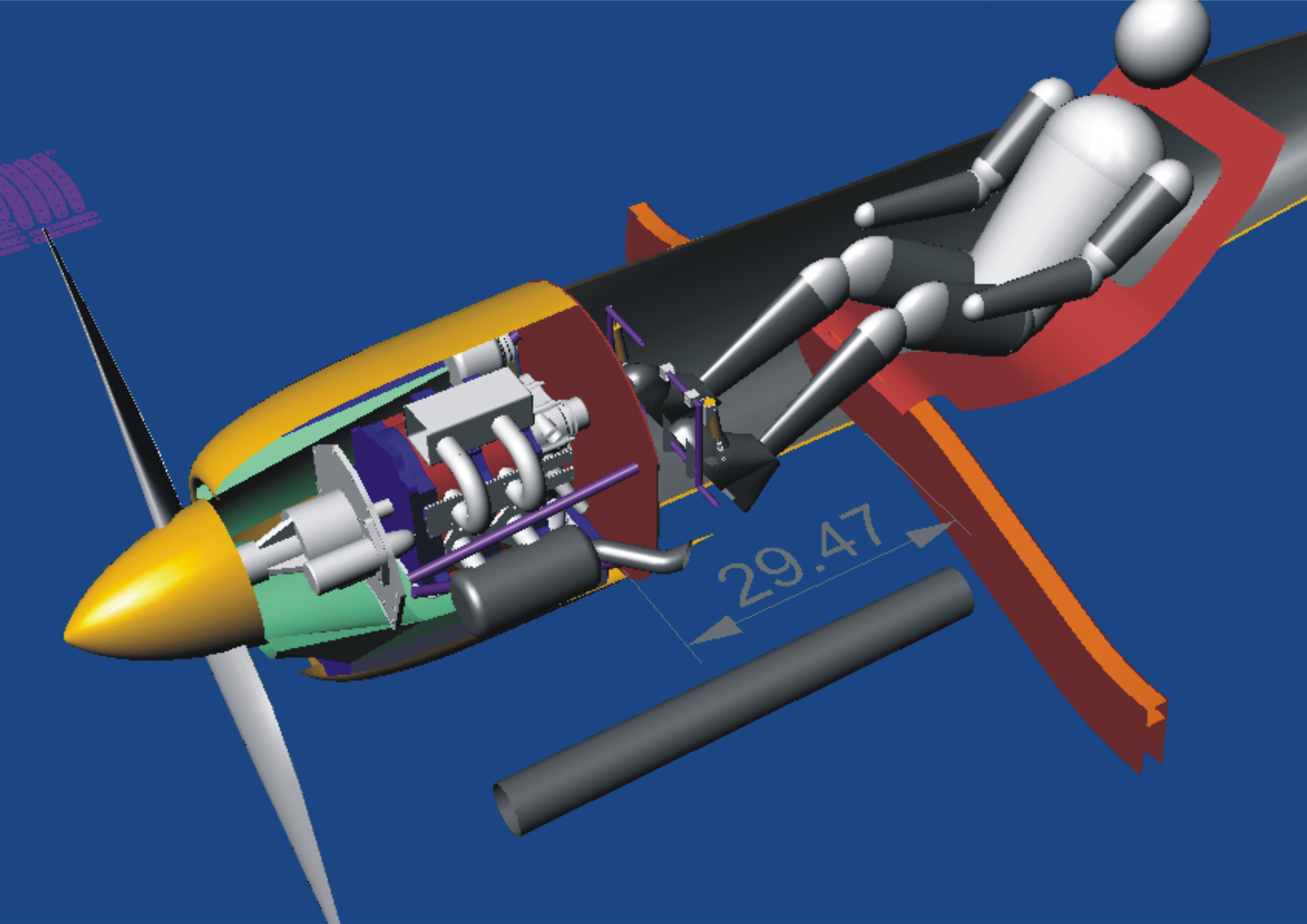
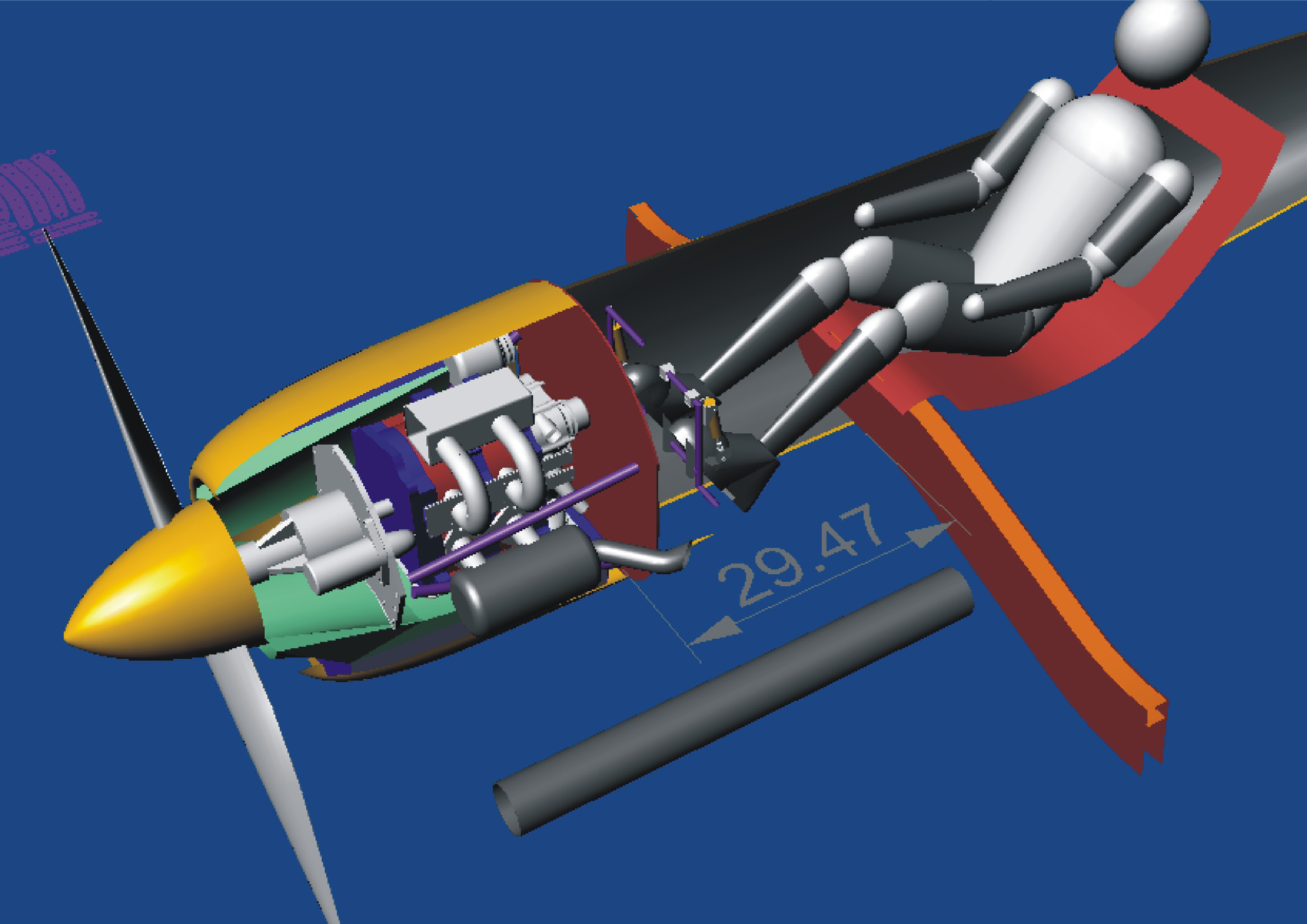
As you can see in the attached screen grab there isn't much room between
the firewall and the main spar (which goes all the way to the bottom
skin). The grey tube is your ejector and there just isn't any room for
it unless I hang it under the plane. It looks a lot bigger when placing
it right up against the rest of the plane. I wear size 13 shoes and
having a tunnel go between them although plausible would make me want to
jump out of my skin (I'm slightly claustrophobic) if I couldn't have any
room for my feet side to side. I have built a mockup of the cockpit if
you were wondering.
I moved the exhaust outboard a little and that allowed the center of the
ends of the motor mount tubes to get within about 1" of each other at
the motor mount plate. Hopefully that will be enough. It does require
a bulge on the side of the cowling. Aircraft design is all about
compromises and the bulge is the one I'm most comfortable with. I can
live with it being a little noisier and having a little higher fuel
consumption. In exchange I get a whole lot of space to put everything
and a good looking plane as well. And the bulge will add a little more
Fw-190 to the flavor.
So basically unless there is some major functionality issue that hasn't
been mentioned yet I think my basic course is set.
Will Aldridge
That's a beautiful airplane no doubt about it.
Please send me the 3DM on the pilot.
Paul Lamar
The Rotary Engine News Letter. Powered by Linux.
ACRE NL web site.
http://www.rotaryeng.net.
You Tube
http://tinyurl.com/beqqxas.
Copyright 1998-2014 All world wide rights reserved.