A main problem was the longevity of the battery, which needed to be
between 7 to 10 years. The solution the engineers came up with was to
keep the battery pack between 60% and 40% charged, proving to be the
"sweet spot" for extending the battery life to roughly that of the
other car components.[
The break-even date is uncertain, but according to the head of the
Prius team, the company initially lost money on the Prius.
For any car, aerodynamic losses, which vary roughly as the velocity
squared due to air drag are much greater on the highway than in low
speed city driving. The Prius hybrid has less of an advantage in
higher speed open road driving, typical of intercity driving and LA.
The environmental impact of the car's batteries has been questioned.
Its more aerodynamic body resulted in a drag coefficient of 0.26.
0.04 lower than almost any other car. The weight reduction and the
hard, low rolling friction tires, if applied to any car would reduce
the fuel consumption.
The The New York Times in July 2007[99] published an article using
data from CNW Marketing Research that found that just 36% of Prius
buyers cited fuel economy as a prime motivator, while 57% said their
main reason was that "it makes a statement about me." Shortly
afterwards Washington Post columnist Robert Samuelson coined the term
"Prius politics" to describe a situation where the driver's desire to
"show off" is a stronger motivator than the desire to curb greenhouse
gas emissions.
Lifetime energy cost
A 2006 study by CNW Marketing Research, Inc. calculated the overall
energy cost of a Prius at US$3.25 per mile and a Chevrolet Tahoe SUV
at US$2.94 per mile. It concluded that 2005 hybrids cost
"significantly more in overall energy costs than conventional
Internal Combustion Engine (ICE) vehicles."
Dust to Dust: The Energy Cost of New Vehicles from Concept to
Disposal. CNW Marketing Research, Inc. (December 2006). Retrieved on
2007-07-27
http://cnwmr.com/nss-folder/automotiveenergy/
Older used Prius's are down to $8,000 and that is just the tip of the
ice burg. Wait until they all need new batteries just like your
notebook computer. At the head of all traffic jams is a Prius. There
are a lot of wackos in Calif.
Hydrogen must come from somewhere. The cheapest is getting it from
oil.
You need to put more electricity in than you get out in energy.
Another stupid idea. Hydrogen cars are pure PR for the wackos and
the idiots that believe they can burn water.
The rotary is unique for turbo compound. There are no exhaust
valves. Read this chart again if you are able.
I told you that over and over and over again but it goes in one ear
and out the the other because you are so emotionally involved in
electricity.
They ought to electrocute all you electric over weight car wackos
:)
The future is lighter weight cars with better power to weight ratio
IC engines like the twice as good turbo compound rotary.
Paul
From the web:
The relatively small frontal area of Prius, as well as the small
upper grille aperture, minimizes the initial impact of air, directing
its passage over and around the rest of the body rather than
attempting to pass through it. A subtle chin spoiler at the bottom of
the bumper slices the air heading around the car from that passing
underneath, while the flat, vertical surface of the front bumper
corners serve to correct the airflow as it passes over the front
wheels, minimizing turbulence in the wheel arches. Spats are fitted
at the front of each wheel arch to further suppress airflow changes
around the tires, which themselves feature a low rolling resistance
compound.
Minimal disruption smooths air passage across the rest of the
vehicle, thereby reducing drag and improving high-speed stability.
The A-pillars are pushed forward to increase the rake of the
windscreen, panel gaps are narrow, and the glazing seals are flush
with the body. Necessary additions such as the door mirrors, handles,
light lenses and rear spoiler are carefully designed to be
aerodynamically efficient.
Side skirts are used to carve a clear aero demarcation between the
outside and underside of the car, directing air to flat vertical
surfaces on the rear bumper corners that once again correct airflow
and reduce turbulence. Meanwhile, the underside of Prius is
comprehensively covered with flat panels to prevent air getting
trapped and causing turbulence within pocket-like elements such as
the bottom of the engine bay and load space floor.
Finally, the distinctive, extended roof line of Prius ends rather
abruptly with an upright ‘Kamm effect’ design for the rear end – one
of the most efficient means of reducing the low-pressure area of
trailing wake pulling on the back of the car. This feature converges
the vehicle’s contours into the beginnings of an aero-efficient
teardrop shape but abbreviates it at an intermediate point to avoid
unnecessary body structure adding to the length and weight of the
vehicle. Aerodynamicists have discovered that passing air needs only
an initial suggestion of this teardrop shape in order to deliver a
large proportion of the turbulence-reducing effect of a full
‘Kammback’ or ‘Kamm tail’ design.
It slips through the air with a remarkable drag coefficient of just
Cd 0.25, which has secured its position as the world’s most
aerodynamic hatchback.
Paul,
IC you are biased against the Prius. LOL
But justifiably. The Prius has a very short EV range. After that it
becomes an IC engine-car with an Atkinson cycle 4-cyl. tuned for
efficiency at highway running because it can use its EV motors for
helping the weak, bottom-end performance of the the piston engine.
jd
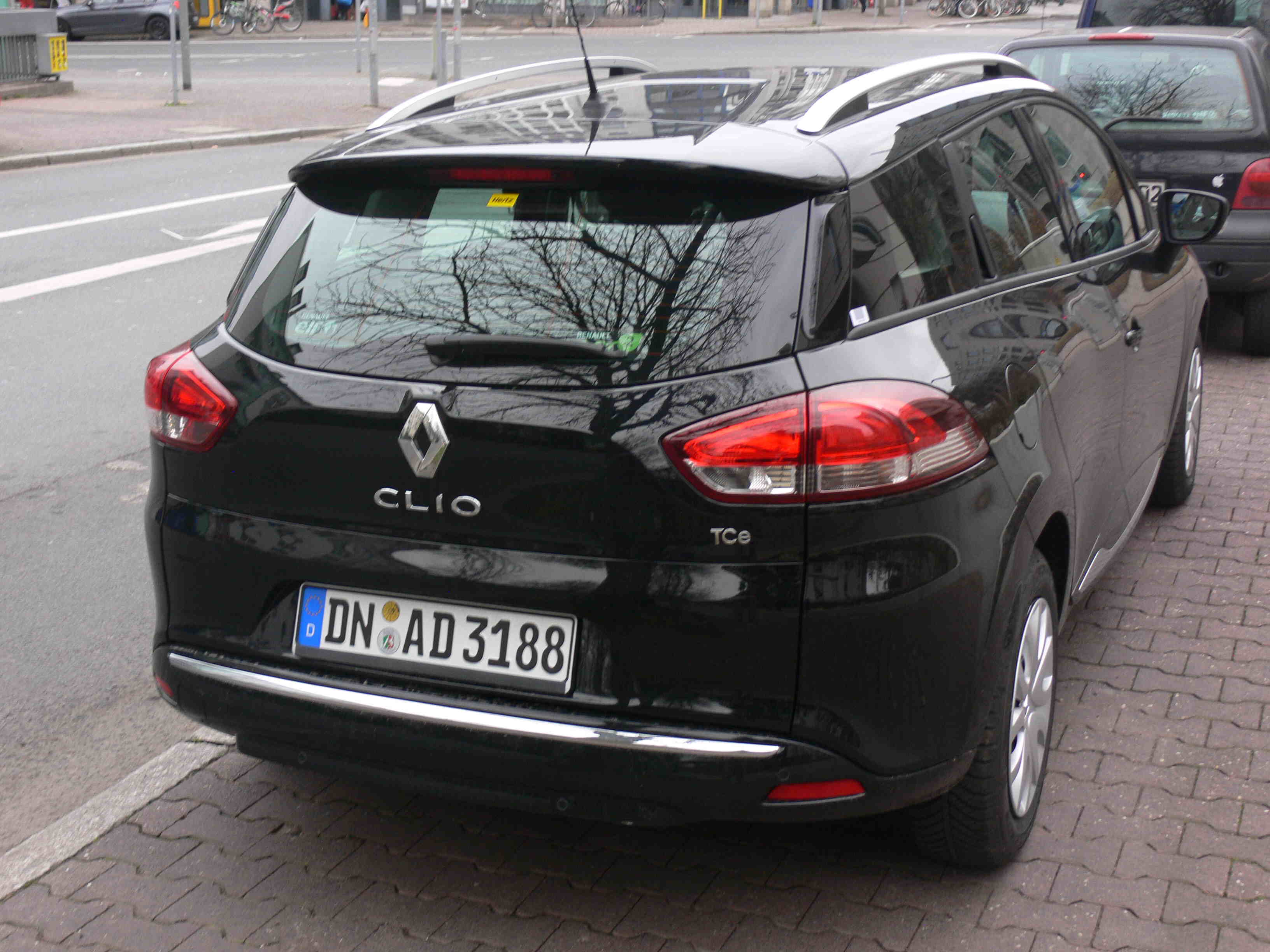
A Renault Clio will run circles around a prius.
180 KPH on the autobahn (200 down hill) and 63 MPG in the bargain.
Because it is a 1000 pounds lighter and just as low drag.
No doubt a turbo compound will be applied to the turbo charged
one liter Clio shortly for even better MPG.
The prius is a gross waste of copper and lithium.
Paul Lamar
The Rotary Engine News Letter. Powered by Linux. ACRE NL web site.
http://www.rotaryeng.net. You Tube
http://tinyurl.com/beqqxas.
Copyright 1998-2014 All world wide rights reserved.