Paul, what can you tell us about the Woelfle/AIXRO engine? It looks
really interesting for a single-seat project.
David Josephson
It is a good engine.
Paul Lamar
Here are some pictures.
Paul Lamar
Paul and Poul,
The Center Needle Bearing cage, it looks like a light brownish
plastic, is that the material "PEEK" that the 2 stroke guys are using
now as coating or in total as a bearing race material?
Poul, I read where you can get Ceramic Bearings for the Center
Bearing , how is that working?
My best, Anthony
I have not idea.
Paul Lamar
Paul, I noticed the AIXRO rotor face looks more like a square and not
a rectangle, do you have any literature
on the length and width of the rotor face and how it changes engine
performance?
Aaron Buster
I have not found any data on that yet. The AIXRO was based on the
Norton geometry. So was the Midwest engine. That became the Austro
Engines rotary used in motor gliders. There are plenty of UAV engines
with the same geometry.
The wider rotor make sense to me as the surface area to volume ratio
is better than the Mazda Geometry. There is a company in Germany
called Wankel Supertec.
http://www.wankelsupertec.de/ That went for a
narrower rotor than Mazda. So too is the Mazda 16X. Why is a mystery
to me.
I under stand the Wankel Supertech has a higher compression ratio.
They were making some fantastic claims of low BSFC numbers at Aero
but I never saw one run let alone saw one in private hands. I suspect
they are lying.
I suspect the surface to volume ratio is not the main problem. I
suspect the heavy fuel molecules are being thrown out towards the
rotor housing and become near stationary while half of the mixture is
attached to the rotor and moves with it. It is a similar aerodynamic
situation to that of a car moving over a stationary road. The air on
the ground is stationary while the air attached to the bottom of the
car moves with the car. So far I have not found a rotary CFD that
addresses this issue.
It is well known fact that a lot of fuel is NOT being burned in the
rotary. AKA high hydrocarbon emissions. Currently that is handled by
the catalytic converter. I suspect that two plugs side by side with
multi strike ignition would ignite some of that unburned fuel. Mazda
achieved a 3% improvement in the Lemans engine by using 3 spark plugs
per rotor with another one above the top plug.
Any time you put a spark plug BTDC you lose a little compression due
to small leaks above the apex seal near the plug hole. In theory a
flush surface plug would be better but apparently nobody has been
able to develop one that worked over a long period of time or that
was truly flush and did not leak compression.
Hopefully my new ignition will burn more of that fuel.
Paul Lamar
Thanks Paul, you always provide top quality technical information.
Regarding the Rotor width, there's some early research by C-W
pointing that the Rotor width can be increased with no changes
in the rest of engine parameters, in order of having a bigger chamber
displacement, not even at no loss, but in one of their tests, having a
better fuel economy, what could have been suspected, as a chamber
closer to an square has a better volume/surface ratio, and thus, less
heat losses. The eccentricity in a Wankel RCE is the same as stroke in
a reciprocating engine, a longer stroke being more favorable to low
rpm torque and elasticity, but this is a site for airplane builders, and
an airplane engine is going to work most time at the regime giving
best MEP, more torque, and better SFC, it's around 3000 rpm or
more, so the subject of eccentricity is not important.
The new Mazda RX-16 has a greater eccentricity than previous
series 12 and 13 engines, and thus, it seems being designed with
partial load/low rpm efficiency as an important goal.
You know that difference from series 12 to 13 is series 13
having a wider rotor, and 13B to Renesis, while preserving
the engine parameters of series 13, have several deep changes:
a lighter Rotor, allowing higher rpm, side exhaust ports, that
eliminate intake and exhaust overlapping, fresh mix going to
the exhaust manifold, and burned gas entering the intake 'stroke',
to accomplish this, some ceramic parts in critical places were
added, and other changes, as 'scraper' seals in Rotor sides,
to prevent carbon build-up in ports and side plates.
The issues of combustion inside a Wankel RCE chamber were
addressed in a SAE paper by Mazda, references are in the
Wikipedia Wankel Engine article.
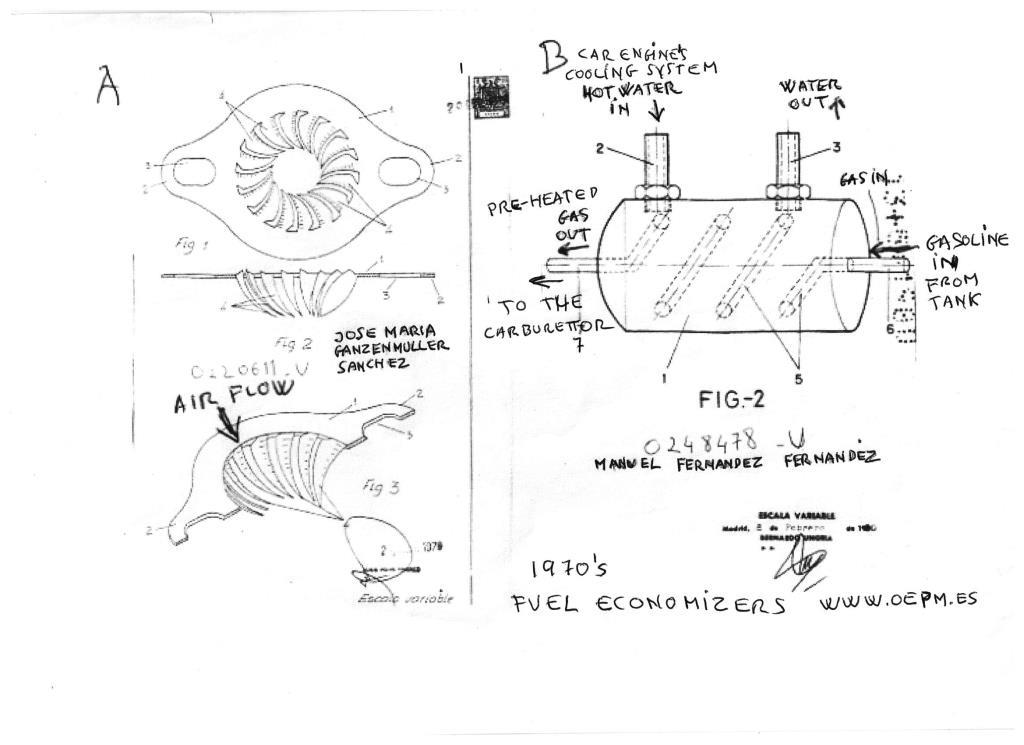
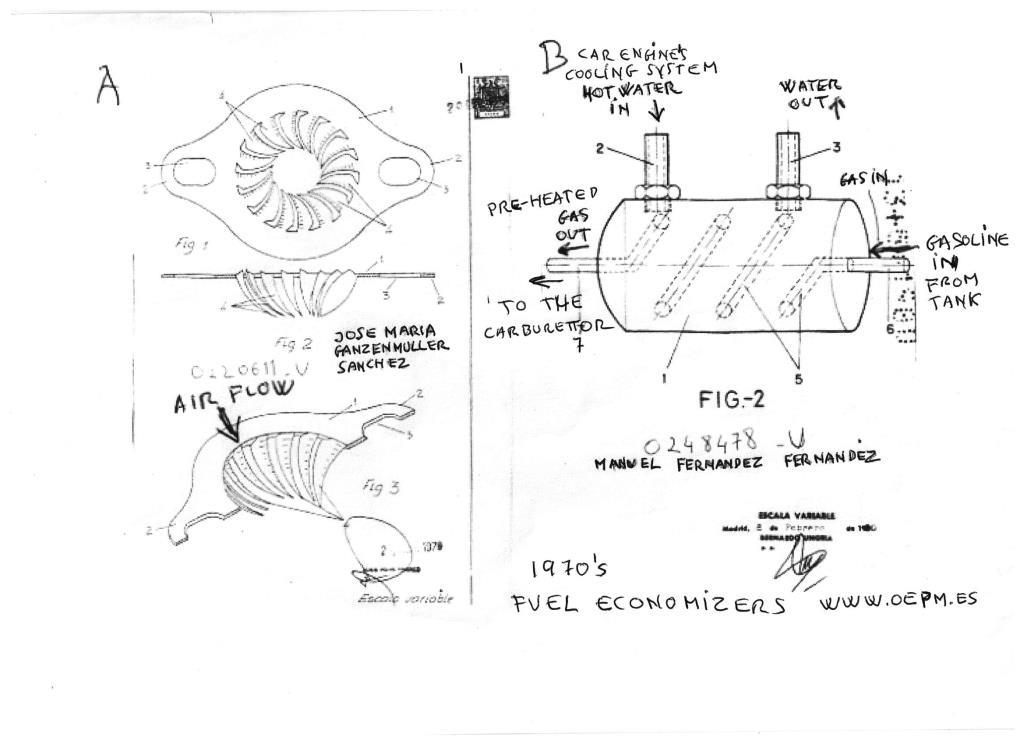
Fuel vaporization, and atomization in Fuel-Injected engines
is part of it, is one of the impossible to miss conditions for
good fuel economy and emissions, some proposed years
ago heating the fuel with an interchanger with the engine
cooling liquid to promote vaporization, see attached patent,
the 'Iskra' training jet airplane used this, the uptake of heat
by the gasoline/air mix is in the cause of carburetors freezing,
but if you heat fuel too much, 'vapor lock' by bubbles inside
the fuel lines appears.
GM research said that rotor surface temperature is one of the
main elements controlling HC emissions, the hotter the
Rotor surface, the less HC emissions are, the other elements
are squish, acting at high rpm, and leaks, at low rpm, but above
a certain surface temperature, lubricating Oil cokes, and it can
no longer make its task. Rotor temperatures are higher in the
center of combustion recess, but this doesn't necessarily mean
that temperatures critical for lubricating oil film are reached
in the seals nor in the housing working surface.
The China RCE research, coordinated by professor Teluan Chen,
(I've been unable knowing if he's the same T N Chen that signed
several SAE papers about the Ingersoll-Rand series of 42 liters,
(2580 ci) gas burning RCEs that gave thousands and thousands
of trouble free operation before I-R discontinued its production),
included the benefits of having a Reed-Valve controlled Peripheral
Intake Port, plus the jet of fuel directly pointing the Rotor's surface,
in the results charts their engines obtained better 'use fuel economy'
in a bus than existing reciprocating engines.
Hope this is useful, or at least fun, for someone. Thanks for your
attention. Best regards. Salut †
Jose Gros-Aymerich Madrid, Spain
I'll look for the reference of paper where Rotor width was addressed,
and will let you know.
The China stuff is flawed and naive. Forget reed valves as they will
effect the
VE greatly. GM research indicates that a SS rotor surface might help.
It would be possible now to remove some material on the face of the
rotor (say .050")
with an NC mill and replace it with SS sheet with a lower coefficient of
heat transfer
keeping more heat in the combustion area. I might try that soon.
Paul Lamar
The Rotary Engine News Letter. Powered by Linux. ACRE NL web site.
http://www.rotaryeng.net. You Tube
http://tinyurl.com/beqqxas.
Copyright 1998-2014 All world wide rights reserved.