I just got this great book by Sir Stanley Hooker. Thanks to Robin.
One of a handful of engineers that won WW II.
Hooker improved the super charger on the Merlin making it possible to
fly a P51 to Berlin.
When Goring saw P51's over Berlin he declared the war lost.
Chapter 2 on the Merlin was fascinating to me. A real engineering education.
Paul Lamar
Bibliography?
Mark LaPierre
No bibliography
Paul Lamar
No, write a bibliography for the book here so we will know what you've got.
Mark LaPierre
You mean I don't have enough to do already ? :) Here is a list of books
I have found useful.
WANKEL TYPE ROTARY ENGINES
The definitive book on the rotary is simply called "ROTARY ENGINE" by
Kenichi Yamamoto published by Toyo Kogyo Co. Ltd. (Mazda) in 1969.
This is a highly technical book chronicling the development of the
wankel by Mazda. Kenichi is an engineer and has risen to CEO of Mazda.
This book on the rotary is also called "ROTARY ENGINE" by Kenichi
Yamamoto published by Sankaido Co. Ltd. Second edition published in
1981. This is an updated version of the first "ROTARY ENGINE" book.
Confusing eh what? This book has a much greater emphasis on emissions.
Another technical book on the Wankel rotary engine is; "The Wankel RC
Engine Design and Performance" by R.F.Ansdale Published by A.S.
Barnes & Company Lib of Cong 69-18692
The Wankel engine Design Development Application by Jan P. Norbye.
Chilton Book Company. ISBN 0-8019-5591-2 Published in 1971. A little
history and results of the Wankel engine development by NSU, Mercedes,
Mazda and others and some results of work by Curtiss-Wright. Also some
history on all rotary engines. Not as technical as I would like but not bad.
These books will be easier to find then the Toyo Kogyo book.
Mazda 4-Rotor Rotary Engine for the Le Mans 24-Hour Endurance Race.
(Mazda won the race outright beating all of the famous European race car
builders.) Ritsuharu Shimizu, Tomoo Tadokoro, Toru Nakanishi, and Junici
Funamoto Mazda Motor Corporation. SAE paper 920309. By far the best
technical paper on the Mazda Wankel type rotary engine. Lots of
information on how to make a powerful, normally aspirated, light weight
all aluminum, heavy duty rotary engine.
Many other SAE papers were published by Mazda engineers.
Test of Thermal-Barrier and Wear Coats in Rotary Engines. NASA Tech
Briefs LEW-16512 by Paul Moller. Self explanatory title. Work based on
the OMC all aluminum snow-mobile engine.
Curtiss Wright published quite a few SAE papers back in the 60's and
70's on their development of the rotary for aircraft use.
Engine Revolutions: The Autobiography of Max Bentele. Max was intimately
involved in the early development of the Wankel rotary engine both while
in Germany and in the U.S. while working for Curtiss Wright and
Lycoming. One or two chapters on the history of the Wankel type rotary
engine development.
COOLING SYSTEMS.
Aerodynamics of Propulsion. D. Kuchemann & J. Weber McGraw-Hill Book
Company Inc. 1953 Lib. Of Cong. Card # 52-6541 The bible of the
aerodynamic design of scoops and ducts. Also covers ducted propellers.
Compact Heat Exchangers. W.M. Kays and A. L. London Kreiger Publishing
Company. Malabar Florida. 1998 The bible of heat exchangers. Some work
on ducts (called headers in this book). Very comprehensive.
Every few years the American Society of Mechanical Engineers holds
symposiums on heat transfer. Same for the Instate of Mechanical
Engineers AKA IMechE London and the SAE. Lately the automotive industry
is getting so competitive this kind of info is drying up.
AIRCRAFT and all other types of intermittent ICE's IN GENERAL
Sky Ranch Engineering Manual. This book presents an excellent overview
of the problems of aircraft engines. It is 500 pages and a bargain at
only $23. There are many details on the materials and processes used to
build a successful aircraft engine. There is a very good and exhaustive
discussion of destructive torsional vibrations and fatigue. The
telephone number to buy this book is (916) 421 7672. The author is John
Schwaner. John is highly thought of in the experimental aircraft community.
For those of you with an engineering degree or equivalent Taylor's
series of books is the best there is. The bible of engine design.
The Internal Combustion Engine in Theory and Practice.
Volume 1: Thermodynamics, Fluid Flow, Performance. Second Edition Revised.
Volume 2: Combustion, Fuels, Materials, Design. Revised. Charles Fayette
Taylor. The MIT Press Cambridge Massachusetts, and London England.
AutoBooks in Burbank CA.
Advanced engine technology by Heinz Heisler. Published by the SAE in
1995. An up to date treatment of the latest technology as applied to the
piston engine.
Introduction to the Study of Aircraft Vibration and Flutter by Robert H.
Scanlan & Robert Rosenbaum, Dover Publications touches on crankshaft
design. Lib Cong 68-22341.
Photo-Elastic Analysis by A. W. Hendry, Pergamon Press investigates
stress concentrations in complex machine parts such as crankshafts and
connecting rods. Lib of Cong # 65-29062. Only recently has computer
finite element analysis developed to the point of perhaps doing a better
job on crankshafts than these techniques invented in the 30's. The book
has a great bibliography on the subject.
I can highly recommend a book by Herschel Smith called "A History of
Aircraft Piston Engines" published by Sunflower University Press Inc.
1531 Yuma, Manhattan, Kansas 66502-4228. ISBN 0-07-058472-9.
629.134'352 in a good library. This is a reprint of a book originally
published by McGraw Hill in 1981. Fourth printing 1993. There are 250,
8.5 by 11 pages. It chronicles the evolution of the aircraft engine from
early days to the present. There are many tables listing every engine
ever put in an airplane with all important specifications including
weight, horsepower, RPM, configuration and in some cases BSFC. There are
many photos and drawings of all types of aircraft engines. This is as
close to a bible of aircraft engine history that I have found so far.
About $22.
Vee's For Victory! by Daniel D. Witney. An extensive and comprehensive
book on the history and engineering of the Allison
V-1700 liquid cooled aircraft engine. 8.5 by 11, hard bound, 470 pages.
$59.95. Schiffer Military History. Atglen PA
ISBN:0-7643-0561-1
Schneider Trophy Racers by Robert S. Hirsch. Motorbooks International
Osceola WI. Excellent history of the water cooled V12 leading up to the
Merlin. Lots of good drawings done by the author and photos.
Thompson Trophy Racers. Roger Huntington. Motorbooks International.
1989 ISBN 0-87938-365-8. $19.95. 8.5" by 11" 188 pages. Fascinating
reading. Lots of good mechanical drawings, photos and cut-aways on
aircraft engines plus a good history of the development of aircraft
engines for air racing.
The development of Piston Aero Engines by Bill Gunston 1993, 1994, 1995.
ISBN 1 85260 385 2. Patrick Stevens Limited/Haynes Publishing Sparkford
Nr Yeovil, Somerset, BA227JJ. Hard bound 213 pages. $39.95 at the Wright
Pat Air force Museum.
The first half of the book is on basic principles and engine design.
For the most part this is very well done for the non-physicist
non-engineer reader.
The middle is a history of of the development of aircraft engines.
The author criticizes Fiat compared to Rolls-Royce for not developing
high HP per cubic inch while still acknowledging that the V24 Fiat
powered Macchi MC.72 still holds the world's seaplane record set in
1934 at 440 MPH! Sounds like a little British Empire envy to me. HP per
cubic inch is irrelevant when it comes to aircraft engines. What really
counts is continuous HP per pound and continuous HP per square foot of
engine frontal area. There is no replacement for displacement.
The last chapter; "Chapter 8 Piston Engines Today and Tomorrow"
categorizes engines by air cooled, liquid cooled, diesels and
unconventional. All engines are included world wide no matter how
obscure starting with low power engines for ultra-lights through auto
engine conversions. The major fault with this chapter is all engines are
listed from PR information regardless if they have flown or even run for
that matter. Teledyne Continental is given almost equal weight with TTL
(UK). Ever hear of TTL (UK)?
In the case of auto engine conversions he quotes Blanton with his Ford
V6 powered Cessna 175 that supposedly cruised faster than the
GO-300 (geared opposed) model and unrealistically burned 6.8 gallons an
hour (90 HP at 0.45 BSFC) instead of 12 gallons per hour for the
GO-300 (157 HP at 0.45 BSFC) without checking the numbers. Bill Gunston
should know better.
I think Bill Gunston is a little gullible. Other than that the book
seems to be excellent.
SAE Paper # 871042 0148-7191/87/0428-1042 $2.50 Design and
Development of the Voyager 200/300 Liquid Cooled Aircraft Engine by R.E.
Wilkinson. Twenty pages. Published in 1987. This paper is about the
engine used in the Rutan Voyager around-the-world un-refueled record
holder. If you never read anything else about any kind of engine you
must read this paper. It is by far the most informative and up to date
information on liquid cooled engines there is.
The real critical limitations of the aluminum head engine are thoroughly
explored. That is; the temperature of the metal immediately adjacent to
the combustion chamber. Aluminum loses half of it's fatigue life when
the temperature goes up from 250 degrees to
500 degrees F. Therefor this temperature limits the amount of continuous
power obtainable from any engine whether air-cooled or liquid cooled.
Just because the coolant temp. is less than 220 degrees F does not mean
the metal next to the combustion chamber is anywhere near that at high
power levels. The continuous HP requirements are far higher for an
aircraft engine than they are for an auto engine or pickup truck engine.
The Automotive manufacturers rarely publish any real information about
engines in the SAE due to the highly competitive nature of the
automobile marketplace. This paper is an outstanding exception for the
SAE. A must read bargain of real information.
Smithsonian Air & Space magazine article "Power Struggle" by Don
Sherman, January 1997, page 72. Excellent ten page article (with many
pictures) about auto engines in airplanes. A brief history of all auto
engines in airplanes and a more detailed history of the twenty year,
twenty million dollar development of the Chevy V8 based, all aluminum
Orenda liquid cooled aircraft engine. At this time (Jan 1997) and well
after the article was written the engine failed its FAA 150 hour full
power certification test due to a crankshaft problem after 20 years of
very expensive development. It was finally certified in 1998 by
Transport Canada.
Extensive changes have been made to the basic Chevy big block engine
including a parallel cooling system with dual coolant pumps as opposed
to the serial cooling system with single pump as typically found in
automotive engines. Parallel cooling systems were considered to be
essential in the 1920's on liquid cooled aircraft engines.
Engine length is almost everything to a car designer. Engine cooling
compromises are made by simezing the cylinder walls in automotive
engines. Crankshaft life at high continuous power is compromised by
shortening the length, leaving too little room for adequate size journal
fillet radii. In my opinion this engine will not be successful until it
is re-designed from a clean sheet of paper to be a real aircraft engine.
If that happens they might as well go to a horizontal opposed
configuration for lighter weight.
Orenda is now in the process of moving the project to Nova Scotia and
injecting another 32 million dollars of mostly Canadian government
money. They are also attempting to market the engine to the homebuilt
market. I don't expect many takers at over $100K per engine.
Recently Lancair gave up after spending a lot of money installing the
engine in a special airplane called the Lancair Tigress. The engine and
the Tigress were donated to the EAA museum as a tax write off.
The Orenda company is now bankrupt.
"Those that fail to learn from history are doomed to repeat it."
SAE Paper 690302. Designing Cast Components for V8 Engines. J.L. Fitz
et. al. Central Foundry Division of GM. Written before GM clamped a lid
on all real information published by their engineers in the form of SAE
papers. This paper is about the trials and tribulations of making an
engine work as designed by the stylist and using chewing gum materials
as specified by the bean counters.
SAE paper 841221 Development of Powder-Forged Connecting Rods by K.
Imaahashi, C. Tsumuki, & I. Nagare. Toyota Motor Corp. The conversion
of Kg/mm^2 to P.S.I is by multiplying Kg/mm^2 by 1.45. The Toyoto rods,
according to this paper, are about as good as forged SAE 10L55. Aircraft
engine rods are made from forged 4340 which has at least a 25% better
fatigue life than forged SAE 10L55.
V-6 BUICK FORD & CHEVY 90 deg./60 deg. Performance. by Pat Ganahl
CARTECH 1988 ISBN 0-931472-13-X $18.95 I normally don't recommend books
of this genre as they do not have the detailed and factual engineering
information such as BSFC, stress and heat rejection information
necessary to successfully adapt and auto engine to aircraft use. What
this book does, in it's introduction and crankshaft chapters, is discuss
the myriad compromises that led to the 90 degree V6 auto engine.
The real reason such a fundamentally mechanically unbalanced and
problematical design is used in cars is revealed. I.E. the properly
designed, high displacement, 60 degree V6 is too tall for modern car
styling and the 90 deg. V6 can be made on the same production line as
the V8. Consider this book one that should be read on why you should not
put a 90 degree V6 in your airplane. Besides, all V and in-line engines
are trying to jam their crankshafts out the bottom of their blocks
anyway. This is one of the reasons they are inevitably heavier than
opposed engines.
Hotrod Magazine. GEN III. The first look at the all new GM small-block
V8 LS1. By Jeff Smith. Page 50, September 1996. Normally auto magazines
do not publish the material specifications for auto engine parts. This
article on the AL alloy block Chevy V8 LS1 engine is an exception.
Crank, rods and main bearing caps are specified as either cast iron or
powdered metal. Chevy actually went down on the valve stem diameter to
reduce the valve weight. This is not what is needed for good heat
rejection in high duty cycle engines. Lots of other engine details are
included.
Metallurgy Fundamentals Daniel A. Brandt The Goodhart Willcox Comp.
Inc 1992 ISBN 0-87006-922-5 Lib of Congress 91-22280 Lots of data on
heat treating, hardness, properties of steel, crystal structure, failure
& deformation, microscopic structure, surface hardening, etc.
and stress.
GM Performance Parts 1997 Parts Catalog. $6.95 at your friendly GM
dealer. GM may put chewing gum cast iron and powdered metal parts in
their light duty engines installed in their passenger cars and trucks
but they will be glad to sell you the 4340 chrome molly good stuff in
the parts catalog. Of course all other manufactures are putting chewing
gum parts in their passenger car engines as well. I am not singling out GM.
Allied Aircraft Piston Engines of World War II by Grame White published
by the Society of Automotive Engineers, Inc. 400 Copyright 1995.
Commonwealth Drive Warrendale PA 15096-0001 (412) 7765 4841 Fax
(412) 776 5760 8.5" by 11" hard bound 400 pages. ISBN 1-56091- 655-9.
Lots of good drawings, excellent cutaways and illustrations as well as
photographs. Surprisingly not technical despite the publisher. This is a
well researched book with extensive references but rather disappointing
to me as I would like to see a lot more technical information about
power curves verses BSFC, engine weights, TBO's and such. I expected a
lot more from the SAE. Therefor this expensive book is NOT recommended.
Scientific Design of Exhaust and Intake Systems. Philip H. Smith and
John C. Morrison Published by Robert Bentley. ISBN 0-8376-0309-9
http://www.rb.com
I have nothing to do financially with any of these publishers.
Feel free to send this list of books and papers to anyone who may be
interested in engines.
Paul Lamar
No Paul, you've misunderstood my request. I was asking you to tell us
the Author, Title of the book, City of publication, Name of publisher,
Date of publication, like this:
General Guide to Formatting a Bibliography For a book:
Author (last name first). Title of the book. City: Publisher, Date of
publication.
EXAMPLE:
Dahl, Roald. The BFG. New York: Farrar, Straus and Giroux, 1982.
I'm not asking for you to write a book report. ;-)
Mark LaPierre
With google all that is no longer necessary.
Paul Lamar
I forgot to add my own book to the list.
"How to Cool Your Wankel" by Paul Lamar.
Based on 15 years of editing the Rotary Engine News Letter and years of
research. Essential for a successful installation of a Wankel Rotary
engine in an aircraft.
100 pages, full color. Glossy heavy magazine stock.
Many illustrations and photos by the author and others.
$30 cash plus $5 shipping in the US.
Send US cash only, no checks, money orders, paypal, or credit cards to:
830 East Santa Maria St.
Suite 303.
Santa Paula Ca.
93060
If you are concerned with sending cash in the mail send it registered or
certified.
In Australia and New Zealand contact:
Neil Unger
<neil.unger@bigpond.com>
In Europe contact:
Poul Henrik Woelfle Woelfle Engineering GmbH Randstraße 109 D - 47804
Krefeld Germany Tel +49 2151 151020 Fax +49 2151 151019
www.woelfle-engineering.com HRB 7369, Amtsgericht Krefeld
Paul,
How can I filter my e-mail to only receive a message from your site no
more than twice, even three times is OK. As much as I look forward to
understanding Potting compounds in ignition modules, my wife is losing
interest. We need a little help here.
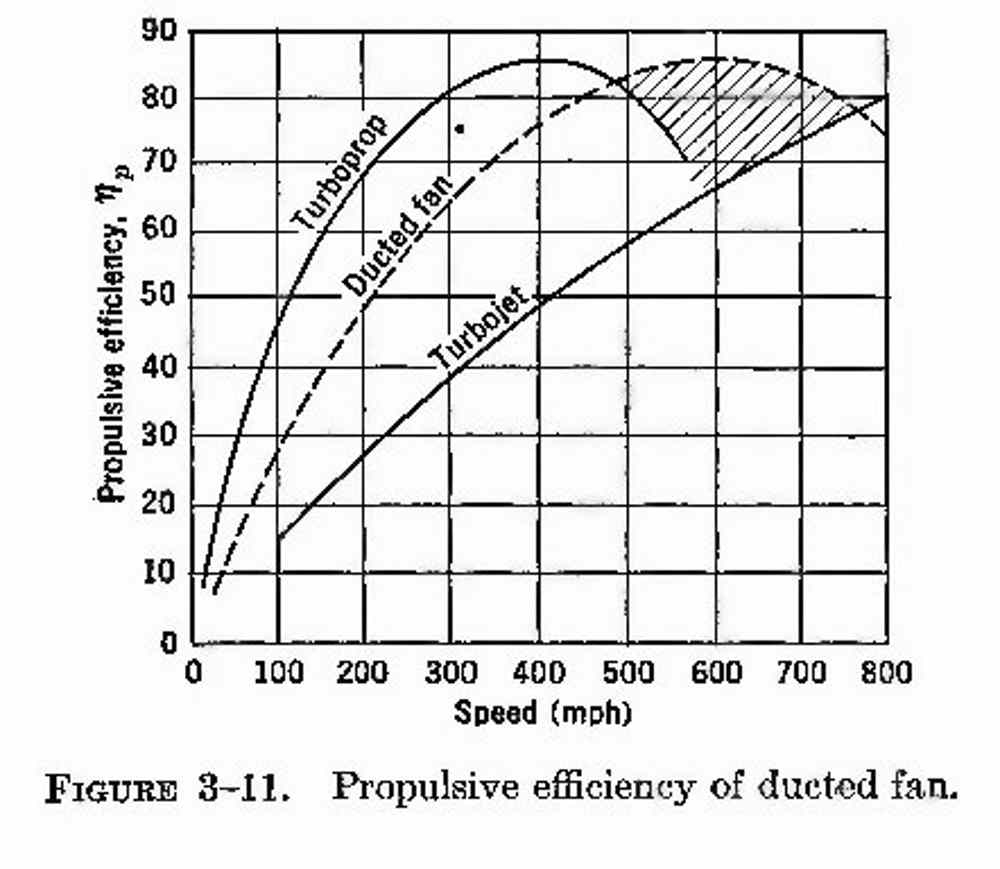
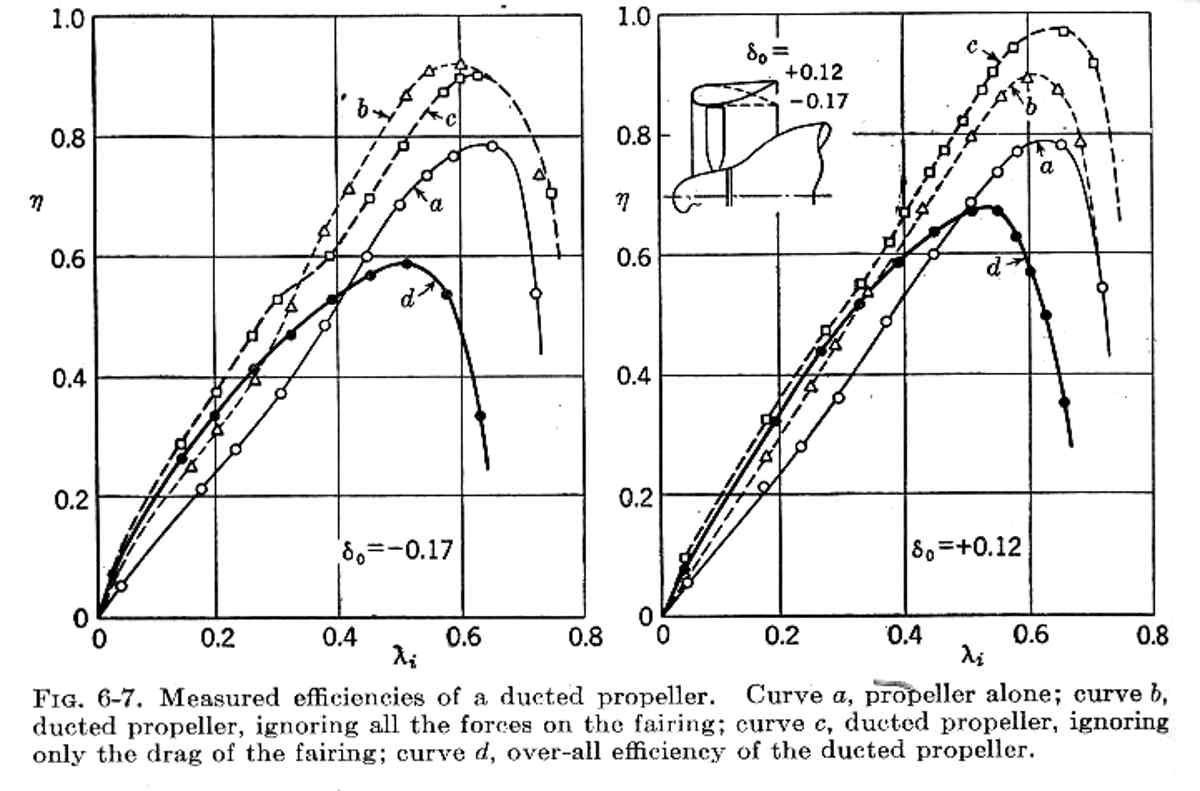
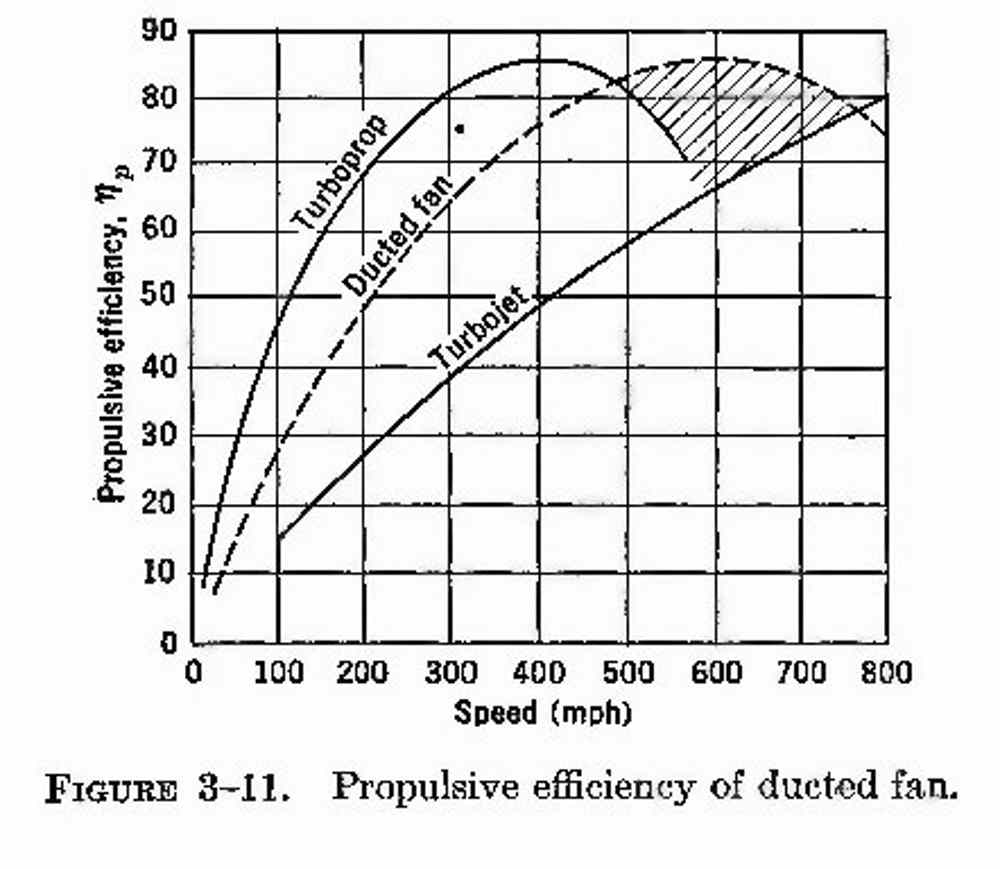
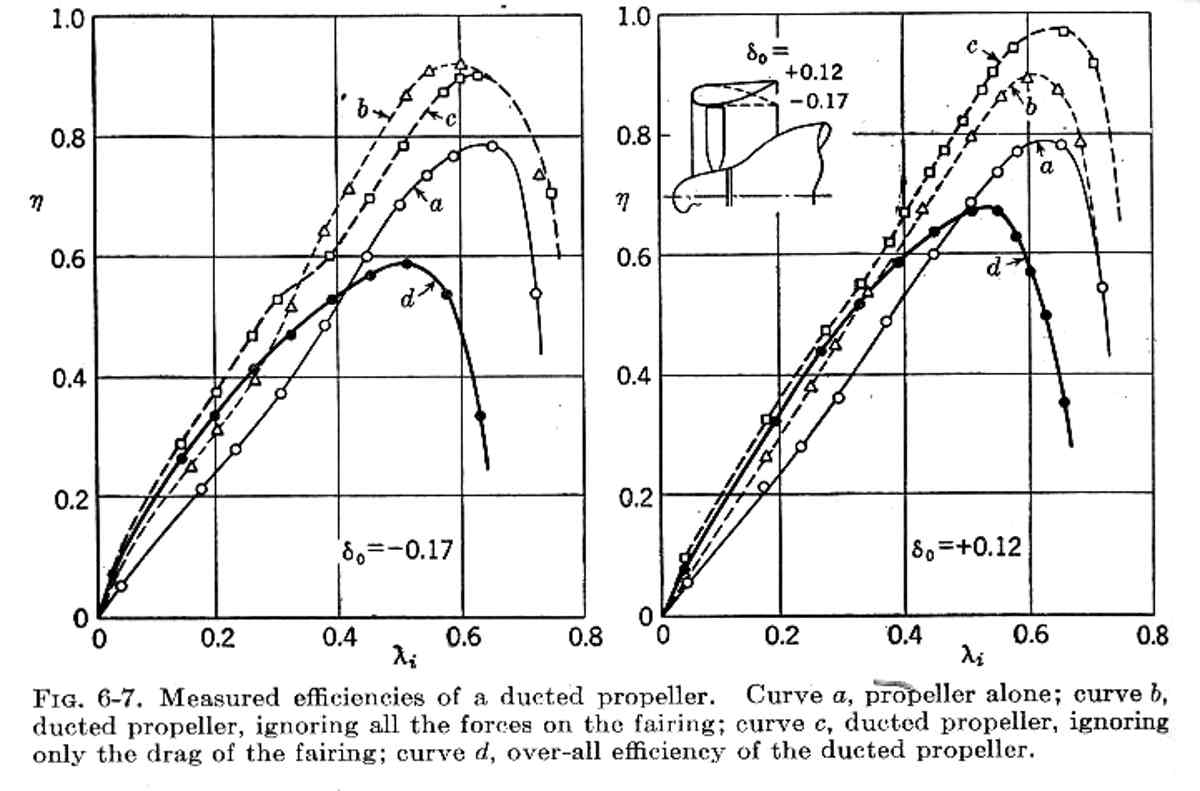
Also, where is the disk loading chart that shows the lbs. of propeller
thrust produced per hp. avail, at different levels of disk loading (lbs.
Of a/c wt. per sag. ft. of prop area). I cannot find my copy of Mr.
Hovey's "Ducted fan design" vol's. I and II.. Memory says it's around
10 lbs. of thrust per hp. (helicopters) with a disk power loading of
around one (1).Lb. per sq. ft.
Thanks for your help. And a Happy 4th.to you and yours.
PS. Is the RT700 @
www.nwuav.com for real ? please tell me it's
real. at 3x the power to weight of other rotaries, it does not appear on
the Rotron web site at all.
Thanks Again,
Larry Gordon
Katy Tx..
Are you sure you are scrolling down to read the entire thread? New
messages are
at the bottom. If the messages are truly identical the problem is on
your end.
I don't have Hovey's book. Ducted fans suck in our speed ranges. Or
don't suck :)
The RT700 is vapor ware.
Knock off smoking that stuff. You will be senile before you are 40 :)
Paul Lamar
The Rotary Engine News Letter. Powered by Linux.
ACRE NL web site.
http://www.rotaryeng.net
You Tube
http://tinyurl.com/beqqxas
Copyright 1998-2014 All world wide rights reserved.