Hi Paul. I am revisiting the long drive shaft for a pusher design.
With the progress made on composite drive shaft, is the option of
long and light prop shaft becoming more of a reality now? I saw a lot
of automotive carbon shafts on the market now for very decent
prices. Could a simpler design with rubber couplings instead of
powerslip clutch be made to work without outlandish development cost
and headache? I would appreciate your thought. Luke F Wings.
How long?
I would use a minimum of 3.5 inch diameter aluminum tube. Cut the
wall thickness on a lathe to .062" to save weight. Then anodize it so
epoxy will stick . diagonally wrap carbon fiber to a total thickness
of .125 to .2 inch.
If not too long get a stock RX8 carbon drive shaft from a junk yard.
Yes rubber couplings are the way to go.
Paul Lamar
Will anodizing be as good as the process used on grumman GA? THANKS.
L F WINGS.
I don't know what they used on that airplane. You can buy a kit in
West Marine to treat aluminum for epoxy bonding.
How long is the prop shaft?
Paul Lamar
Isn't there a vibration issue with anodized parts. There was an
award winning Experimental helicopter where the builder had anodized
a lot of parts for a blingier look, including I think the drive
shaft. After about 60 hours the blingy part failed catastrophically
causing a complete wreck of the machine. IIRC the anodizing process
introduces microscopic stress risers. Feel free to correct me if I've
got this all buggered up.
John Gibbons
The aluminum tube is just a male mold for the carbon fiber.
BTW when you have a high modules of elasticity material (carbon)
sharing the load with a low modulus of elasticity material (aluminum)
the high modules material takes most of the load.
Paul Lamar
But when you attempt to adhesively bond two materials with widely
different Elastic Modulii you are asking for bond line failures - Ask
me how I know this Roland Friestad
I agree but not only that. When thermal expansion coefficients
differ you can also get bond line failures.
Again we are only using it as a male mold. The carbon will take all
the load. It is too hard to remove the plug so it can be left in
there. If the bond fails it will act like a torsional damper :)
Paul Lamar
It would be better to use a tube of the correct diameter and slice
it accurately longitudinally and use it as an OUTER mould. Use
pre-preg carbon and lay it up around a partially inflated tubular
balloon. Clamp the outer mould in place and inflate the balloon
whilst warming the outer mould with a heat gun. When cured remove
outer mould and balloon and you should have a perfect carbon tube.
Chris in NZ.
Chris. Have you tried to cure pre-preg with a heat gun before? I
thought it needs very accurate temperature and time control. Am I
correct? Thanks. Luke Wings.
Hi Paul
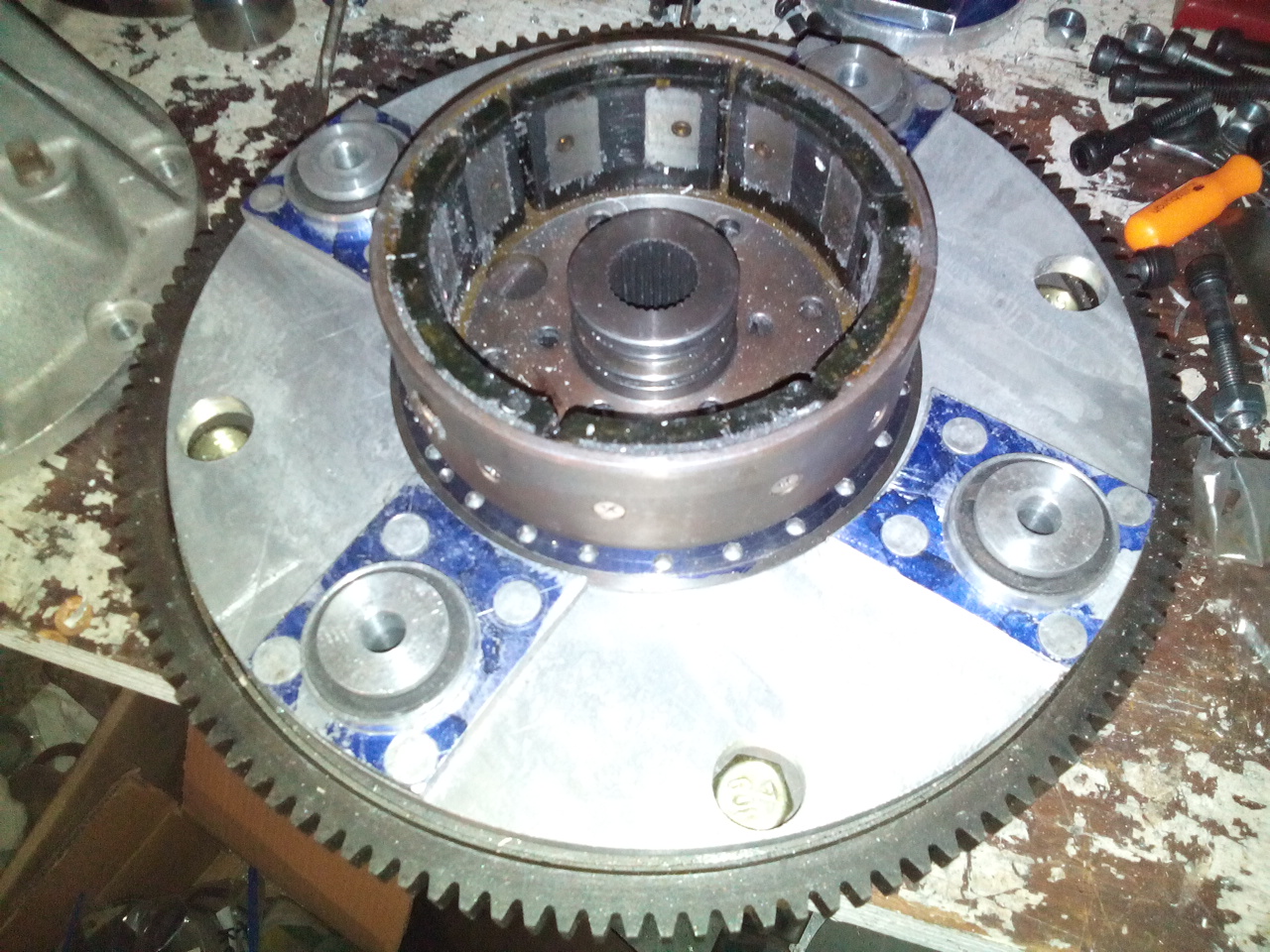
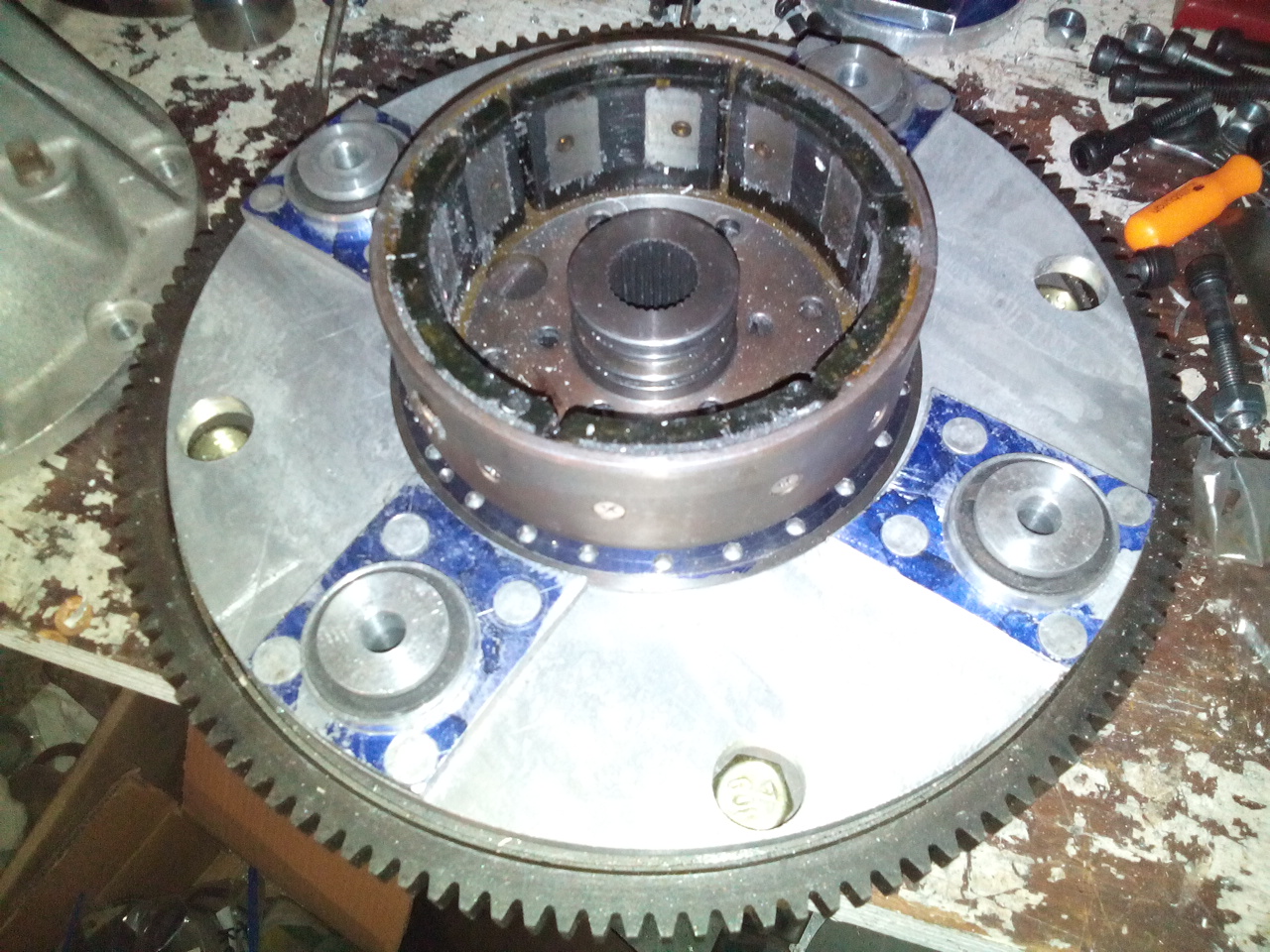
He can look at my aluminum plate damper set up to attach his carbon
fiber shaftting
JEAN PRUDHOMME
The Rotary Engine News Letter. Powered by Linux.
ACRE NL web site.
http:www.rotaryeng.net
You Tube
http:tinyurl.combeqqxas
Copyright 1998-2014 All world wide rights reserved.