I am in the process of updating the web site on my race car wing
manufacturing days. Just about all Formula A (AKA F5000) suspension
mounted wings were built by me. I sold them to Carl Haas and he mounted
them on new Lola race cars before he sold them to the racers. These car
weighed about 1300 pounds empty and had a 5 Litre V8's with up to 800 HP.
The wing skins were .016" thick 7075 T6 razor blade material :) The
corrugated wing spar and two end ribs was 5052 H32 .040" thick.
http://www.rotaryeng.net/who.html
http://www.rotaryeng.net/1970-James-Garner-F5000.mp4
Paul Lamar
Very interesting Paul, the text mentions driver control of the wing, but
I can only see anything on Chris Amon's Ferrari. Your drawings do not
show any means of adjusting the angle of attack.
I noticed at Indianapolis a lot of the cars in the museum used Gurney
flaps on the trailing edge, I don't see them on yours.
What airfoil did you use.
John Evans
Not all were driver controlled. I probably built over 100 suspension
mounted wings.
The Chaparral wing was controlled by a foot pedal and hydraulic system
similar to a clutch slave cylinder. The Amon and Craw wings were
controlled by an aerodynamic trim tab on the trailing edge. This
arrangement is called an aerodynamic servo.
None of the Formula 5000 wings were driver controlled as I recall as it
was outlawed.
It was necessary to pivot the wing at the quarter cord point as that is
the centre of pressure. That implies ballast in the leading edge to
static balance the wing around the centre of pressure. Otherwise severe
flutter would occur or the wing would change angle of attack while
driving over a bump.
I used a VW starter solenoid located in the leading edge with a long
rod controlling the trim tab.
All had angle attack adjustment mechanism or stops for flat and
downforce positions.
If the wing fails you will leave the road instantaneously if not sooner.
That happened
to me at over 100 MPH while testing one of my wings at Rattle Snake race
in Midland Texas on the 2B test mule.
Paul Lamar
Paul --
Interesting background on your wings, although I kind of doubt a
five-liter Chevy in the late-'60s/early-'70s time frame was making 800
bhp. However, regarding your comment about the wing failing at speed:
The last time I drove in a race was for the Daytona 24-hour in 1995 (It
was 20 years ago today, or something like that). The car was what was
called WSC, for World Sports Car Championship, and they were kind of
like CanAm cars but with less engine -- ours had a 310-inch Chevy that
was more-or-less like a down-scaled NASCAR engine. I think it would make
maybe 180-185 mph once we got it up to speed around the banking. Anyway,
in the night practice before the race we discovered a crack on the
underside of the wing, right in the center, going all the way from the
leading to the trailing edge.
None of the drivers really wanted to get in with the cracked wing, but
we also hadn't driven it much and needed to find out a few things and
also get in a least a little practice. So we were standing there in pit
lane, kind of seeing who would go first. I remember pointing out that
since the crack was on the bottom side, and the struts were near the
center, as the wing loaded downward at the ends the downforce would
probably hold it together. Nobody else thought that was very funny. The
lead driver on our team took it out, did a few laps and came back, which
made it my turn. You know what it's like; no way was I going to not
drive it. So I got in, but I remember coming off NASCAR Turn Four at WOT
and hanging on tight and really, really hoping that goddamn thing didn't
break.
We made it through practice and fixed it the next day.
I did not tell Barbara, my lovely wife, about driving that thing with
the cracked wing. A few months later, at a dinner, one of the other
drivers started talking about it, like it was one of those war stories
that's funny later. The charming Barbara was at the dinner and she did
not think it was at all humorous. She was really, really pissed, in fact.
That's my wing story.
Best always, and enjoy following the technical discussions.
Don Fuller
The Rotary Engine News Letter. Powered by Linux. ACRE NL web site.
http://www.rotaryeng.net You Tube
http://tinyurl.com/beqqxas Copyright
1998-2015 All world wide rights reserved.
Don,
My old friend, your engineering analysis of the wing holding together
was exactly wrong. Think of the wing as a plank that is supported at
both ends on which you are standing. It sags in the middle, stretching
the bottom surface. So, in fact, the downforce on the wind would open up
the crack on the underside, not press it together.
You're lucky to have survived your session in the car.
Take care,
Csaba
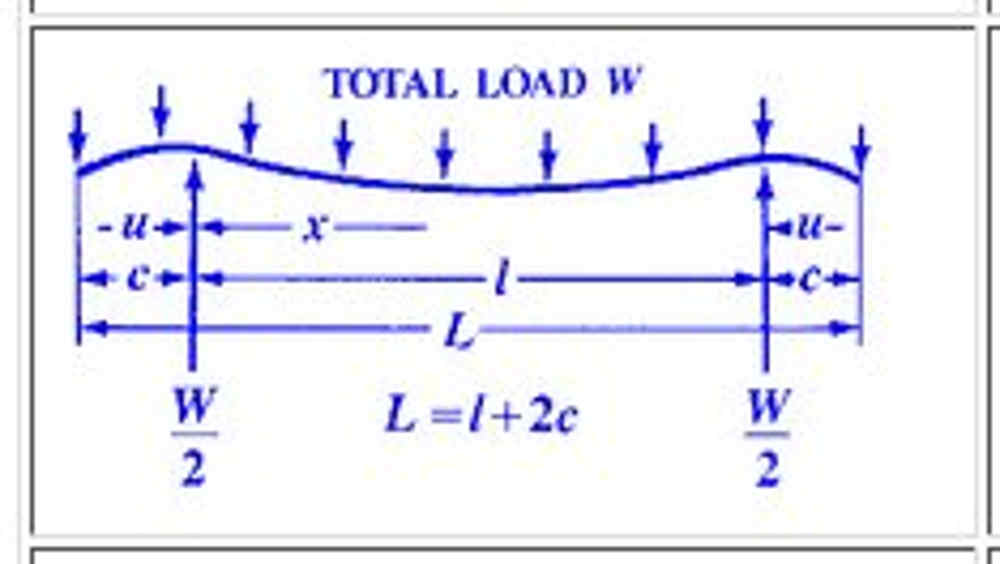
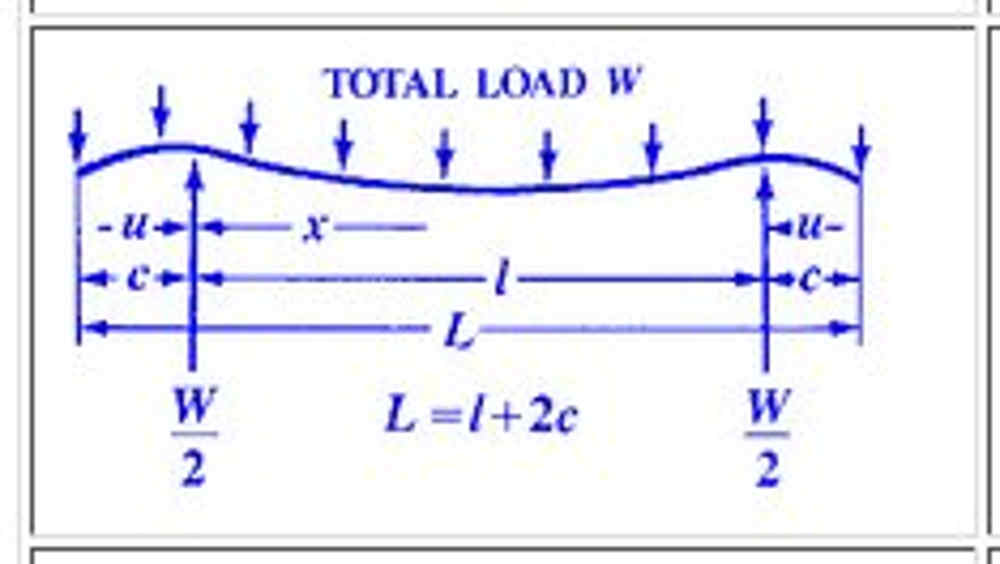
I disagree Csaba. Don was possibly right. In the old days the wings were
as wide as the car.
The struts were inboard of the tires so there is some load outboard of
the struts.
The skin probably failed from acoustic fatigue. I don't think it was
one of my wings.
If was the corrugated spar alone would still carry the load.
While we are on the subject the narrow Form 1 wings have twice the drag
as a full width
wing for a given down force. If FAI were serious about saving fuel they
will make them wider,
http://www.engineersedge.com/beam_calc_menu.shtml
Paul Lamar
The Rotary Engine News Letter. Powered by Linux.
ACRE NL web site.
http://www.rotaryeng.net
You Tube
http://tinyurl.com/beqqxas
Copyright 1998-2015 All world wide rights reserved.