Greetings Gentlemen, I am quiet concerned about the ending of Mazda
rotary production and would like to see the Mistrel type av engine
fitted with a compound turbo system as per Pauls' CAD drawings.
Nothing short of brilliant!
We have just finished price negotiations on a Seawind 3000
incomplete amphibian kit which we expect to take delivery of next
month. We will be installing a 20b Mazda on it with a compound turbo
system. Yet to be engineered. Quality reference from anyone having
the needed knowledge in turbine sizing/design would be highly
appreciated.
All the manifolding/mountings will be scratch made in house. We have
located blade producers to handle blade assemblies. I grew up in a
family run machine shop and have 25 years as a Plant Engineering
Technician. Efforts are now moving forward on obtaining ample funding
for an additive machining center to produce honey combed interior
shaft assemblies and end covers to further reduce weight and bring
production costs down. 100 pounds of Monel reduced to 27 pounds of
shaft leaves a lot of time and material on the floor!
We also have a huge existing residential market use for an affordable
45 hp rotary with a blow down turbo. Which we will not disclose for
engineering with out an NDA. $5,000 for an Axiro is more than a bit
much!
Cheers Ya-All, Michael Nash
Michael, A word of warning on the seawind, they are a real dog to
fly. Having that engine up there on the tail is a bad idea, they
suffer badly from gyroscopic precession when rolling into the turn. A
good friend of mine here killed himself trying to take off from a
lake, he hit a boat wake (not a big one) and it porpoised and dove in
killing him. They can only handle a very small choppiness on the
water. I flew it a few times and boy did it need a lot of rudder
input to co-ordinate in a turn. Changing power settings on final for
landing was a disaster, the pitch changed dramatically with throttle
change. Just my 2 cents worth here
Michael. Chris in NZ.
With the CG that high I can see how that might happen. Any
significant impact at water level will cause a pitch down.
Paul Lamar
Thank you for your informative words...they have in fact pounded 15 of
these into the ground. The slowed prop does in fact impede airflow over
the elevator and rudder control surfaces particularly on final. We had
seriously thought about moving the 20B down into the aft fuse and using
carbon fiber drive shafts and magnetic couplings for low friction loss
to solve the GG issue. The high speed wing lacking lift is the other
demon. A Retractable hydrofoil to keep the nose up and clean might help.
Thank you for the "Heads UP" You caring words did not fall on deaf ears.
I think we will take it to the company that is trying to sell a
certified version Seawind and let them work to save their bacon. I won't
mind helping them work it out especially if it saves lives down the road.
Respectfully,
Michael Nash in Virginia
I would lengthen the hull. You need more buoyancy forward.
Paul Lamar
I can't speak to this design specifically but the high thrust
line of this style of aircraft scares me silly. The most common
time for an engine failure is take-off. A high thrust line like
this tends to push the nose down during high power applications
which must be compensated for. On take-off and initial climb
you are at low speed, high A of A and close to the surface. If
your engine loses power for even a second it can be enough to
take that thrust line (nose down moment) and reverse it into a
very high drag line (nose up moment). This puts you way past
the critical A of A where you have no chance of recovery, I knew
a couple of people who sadly learned this in the last few
seconds of their lives.
John Gibbons
Interesting thoughts as to the Seawind. I remember it at the Oshkosh
seaplane base. It came in with 4 people... left with one. It just can't
get out of the water well. Perhaps some of you remember the Air Shark.
Much like the Seawind, it tried to be "fast".. In fact, may still hold the
speed record for a single engine monohull amphibian of over 200 mph., but..
it too came in to the seaplane base to prove it's worth. It was eventually
beached and trailered back to the airshow. Couldn't get out of the water.
It of course no longer exists. Amphibious monohulls of a smaller nature are
a compromise. The engine has to go somewhere on top... usually a pylon.
The Lake Amphibian is I believe the only certificated of that genre. The
bigger monohulls of course aren't as affected by said thrust lines with the
engines in the wings. The Grumman Goose and Mallards out there etc... and
even the twin Seabee's. These attempts at faster amphibians (personally),
just don't have enough boat under them. The compromise to being faster. (?)
It's always (The Seawind) been a beautiful bird... and fast. Just probably
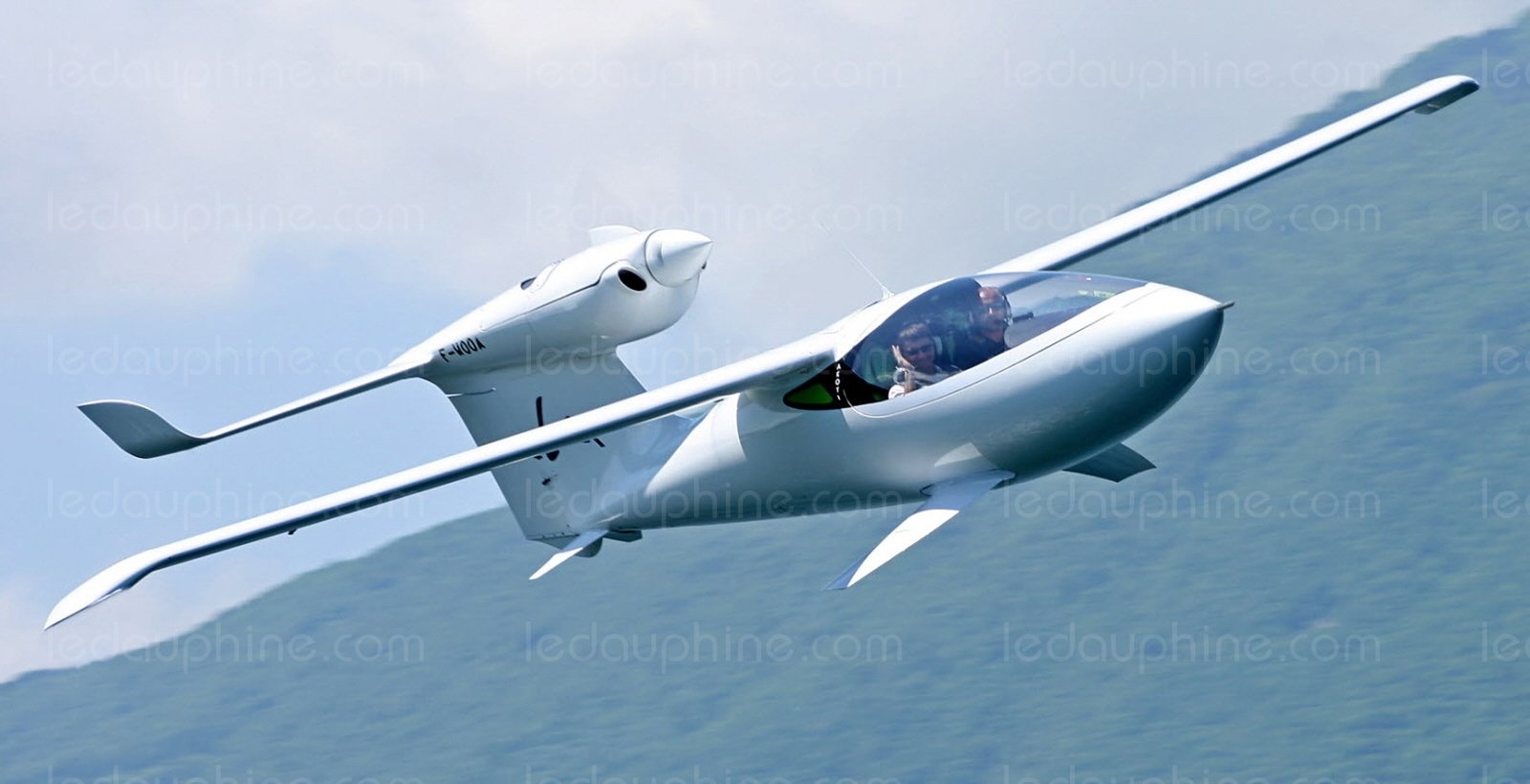
shouldn't be an amphibian. One to watch perhaps is the French Lisa
Akoya... Basically, a mini Seawind. (with "Seafoils" instead of a
stepped hull) They too are struggling for certification as an LSA. Some
might say any aircraft can be a widow maker, but.. amphibians given their
versatility and use in water likely score right up there. Good luck with
your Seawind Michael.
Bruce Buksyk
The Rotary Engine News Letter. Powered by Linux. ACRE NL web site.
http://www.rotaryeng.net You Tube
http://tinyurl.com/beqqxas
Copyright 1998-2015 All world wide rights reserved.