Hi Paul,
Having read your website,
There are a number of WHATIF flies buzzing around my head if you
would be kind enough to swat them for me for a good night sleep.
1. "It takes HP to suck the combustion air into the engine" .
Does that mean you simply allow more air to go to the combustion
chamber with no MORE EXTRA in FUEL resulting in greater output HP ?
1a) By Output Horsepower my understand is the flywheel will achieve
1000rpm in less time and the flywheel will overcome
friction/resistance using same amount of fuel.
2. If my above assumption of more air no extra fuel is correct then
an ECU like Megasquirt simply continues to squirt (using direct
injection) same amount of fuel into the combustion chamber and
firing the spark at the appropriate time ?
3. To harness the extra Horse Power and rev up the engine you
suggested using the new side throttle system with p-port. Does that
mean the using VERNIER CONTROL Is that the new throttle cable. But I
am wondering there must be some sensor which tells the ECU as you
pull the cable to allow more air fuel into the combustion before the
usual sparking ?
4. As far the Megasquirt is concerned should it continue to behave
same usual
even if the engine wasn't p-ported with reference to amount of fuel
to squirt and then spark.
5. If my aircraft has an all in weight of 450kg including
engine,pilot, wallet . I have fuel tank of say 80 litres. I want the
fuel to last as long as possible which engine should I use 13b , 13b
P-port, 13b Turbo , 16b , 16b P-port , 16b Turbo , 13b Turbo
Compound or another option ?
Regards
Zahid Rahman
1. The fuel air ratio must be maintained. It all has to do with
BSFC. Brake Specific Fuel Consumption. This is the weight of fuel
burned per HP out of the engine. Google BSFC.
1a. Yes the engine will accelerate faster but HP is not the only
factor. Rotating inertia is a major factor.
2. Mega Squirt maintains the correct fuel air ratio.
3. A slide throttle reduces in internal aerodynamic drag of the
intake system.
4. Same answer as 2. The sensor is either a mass airflow sensor or
simply the intake manifold pressure and air temperature.
5. For best BSFC use a turbo compound RX8 engine. Soon to be
available from Mazda. May not be P-port so a lower BFSC would be
possible with a turbo compound P-port.
Paul Lamar
When is it appropriate to use reduction ratios 2.85 and when should
one use 3.17.
The reverse rotation also available with Ford of 2.17:1 and 1.85:1 ,
is it used with piston engines because they turn in the opposite
direction to the rotary.
Zahid Rahman
HP is RPM times torque.
Most aircraft piston engines turn in the same direction as the
rotary.
Are you a pilot?
Paul Lamar
Not yet. I going to build my own light aircraft as a hobby. I asked
the question because I thought it said on your website the rotary
engine turn in opposite direction and uses 2.17 reduction ratio.
Zahid Rahman
The Mazda engine rotates the same direction as most AC engines
rotate.
Paul Lamar
Hi Zahid, I am building an LSA aircraft, I am using a single rotor
13b sideported, you will probably want to use the alloy side plates
from Racing Beat in the US. The alloy plates will save a
considerable amount of weight. At 450Kgs if you are a two seat
aircraft you will want to be fairly weight conscious. If you use a
single rotor, side porting would seem the way to go. You will have to
find someone to machine the e shaft as they are not available off the
shelf. You should have no difficulty in producing 120Hp The less Hp
you require the less fuel you will burn. Large savings in fuel burn
can be achieved by building the right plane for your needs. In the
LSA Field there are some very efficient aircraft around. Andrew.
CampBell
A side port single rotor is definitely not the way to go.
Paul Lamar
Is it a typo ?
Andrew Campbell wrote "If you use a single rotor, side porting would
seem the way to go."
Then Paul Lamar wrote "A side port single rotor is definitely
*not*
the way to go."
Regards
Zahid Rahman
Let me put it another way.
"A side port is definitely
*not* the way to go."
You would not introduce needless aerodynamic drag to the outside of
your air plane so why introduce needless aerodynamic drag to the
inside of your intake manifold?
Air velocity inside an intake manifold is up to 400 MPH.
Paul Lamar
Sorry , Just to be clear side port and p-port are the same thing or
not ?
Zahid Rahman
I thought you told us you read the web site?
http://www.rotaryeng.net/intake.html
<http://www.rotaryeng.net/intake.html>
<
http://www.rotaryeng.net/intake.html
<http://www.rotaryeng.net/intake.html>>
http://www.rotaryeng.net/fund-of-intake.html
<http://www.rotaryeng.net/fund-of-intake.html>
<
http://www.rotaryeng.net/fund-of-intake.html
<http://www.rotaryeng.net/fund-of-intake.html>>
http://www.rotaryeng.net/Welded-steel-p-port.html
<http://www.rotaryeng.net/Welded-steel-p-port.html>
<
http://www.rotaryeng.net/Welded-steel-p-port.html
<http://www.rotaryeng.net/Welded-steel-p-port.html>>
Paul Lamar
Well the Suzuki engine may be inexpensive, but designed for
automotive use.
It Will shit a rod out the side or break the crankshaft in aircraft
use!
The aluminium RB end housings for a 0ne rotor will cost about
$3000. Atkins
e-shaft for a single? P-port a rotor housing as per Paul's
instructions or
Jeff Dodridge (contact listed on web site). With a 3:1 PSRU you
should get
about 125 - 140 HP. Engine weight about 60 - 70 pounds. PSRU about
the same
What does the Suzuki engine weigh and it still requires a PSRU. The
Mazda a
bit more expensive but bullet proof once sorted. The recip will
need 2-3
engines to go as many hours.
Dale Davies
The PSRU is only 45 pounds max Dale.
The Ross version was 35 pounds and the Bell 47 final drive
about 45 pounds.
Paul Lamar
I am interested in building something leading edge and unique,
Frankly the Single Rotor Engine fits the interest. It just looks more
and appealing every time I look at the pictures. I would rather make the
parts then buy them.
Do you have dimensions of the e-shaft and the other components
which need the shaft to be balanced ?
Zahid Rahman
No I don't have the dimensions. Most people use a cut down 2 rotor
shaft.
Cheaper than starting from a billet. Don't forget you have to
harden and grind
the bearing surfaces. Do you have a machine shop?
Look up Emon Hurley in Coventry and drive over there to visit.
Hurley Engineering
10 - 16 Arbury Avenue
Foleshill
Coventry
CV6 6FB
UNITED KINGDOM
They probably have one rotor shafts.
Say Hello to Emon for me.
The only guy to step off a supercharged RO80 powered motor cycle at
170 MPH and live to tell about it :)
Paul Lamar
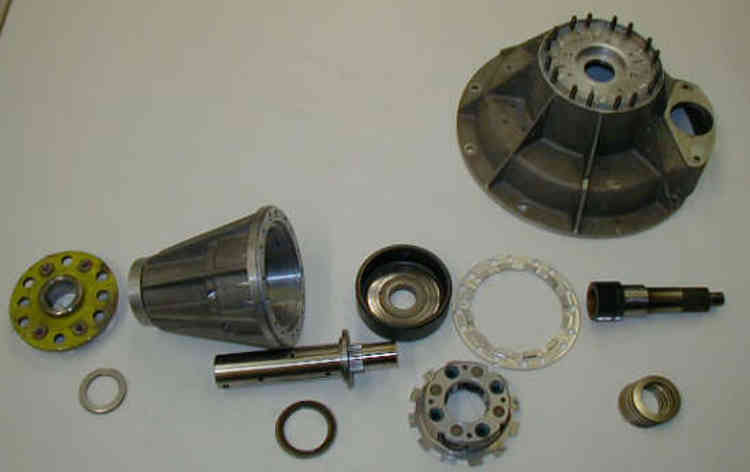
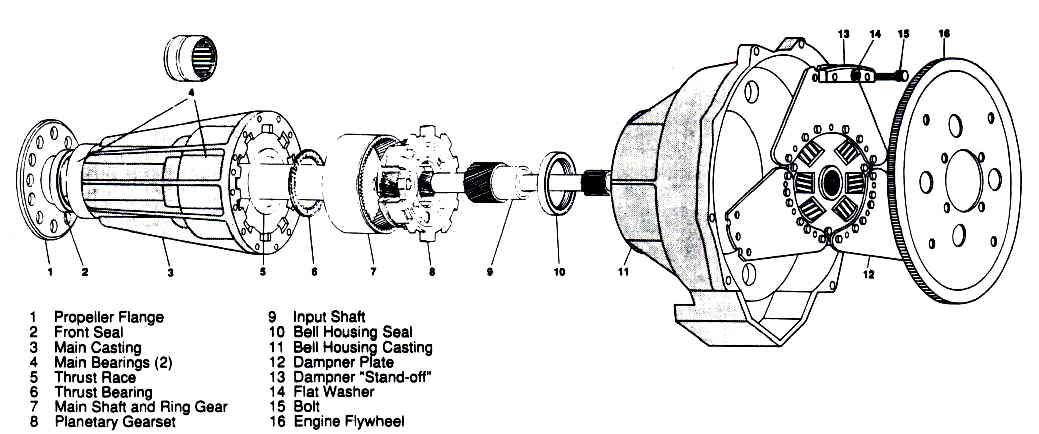
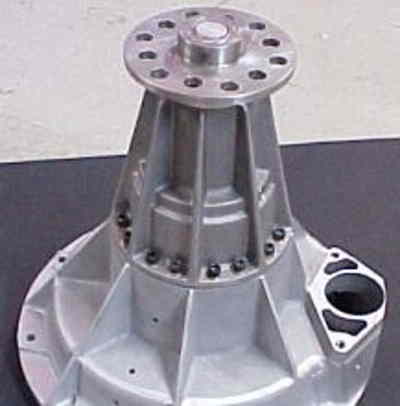
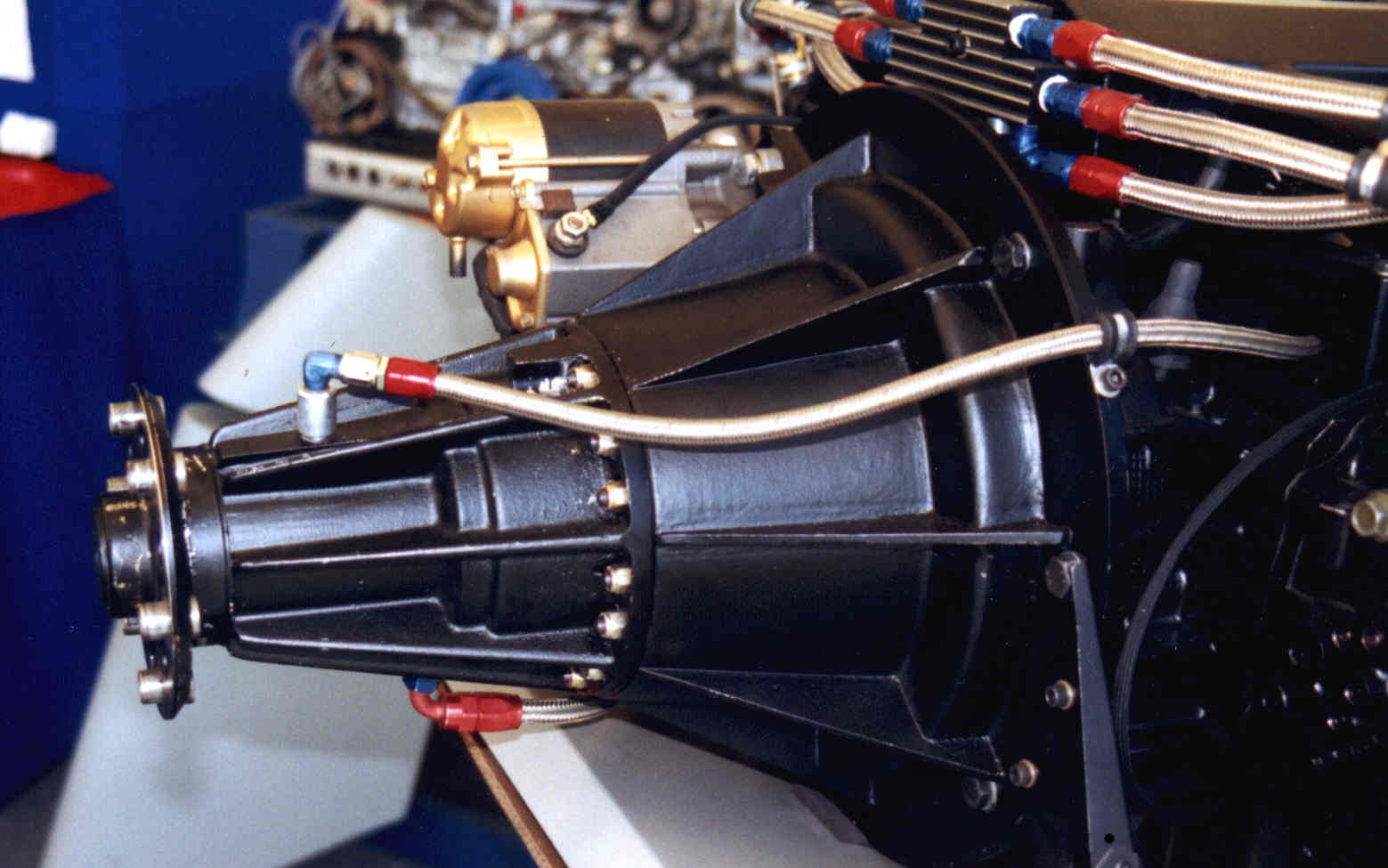
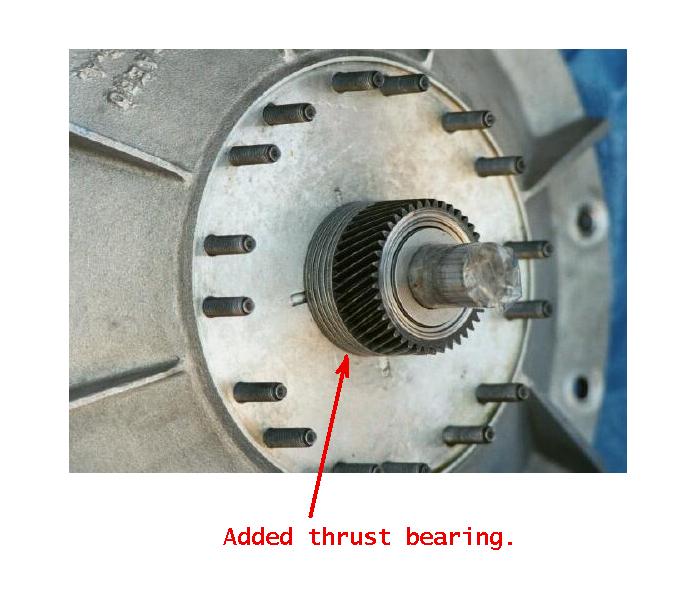
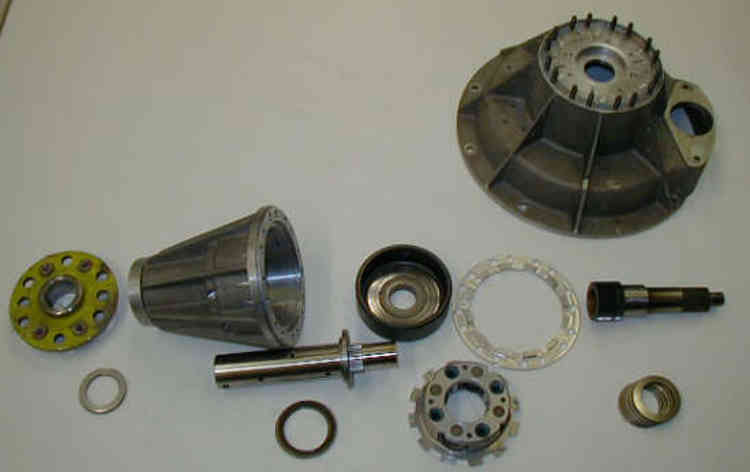
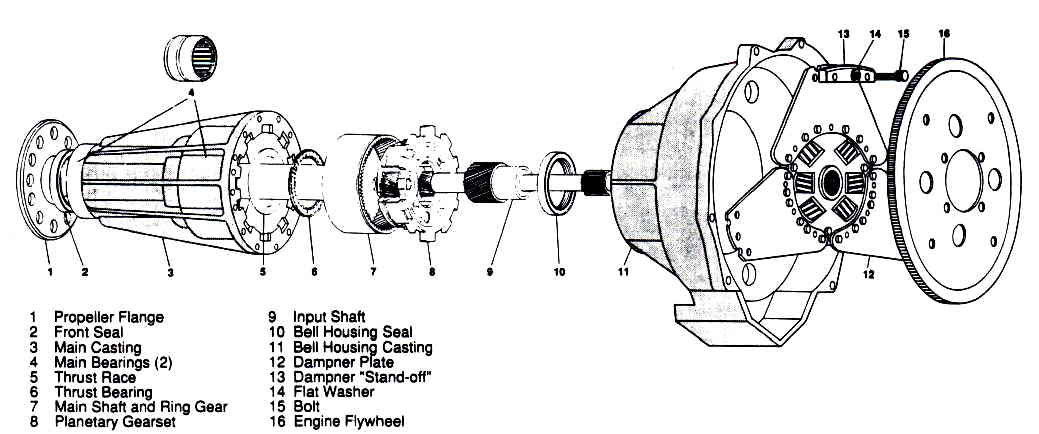
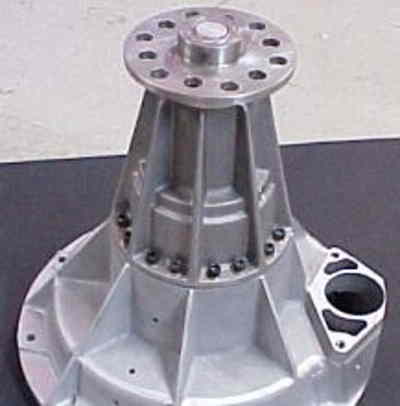
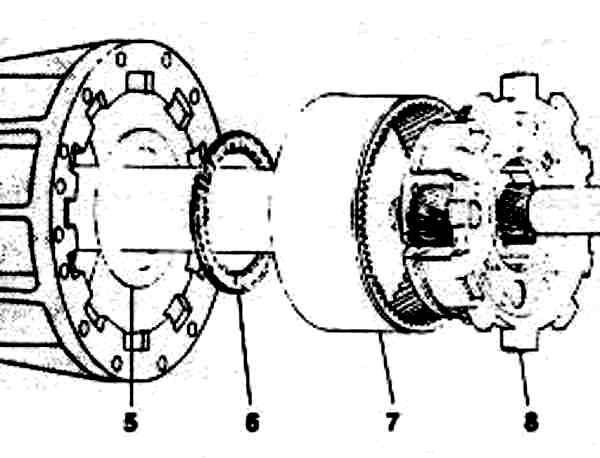
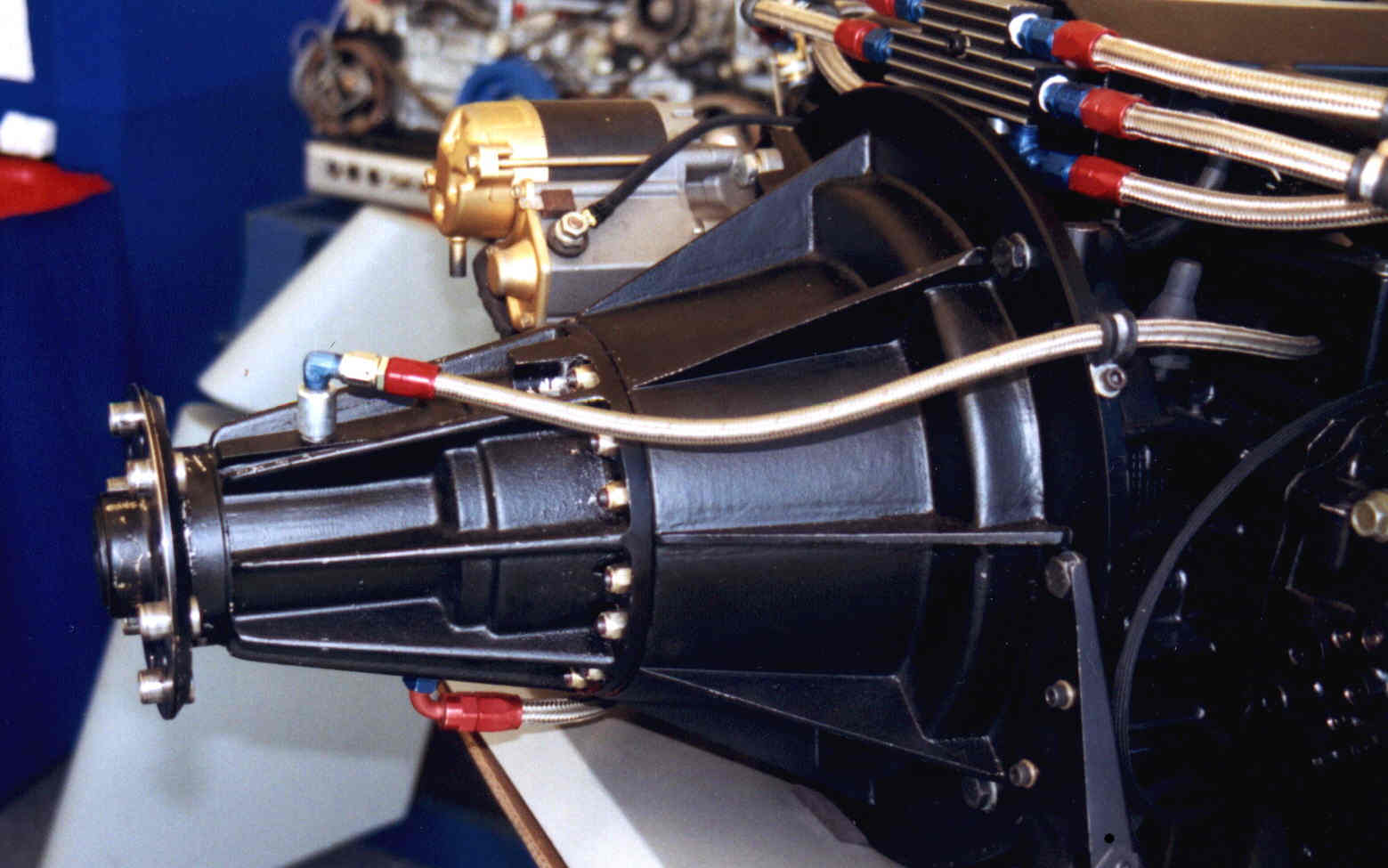
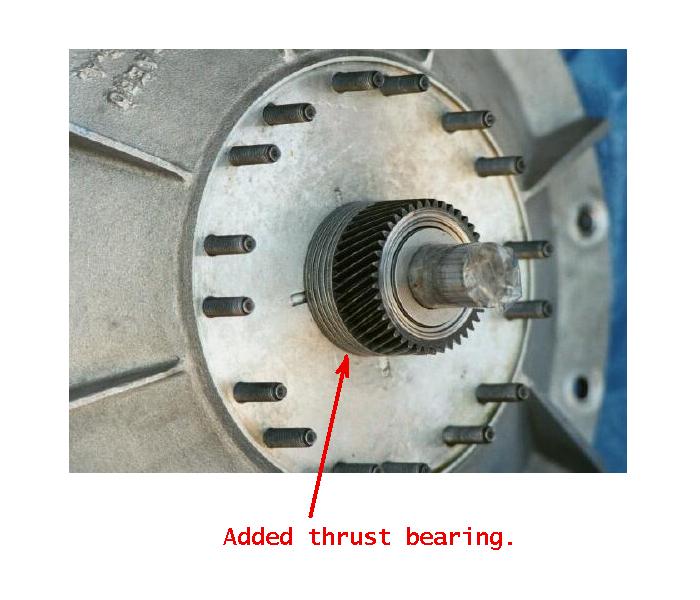
This is the initial PSRU design.
My CAD designer is using a different propeller flange design rather than
screwed one.
When I asked why he is not using the screwed one these his comments.
"I am certain that the flange using the set screws to has never been
used successfully in practice in a power transmission for an aircraft.
The set screw concept will not support the torque that the shaft will
transfer to the propeller. If you want, I can provide a model the flange
as you have shown but it will most certainly fail in operation.
The models that I have been working on are sized to handle the 700 Nm of
torque transmission for the duty cycle of the aircraft. The flange that
I has been developed is very similar to the "tracy-crook-new-shaft2.jpg"
image.
Let me know if I should copy the set-screw concept instead of what has
been developed."
Regards
Zahid Rahman
No mention of extended point. I don't think he ever heard of one. The
concept could
be an American invention that has not made it to the UK.
Sounds like he doesn’t understand you can use 24 extended point set screws.
Is he an engineers or just a machinist? In the UK the engineer name is
applied to many
people with out a university degree in engineering.
Ask him to calculate the shear stress on the extended point set screws
and see what he says.
The design submitted is too heavy and the shaft will crack at the root
of the front spline.
The designer is a drafts men and not an inexperienced design engineer.
Also very expensive to machine out of billet 4130 steel and aluminium.
The designer obviously has no experiences designing aircraft gear boxes.
However it is a very pretty dwg :)
Copy the Ross exactly. Have the drafts men draw the Ross and send that
to me.
I will check it and make sure the dimensions are the same as the Ross.
Don't send a PDF. Have him give you an IGES file. IGES files have the
dimensions.
Paul Lamar
The Rotary Engine News Letter. Powered by Linux.
ACRE NL web site.
http://www.rotaryeng.net
You Tube
http://tinyurl.com/beqqxas
Copyright 1998-2015 All world wide rights reserved.