Paul,
The image left-side-p-port.jpg (attached) of Mark Supinsky Mustang
II P-port 13b left side shows P-port with slide throttle as per
rotaryeng.net website and a short exhaust.
The image p-port-turbo.jpg (attached) shows the short exhaust
replaced with a turbo and feeding back into P-port top chamber.
Principally are these the major hardware changes needed to add turbo
to a p-ported engine.
Regards Zahid Rahman
Yes and here are some pictures of the turbo integrated inter-cooler
and p-port intake manifold my welder welded up for Mike Collier's
Long Ez. This will be an easy 300 HP or more. It requires a butterfly
throttle between the turbo and the inter cooler.
Paul Lamar
The new Borg Warner EFR turbo would be a simplified fit . Divided SS
turbine housing with integrated waste gates. Also boost control and
BOV all in one small package. This one is the 8374... good for about
400 HP take off. Barry Bordes
Barry, where did that Rotary exhaust manifold come from?
Paul Lamar
Paul,
The flange is from Racing Beat.
Joe Berki
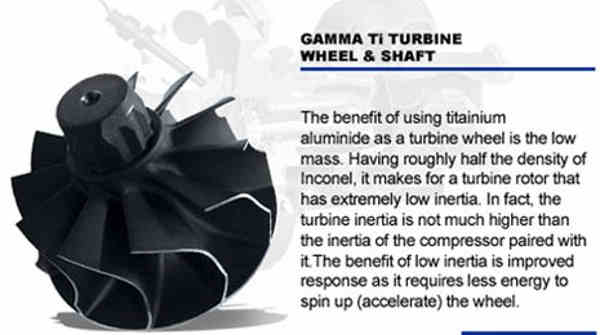
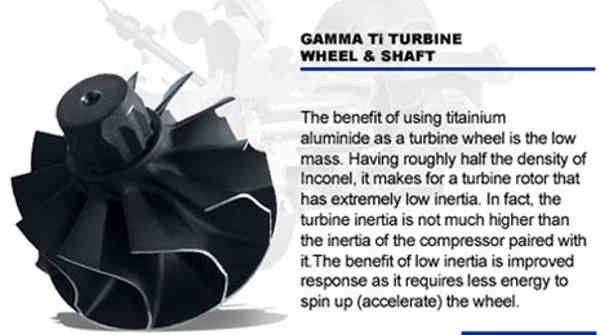
"Titanium aluminide has three major intermetallic compounds: gamma TiAl,
alpha 2-Ti_3 Al and TiAl_3 . Among the three, gamma TiAl has received
the most interest and applications. Gamma TiAl has excellent mechanical
properties and oxidation and corrosion resistance at elevated
temperatures (over 600 degrees Celsius), which makes it a possible
replacement for traditional Ni wiki/Nickel> based superalloy components
in aircraft turbine engines."
"General Electric has recently announced that gamma TiAl low pressure
turbine blades will be used on its GEnx l_Electric_GEnx> engine, which
powers the Boeing 787 aircraft. This is the first large-scale use of
this material on a commercial jet engine. The TiAl LPT blades are cast
by Precision Castparts Corp. and Avio s.p.a. Machining of the Stage 6,
and Stage 7 LPT blades is performed by Moeller Manufacturing, Aircraft
Division, in Wixom, Michigan, USA An alternate pathway for production
of the gamma TiAl blades for the GEnx and GE9x engines using Additive
Manufacturing is also being explored."
600 C is only 1100 F. These turbo's may not hold up in aircraft use. The
low inertia turbine is of no use to us.
If you use this turbo in a rotary powered aircraft you may be on the
bleeding edge.
=========================================================
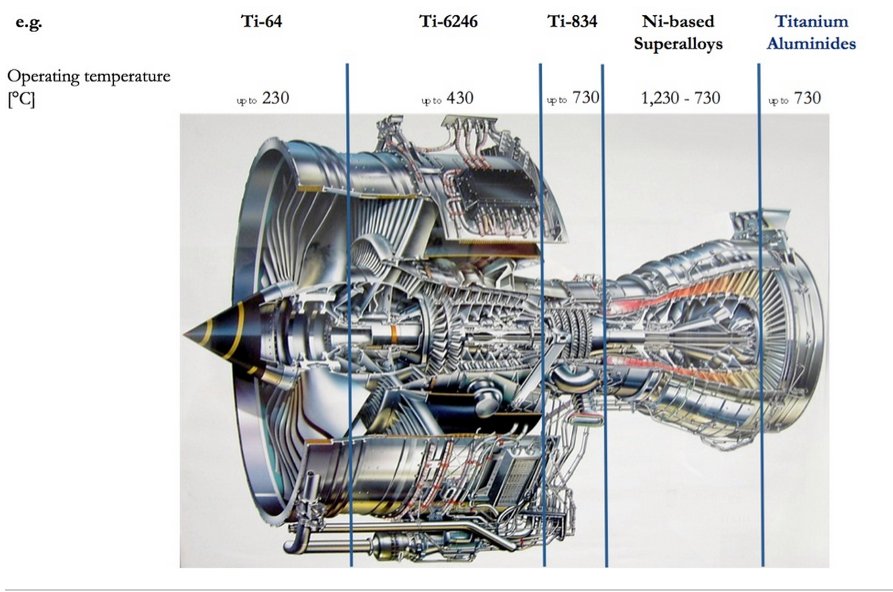
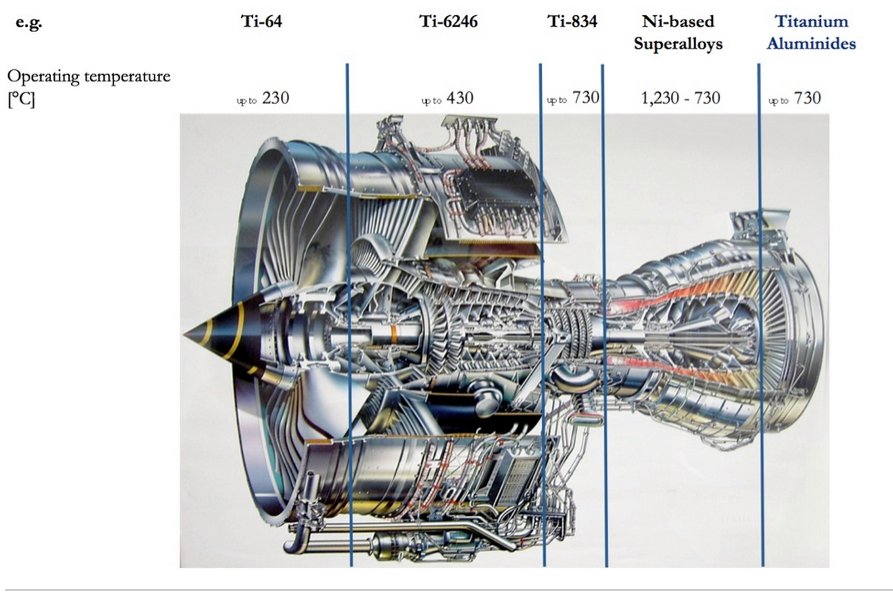
jet engine temps
730 C is still only 1340 F still a bit marginal for the rotary
with up to 1800 F in the exhaust. Passenger cars exhaust reach high
temps for just seconds at a time.
Paul Lamar
The Rotary Engine News Letter. Powered by Linux.
ACRE NL web site.
http://www.rotaryeng.net
You Tube
http://tinyurl.com/beqqxas
Copyright 1998-2015 All world wide rights reserved.