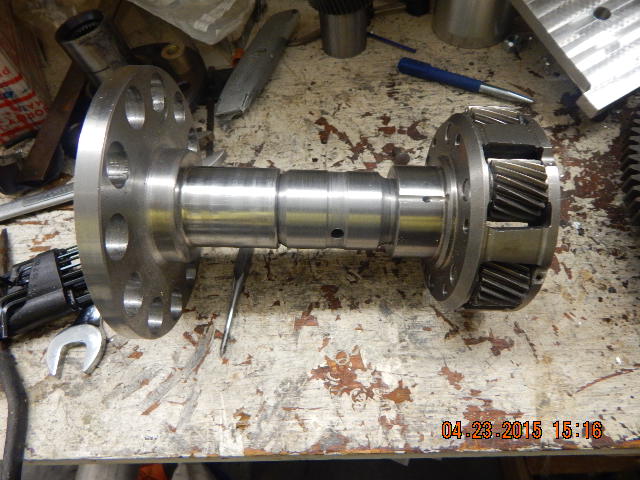
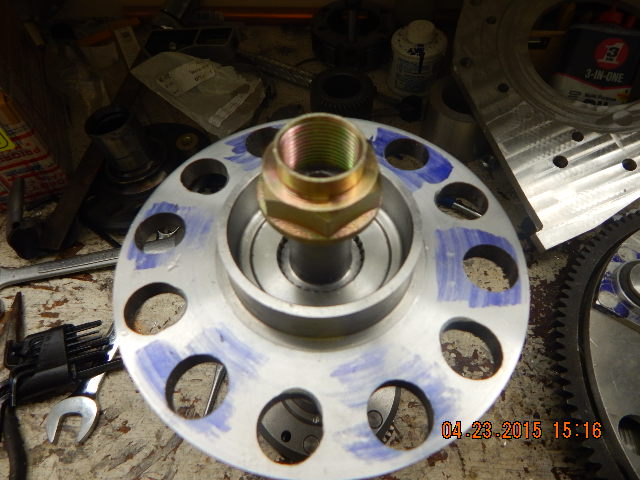
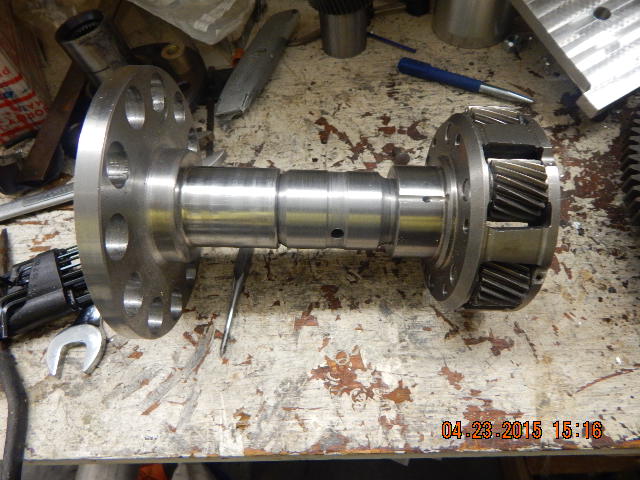
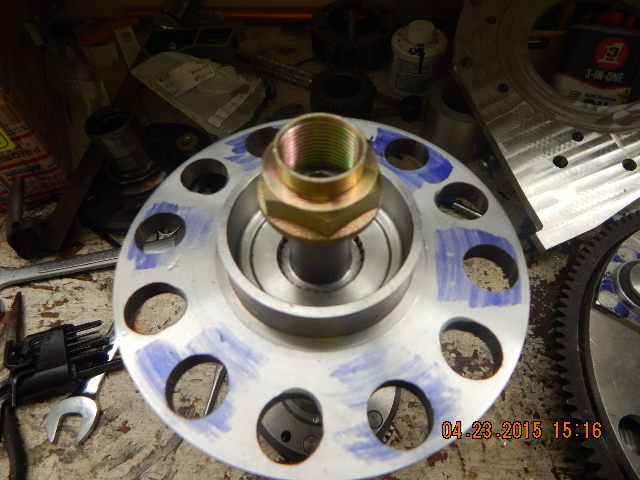
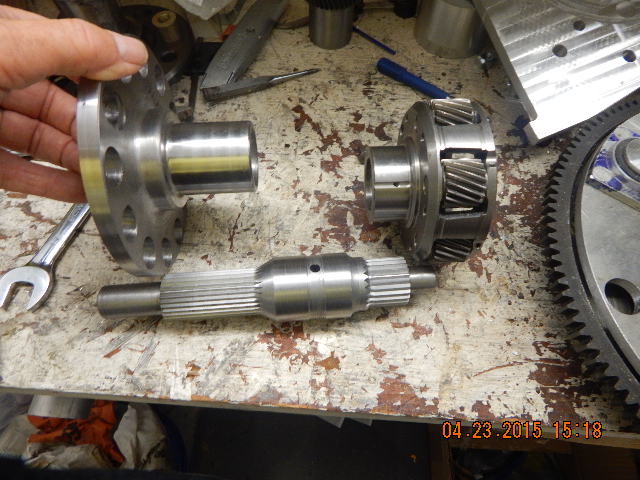
Paul and Georges Almost done before assembly. I do have the end shaft
to be treaded 22mmX 1.5 for the safety nut and groove one one side to
lock it . Then treated and annealed both shaft at Rockwell 60. I will
try to go at Sun&Fun this Saturday and comeback Sunday. Few photos
for your interest.
JEAN PRUDHOMME
Looking real Jean. What does it
weigh so far? I won't be at Sun & Fun this year. Too much patent
work. Filing world wide. Paul Lamar Jean I am Pascal from France
searching for a PSRU. Question: where did you find the bell housing
which seems to be die casting made? And where did you get all these
parts? Would be very interested to purchase a full set as you show in
your photos. Since Tracy Crook retired, I really don’t where to find
a planetary psru. If you can help, that would be great. I'm looking
for 2.71 - 2.85 ratio.
Thanks Best regards Pascal
Jean
No Help? Is it a secret where you got your parts?
Regards Pascal
The bell housing is stock Mazda. The casting on the front is a
sprint car quick change rear end.
Paul Lamar
Thank you Paul I'll try to figure out on which trade mark car it is
used and try to locate in Europe. Pascal
I don't think they have sprint car racing in Europe. There is a
whole industry here in the US dedicated to small oval tack racing on
dirt and pavement. The power is up to 800 HP and the weight is 1300
pounds or less. There are literately 100's of small oval race tracks
around the US.
It is a reflection of our disposable income as is private aviation
:-)
Also so called live rear axles are not common in cars in Europe. They
are disappearing in the US as well and being replaced by front drive
independent suspension.
Paul Lamar
Paul Could send me your casting dimension I am working also with
needle bearing but I can use the same housing and I am wondering if
yours can be use. The needle bearing I intend to use is the B-3612
eBAY Torrington they are at $19.40 EACH
JEAN PRUDHOMME
We don't have a casting. I suggest making the housing out of thick
wall aluminium tubing.
Read over this stuff. I suggest cutting the splines for the 2.85:1
planet carrier on the end of this McMaster shaft. It is hard so you
may have to send it out ans have it normalized. After you cut the
splines turn it down to 2.26 OD. Then have it hardened and ground to
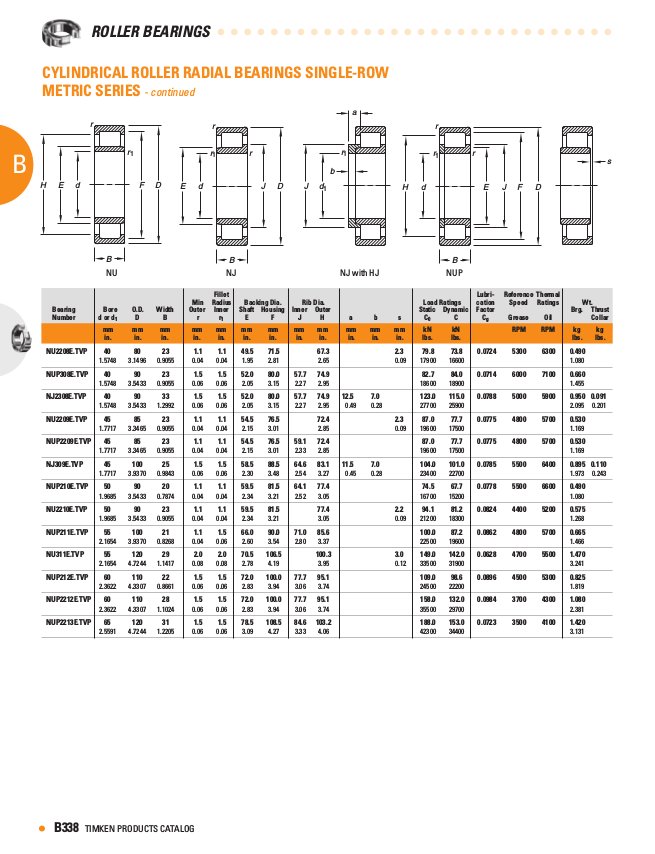
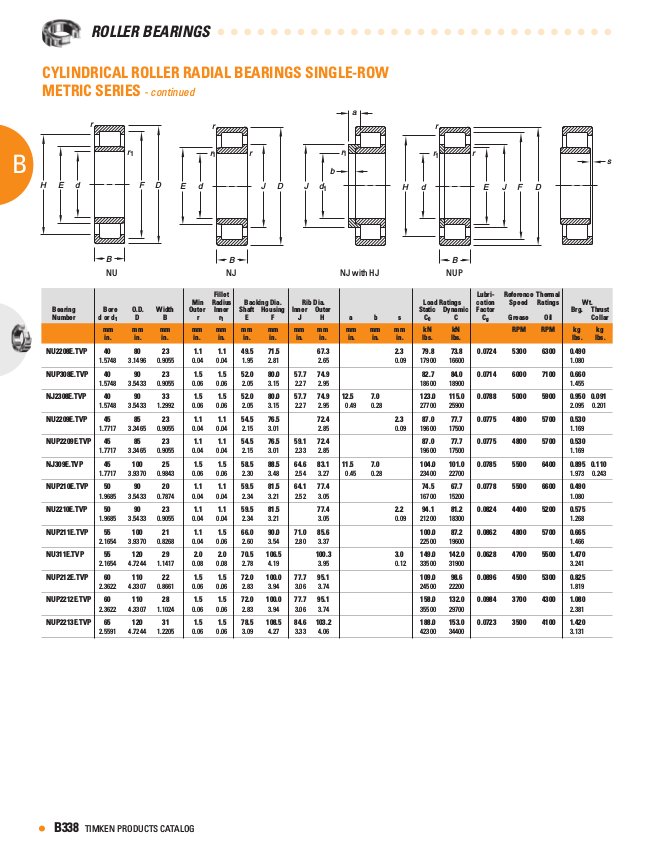
2.500". See the attached timken engineering stuff. Same goes for Koyo
bearings
You can then use the EBAY bearings directly on the shaft. For the
prop flange end use two 38 pins 90 degrees to each other like Ross
did or use the extended point set screw trick. I suggest making a
static test rig for the extended point set screws and apply a 1000
foot pounds of torque. You can use your prop flange as one part and
a short length of tubing for the other part.
Paul Lamar
I already have a 2.250 4130 normalized tubing and I will get within a
day and I don't know the accuracy of the diameter. I saw in the past
you made a sketch for an aluminium made housing, could send it to me
with dimensions so I can check on the Rhino
JEAN PRUDHOMME
The zip has both IGES and 3DM files. Let me know if it loads OK into
Rhino.
Paul Lamar
Paul I did open both files in RhIno Thanks
JEAN PRUDHOMME
If you see anything in here you (or anybody else) would like.... let
me know as I have dwgs on all of it in Rhino 3DM or IGES format.
Paul Lamar
Sure Paul you can send it
JEAN PRUDHOMME
Which one? I sent a couple of dozen.
Quit using that cell phone for email :-) ROFL
Paul Lamar
Anyone so I can get dimensions of parts
JEAN PRUDHOMME
I have a bunch of different prop flanges. How do you want to attach
the prop flange to the prop shaft? What parts do you need dimensions
on? Some of the dimensions are incorrect. all must be checked.
I can't send them all. Too big.
Paul Lamar
Paul I did order a2.5" od by .375 wall 4130 tubing I will pressure
fit both [prop] flange and the planet cage and one side will be fix
by cotter pins and welded together and I am guessing the side planet
will be more appropriate, the flange side with high tensile screws
plus one longitudinal shear pin for alignment both parts and give
more shear resistance. Could you send me the shaft file details so I
can open it on Rheno to check bolt holes and length Thanks
JEAN PRUDHOMME
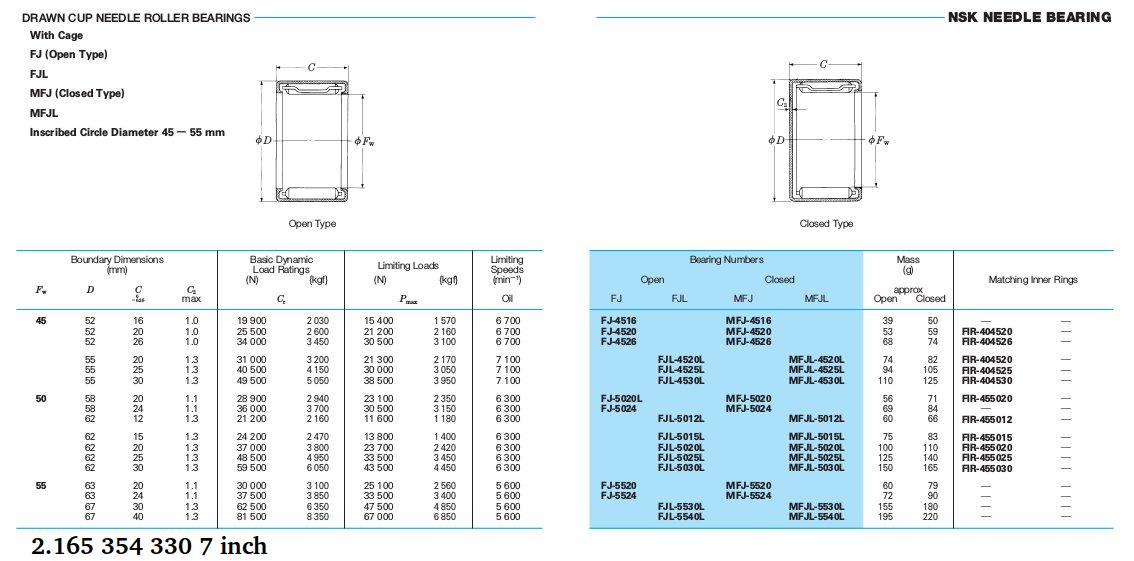
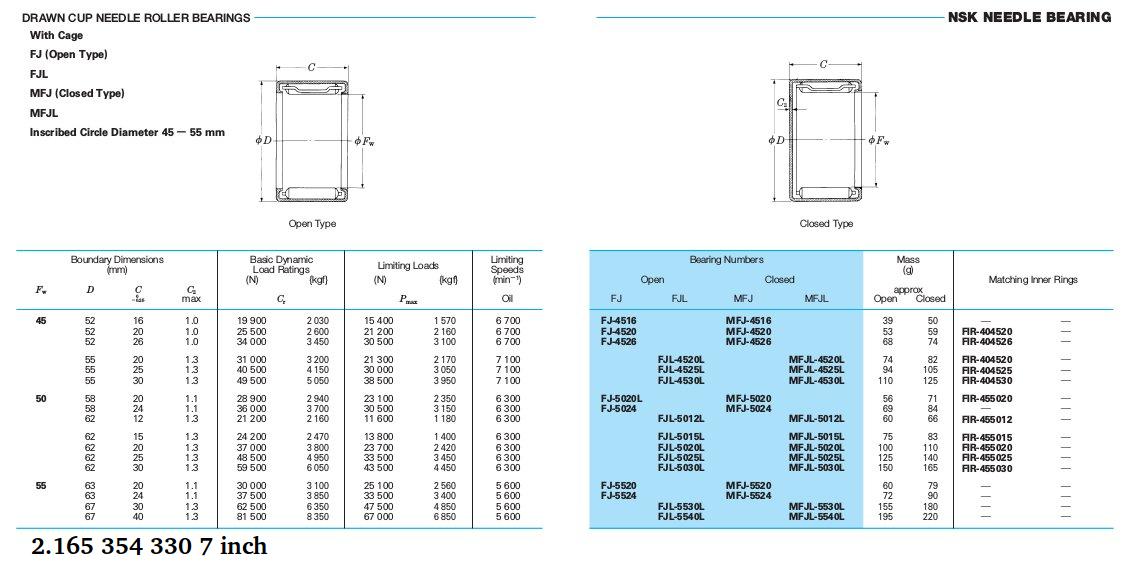
That shaft is too big. I can't find a needle bearing to fit. The
largest I have found so far is 55 mm or 2.165 inch.
50 mm or 1.968 inch is more common. That would be a ground down after
hardening 2 inch tubing size.
Industrial Metals has 4130 2 inch tubing with .120 wall which is
more than strong enough.
You will have to tig weld a flange on like the Ross for the planet
carrier.
Paul Lamar
Paul
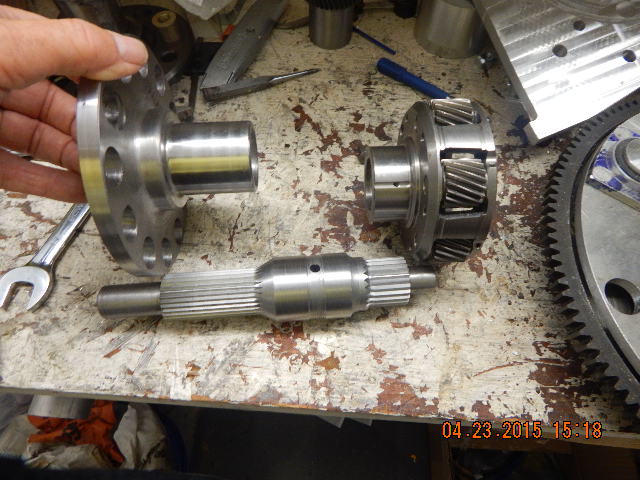
After all it is better to use my shaft set up which the the prop flange
side is treated and the flange hub can support a 45mm id roller bearing
without machining and the other end at planet hub which can be ground to
2'"dia for a needle bearing.
The planet hub can be secure with cotter pins true the splines shaft and
be hidden by a cage press fit needle bearing.
With this shaft it can be use for constant speed hydraulic prop and is
not more weight then your set up and no need screws to hold the mid
shafting and the prop flange can be use from auto parts at $40. and
little bit of machining for the logs location, reduce the outside dia to
6"dia, small 2.250" dia cup made of aluminum for the prop constant speed
oring seal
The threaded end shaft can be at larger threads size to old more trust.
The shaft can be made in quantity, ready and hardener to proper Rockwell
c and easy to assembly on aluminum housing.
The aluminum housing can be smaller at the prop end.
Photos are shown on the bottom
JEAN PRUDHOMME
Do you have a scale dwg? The description does not look like the pictures.
A scale dwg would clear things up.
Is that prop flange aluminium ?
Is the splined shaft aluminium? The planet carrier shown is aluminium.
45 mm roller bearings will take 17,000 pounds of load. Good for rail
road freight cars :-)
There is little or no load on the prop shaft bearings in a planetary
gear box
99% of the time. Worst case 700 pounds in a spin or stall.
They weigh 1.169 pounds each.
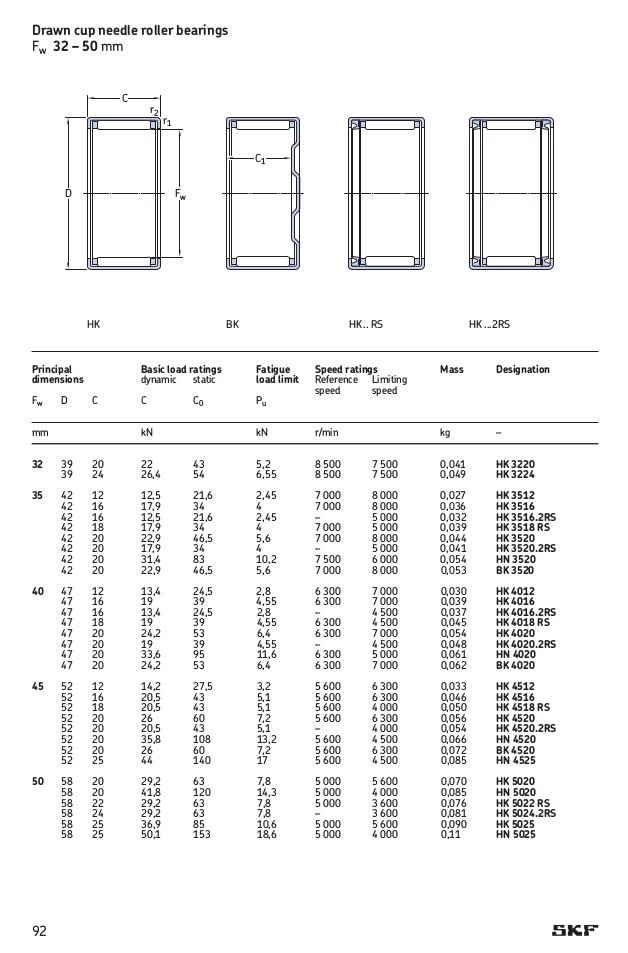
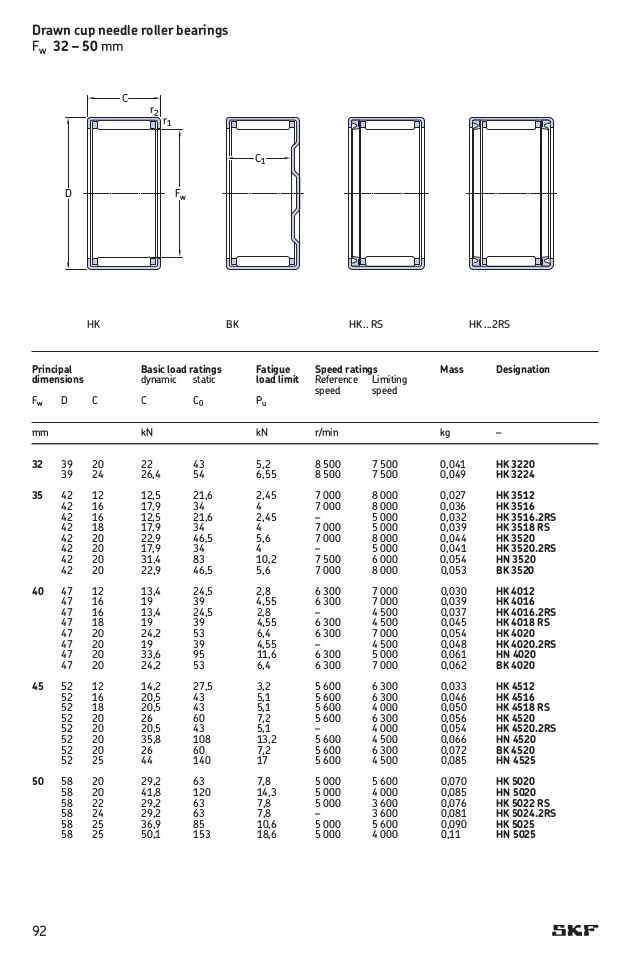
Even 2 inch drawn cup needle bearings are over kill at 4,500 pounds and
they weigh less
than 0.2 pounds each.
Then there is the cost of the bearings. Rollers are probably ten times
more expensive
than drawn cup needle bearings.
Paul Lamar
The Rotary Engine News Letter. Powered by Linux.
ACRE NL web site.
http://www.rotaryeng.net
You Tube
http://tinyurl.com/beqqxas
Store
http://www.rotarpower.com/#!
Copyright 1998-2015 All world wide rights reserved.