Opss forgot the pics.
I needed some dash 4 AN flex hose for the drain back out of Tracy's
PSRU all the way back to Mike Wills custom oil pan.
He had used rigid aluminium line which is a bad idea if is is really
long. In that case is tends to vibrate, fatigue and crack. On our
eight quart oil pans we have thick materiel on the front end to
accommodate a pipe fittings. There was not enough height on Mike's
trick pan to accommodated the necessary materiel and a pipe fitting
for the PSRU drain back.
I used AN dash 4 SS braid instead.
I had to re-educated myself on adding AN reusable fittings to AN
hose. A very tricky thing to do.
These are the best written instructions I have found so far. Follow
these instructions exactly. No skips and no short cuts. Use paper
masking tape. Duct tape and electrical tape tends to melt. Paper tape
burns and remains stiff very important.
The best thing to use for cutting the hose is a hand held friction
saw.
When tightening the back nut clamp the hose in a vice just behind the
back nut. Apply back pressure to the front nut to keep the SS braid
in the fitting.
Paul Lamar
Hi Paul,
Tracy recommends -6 ID at a minimum and notes that there should be no
are dips in the line where oil will pool and cause a small amount of
back pressure. (similar to a turbo oil return in that sense. That
will cause the oil level in the psru to rise and oil will seep out
past the input shaft seal.
SS braid is also overkill on a line that sees no pressure,
particularly over on the cold side of the engine, but I recommend at
least -6. I have always gotten a misting of oil coming out past
that seal because it is difficult to achieve Tracy's goals. I think
that is why Mike used rigid lines, very light weight and easier to
prevent dips. With no pressure in the line a typical crack is
unlikely to be catastrophic.
Food for thought.
Glad to see you putting some time into it.
Dave Leonard
Thanks Dave, for paying attention and checking my work.
I needed an engine to test the LII MS ignition as it is a BIG deal
:-) Patent applied for in 100 countries.
I'll risk it and use a better seal on the input shaft. Tracy used a
too cheap seal :-).
Here is the hot tip shaft seal for this important location. SS
spring loaded Teflon.
How many hours do you have now Dave on your Mazda Turbo powered RV6
?
Paul Lamar
Thanks for the tip on the input shaft seal. I will put one in next
time I take apart the gear box for inspection, probably when I reach
1000 hrs barring any other incident. I think I have about 850 or so
now. Not much flying in the last couple of years.
Great to hear about the ignition.
Dave Leonard
Most people only put 50 to 100 hours a year on their private
aircraft. 850 hours is a lot.
BTW I will let everybody know when there is something to see on the
turbo 650 HP 2 rotor time to climb Harmon Rockets [RV4] and you can
fly in to SZP for lunch. The restaurant is now open again.
The crew don't work on it during weekends and Dan closes the
shop/Hangar when he is in in Sydney or London on a flight so it will
be a moments notice basis. Dan also goes home every day about 4 PM.
Paul Lamar
I have been having trouble lately with dropped messages. The NSA
reads all of these messages as they go over seas. Perhaps they are
having computer problems and are dropping messages. Perhaps it is
the OS I have on my home computer. I have not figured it out yet. If
you get this.... reply to it with "OK".
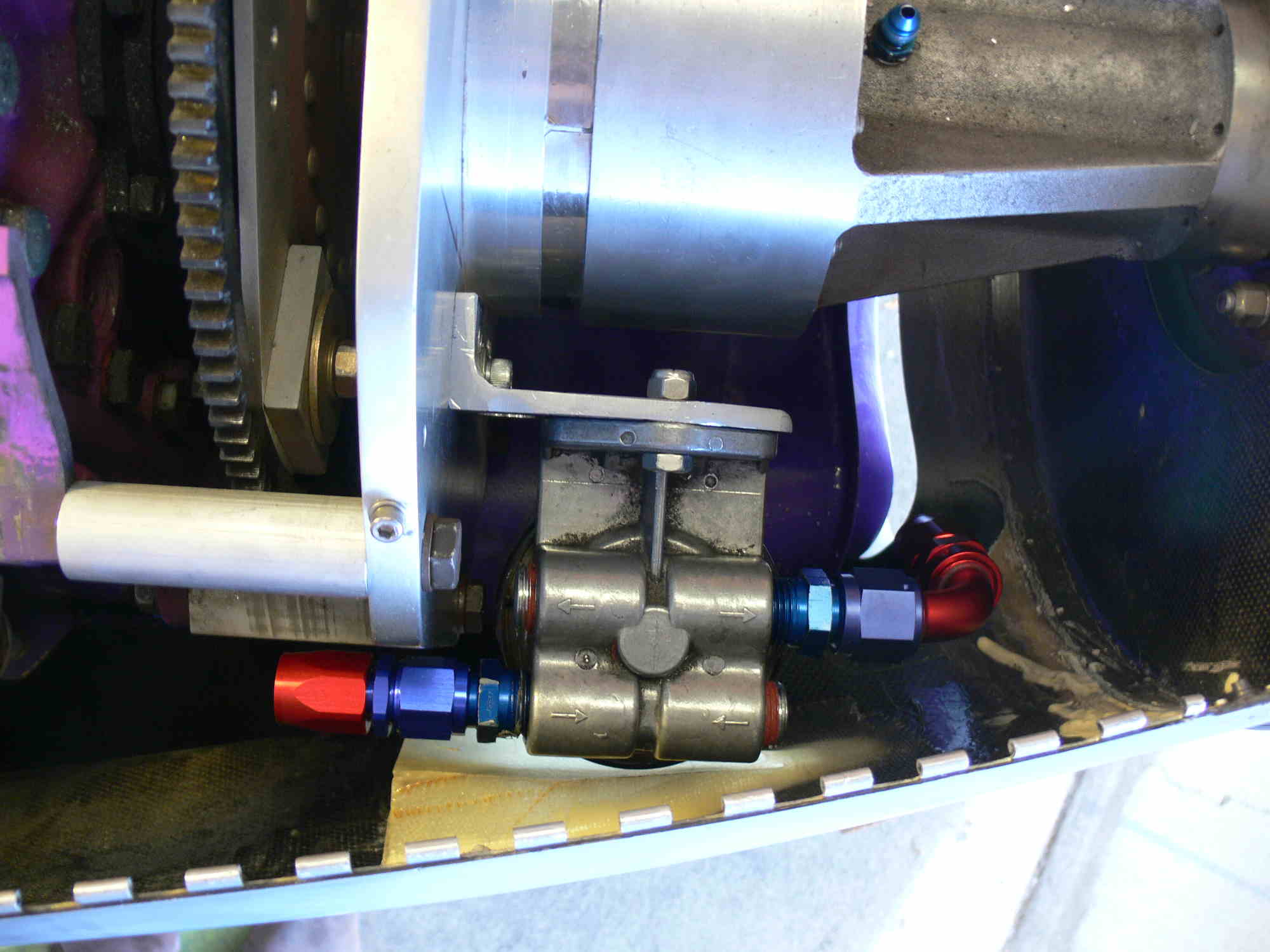
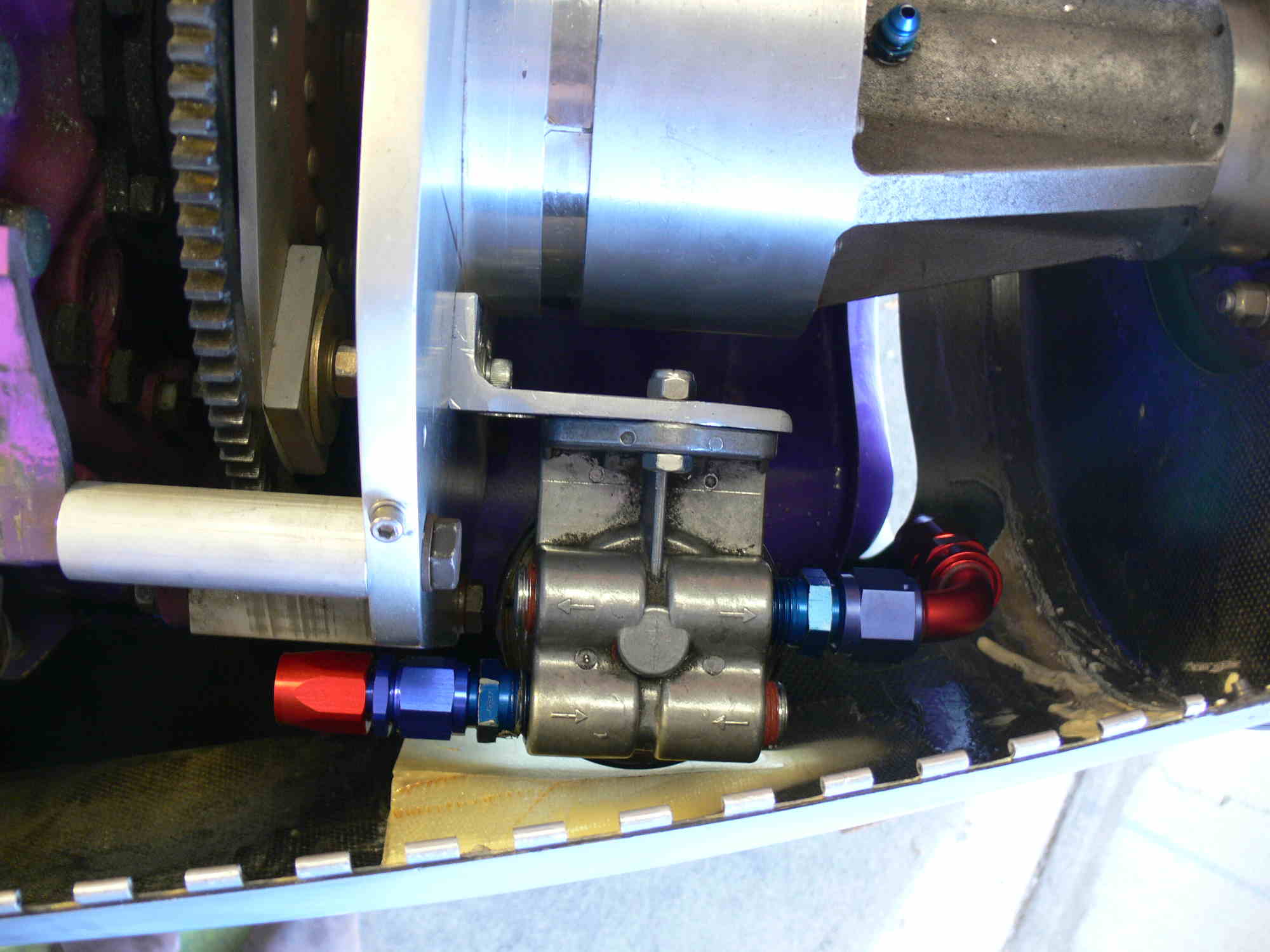
Now here are some more pictures on Mike Wills RV4. There appears to
be enough room to get all four LII coils mounted behind the motor
mount. 2 on the inside of the MM tubes and two on the outside of the
MM tubes. The closest to the cowl is the oil plumbing. The filter
should be the first thing out of the oil pump as it is not a good
idea to send debris to the oil cooler.
Paul Lamar
Ah, but it is a worse idea to send debris to the engine, debris
that may
have been been picked up in the cooler. Besides, mazda seemed to think
cooler first was good enough.
Enough of a wash to make further changes not worth while?
Dave Leonard
That is interesting that Mazda choose the oil cooler first.
Any idea for the rational for doing this?
I suspect it was convenient on the RX7 as the oil cooler could
simply be
mounted on top of the aft end housing. How did the debris get in
the oil cooler?
It is nearly impossible to clean a Mazda oil cooler as they have
turbulators
inside the tubes.
The rotary does not have as many wear surfaces to generate debris in
the first place.
I have to move the oil filter anyway so I might as well place it
first in the chain
for the above reasons. The dash 8 gave me the room to use the
smooth curved
hose ends.
Sharp right angle oil fittings drop the oil pressure and add heat to
the oil. There is a way of doing away with the front cover oil outlet
and taking the oil out of the pump more directly. Unfortunately
you need to
do that when the engine is disassembled. Rumour has it this drops
the oil
temperature 10 degrees.
Certain after market remote oil cooler fittings do the same. The
one I have
is in that category. JPG 2 is better than jpg 1 but jpg 1 is the
one I have and it is
easier to plumb is this situation.
Paul Lamar
Well, I suppose that debris could come from the oil cooler either
because a) it is new and there is something left over from the
manufacturing process, b) it is not new and was previously used in a
cooler-first setup, or c) bits of corrosion or fatigued broken-off
innards. But those are really minor concerns. My point was that it
probably does not matter much which order things go. I am sure you are
right, Mazda did it for convenience, and we should too. Which ever order
is more convenient is good enough.
I must admit that I’m having a hard time believing the 10 deg of oil
cooling for straightening out that single 90 deg bend. Though there is
not doubt that it is wack the way Mazda did it. Has cost more than one
rebuild due to the famous front cover oil o-ring seal, not to mention
the 90 degree harsh angle bend.
Dave Leonard
Lynn Hannover came up with that as I recall. There is something like 30
gallons per minuter going through
the oil system as I recall and a sharp right angle will cause a lot of
turbulence. Turbulence takes energy
and energy translates to heat of course.
I am very proud of this filter installation. The breakthrough came in
rotating the filter 90 degrees
on its axis with an angle bracket. This now frees up a lot of room for
my new high speed ignition
system. Five or six sparks at any RPM.
The oil coming in from the pump is now a straight shot in and the oil
going to the cooler
enters a smooth 90 degree hose end. It now fits in Mike's tight cowl and
the filter can be changed
with out removing the lower cowl half. This should work on most rotary
powered aircraft using
the PSRU adapter plate and universal motor mount.
The pipe plugs blocking the unused filter ports have magnets on them to
hopefully capture
any ferrous debris.
Paul Lamar
The Rotary Engine News Letter. Powered by Linux.
ACRE NL web site.
http://www.rotaryeng.net
You Tube
http://tinyurl.com/beqqxas
Store
http://www.rotarpower.com/#!
Copyright 1998-2015 All world wide rights reserved.