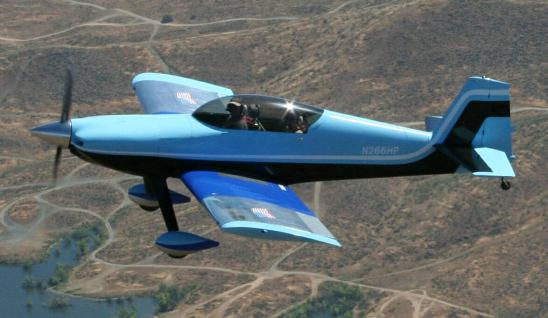
The record is currently held by a WW II Bear Cat in under 2 minutes I think.
Dead stop to 10,000 feet.
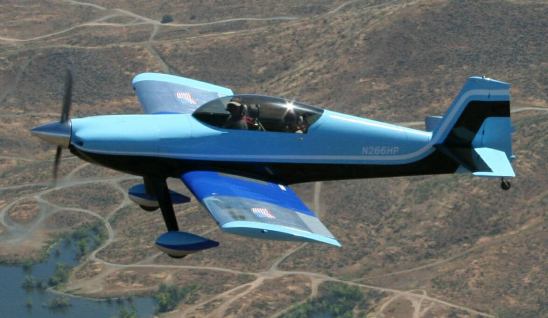
Jim Mederer and Racing Beat crew are currently working on
a 650 HP 2 rotor powered experimental aircraft for a well funded attempt
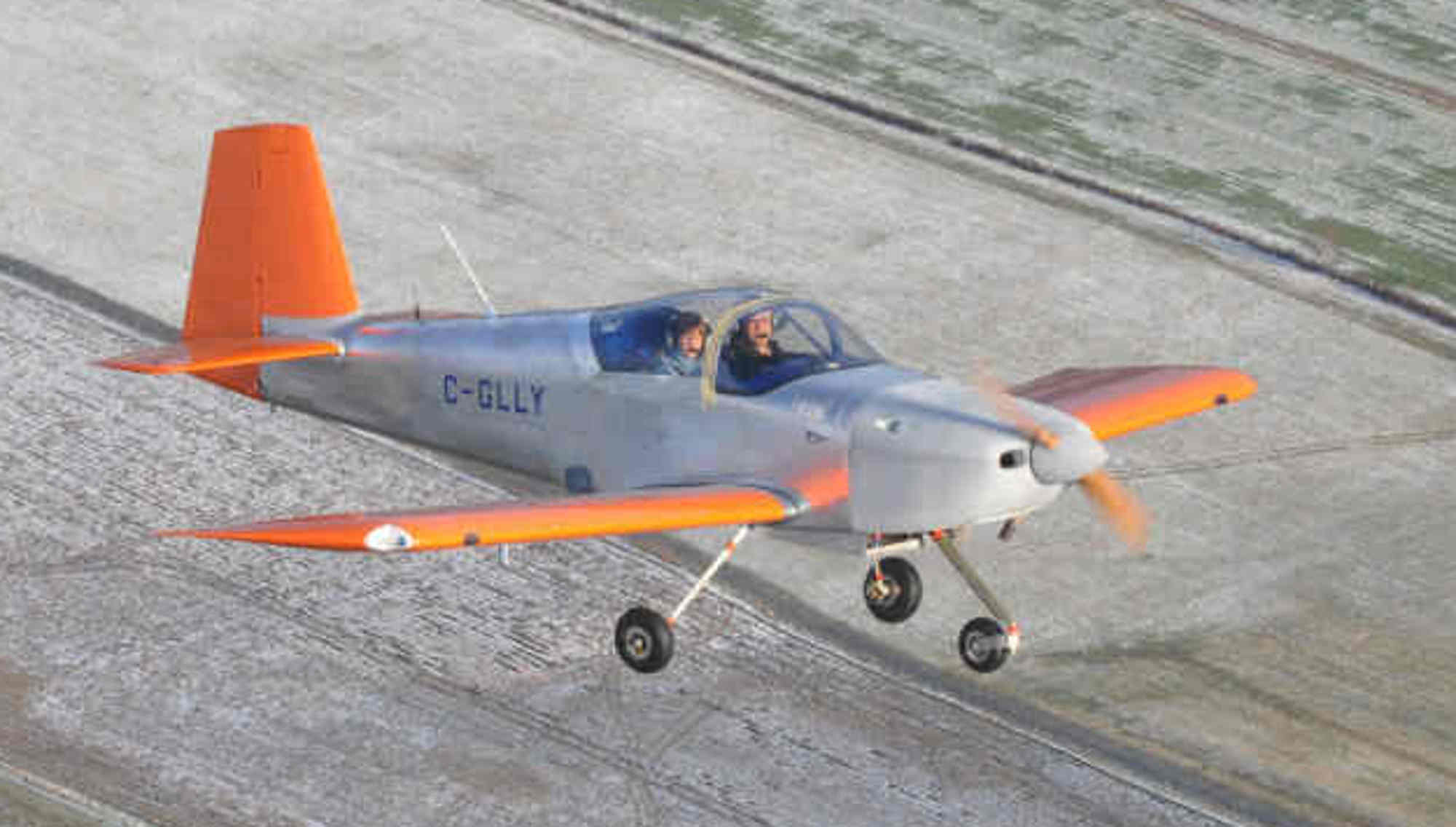
at that record. A Power Sport rotary powered RV4 currently holds the
unofficial zero to 3000 feet record in just under one minute using NOS.
Obviously
the high power
to weight ratio of the Mazda rotary is key.
Jim ran into over heated spark plug problem at around the 500 HP level when
run for several minutes on the dyno.
Here is what Steve Beckman said about the subject. Steve was Everette
Hatch's partner at Power Sport.
Paul good to hear from you.
First, I got a laugh out of your note to Jim about you telling him I might
be still alive. It reminded me of Mark Twain's quote, Rumors of my death
are greatly exaggerated. In this case, over the past few years your
comment was not a great exaggeration, as these damned doctors have cut a
few chunks out of me. But still above dirt although slowed. I apologize
for not yet being up to speed.
Sounds like an interesting engine Jim has in the works. I sure hope he
pulls that off to help keep the rotary engine (and parts) alive and
available.
I wish I had all my files and photos handy. But when I was out of the
saddle a while back, and an army of grandchildren and their parents
abusing my computer, that Bill Gates special crashed. Bought a Mac and
need to have someone above my pay grade in that area to find out what if
any electronic files I have left and get things squared away. That was a
lot of years reference work. Meanwhile I don't have anything. The wife
and grandkids stuff has banished my hard copy rotary files to storage in
the attic. When able I get up there and see if I can come up with photos,
drawings, etc.
But here are a couple of related observations as I can remember them.
I apologize for errors and omissions, I know there will be some, as I am
working from memory and right now there is not a lot to be said of that.
To understand what we did with cooling in the SuperLight engine requires a
little background of that one engine. We did that test engine hoping it
could be used for a possible NASA/military drone project. The cooling
system worked flawlessly but the engine was so damned complicated and
expensive to build it was not economically viable for a general market
aircraft engine. We learned a lot from it but unfortunately nothing in the
engine would work with any of the other engines, including those with
modified Mazda side housings.
That cooling flow was center in and modified axial flow path. Cold
water from the heat exchanger swirl pot entered the engine at the fitting
in top of the water manifold and included jets at both spark plug bosses.
The flow was basically into the engine in the middle, then flowing fore
and aft, returning from front to center and back to the center housing.
The integral front and rear side housing engine mount ears you see in my
photos are hollow. They were used for directing and routing coolant flow.
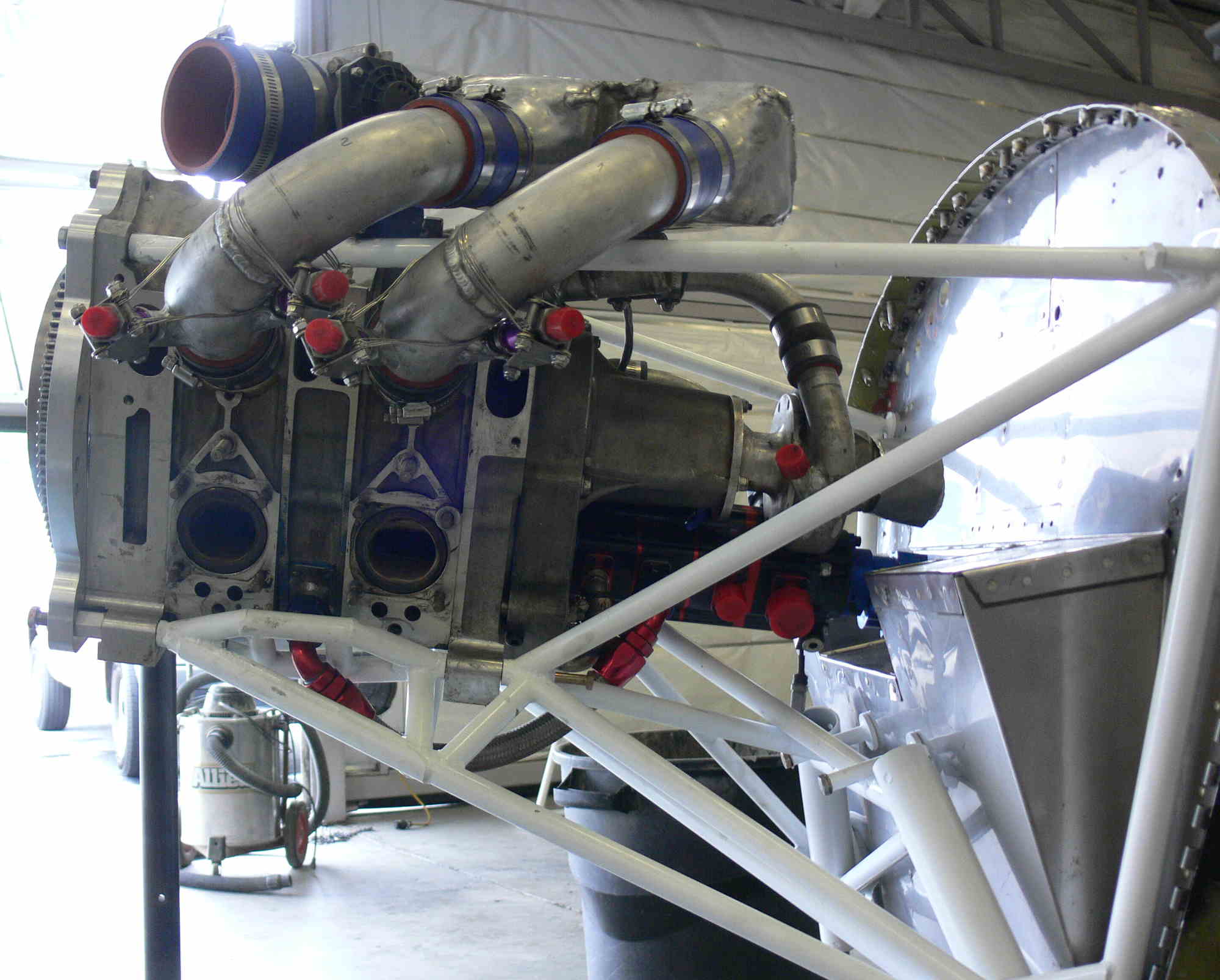
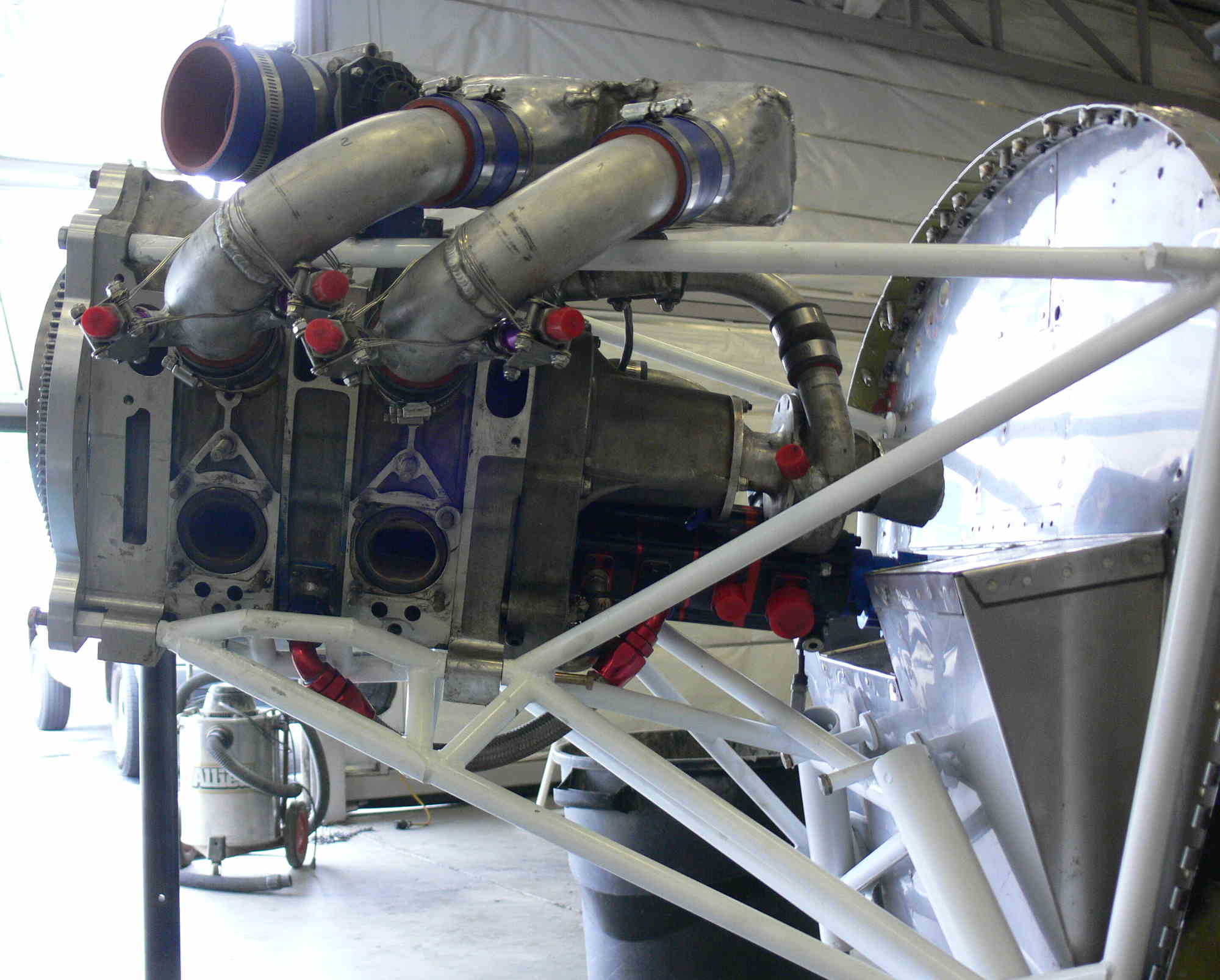
In the photo I took in the hangar with the reduction gear removed for
inspection, on the left side of the installed engine you can see the
convergent flow exit in center housing where water flowed out of the
engine back to the heat exchangers.
The one photo of the modified Mazda rotor housing shows only a part of
what was required. Also need to see the cooling inlet manifold and
details. Unless my wife accidentally pitched some of my hard copy files,
there should be drawings of both the rotor housings, jets and water inlet
manifold. I remember putting in the file my drawing for the foam pattern
I cut to cast the manifold (using lost foam). It has views that include
final machined/fabbed piece you see in the photo. I sure hope this stuff
did not get tossed or lost between here and storage.
Jim probably knows as much as anybody alive the challenges and limitations
imposed by high heat flux in the combustion area in the rotor housing. For
moderate duty cycles the stock Mazda rotor housings were very good for us
with absolutely no cooling mods. But when we started configuring the
engines for more power at sustained WOT, high power output, that all
changed. Will never forget the first time we ran full tilt for 100 miles.
At least in a road race or Pikes Peak car the driver has to lift from the
loud pedal and brake for corners. And with that power output in a light
car it is probably under 10 min to top? But even in that time, it is a
helluva lot of heat to deal with. And thin air, together with airflow
slowing down for slow corners, from halfway up. A tall order. But it is
amazing what Jim has been able to do with these high output engines. It is
great to see him still swinging for the fences.
When I am able, I will get up in the attic and see what has survived of my
files.
Steve
End quote
Paul wrote:
Here are some pictures from my Power Sport files.
Also here is my suggested 3D spark plug cooling solution.
Thanks to Larry Childs for the excellent 3D of a Mazda
rotor housing. Power Sport was the originator of
the spark plug cooling idea.
It requires a separate cooling system using
a tank of acetone and dry ice and an electric pump. We only
need severally minutes worth of spark plug cooling
and then hopefully we will be at 10,000 feet if
the airplane does not snap roll on take off and crash :)
We need to make sure to brief the pilot on what he
is up against :)
The spark plugs themselves will have to be machined to reduce
the size of the hex. Of course a smaller socket will be required
to install them.
Paul Lamar
Paul, would give us an overview of what, and how the 3 engines
in the pics came about.
Thanks, steve carlisle
I don't really know the whole story. Here is all I know. This was in the
1990's.
Everette Hatch and Steve Beckham formed a company called
Power Sport to developed rotary engines for aircraft. Both were pilots.
Everette owned a farm in Oregon with an airstrip on it.
Everette had a dyno and was an engine builder for various local car racers
and hot rodders.
They would compete at Sun n Fun each year. Sun N Fun had a 100 mile
cross country
air race. Also a time to climb to 3000 feet contest.
Everette died in a mysterious high speed split S into the ground near
his home. Some think he had a heart attack.
When Everette died the company was sold to a company in Wisconsin.
That is a whole nother story.
Perhaps Steve can fill us in on the old Powersport
Here is a pdf about the light weight engine and some old pictures.
Paul Lamar
Paul, that for that intro, looks like lots of sweat and tears went into
that project.
Looking forward to hearing more about it.
Thanks again, Steve Carlisle
Latest state of the time to climb project.
Work is now being done in Dan Grays hangars at SZP.
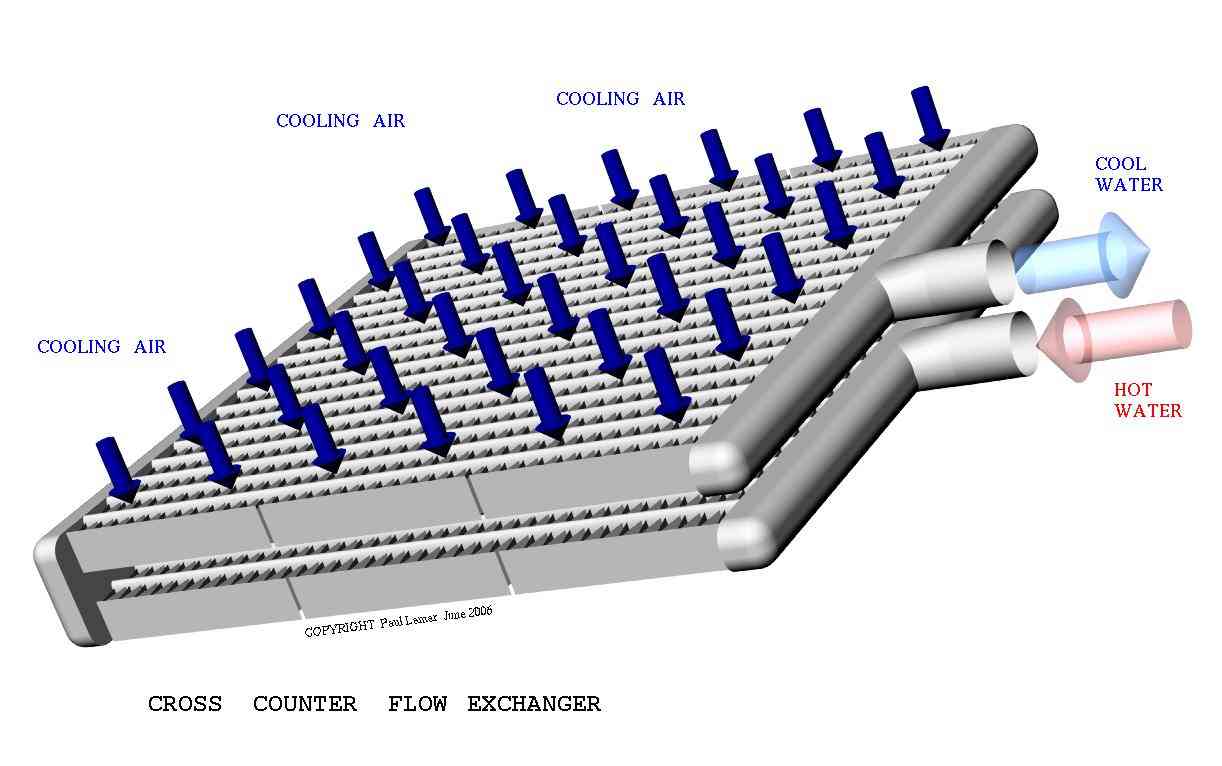
One of the major challenges is to get a 650 HP rotary to cool during a
high climb rate.
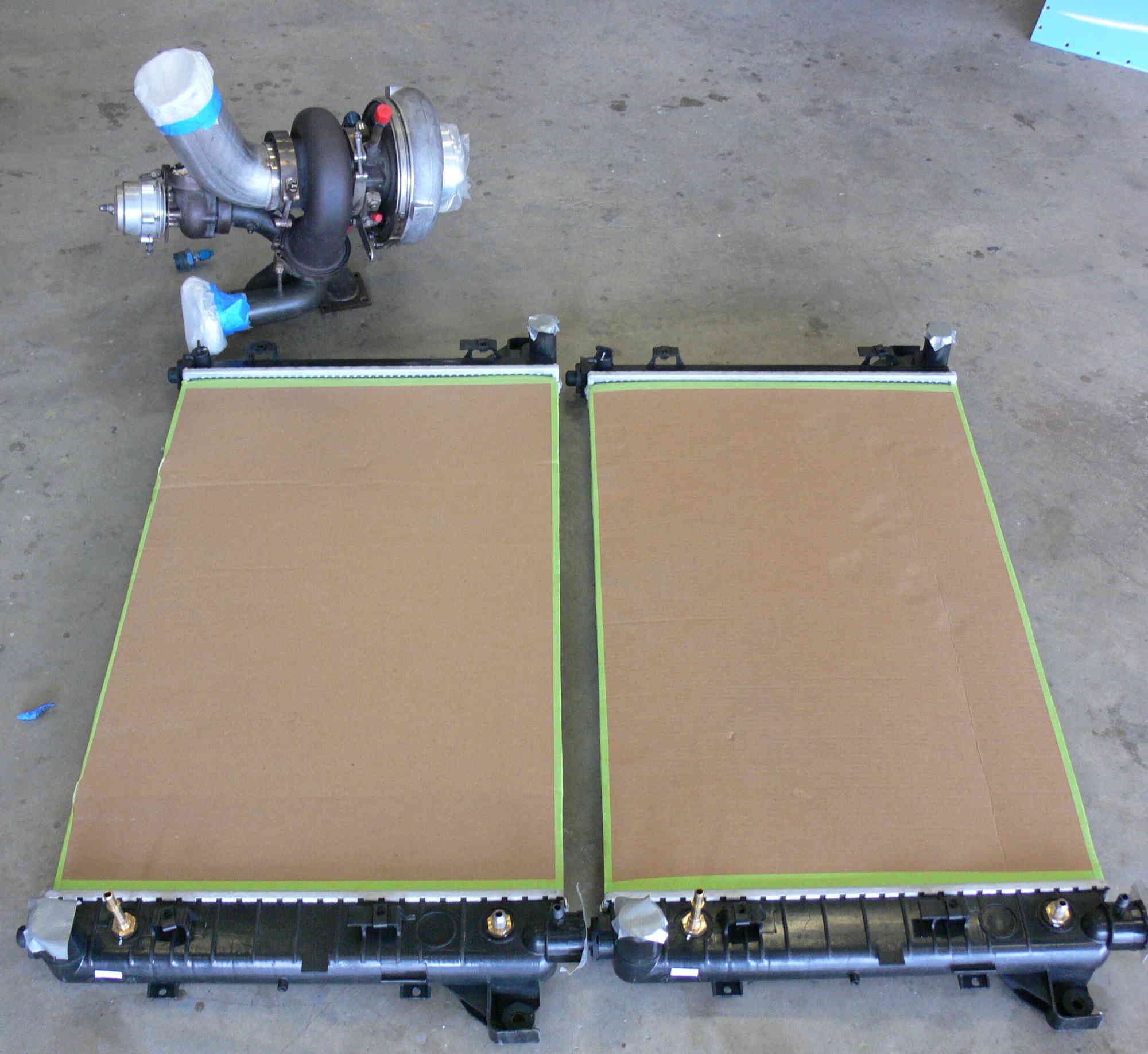
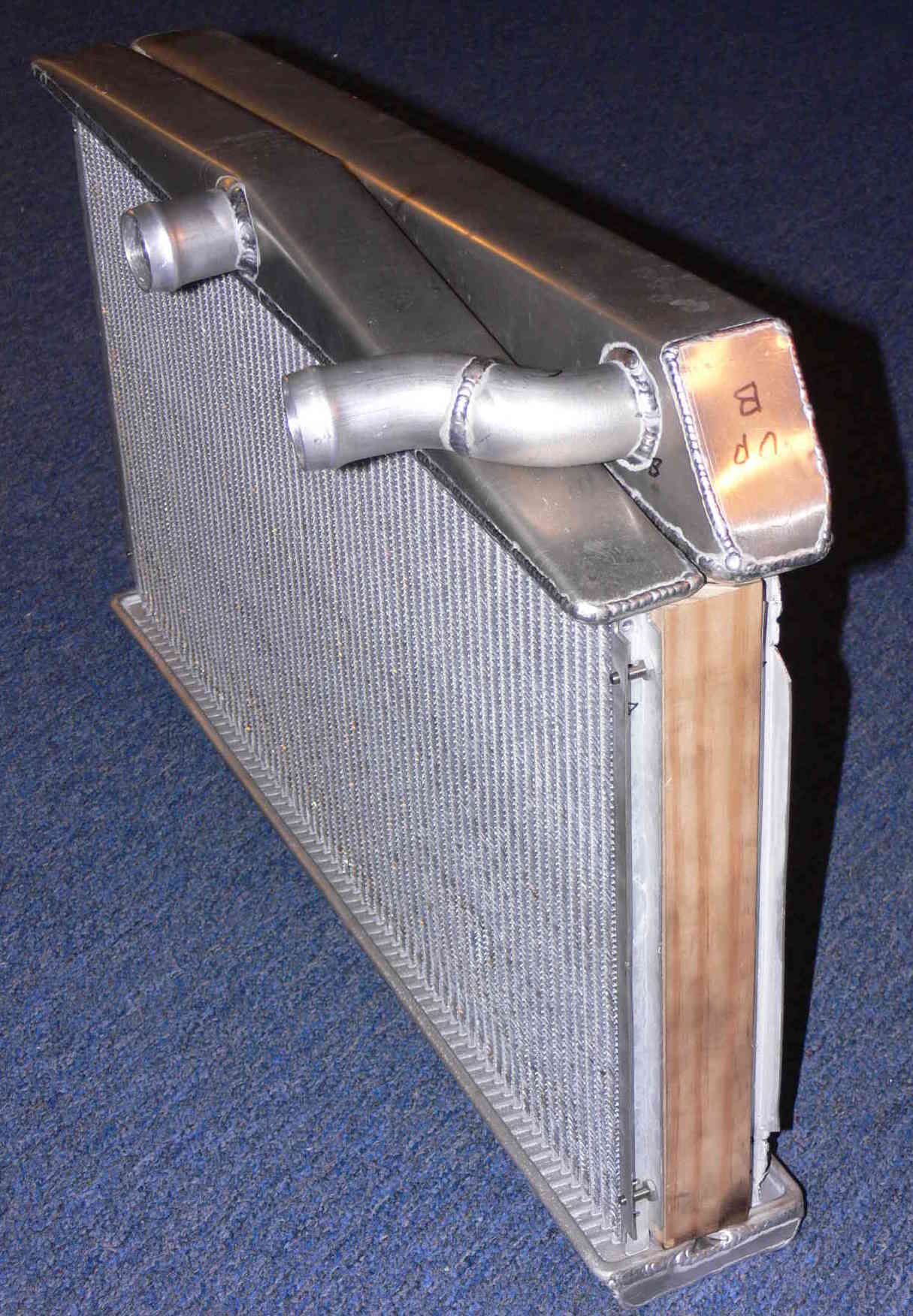
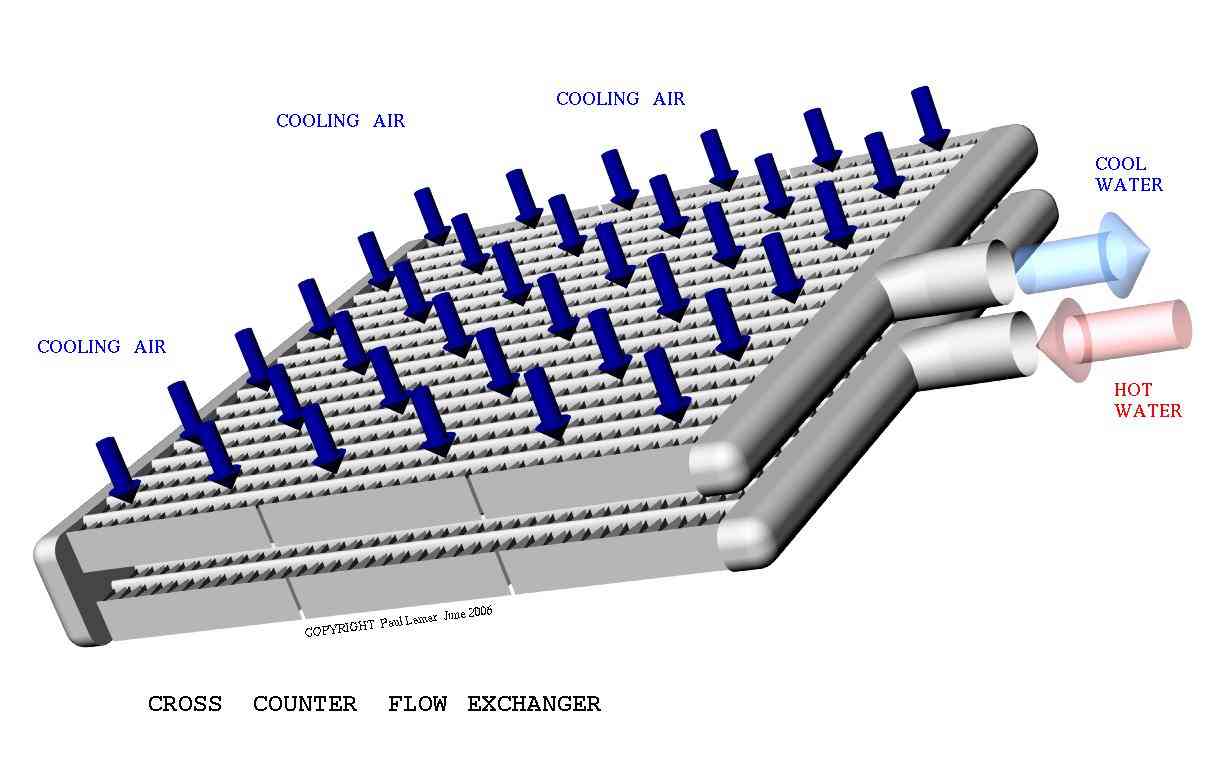
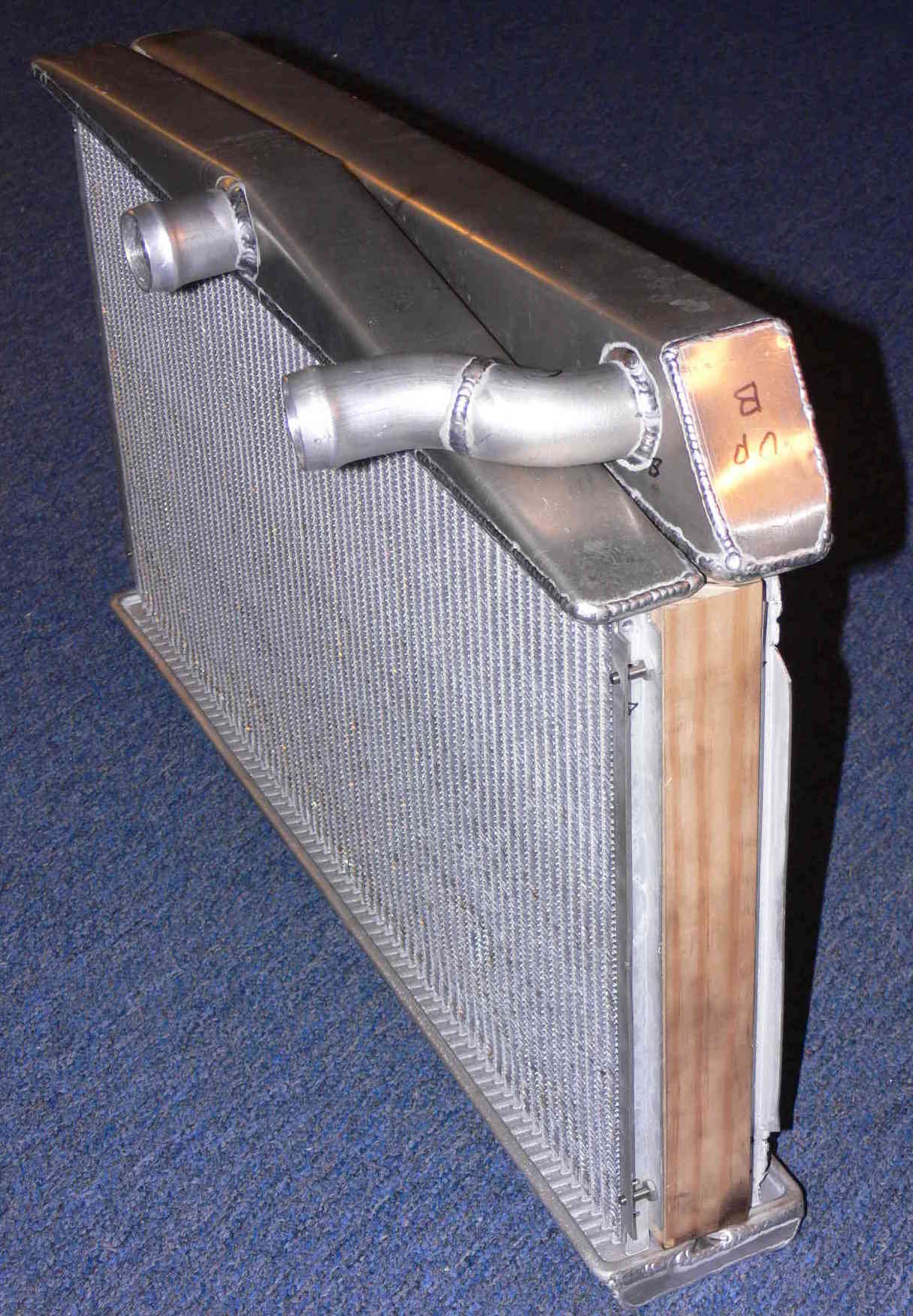
We are going to use 2 Dodge truck rads back to back in a counter cross flow
configuration. It will be mounted under the fuse in a quick and simple
config.
This simplifies the plumbing as both hoses come in and out
of the front end.
The cores are thermally separated by two cores with 1.5 inch wood strips.
(low heat transfer) Don't let the in-tank touch the out-tank.
Paul Lamar
The Rotary Engine News Letter. Powered by Linux.
ACRE NL web site.
http://www.rotaryeng.net
You Tube
http://tinyurl.com/beqqxas
Copyright 1998-2014 All world wide rights reserved.