Cross counter flow is a more effective heat exchanger.
Here is the sequence for welding the rads to make a cross counter
flow heat exchangers.
Butt tig weld the in and out tanks first by cutting off all tabs on
the rads.
Don't weld the in and out tubes on yet.
They will be marked for position on the tanks while on the aircraft.
Then the large holes for the tubes will be cut and then the tubes
will be welded over the holes. The tank design will vary depending on
cool side mounting or bottom mounting. The TTC is a bottom mount.
Most other aircraft use a cool side mount. The 3 rotor allows longer
rads to be used. Put the diffuser between the rads and the engine.
See my book How to Cool your Wankel for more info.
After the tanks are done (with out the holes and tubes) bolt the
rads together with the wood strips leaving 1/2 to 3/8 of an inch
between in and out tanks.
The idea here they must not touch each other. The wood strips are
heat insulators between the two rads.
Then weld an aluminium strip 1/2" to 3/8" wide at the other end.
Finish by boxing in the other end (the front end).
Weld on them some and let the rads cool some what. They are brazed
together at only 1100 F so it is important to not get them too hot.
Wet rags around the ends of the fins and tubes might help.
Here are a bunch of pictures attached. The JPGs were Dodge Neon rads
and not the truck rads. The TTC rads will be welded soon.
Apparently when Mercedes owned Chrysler they implemented some up to
date heat exchanger technology. IMHO Chrysler rads are now the best
from an efficiency point of view I have found so far. Honda also uses
up to date tech but they are more expensive.
Paul Lamar
What about a dual pass rad already done?
http://www.jegs.com/i/Allstar-Performance/049/ALL30048/10002/-1
-Matt Boiteau
It will probably work but you will be paying a weight and drag penalty.
I don't know how much on the drag penalty. We don't have any comparison data
on the drag yet. The weight of the core with water will be at least
150% of the cross counter flow Dodge truck rads.
Paul Lamar
For maximum efficiency, you don't want to use the flow pattern described in
their (Allstar's) text, use the pattern from Paul's book. The top core
(or first core
exposed to cooling air) is the second core the coolant flows through.
This better utilizes the Delta/T thermal transfer to the cooling air
flow. Read Paul's
book for counter cross flow cooling theory.
C. Smith
Craig, can you send me that Allstar text. I found their web site but I
can't find anything
about that. Apparently they use two rows of one inch tubes . The Dodge
truck rad is one
row of .7 inch tubes.
http://www.allstarperformance.com/instructions.htm
In theory one could cut the AllStar rad apart into a top and bottom for
a cross counter flow
reconfiguration. That would give more core volume if two Dodge truck
cores were
not enough core volume . Slightly less efficient however.
The basic idea is you want as large a frontal area you can fit in the
cowling with core
volume of about 500 inches. The Dodge truck core are about 465 cubic
inches and will probably work with 250 HP. We now have about 930 cubic
inches
in the time to climb rad which I am guessing will be good for about 500 HP.
I suspect the time to climb cross counter flow rad is not enough core
volume for 650 HP and
we will have to spray cold water on the assembly.
We used think we needed 650 cubic inches for 250 HP and that was before
we discovered
the the much improved Kays & London wedge diffuser.
Ian in Perth Oz did some experimenting with a Kays & London S shape
diffuser lying
on it side and was able to reduce the size of the air intake to 10 to 15%
of the core frontal area. That, in theory, reduces the cooling drag.
Ian routinely flies
around the outback.
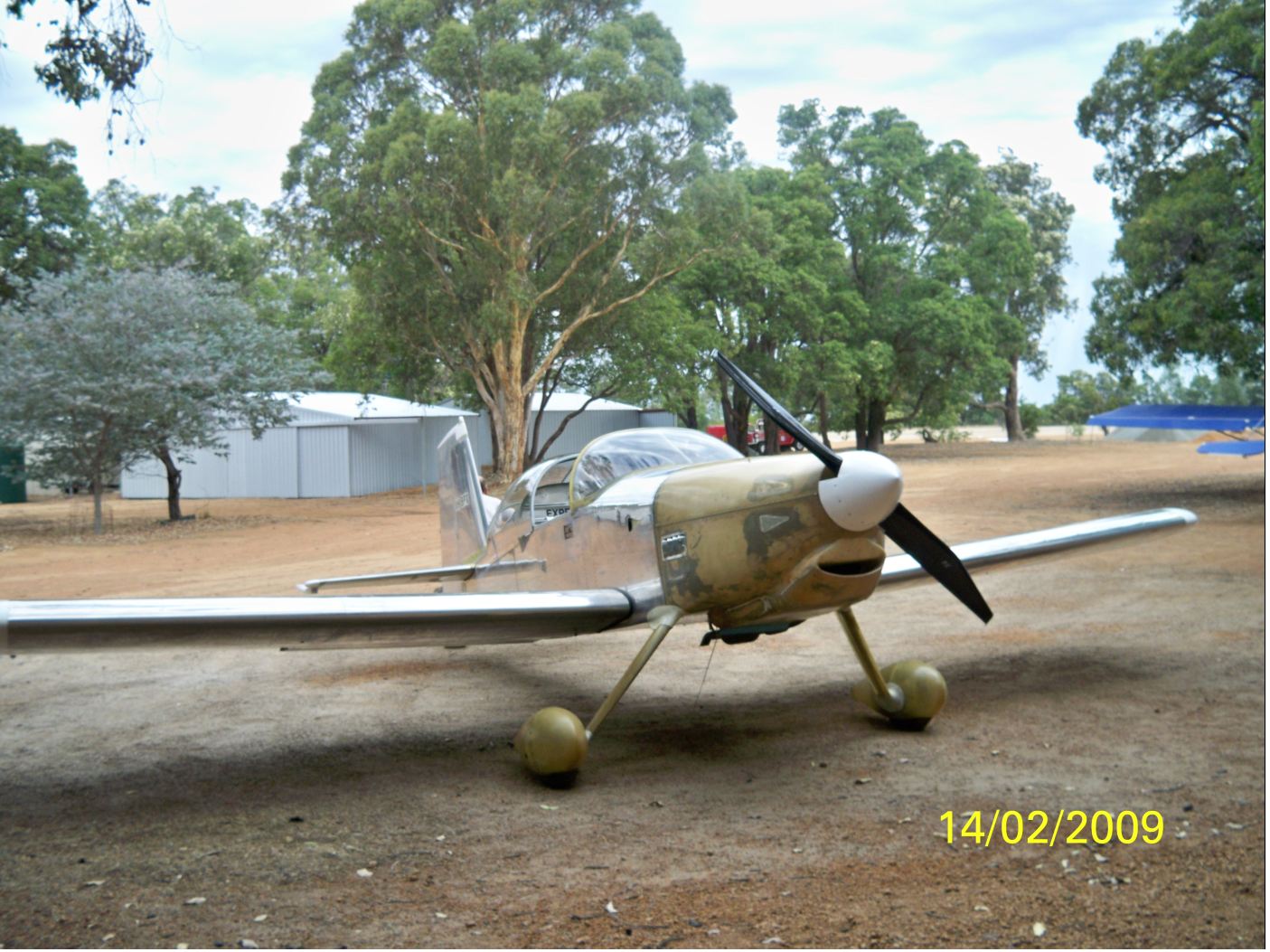
Ian has built two RV6's powered by rotaries. The first one crashed when
a hose
blew off a rad with out a bead on one of the tubing ports.
Paul Lamar
The Rotary Engine News Letter. Powered by Linux. If you want off the
list PLEASE let me know and I will remove you. ACRE NL web site.
http://www.rotaryeng.net <http://www.rotaryeng.net/>You Tube
http://tinyurl.com/beqqxas
Copyright 1998-2015 All world wide rights reserved.