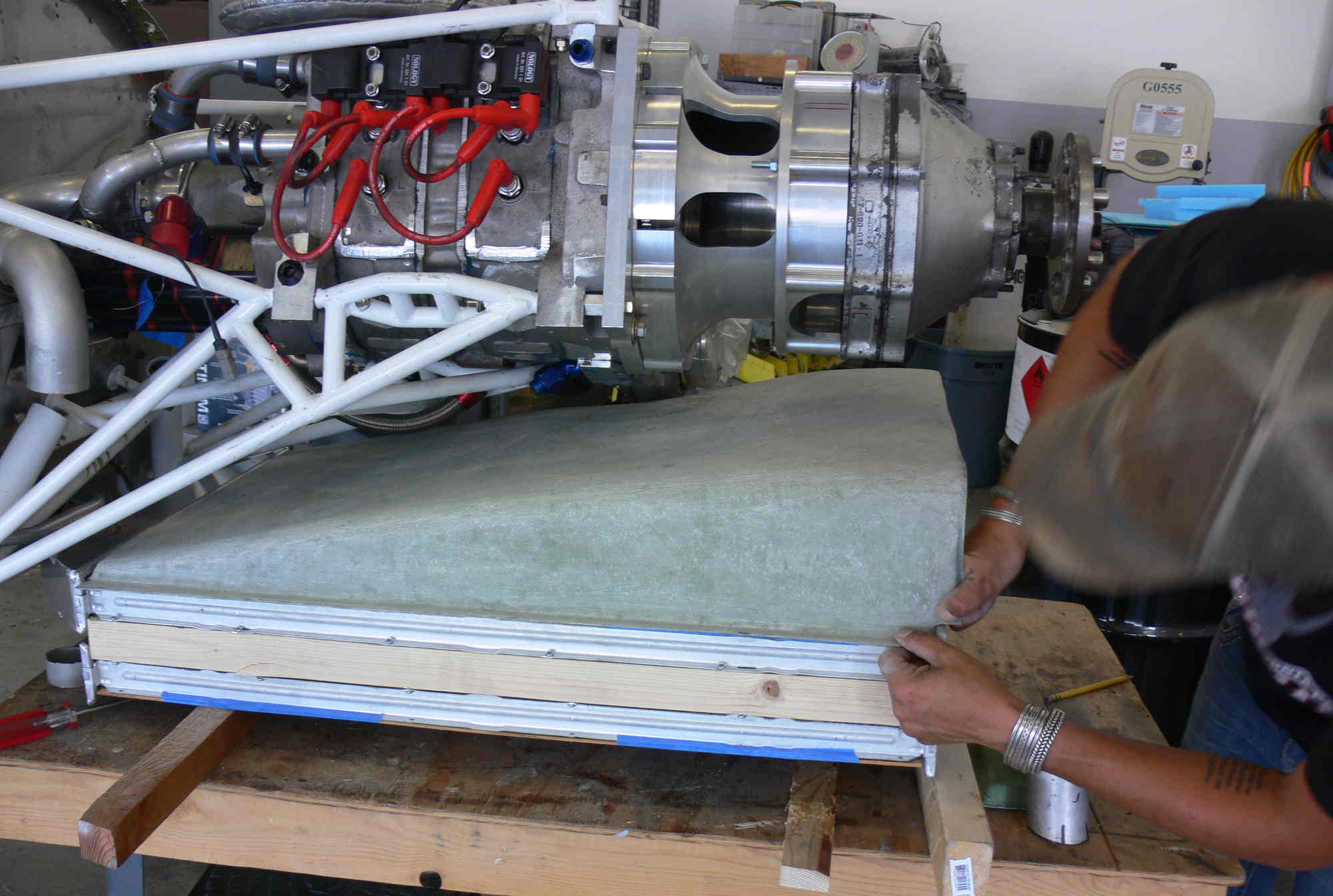
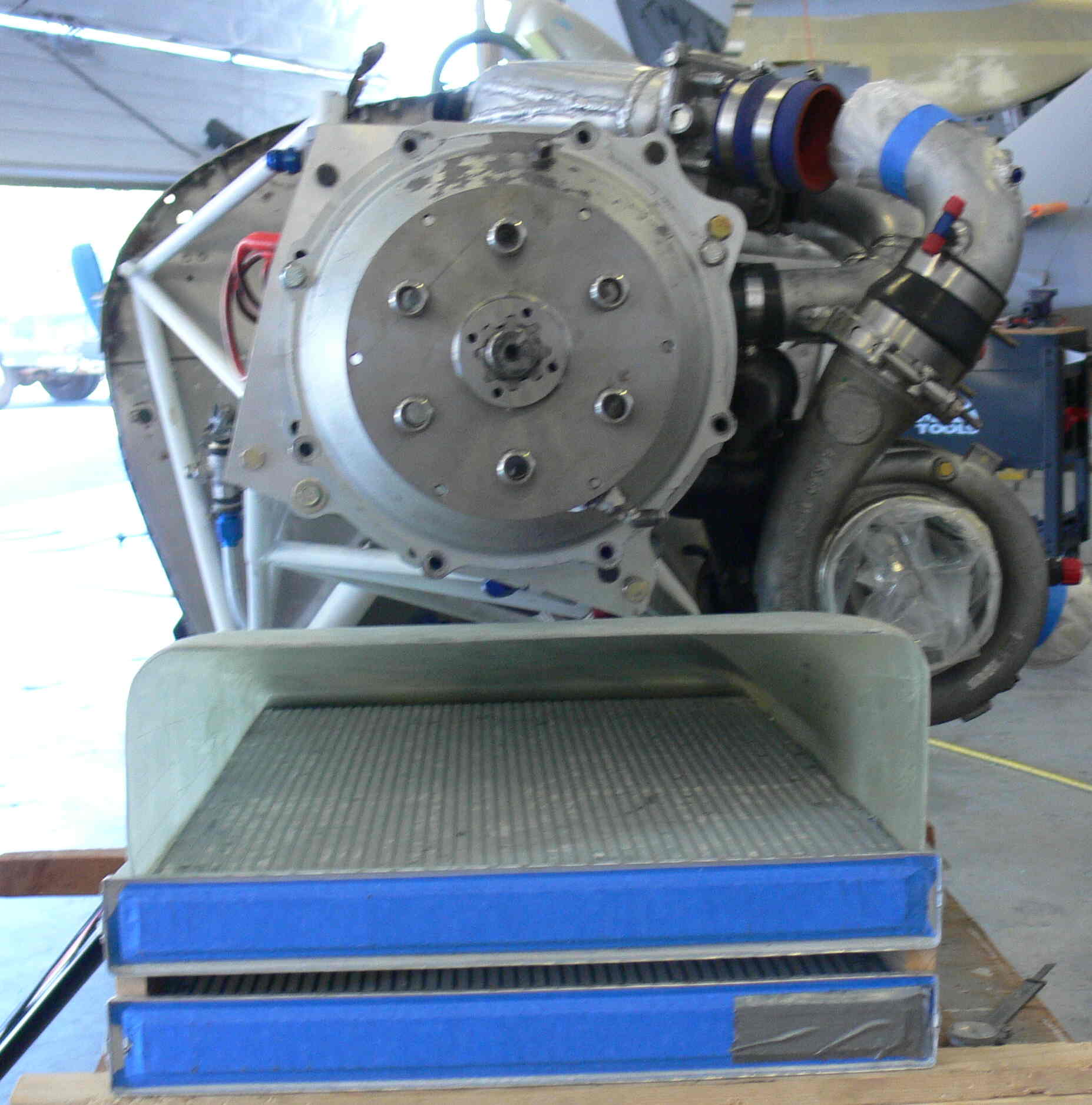
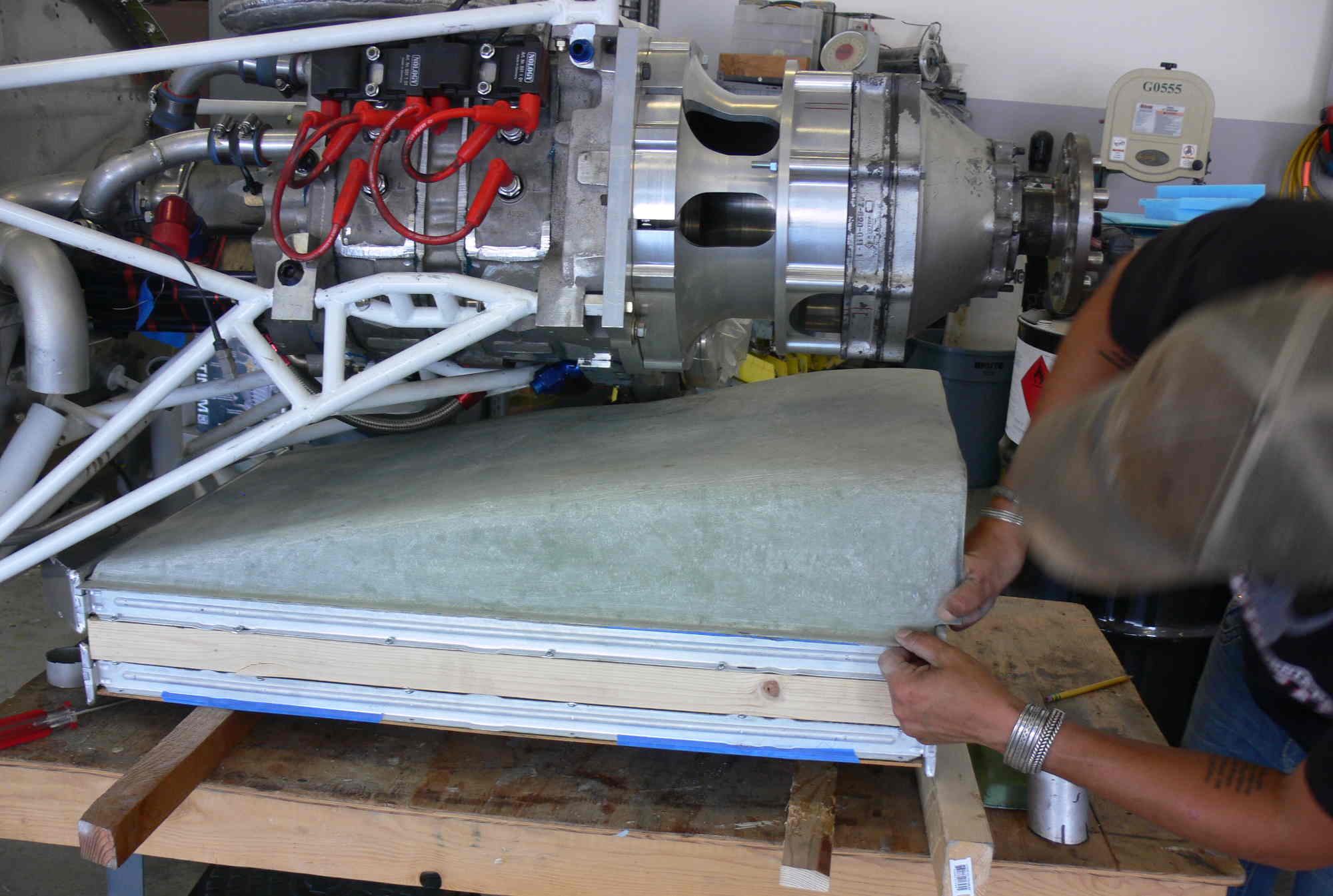
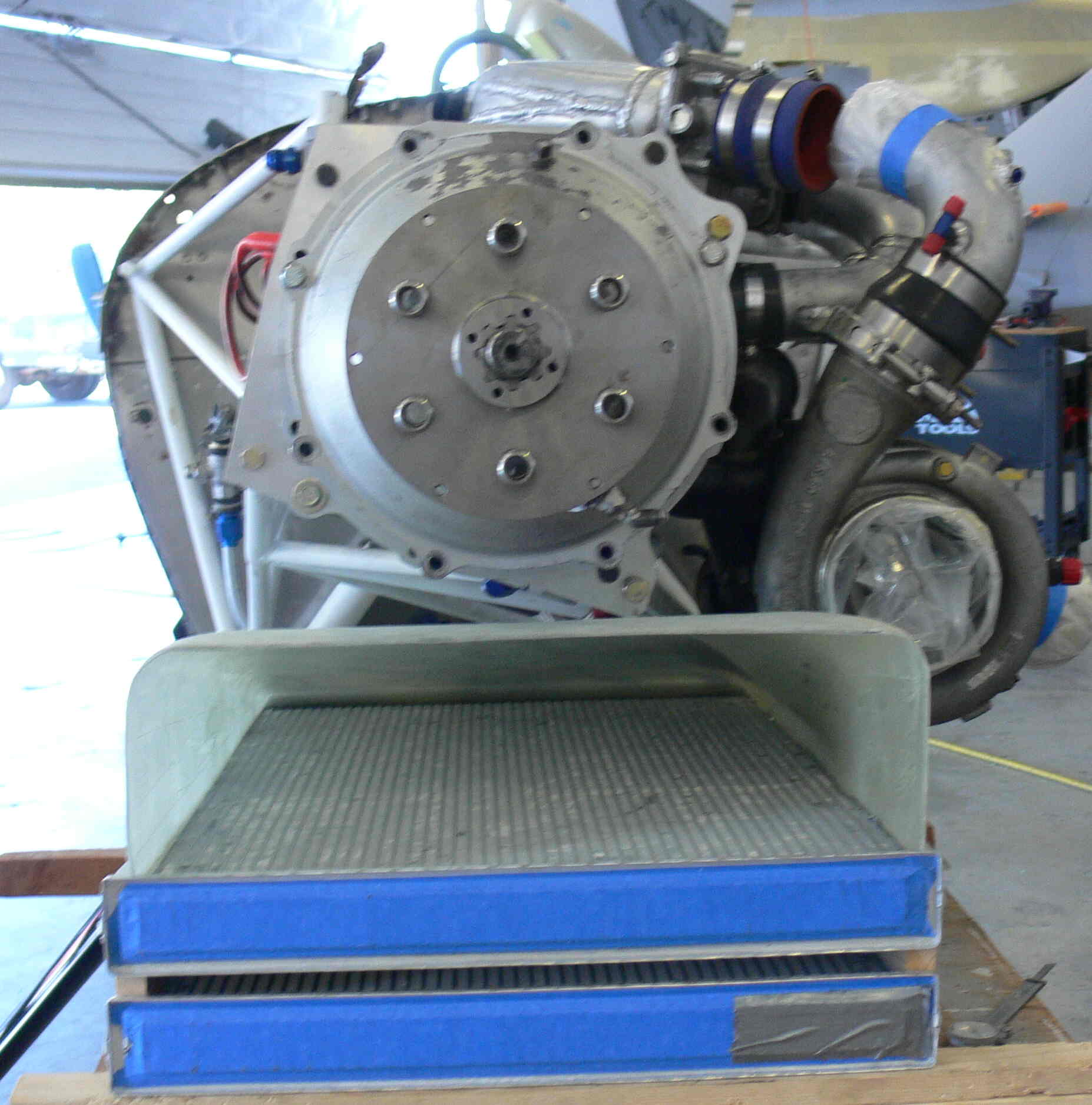
Paul, My old heat exchangers are, oil, 316 cub inches and water 750
cub inches if I have converted from metric correctly. These provide too
much cooling for the P port renesis.
New Exchangers Oil, 297 cu inches and water 650 cub inches
total over 900 cub inches and fit surprisingly well inside the new
sleek cowl. Comparison to others that I know of, Combined total of 623
cub inches ,, just cools.
Combined total total of 770 cub inches for a 20B and reportedly cools
I was aiming for around 800 cub inches, but with the thermostat fitted
went with the biggest I could fit without going silly , as in making
other things difficult to fit in the cowl. The biggest restriction I
found was to be able to route the exhaust around the Water exchanger
keeping about 3 inches clearance. Dave Léonard's idea of having the
air enter the exchangers from underneath is brilliant as it keeps the
front oil exchanger tucked up under the front of the engine and away
from the cowl meaning no unnecessary bulges to the cowl. That also
gives a reasonable flow of air directed at the exhaust pipes to cool
them as quickly as possible.
Still agonising as to if I bother fitting EGT probes to this engine.
I have them in my current engine and they do not last long at all giving
terrible readings that just keep me awake at night with worry. I know
of an engine with over 400 hours on it that has run terribly hot all its
life without ever having EGT probes fitted. Recently stripped and
inspected for no damage whatever. The next question is “What can I
really do about excessive EGTs ?” I can control A/F ratio which has a
bearing on EGT’s but that is all. I thought the timing may alter the
EGT, but not really. The only thing that may, is your spark system that
will give a cleaner burn. So still wondering?.
Neil.
Just adhere to a few water cooling principles. Don't let the cores "see"
the exhaust pipes.
Exhaust heat radiation is a severe problem. The exhaust pipes run
bright red. Keep
the core as cool as possible.
A diffuser on top of the core protects the core from under cowl and
engine heat.
A one degree F increase in air temperature the core is subjected too,
is a one percent
reduction in cooling. Try to find large area thin cores.
Too much volume in the core adds weight. Water is 8 pounds per gallon
and much
heavier than fuel. Dave Leonard used a sledge hammer approach with a 3
inch thick
water core. 1000 to 1500 cubic inches :)
Use a Kay's and London wedge shaped diffuser.
Start with a 20% of the core frontal area as a scoop area
Violate these principles at your own peril :)
Your lucky as there are no hills or tall trees near your air strip. You
can climb
out at high speed. Better for cooling. Could save your butt :-)
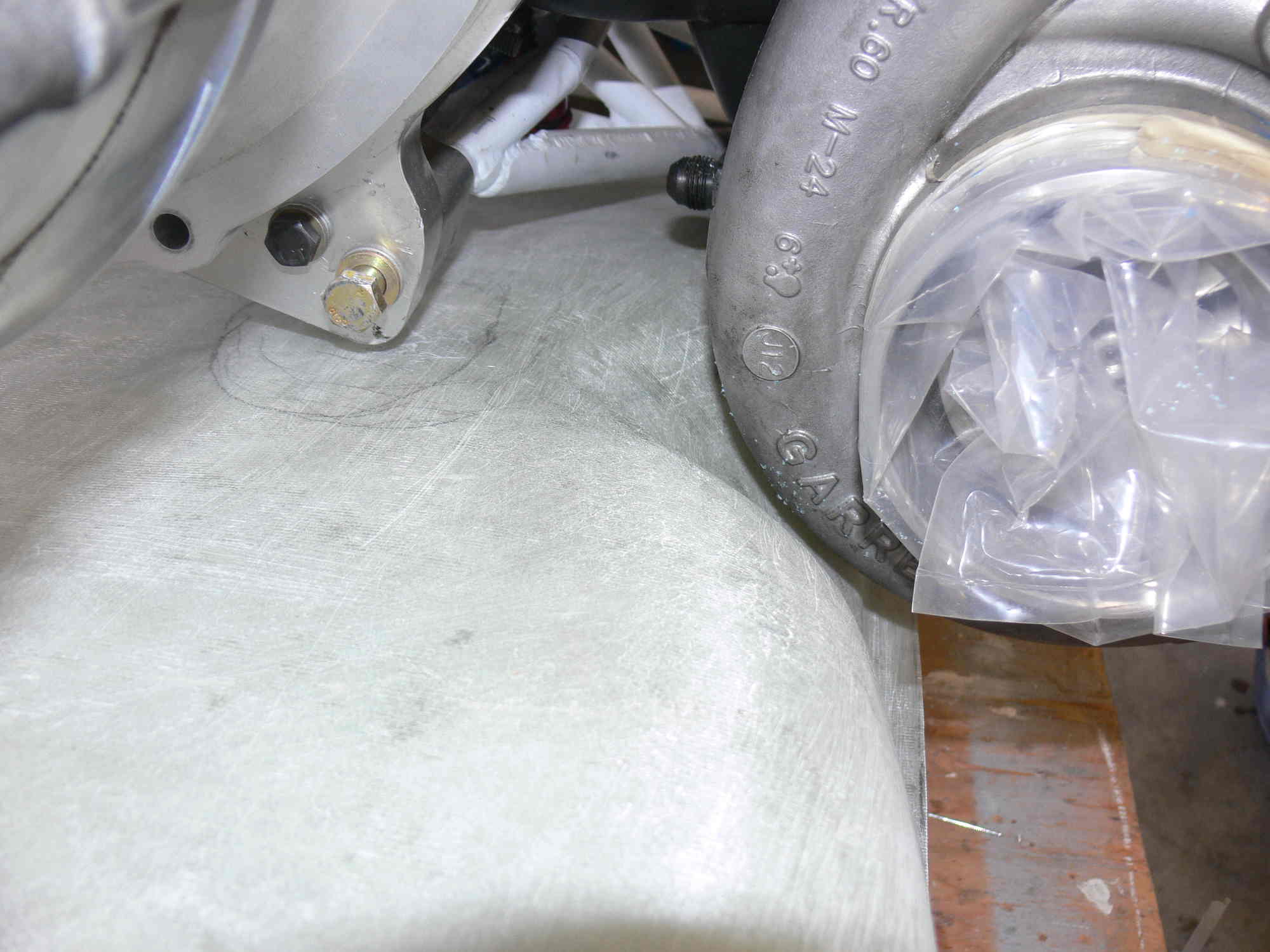
Here is the 650 HP, 2 rotor, time to climb engine cooling system.
Each core is only about 450 cubic inches and about 3/4 inch thick.
There are 2 cores
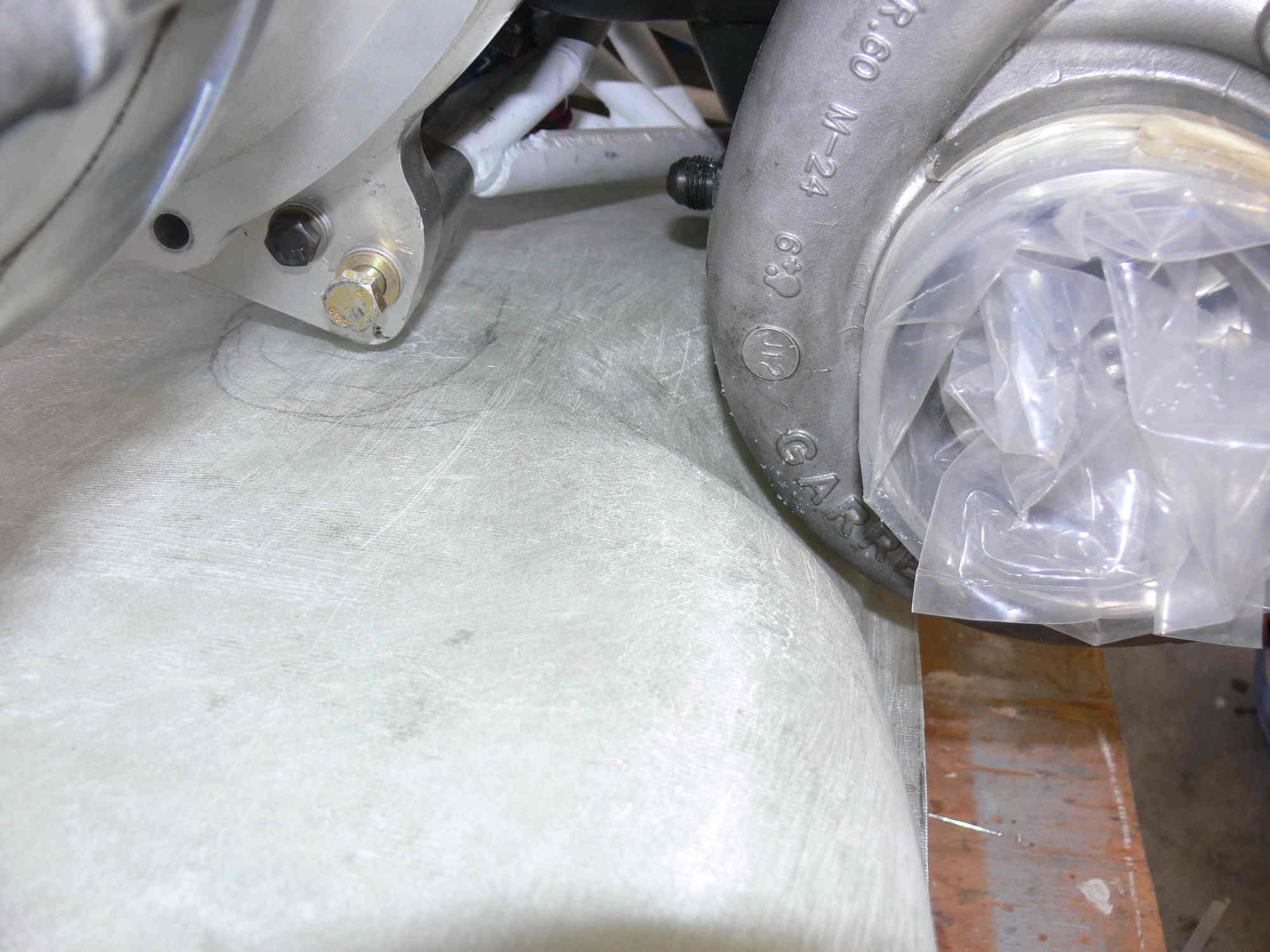
back to back in a cross counter flow configuration. Note the diffuser
is protecting
the cores from the bright red turbo housing.
Paul Lamar
The Rotary Engine News Letter. Powered by Linux.
If you want off the list PLEASE let me know and I will
remove you. ACRE NL web site.
http://www.rotaryeng.net
You Tube
http://tinyurl.com/beqqxas
Copyright 1998-2015 All world wide rights reserved.