"CASA is responding to a high, and increasing, rate of engine
failures among aircraft that are powered by engines manufactured by,
or under licence from, Jabiru Aircraft Pty Ltd (Jabiru). Such
aircraft are referred to in this document as 'Jabiru powered
aircraft'.
The issues appear to be the result of several failure modes, which
require separate investigation.
CASA has formed the view that its functions under the /Civil
Aviation Act 1988/ require it to mitigate certain risks to
passengers, trainee pilots and persons on the ground.
Accordingly, while CASA works with Jabiru to identify the causes of
these engine failures and to implement appropriate corrective
actions, CASA proposes a set of operating limitations on Jabiru
powered aircraft."
https://www.casa.gov.au/standard-page/consultation-draft-%E2%80%93-cd1425ss-0?WCMS%3ASTANDARD%3A%3Apc=PC_102279
-----------------------------------------------------------------------
Time for an all aluminium one rotor In Australia.
The Jabriu was based on the VW crank, rods and pistons I suspect.
There is not enough cylinder to cylinder spacing on a VW to get
adequate cooling fins on the heads.
I also suspect the through bolts are resonating.
The Australian aviation magazines are filled with Jabriu products for
sale.
Paul Lamar
Hi Paul, hope Robin is feeling better. The VW head might have been
ok at 25 to 36 hp with forced air cooling but it has more problems
than bore spacing; because of port layout and keeping engine width
and valve length down there is very little fining and airflow area
over the top of the combustion chamber so the heads run hot and the
CR must be kept low and the engines run rich so they don't blow up so
the efficiency is poor. For a late 1930's engine it is ok but today?
Murry Rozansky
Paul, please keep us posted on Robin's progress.
I don't think there is anything in common between Jabiru and VW.
There are mostly GM/Holden and Honda parts in the Jabiru, and the
cylinders are individual units. Jabiru claims their crank and
cylinders are machined in-house from 7" diameter 4140 billet. Most of
the problems have been with the 6-cylinder versions, the 4's have not
had the same issues. There is a 3-way tussle as I understand it
between CAM it that makes the engine, Jabiru that integrates it and
Rotec that makes aftermarket water cooled heads. Most of the problems
I have seen are due to improper installation integration and poor
understanding of cooling airflow. The through bolt issue is
separate.
I agree there is a need for a light-alloy single rotor, in Australia
and elsewhere. With properly engineered gearbox, turbo, EFI and
ignition it could be a serious challenger. You have to sell it to the
market that pays for these (military drones.)
David Josephson
Robin is fine and she is getting a lot test so the doctors can figure
out what happened hopefully.
The bore and stroke are very much like a VW. Here is a forged VW
crank with the same stroke as a CAMit!
More evidence the cylinders are too close together. The centre
cylinders have worse cooling prospects. The CAMIT engine has entirely
different cylinder heads with more and larger fins. However with
roughly the same cylinder spacing.
These engines start having problems with as little as 300 hours. The
power ratings are optimistic.
A successful air cooled aircraft engine is one half HP per cubic
inch for a very good cooling reason. In air cooled aircraft piston
engines there is no replacement for displacement :-)
The CAMit 4 is 134 ci and 81 HP at 3300 RPM rating. If you run a prop
at 3300 RPM it is very inefficient. It is probably a fair engine at
65 HP and 2800 RPM or so. The weight is 140 pounds.
Paul Lamar
Looks to me that the crankshaft webs could be wider for an
aircraft engine. Again it comes down to duty cycle on recip
components that will kill it.
Dale Davies
Cylinder spacing has a lot to do with through bolt clocking.
Through bolts help hold the cylinders on and clamp the
crankcase together.
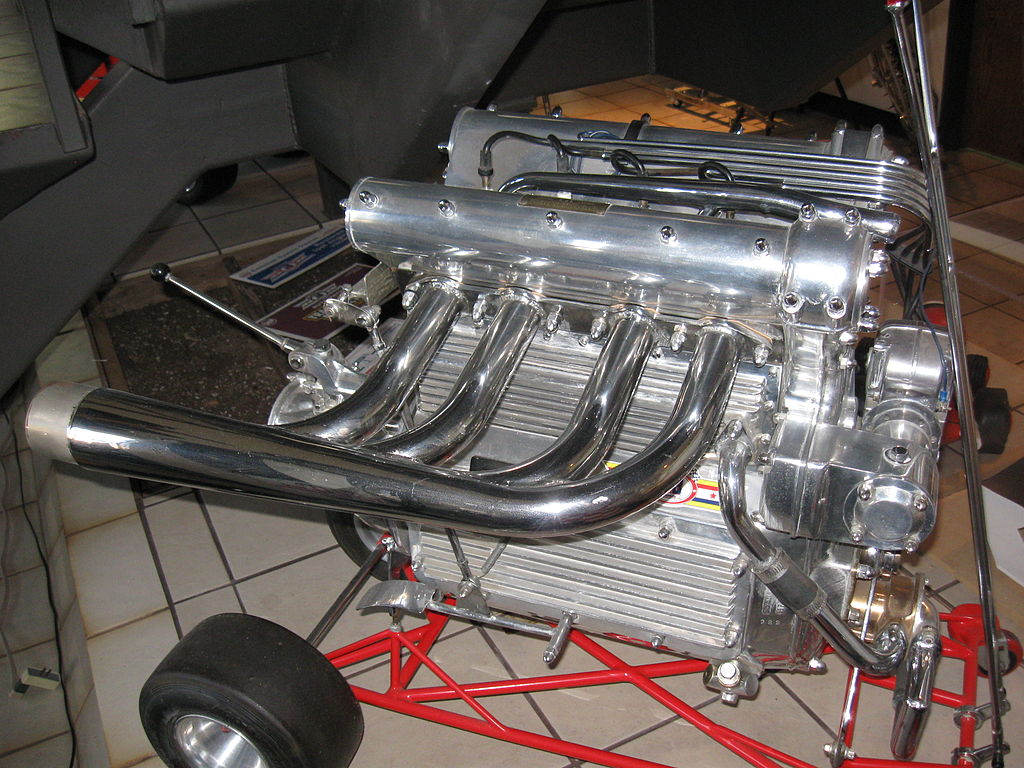
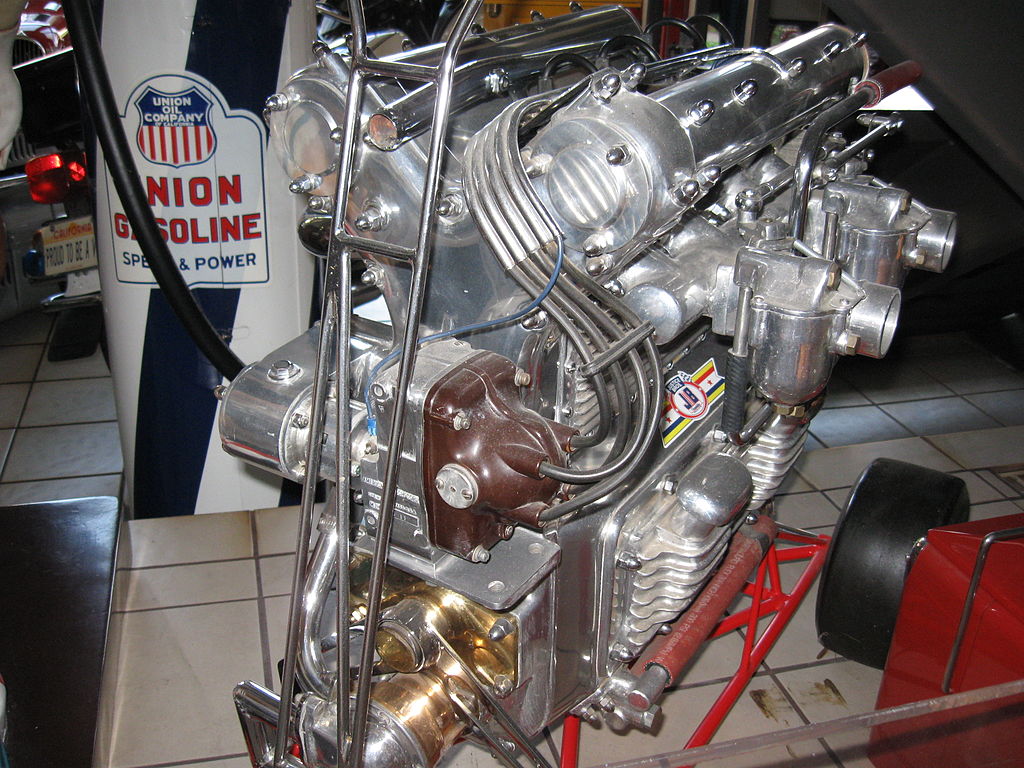
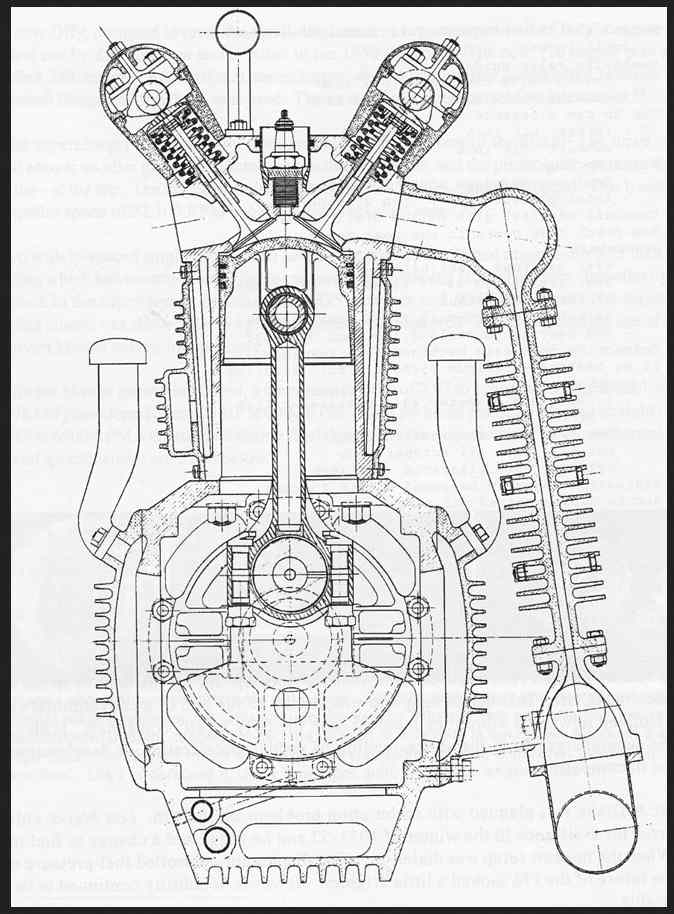
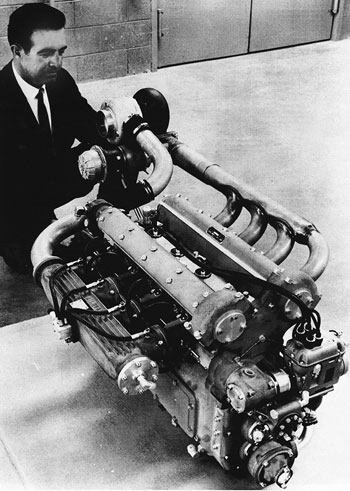
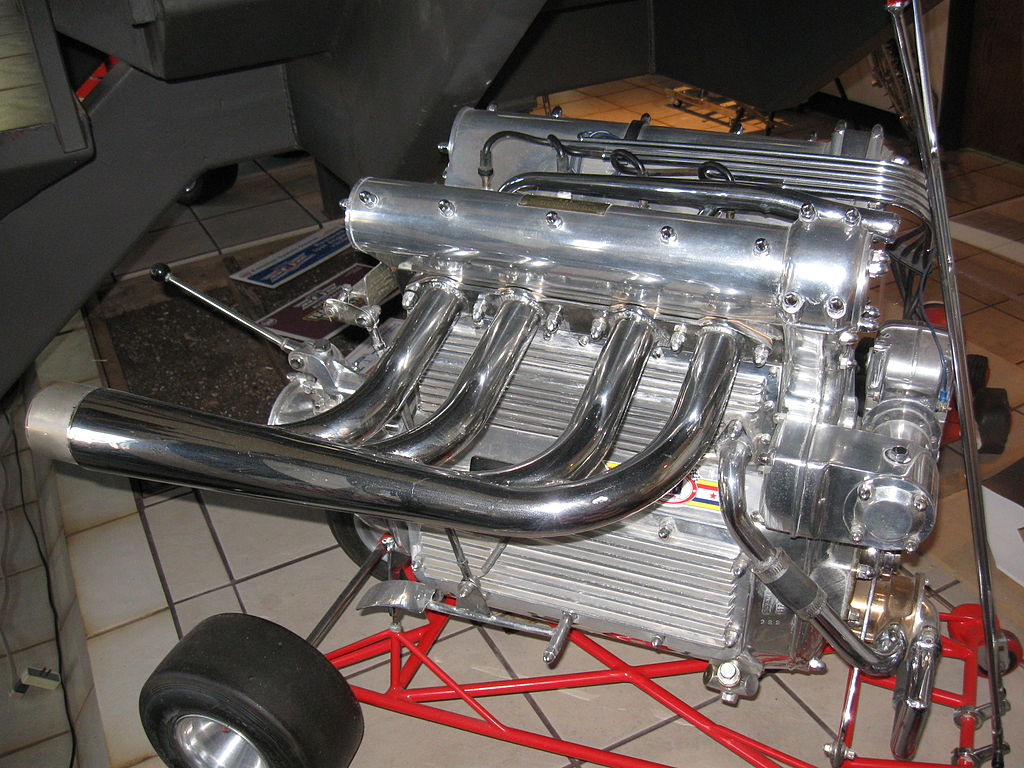
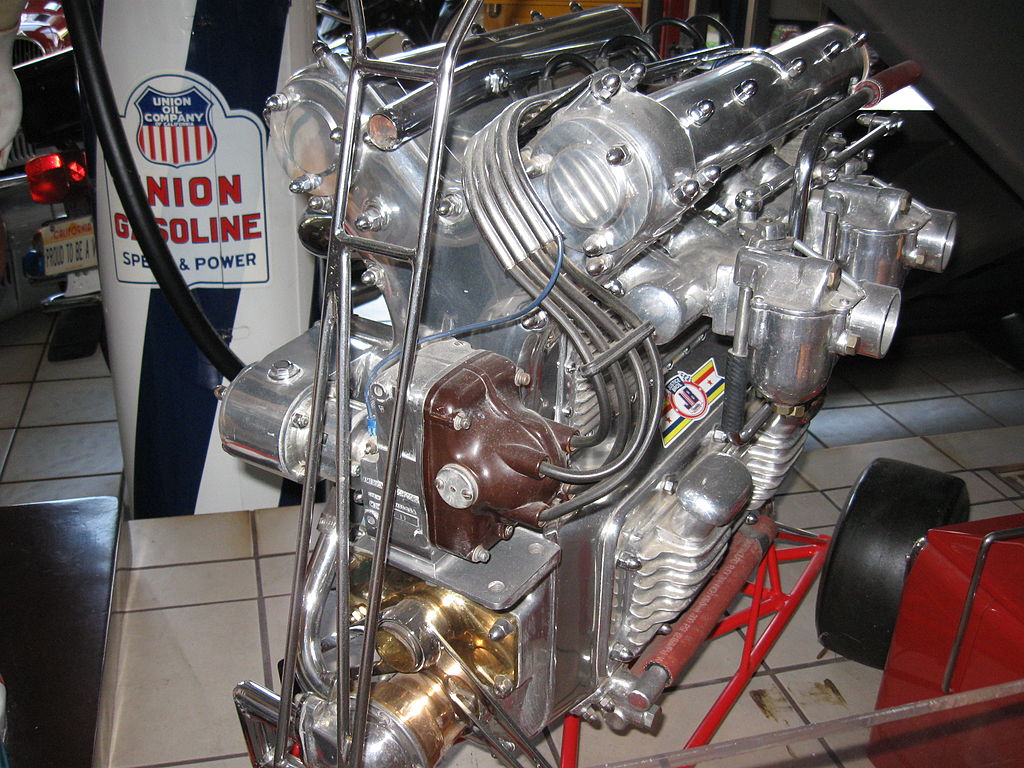
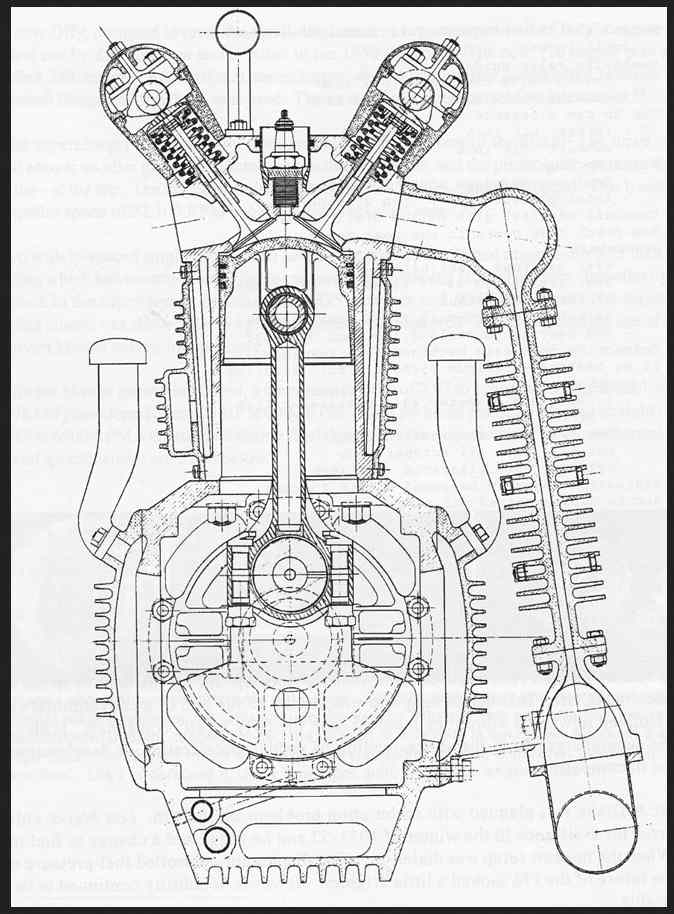
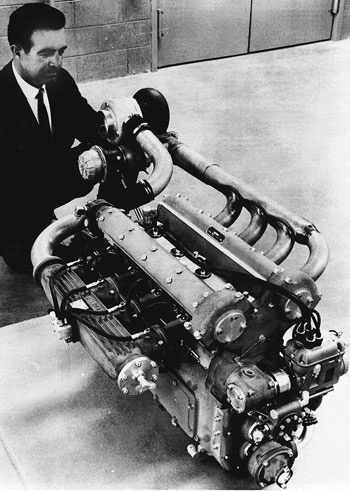
A better way to do it is make the crankcase one piece and
insert the main bearing split bulkheads from one end. Just like the Offy
race engine. The Offy engine set a world record for HP per
cubic inch before the rotary came along.
Paul Lamar
The Rotary Engine News Letter. Powered by Linux. If you want off the
list PLEASE let me know and I will remove you. ACRE NL web site.
http://www.rotaryeng.net You Tube
http://tinyurl.com/beqqxas
Copyright 1998-2015 All world wide rights reserved.