This email is to address Scott Gettings wanting to know if anyone
else has a set-up like his Renesis 6 port. I have the same set-up
as Scott, and I'm using only the four yellow injectors and have the
two red ones blocked off, as per Tracy's direction.
However Scott, I cannot get over 5900 rpm. The engine rpm does not
increase after half throttle. I checked to make sure the throttle
body was opening all the way, and it is. I also removed my muffler
and replace it with a straight pipe thinking there might be an
restriction, not the case, made no difference in rpm. I chopped my
three blade 76" prop down to 68" and still no change in rpm. I'm
also using part of the original six port intake, with no runner
length. Now the only thing I can think of is the engine cannot get
enough air. Looks like I have no choice but to completely redo my
intake or try installing a super charger to force more air in. Not
sure if that will work or not. I'm using Tracy's EC3, EM2, & 2.87
PSRU.
Bob Forbes
The intake configuration and pipe length are critical for the HP.
The prop runs into a brick wall when the tips get close to Mach One.
What is your gear box ratio? Sounds like 2.2:1. A 3.12:1 would
work better with the rotary.
When the prop torque requirements meets the torque out of the gear
box the prop and engine of course will stop increasing in RPM.
You can move peak torque around with intake pipe length. You need
roughly 18 to 20 inches of intake pipe length. The longer the pipe
length the lower the torque peak RPM.
A p-port engine will increase the max torque at any pipe lenght.
So too will NOS :-) This is probably the cheapest and quickest.
Makes up for a lot of intake configuration errors :-)
A turbo charger is more economical than a super charger as it uses
the otherwise waste energy in the exhaust to super charge the
engine.
Paul Lamar
Bob please read this section of the web site.
http://www.rotaryeng.net/intake.html
Paul Lamar
Thanks for Bobs output. Questions I have include what is the prop
pitch and the throttle body diameter? Is this static or in-flight
RPM? I agree the gear ratio maybe also an issue.
I also have built a short and compact intake system (sounds like
yours) with possible nitrous back up for take off if necessary. I
will test the entire engine system mounted in an airboat prior to
flight, which should give me some good data for this pusher
configuration.
Thanks!
Scott Gettings.
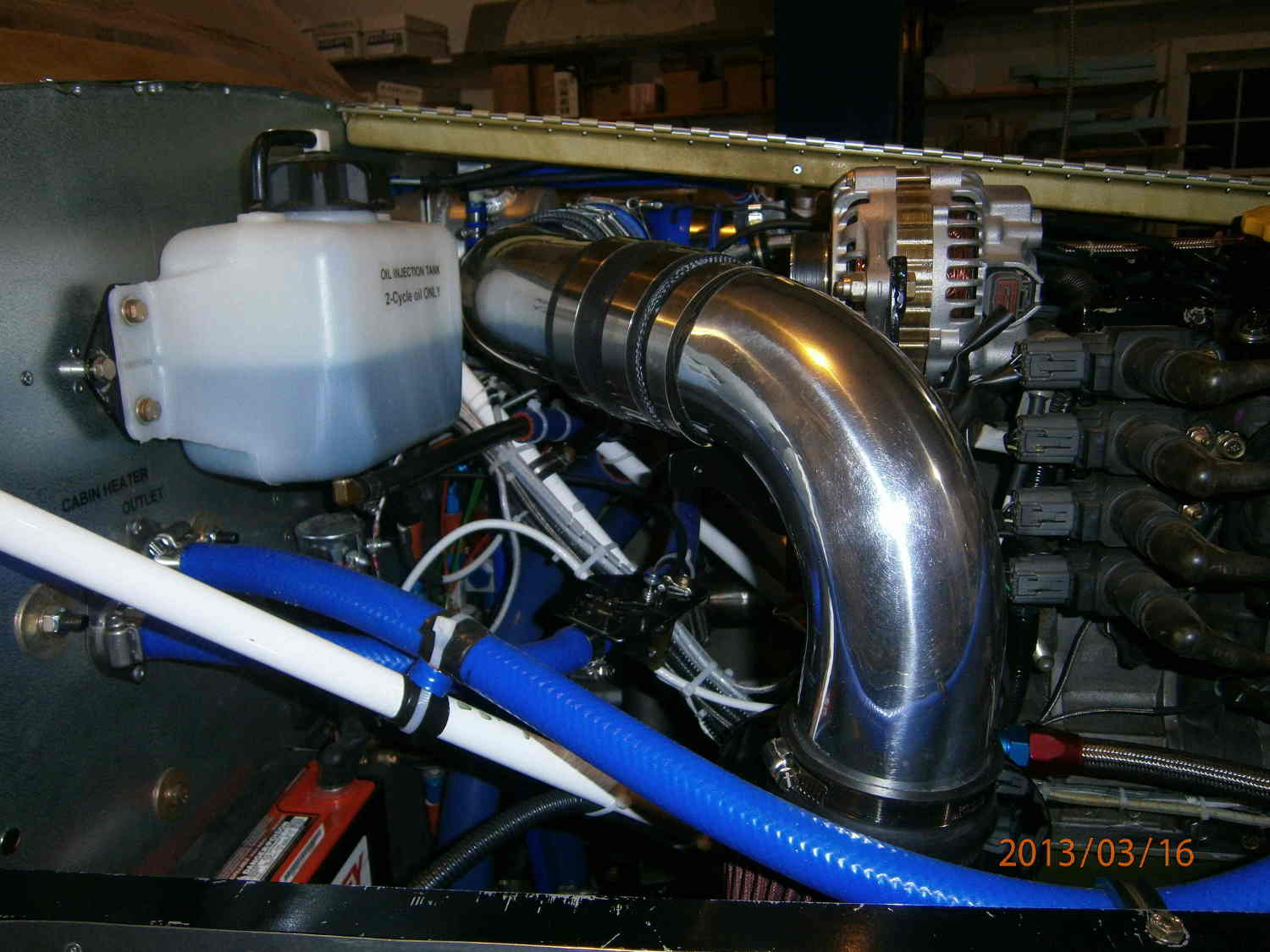
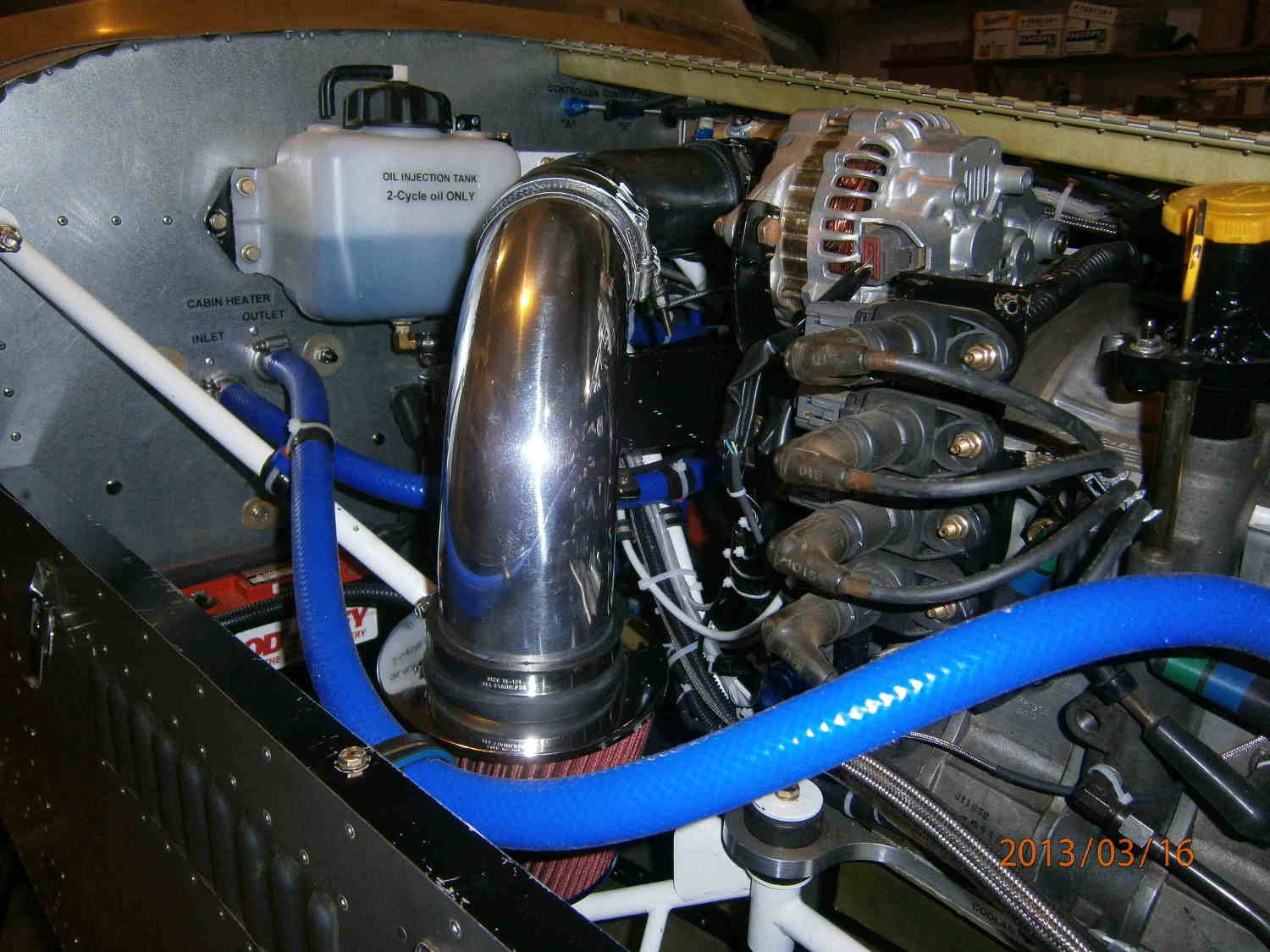
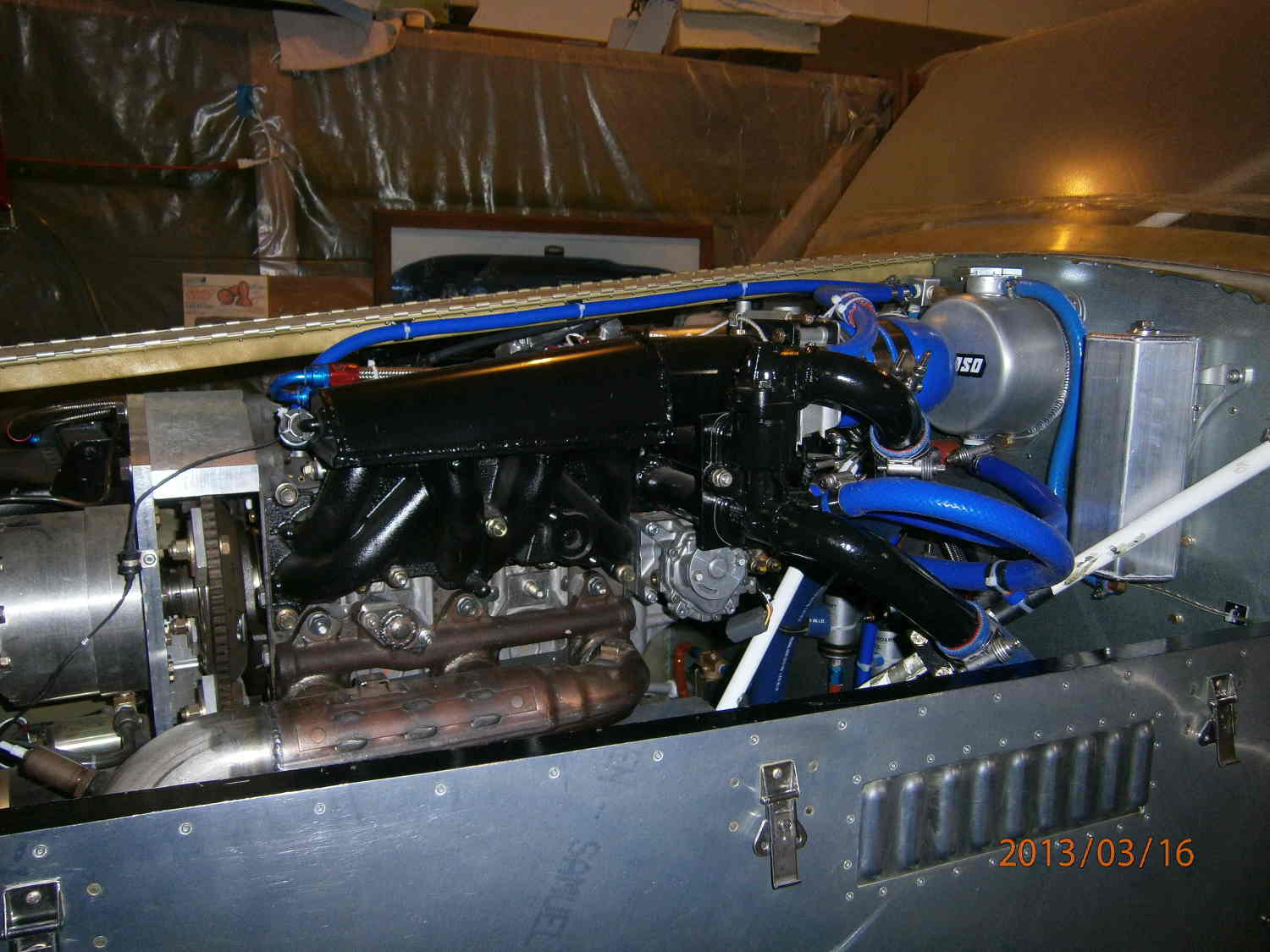
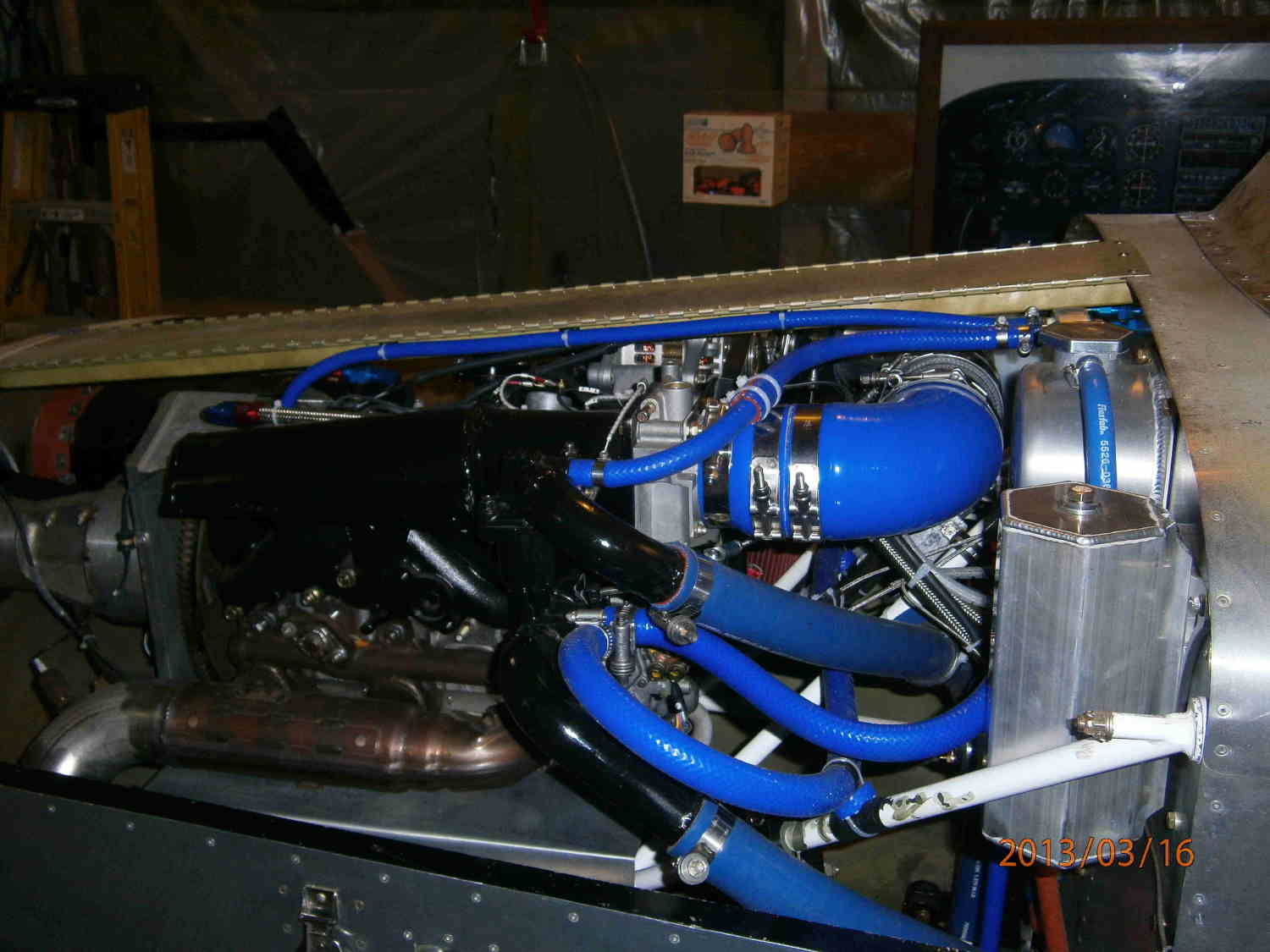
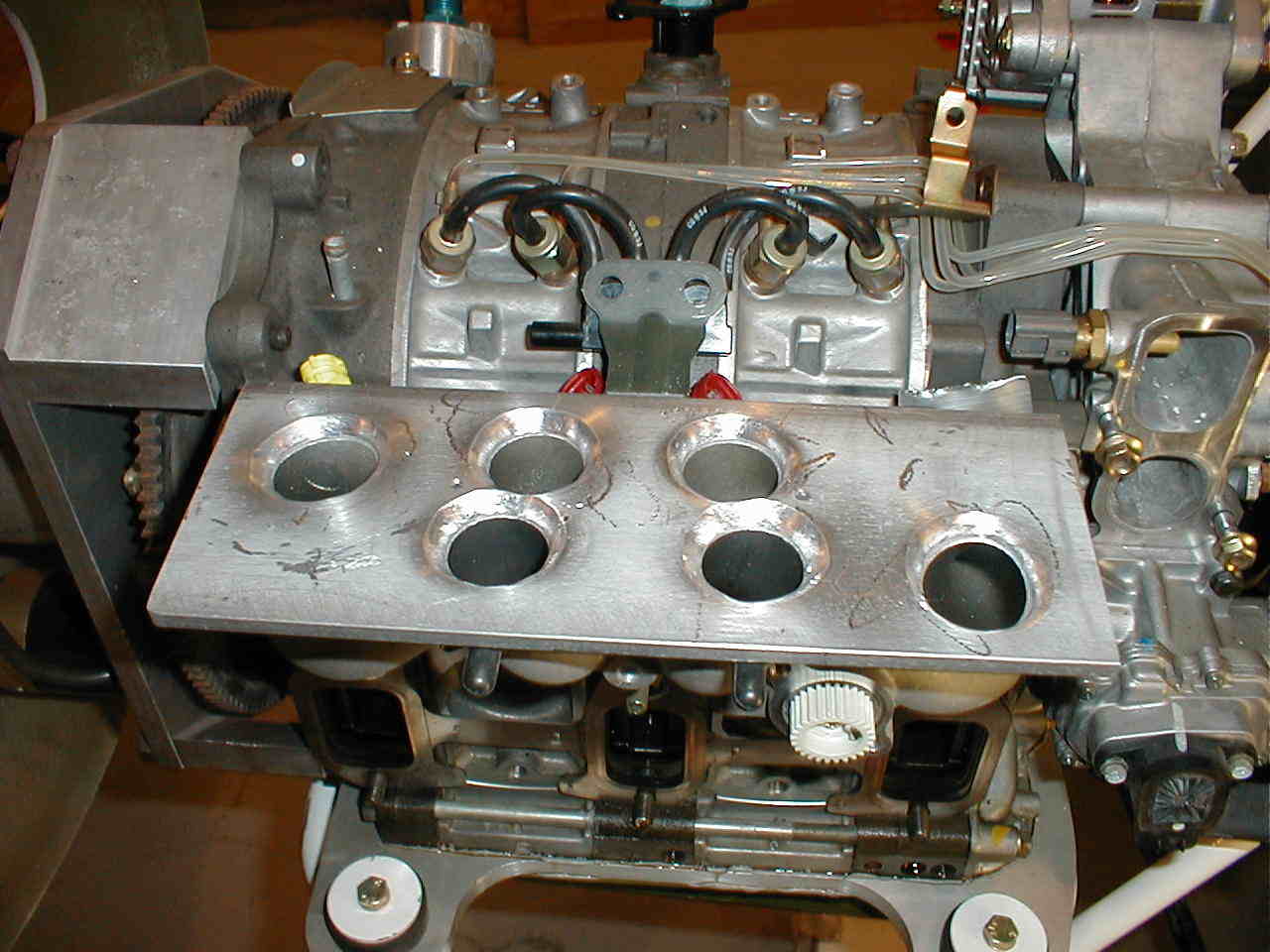
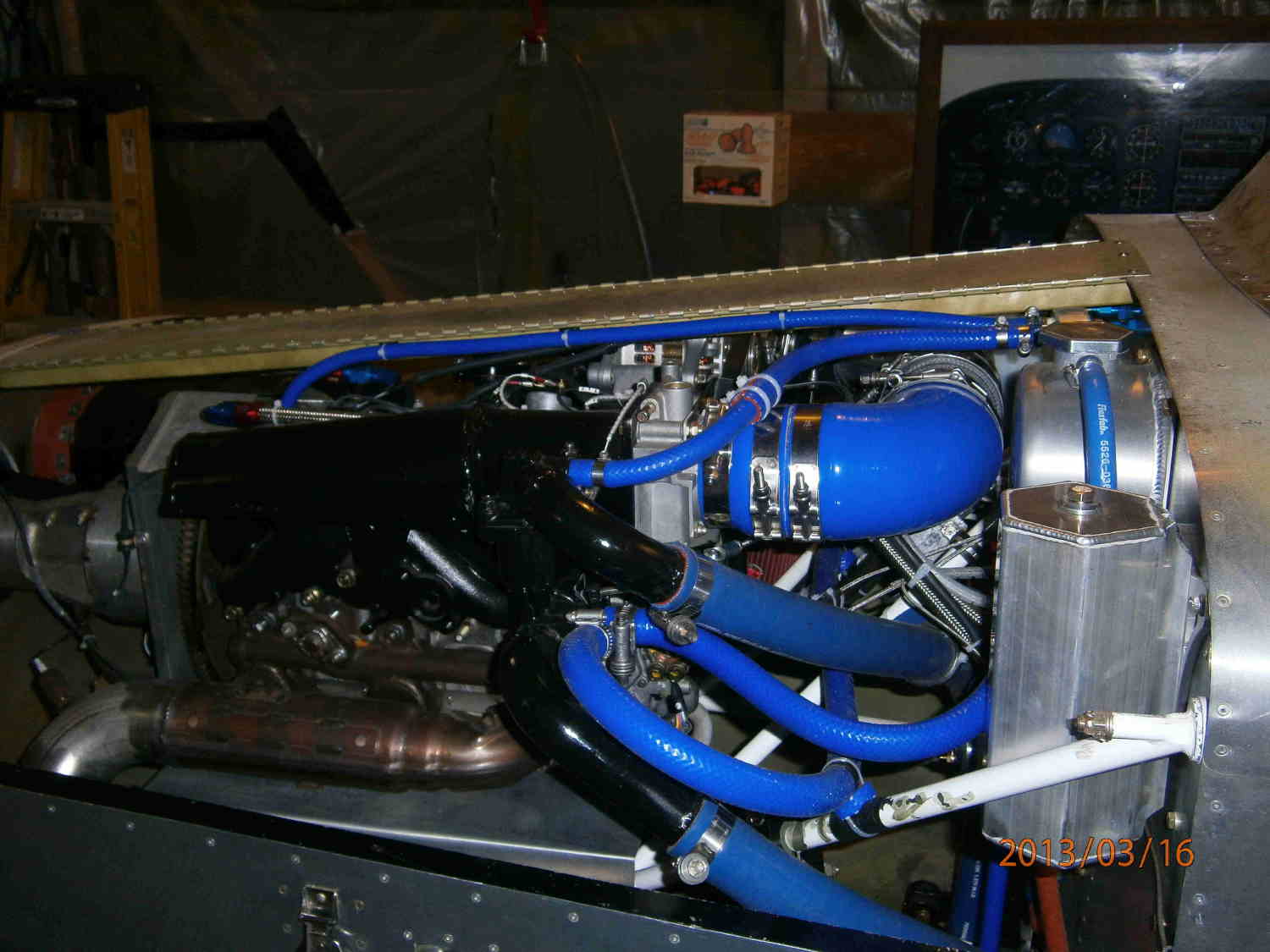
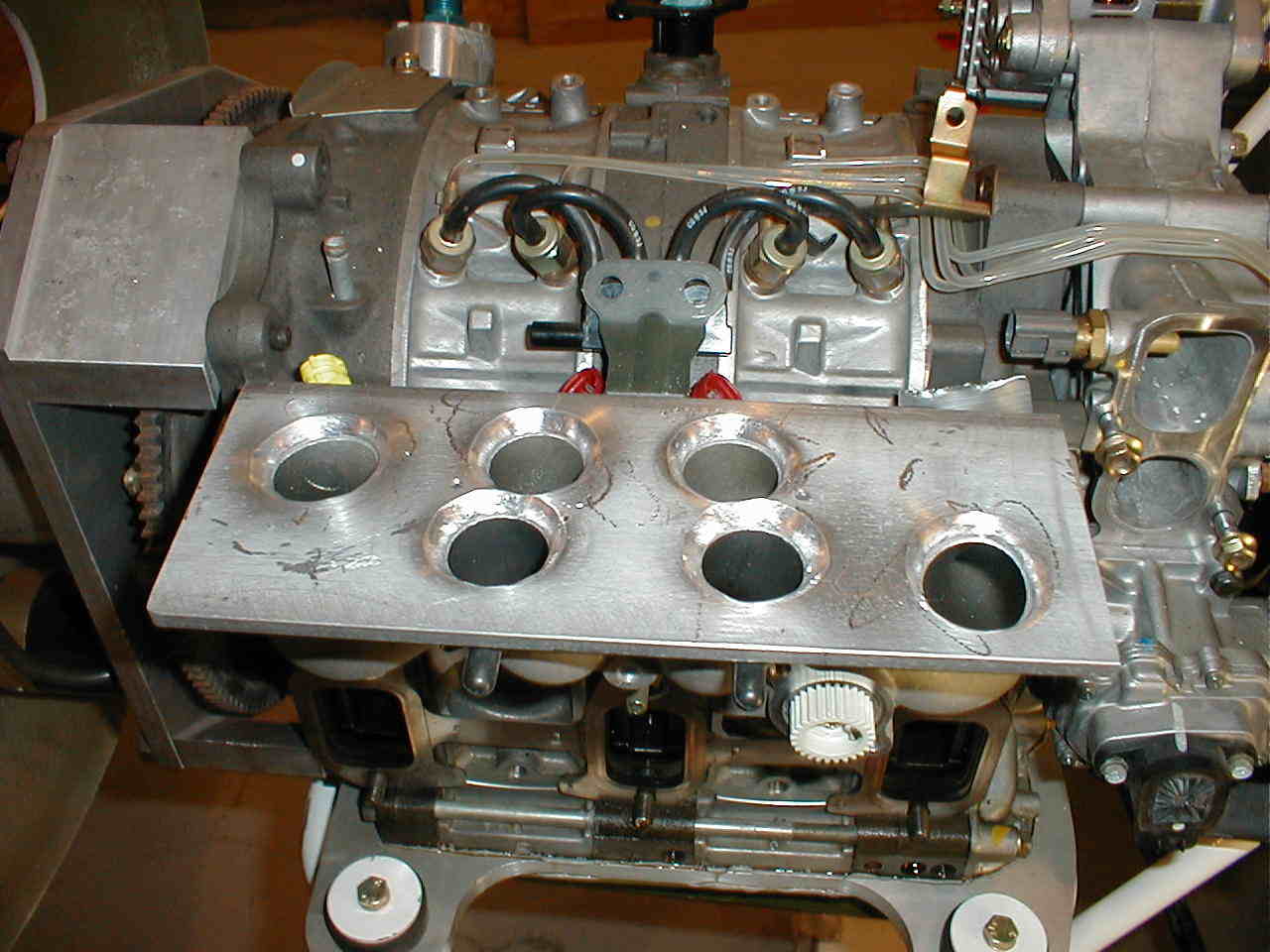
Attached are a few pictures of my short intake manifold. I certainly
realize this may not result and anywhere near Optimal horsepower, but
it was simple to build. The throttlebody is 2 7/8 inches inside
diameter. Although shorter, it is still much less restrictive than
the stock intake manifold system. It can also receive ram air from
the cowl intake. If this does not produce enough power in testing, I
will convert to the over-the-top runners configuration.
Of course, this is not an endorsement of this solution compared to the
longer runners, as Paul has an incredible depth of experience in this area.
Scott Gettings
Scott,
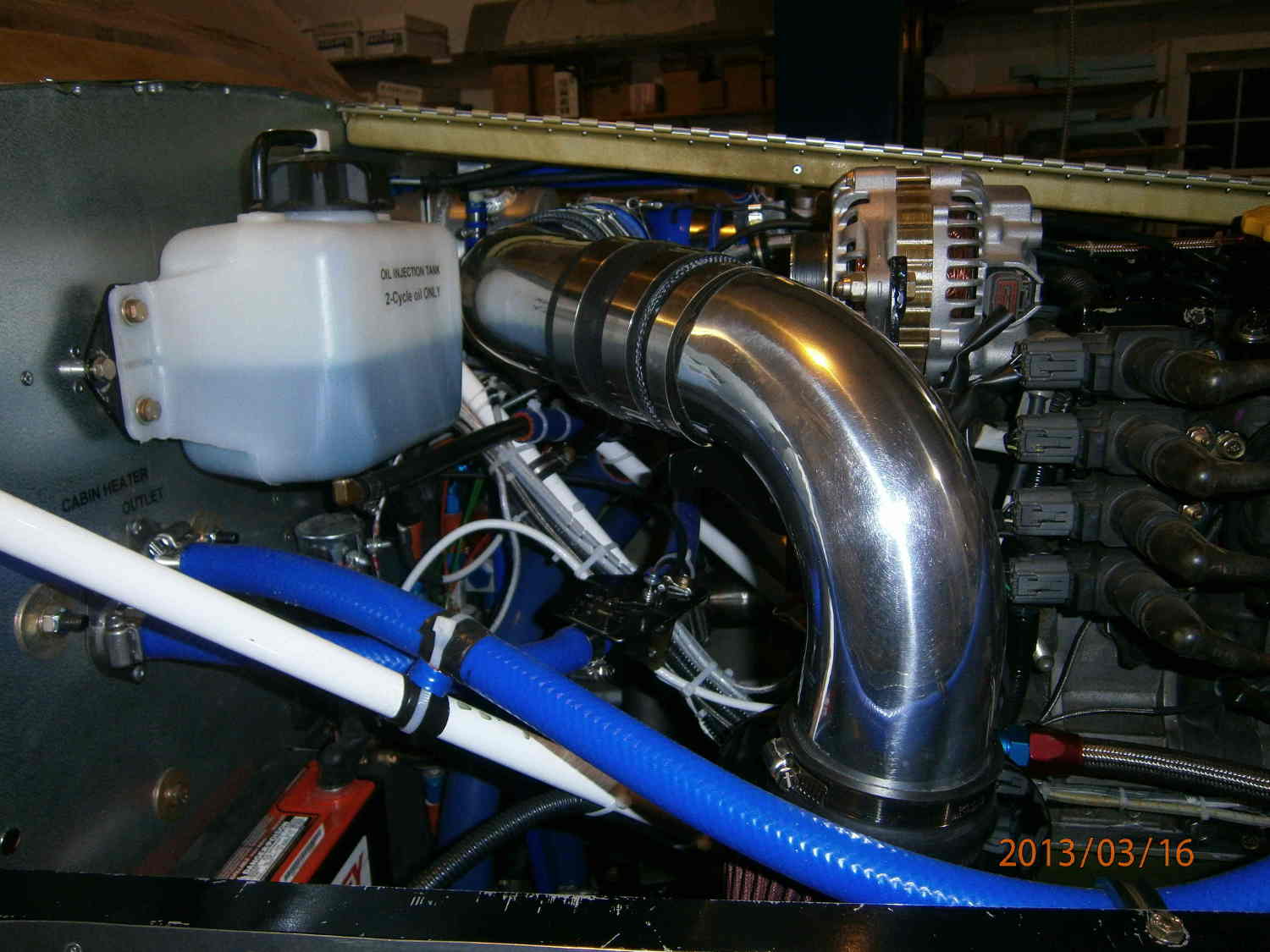
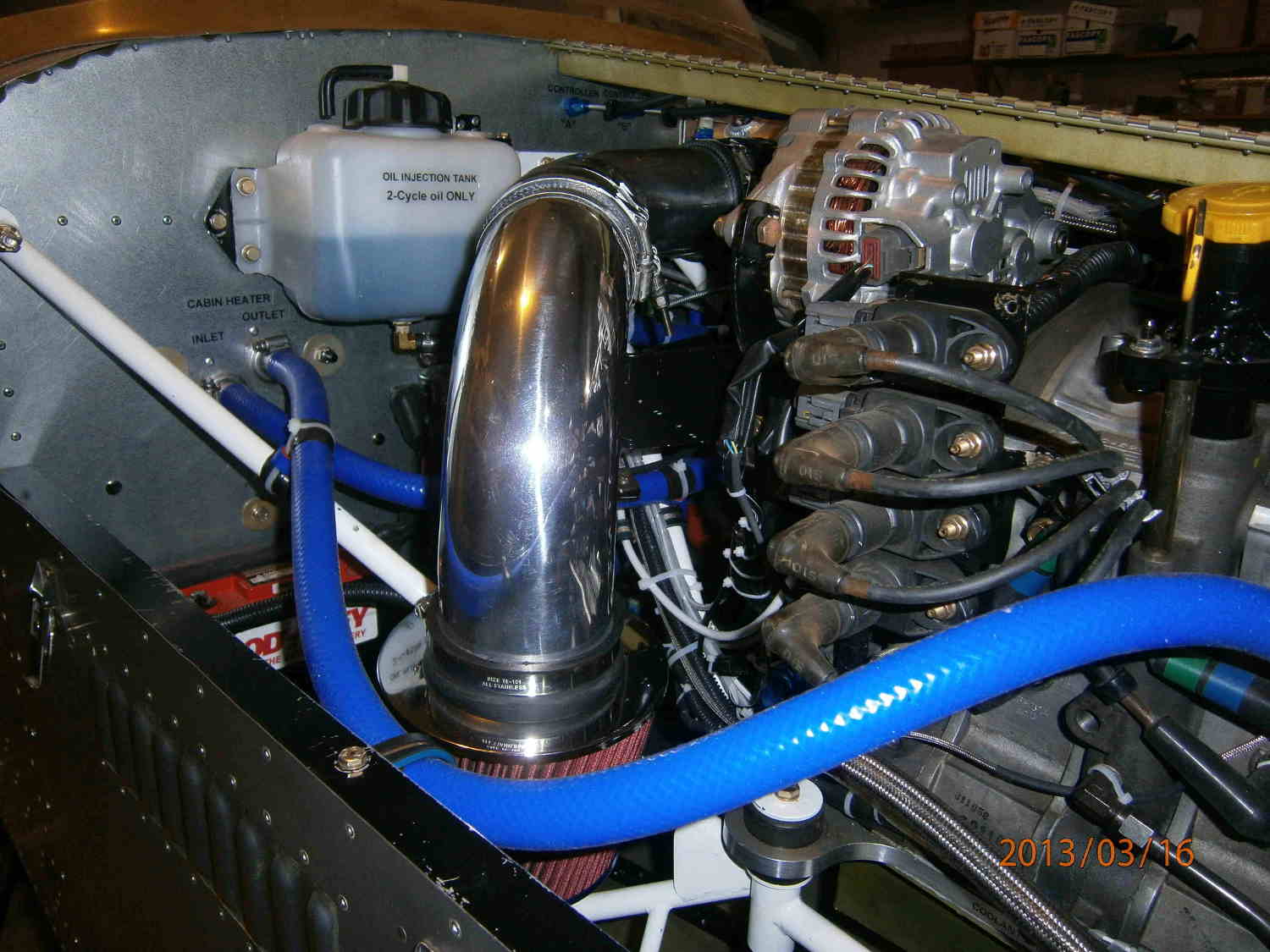
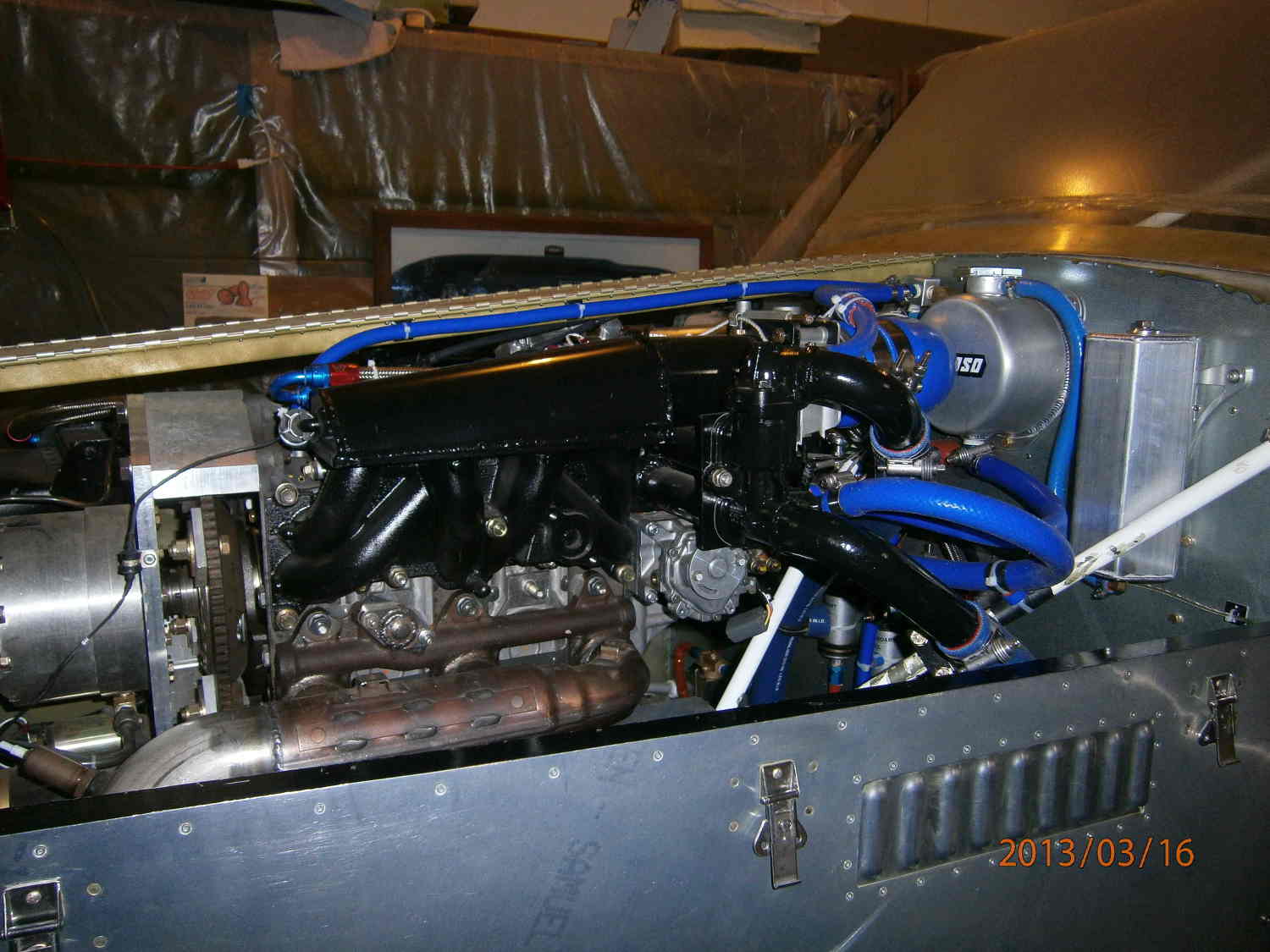
Your intake set-up is identical to mine, (photo's attached). I'm using the
factory throttle body that came with the RX 8 engine, and 3 1/2" intake
hose(photos). I can't imagine it not getting enough air.
Thanks,
Bob Forbes
Read up on Organ pipes Bob. Tuned pipe intakes can exhibit 120% vloumetric
efficiency. It sounds like you did not read
http://www.rotaryeng.net/intake.html :-)
It takes HP to suck air into an engine. Six tubes of the same area are
much worse
than 2 tubes because of the internal skin friction increase.
An intake sys is only as good as the smallest pipe diameter in the
train of pipes.
Paul Lamar
The Rotary Engine News Letter. Powered by Linux.
If you want off the list PLEASE let me know and I will
remove you. ACRE NL web site.
http://www.rotaryeng.net
You Tube
http://tinyurl.com/beqqxas
Copyright 1998-2015 All world wide rights reserved.