Add a bit of hardware to the Maximite for the fast stuff and forget all
this complicated real time linux stuff. It all has a very very VERY
steep learning curve. One could get bogged down for months.
Maximite is truly easy to learn and use.
Ignitions are simple pulses and 7500 RPM gives you 8 milliseconds
to deal with it and everything else. No problem for the Maximite.
Linux might be fine for moving maps and EFIS's because they are
not really real time applications. You have seconds to update things.
Paul Lamar
Here is another hardware trick to cut the software overhead.
Most people are using RX8 or Chevy LS1 ignition coils. These coils
requires a fixed 2 to 4 msec dwell time regardless of the RPM.
No more no less. Too much and they overheat and fail.Too little
and the spark is weak.
This is a bear to do in software. In the Maximite you could set up
a 4 msec tick interrupt and count it until it was time to fire
the blocks. A better way is to use 555's set up as a one shot's
with a 4 ms period. That way all it needs is a one or two usec
negative going trigger pulse when it is time to fire. The timing
of this pulse relative to top dead centre is a function of RPM.
A calculation must be made for that. Low RPM almost no advance.
High RPM could be 50% of the 8 msec TDC pulse frequency.
IMHO Tracy got it wrong in pure software and burned out a lot of
LS1 coils before he fashioned an elaborate coil cooling system
Come to think of it Mazda may have got it wrong in the RX8 I think.
Early RX8's failed a lot of coils.
I am curious how they do it in Mega Squirt.
Paul Lamar
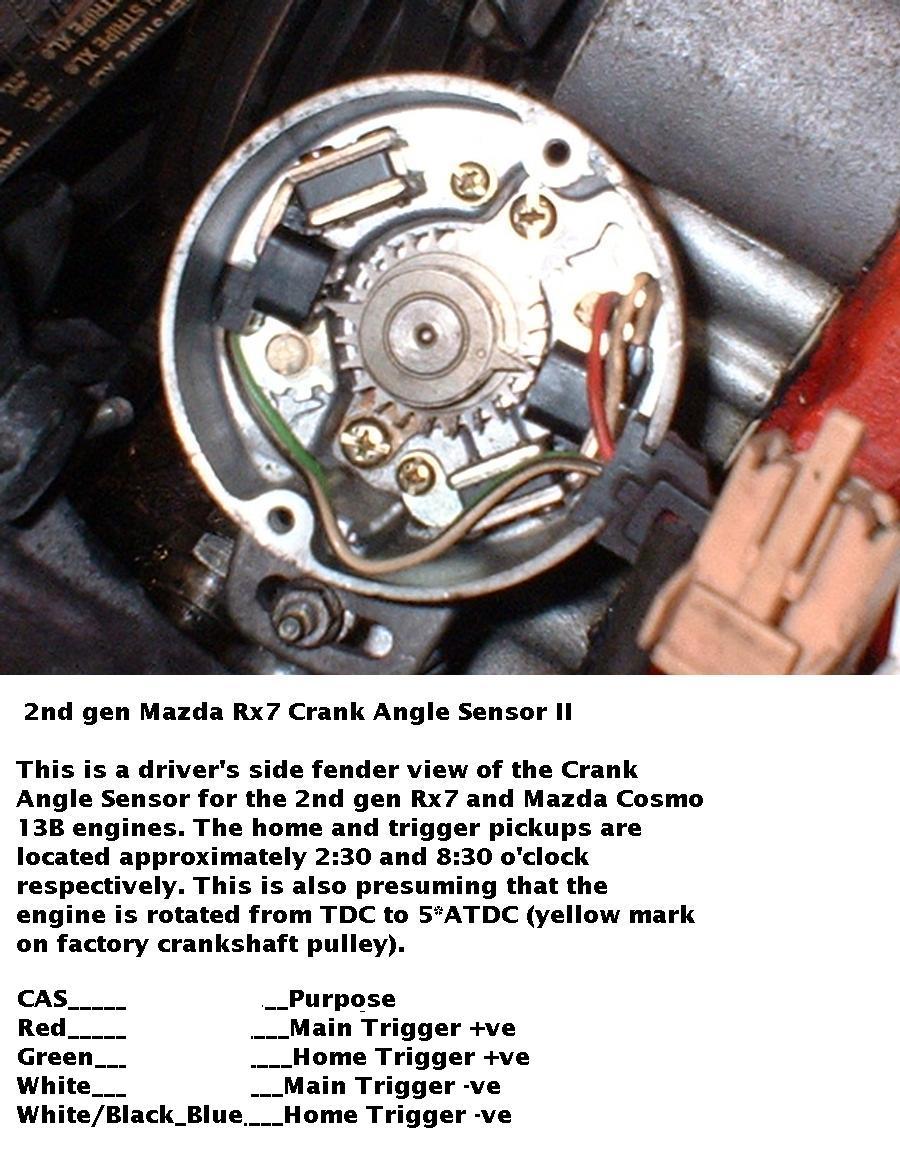
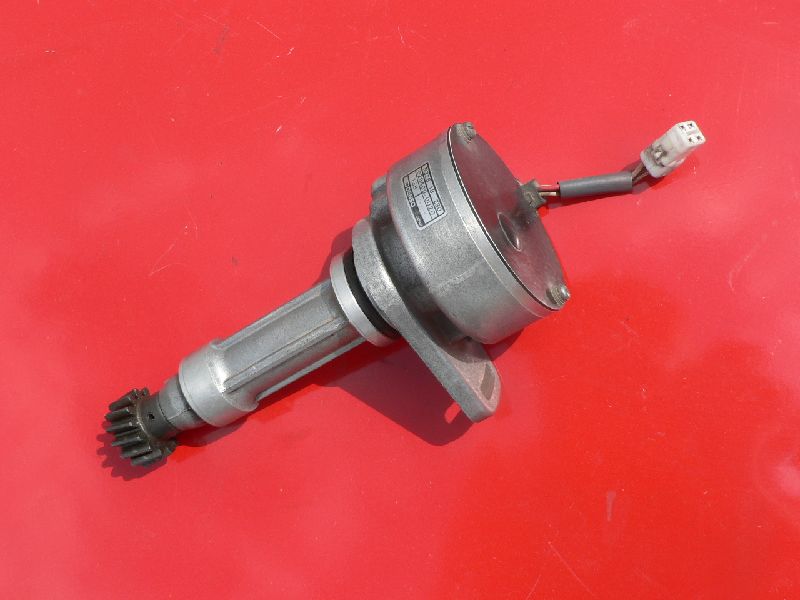
The 2nd gen up to 1991 were easier to deal with as there were
two magnetic pick ups in the CAS which looked like a distributor
on the out side. Here is a picture. On the lower pickup you get
12 pulses per revolution to feed into a MM counter pin. This
will give you the e-shaft angle within 30 degrees and into
another pin for RPM.
SETPIN pin, cfg will configure the external I/O ‘pin’ according to ‘cfg’.
cfg’ is a keyword and can be any one of the following:
OFF,Not configured or inactive,
AIN Analog input (pins 1 to 10, A0 to A5)
DIN Digital input (all pins)
FIN Frequency input (pins 11 to 14)
PIN Period input (pins 11 to 14)
CIN Counting input (pins 11 to 14)
DOUT Digital output (all pins)
OOUT Open collector digital output (pins 11 to 20, D0 to D1Use
Use the FIN input to read the RPM directly.
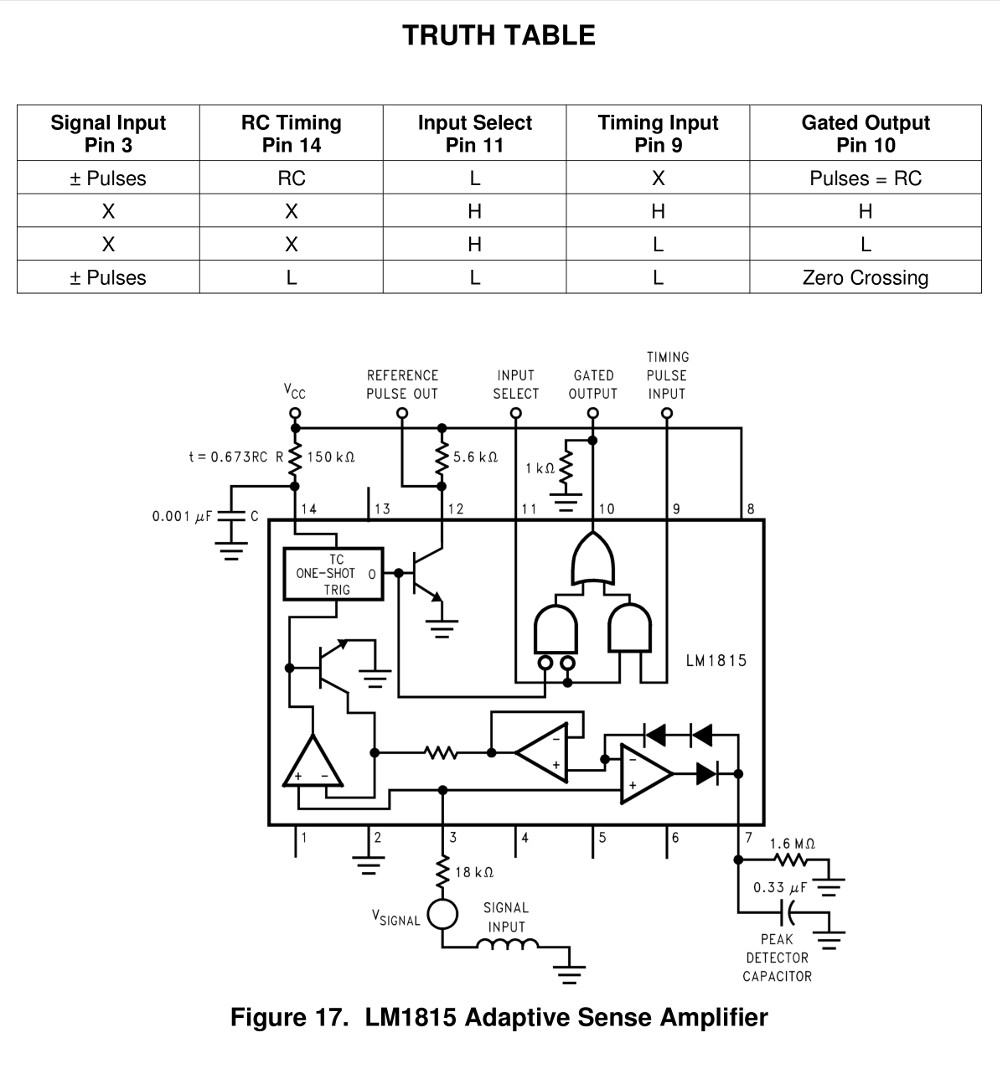
There is a very popular off the shelf part called an LM1815 that works
very very well indeed to process the CAS signal. I highly recommend
this part any time you are using a magnetic CAS. I have
extensive experience with this part and it works great.
You will need 2 for a 2nd gen CAS. It puts out
a fixed width 100 usec wide pulse.
Use another one of these for the top CAS and that will give
you the spark timing reference pulse.
More later on the programming.
Paul Lamar
The Rotary Engine News Letter. Powered by Linux.
If you want off the list PLEASE let me know and I will
remove you. ACRE NL web site.
http://www.rotaryeng.net
You Tube
http://tinyurl.com/beqqxas
Copyright 1998-2016 All world wide rights reserved