The 68 inch diameter prop tip is going 586 FPS at 2000 RPM.
This assumes zero angle of attack and a forward speed of 400 MPH or
587 FPS. This is still not the actually twist as it is desirable
to have the tip at this angle of attack for low induced drag in the
transonic region but most of the rest of the blade needs a positive
angle of attack to generate some thrust.
That is, as far as I can determine at this moment in time, a
matter of judgement or experience. If it was ground adjustable only
several degrees of change would be advisable. I wish I had a good
CFD program for props.
The next thing to worry about is blade area to see if this five
bladed C130 type prop will really absorb 1000 HP.
BTW The C130 prop twist at the tip does not have to be as great as
ours as it is not going 400 PH.
Check my arithmetic I have been known to make mistakes from time to
time.
Getting the prop right is probably the most difficult part of this
project. Up until the C130J it appears that little attention was
paid to this problem.
Paul Lamar
This is our competition.
I can't believe the GlasAir III aerodynamics are that much worse
than a Legacy. It is going 400 MPH while all the rest are only
doing 375 MPH. To do that with HP alone would require an enormous
amount of additional HP. Top speed is proportional to the cube root
of HP. Probably well over 200 or 300 HP or more.
I do think he is using an IA720 A1A The picture looks like a dual
turbo 720. Hard to beat. Those engines are very very expensive. The
crankshaft alone is supposed to be $50,000. In 2009 a new
IO-720-A1B cost $113,621 Stock is 400 HP. We are going to need all
the HP we can get. The prop is critical.
Short life of course. He does have dual turbo's which helps.
Rumour has it the extra thin metal props have a 1/2 hour life
expectancy. They all use the same CS prop more or less.
Paul Lamar
I see only three cylinders per side. Probably a 540 or 580.
Lewis bjork
See the little white dot (red arrow) and note the length of the tubular
exhaust manifold. With just three cylinders it would not have to be that
long.
Paul Lamar
Paul,
Jeff does run a 6 cylinder, water methanol ADI, water spray on the cylinder
heads for cooling. The long exhaust manifold has the waste gate mounted on
the back (hence the length).
The props actually have a fairly normal life expectancy as long as they do
not see an overspeed event. Also, the engine is not geared.
All of us are fairly certain he runs nitromethane in his fuel (this is not
prohibited) and is something to think about.
Overall, he just has a very clean glass air III and is willing to run his
engine very hard, but has very little problems at Reno. Speaks volumes for
his engine builder and how he manages fuel and cooling.
The mods that can be done on a Legacy can greatly increase their speed.
There is one called "Breathless" that was owned by the late Lee Beile that
was a 340 mph racer without turbo's. Flying in formation with him in a
different Legacy, he was using 10 inches less manifold pressure that us at
the same speed....... that airframe has several mods for drag that really
work. A rotary powered Legacy has the potential to dominate Reno, but it
can't be done with hp alone.
Larry Childs
He must have tons more HP.
In my expedience with them they don't have as much room under the cowl.
That worries me. Is it feasible to move the firewall back?
Look at these pictures.
I am off to track down a possible 4:1 planetary.
Paul Lamar
Paul,
Are those pictures of a Lancair 320? Cowl does look smaller than a Legacy.
On a Legacy (designed for a IO550) we will have to move the prop forward for
CG due to our lower weight. The mustang style scoop is the way to go, but
you need to put the oil cooler in it as well to get the max benefit. Then
the entire nose section gets rebuilt for lower drag. While changing body
parts to add the lower scoop, there is a large edit to do to the lower rear
fuselage and trailing edge wing intersection that has a great reduction in
drag. Biggest issue is getting the oil and water lines back there.
Larry Childs
We never got that one to cool. The P51 scoop adds a lot of drag.
Better to use an airplane with more frontal area and put the cooling in the
cowl.
Here is another one. But it is not a retract. Some sort of Lancair I think.
This did not cool either. Those were in the days before I wrote my book. The
cores are too thick and not enough frontal area on the cores.
The cores need to be big and thin.
Paul Lamar
Paul,
When you study the p51 air system, a lot of the radiator assembly was
actually tucked up in the fuselage, and the scoop on the bottom fed a
divergent duct that spread up into that aft area of the fuselage. It then
exited through a variable outlet cowl flap. The system works well when the
correct formula's are used.
That is the correct way to get a large area thin radiator into a bottom
scoop. The Legacy with the lower rear fuselage done the same way would give
the same thing as well as being able to install the "beluga butt" at the
same time. I can see where the ones installed in just the scoop didn't
work..... of course this means major structural mods to the aft fuselage.
Larry Childs
Actually the Germans did some research on cooling diffusers and the P51
version was flawed. They wrote a book called aerodynamics of propulsion.
I used a lot from that book to write my book. It is about $300 used.
David Lednicer turned me on to that book.
The other necessary book is compact heat exchangers written by some Stanford
professors under contract with the US Navy. Took ten years and tons of
money. That is still in print. It is the bible of heat exchangers. I also
used a lot from that book to write my book.
Since I wrote the book in 2007 anybody that has followed the suggestions in
the book has had no problems cooling their Wankel. Some say too cool.
I'll send you a copy.
After the war the P51 diffuser was corrected.
The H.E. core on the P51 was 11 inches thick as I recall and that is not
optimum. The scoop adds to the frontal area while the cooling system under
the cowl does not.
You notice most of the unlimited racers remove the P51 scoop.
Do you have scale 3 view of the Legacy. I have it for the GlasAir.
Paul Lamar
Paul,
The only mustang to race with an alcohol boil off system in recent history
is Galloping Ghost...... and I watched her crash in front of the grand
stands.....
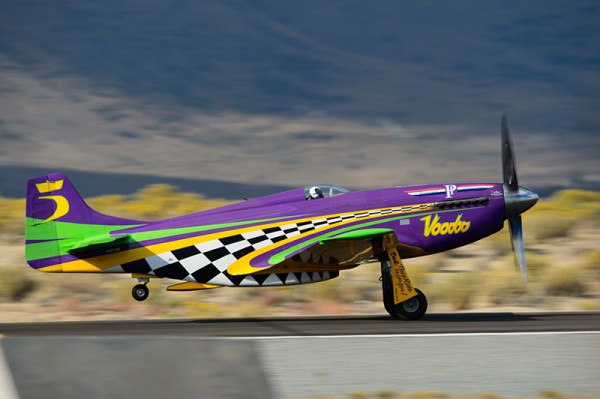
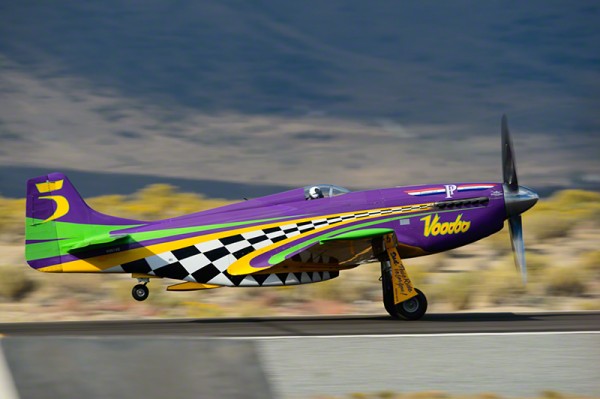
All current fast Mustang racers (Voodoo and Strega) have modified belly
scoops still in place. We also don't need that core thickness as we don't
try to make 3500 to 4000 hp!
Larry Childs
So did I. Horrible. Dave kept his patient alive until she got to the
hospital.
The hospital said she was too far gone. The whole side of her body was
missing.
Paul Lamar
The Rotary Engine free News Letter. Powered by Linux.
If you want off the list PLEASE let me know and I will remove you. ACRE NL
web site.
http://www.rotaryeng.net You Tube
http://tinyurl.com/beqqxas
Copyright 1998-2016 All world wide rights reserved.