Hi Paul Good meeting you today This is the first of 3 sets of
pictures Pictures 1 to 7 are the rounded edge on the Si3N4 apex seals
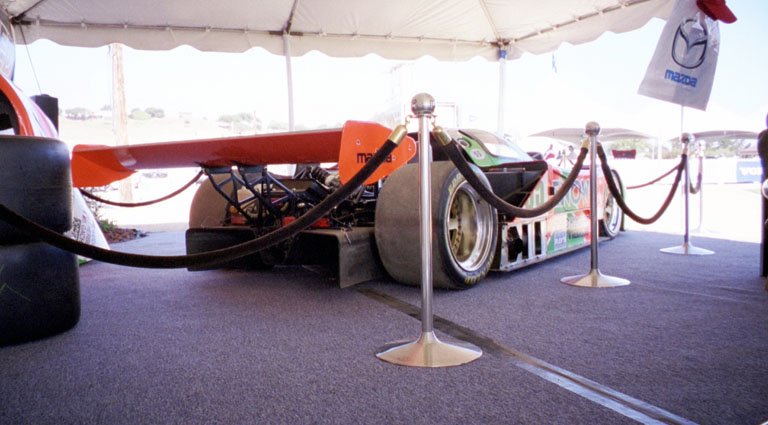
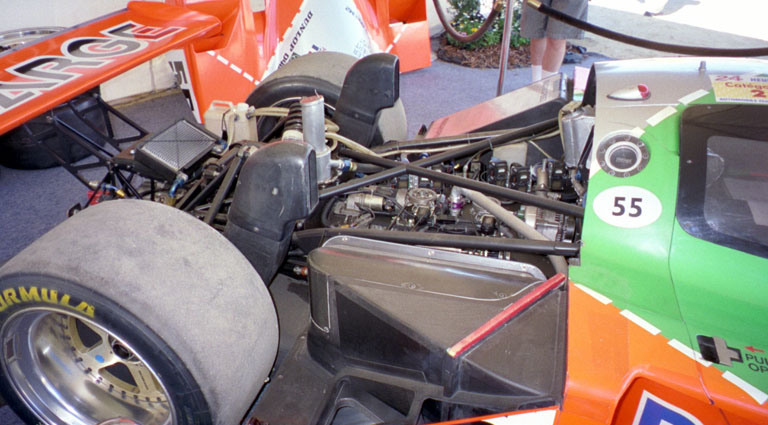
These were run in the #87 Lemans Mazda Race car owned by John Davis
This was used in a race and I suspect that it was not used for a
long period before they were removed possibly only a few hours (I
don't know the actual run time for a fact but I can try to confirm is
that is important, if I can track down the mechanic that removed
them)
John is co-owner of Club Auto Sport in San Jose and that's where the
#87 is stored. #88 Mazda is owned by Ralph Borelli (the other
co-owner of Club Auto Sport). Basically both cars are stored on
opposite corners of the same building.
Regards Simon Saba
Hi Paul,
are these 91/92 Le Mans 787 cars?
Dave in Perth
No. They may have run them at Le Mans I am not sure. Neither one was
the 1991 winner. I think they were built for local races. There were local
races with Le Mans rules but not for 24 hours as I recall.
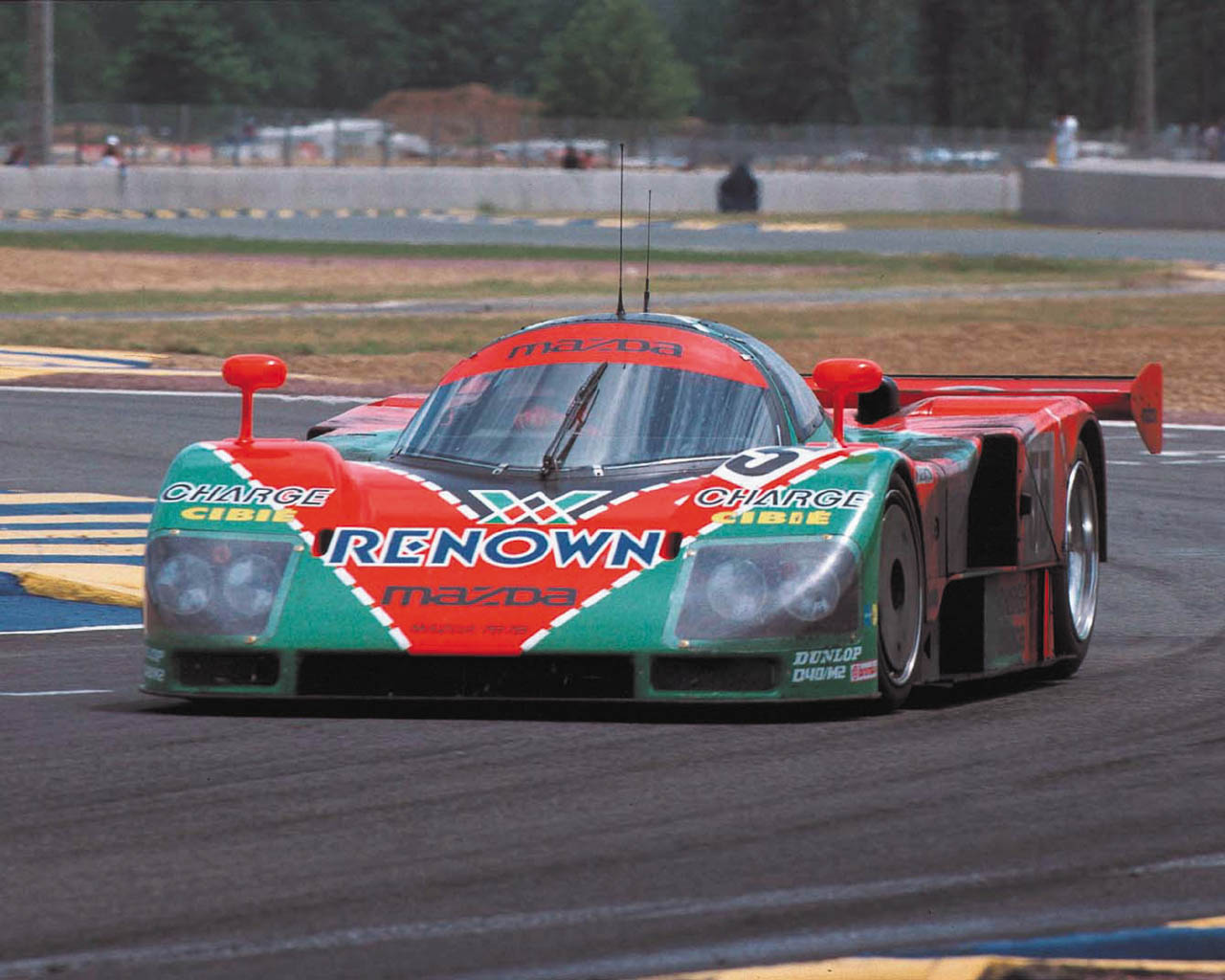
This is the car that won Le Mans.
Here are some of Paul Frère comments after driving it.
Quote:
"As can well be imagined, the push in the back from the 700-bhp [4
rotor] engine is
tremendous. I was asked not to exceed 7000 rpm, which was just reached
in 5th gear at the end of the straights of the triangular track. At Le Mans,
an 8500-rpm limit was used during the race and up to 9000 rpm was
allowed for qualifying. The veteran rotary engine ran beautifully, the noise
inside the car being less obtrusive than outside. It was just as I
remembered it from the sister car I had driven nine years earlier in France,
its flexibility being outstanding for a racing engine. It pulls strongly
from 3000 rpm and at 4500-5000 rpm just sends the 1860-lb. car rocketing
forward.
This remarkable flexibility is no miracle. It has been achieved by the use
of tele-scopic intake pipes whose effective length can be varied in a ratio
of about 2:1. Their maximum length is used when the engine operates at
comparatively low speeds and they become increasingly shorter as
revolutions increase. Their continuously variable length is controlled by
the electronic engine-management unit via electric motors and a somewhat
"Rube Goldberg" but efficient cable-and-pulley system, but it certainly
works. "
End quote.
Here are some pictures and a short MP4 movie I took on what it sounded like
at 2004 Seven Stock in SoCal
Paul Lamar
The Rotary Engine free News Letter. Powered by Linux.
If you want off the list PLEASE let me know and I will
remove you. ACRE NL web site.
http://www.rotaryeng.net
You Tube
http://tinyurl.com/beqqxas
Copyright 1998-2016 All world wide rights reserved.