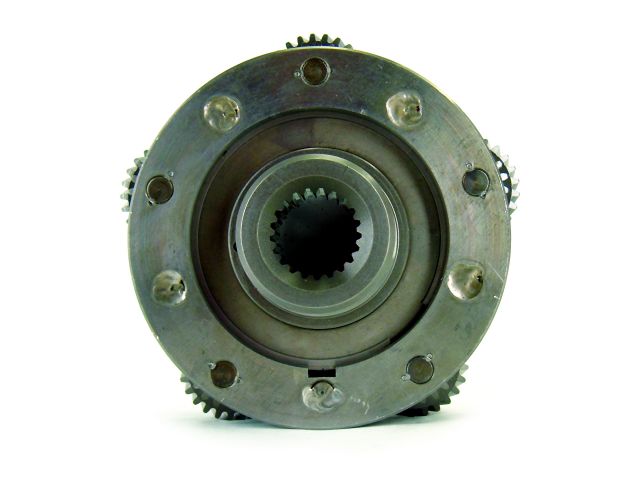
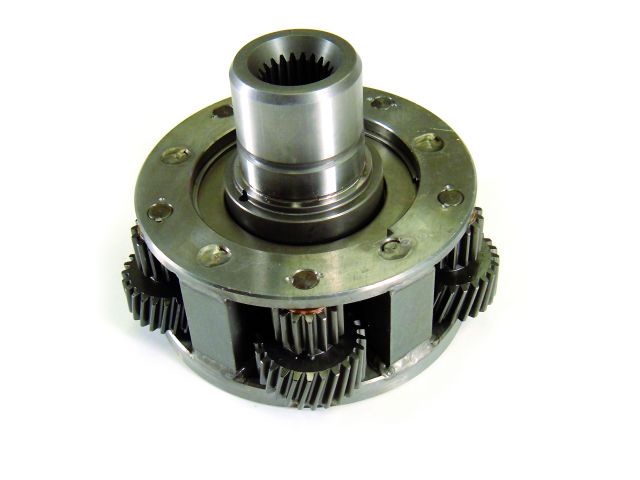
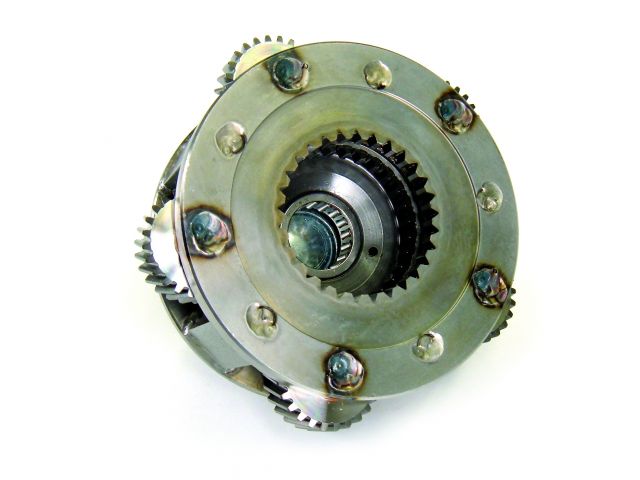
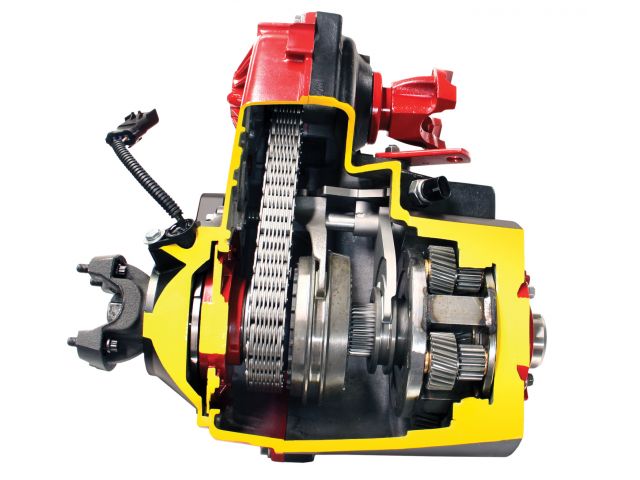
Yes! Those are just the renderings. Pick out what you want and I will
send the IGES.
Paul Lamar
Hi Paul,
I think those AL housings appeared while I was away.
Could you send me some detail of the wear plates and the Al housings; an
AL center hsg would sure cut some weight out of the total engine weight.
I have a friend who has just retired from his engineering business and
has kept a lot of his machine tools so I have access to CNC mills, wire
cutters and lathes.
Rs,
Dave McC in Perth
Do you have access to Rhino 3D drawing program? There is no such thing
as a 3 view drawings with dimensions these days. Everything is done with
IGES files. The dimensions are hidden.
The wear plates can be made in at least two ways. A stock cast iron end
housing can be cut down or a new one made of of hard 4130 sheet laser
cut and then chrome plated like the stock rotor housing.
Too bad Australia is so big. Neal Unger in Parkes NSW is doing a lot of
the same things. Neal has a p-ported-13B powered Glastar flying.
Neal is also president of the Sport Aircraft Ass. of Australia. SAAA.COM
You guys should work together. Oz is in real need of a one rotor all
aluminium LSA engine as the Jabiru is struggling.
http://www.aviationsafetymagazine.com/airplane/LSA-Engine-Safety.html
I'll send you Neal's email address by private email.
Paul Lamar
Paul et al,
I have what is probably a basic question.
I have often read that a propeller induces adverse vibrations into a
drive train and that a belt driven PSRU is the way to isolate those
vibrations from the rest of the components and engine in general while
allowing the propeller and engine to each operate in their most
effective rpm range. Yet I also see a lot of planetary (and other?) gear
drive units, especially in the information shared here, that would seem
likely to transmit those propeller vibrations. So in the applications
being discussed here how is a direct drive permissible? Is it because
the aircraft (e.g. the time to climb) are limited purpose and limited
life and thus not likely to be adversely affected in the time they are
operational?
Just curious and hoping to understand better. Thanks for any responses!
Brad Chubb
The planetary was universally used in aircraft engines for years. Only
in WW II was a spur gear used in the water cooled V12's. All the radials
had planetary gear box's including the largest aircraft engine ever made
in quantity.
That was
the P&W R 4360 Wasp Major. It had 18 planet gears. The latests in large
P&W turbo fan engines for airliners is a planetary gear box that is 98%
efficient.
Direct drive requires a
lot of displacement for a limited amount of HP. The 2 rotor rotary
engine is small displacement as aircraft engine go at 160 cubic inches.
However the time to climb engine is a record amount of HP (650) for
it's weight of under
250 pounds
with gear box.
BTW The rotary is also a record amount of HP per cubic inch of
displacement at 4 HP per cubic inch. The former record holder was the
Offenhouser race engine at 3 HP per cubic inch.
The TTC record holder
Grumman Bearcat had 2 pounds per HP to lift while our TTC aircraft (Vans RV4
basically) only has 1.5 pounds per HP to lift. Weight per HP is the
name of the game in high climb performance. Ask any truck driver :-)
We are about done with the installation and we are waiting until Dan
Gray gets back from vacation to test run the engine on the aircraft.
Paul Lamar
Paul,
I think that F1 engines in 2005, in the final year of the 3.0-liter V-10
era, were making about 900 hp and weighed less than 200 pounds. That
would be 4.5 hp per pound. Of course, they were spinning to 19,000 rpm.
Csaba Csere
I also think they were allowed Beryllium Aluminium pistons made from
surplus Russian atomic war head material. BeAl is .7 the density of
aluminium and will tolerate 600 F. As I understand it, BeAl is now outlawed
in F1 due to its toxic nature.
We are turning only 6500 RPM now because of the current 3:1 gear box
and the 84 inch diameter prop. If we used a 4:1 gear box (available in one
planetary) we could turn 11,000 RPM. Many Mazda RX7 road racing engines
use that red line. If that were the case we would have 1100 HP.
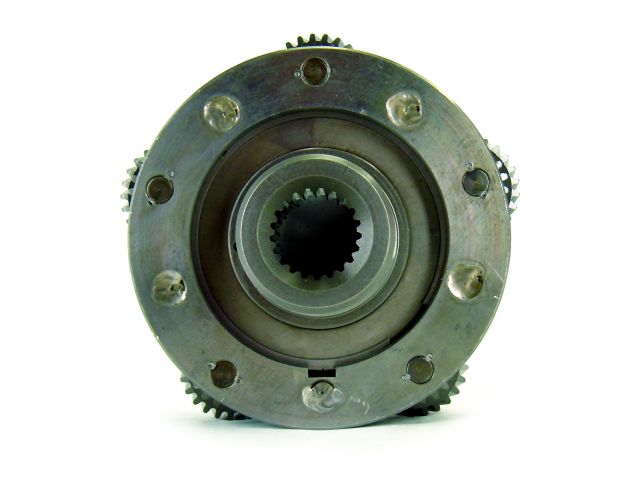
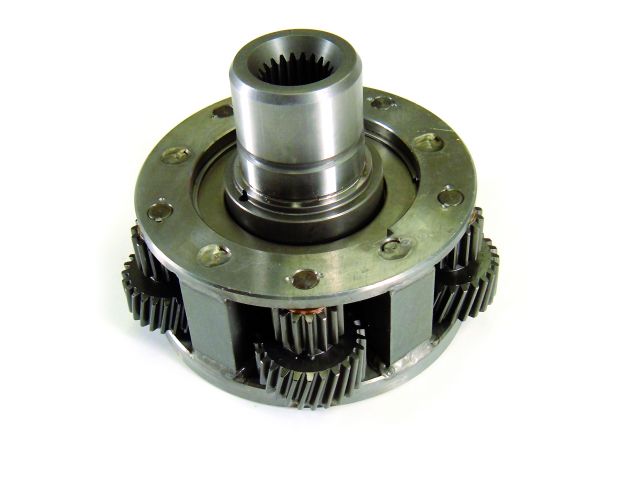
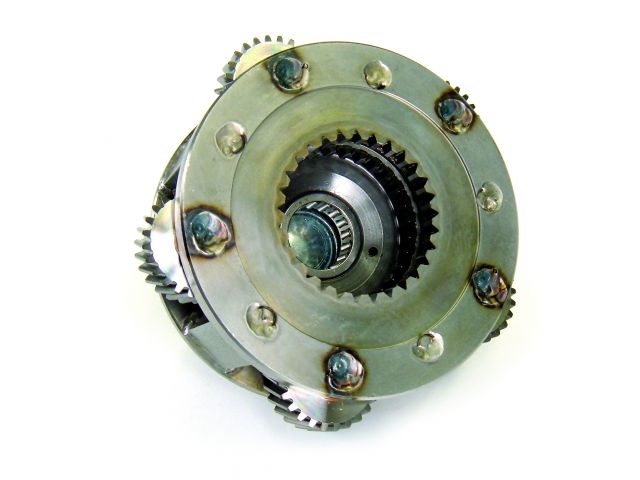
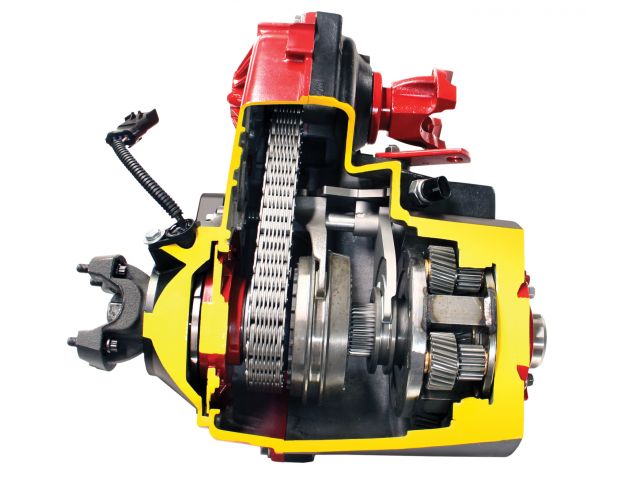
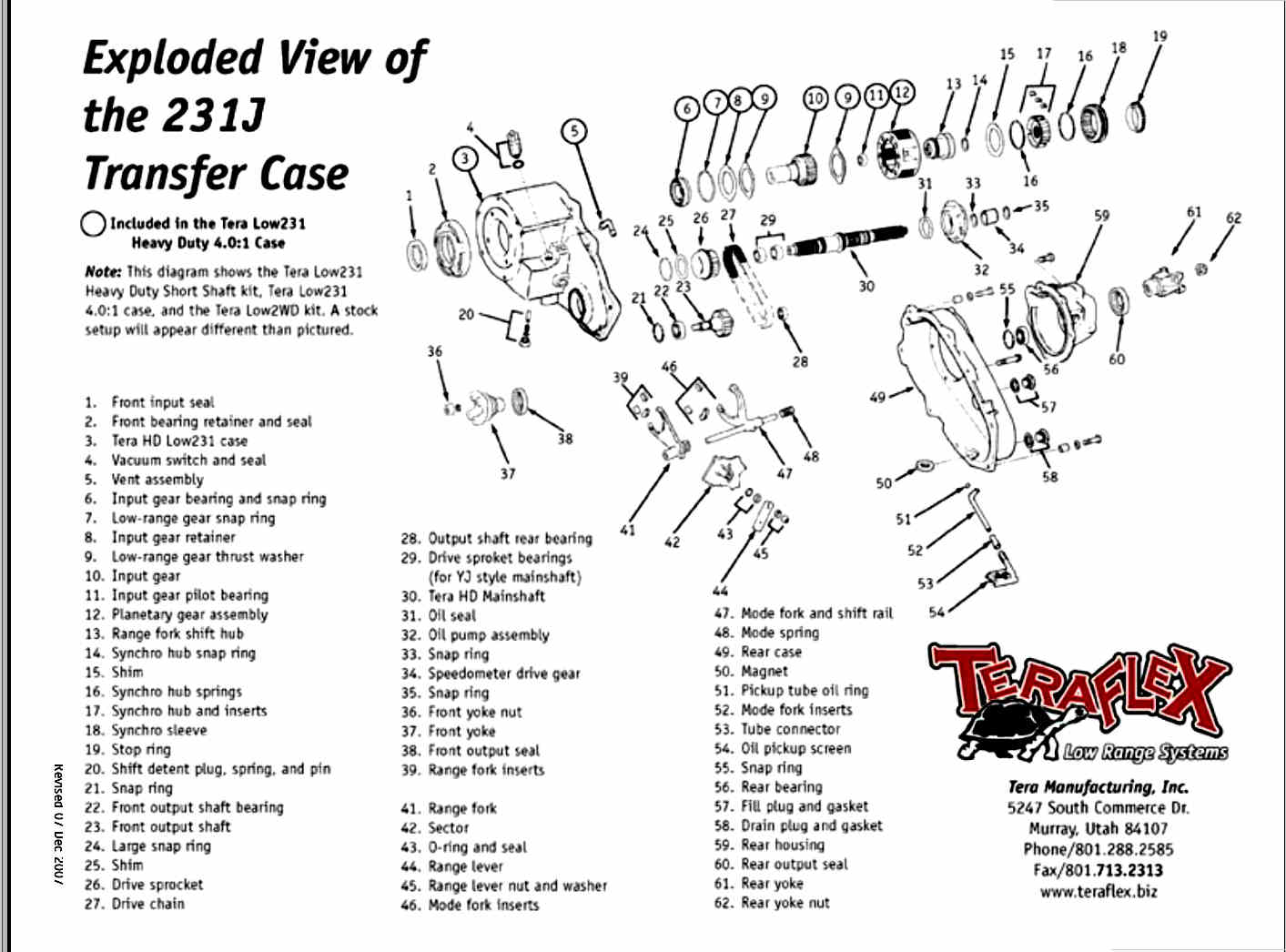
Here is such a 4:1 planetary. This one may not be up to the required torque
so it would have to be scaled up but I doubt it would weigh much
more than the current 3:1 Bell 47 final drive.
If we replaced the current 20 pounds of cast iron rotors and counter
weights with
4.2 pounds of BeAl we could double the RPM and the HP to 2200 HP roughly
speaking. Of course the engine weight would be well under 200 pounds as
well.
Paul Lamar
The Rotary Engine free News Letter. Powered by Linux.
If you want off the list PLEASE let me know and I will
remove you. ACRE NL web site.
http://www.rotaryeng.net
You Tube
http://tinyurl.com/beqqxas
Copyright 1998-2016 All world wide rights reserved.