Hello Paul,
I have spent the last week or so, hours on end absorbing information
from the website and a few other places on the net about the rotary
engine, and I am convinced that this engine would be worth the extra
effort and time for an eventual aircraft build. I would like to go ahead
and subscribe to your newsletter if things are still up and running ( I
didn't see anything very current on the website).
Thanks,
Austin Young
I have delayed on updating the web site because I have been working more
or less
full time on this.
ABSOLUTE TIME TO CLIMB RECORD ATTEMPT POWERED WITH A WANKEL ROTARY
ENGINE AND
SOME WANKEL AIRCRAFT ENGINE HISTORY. PART 1
By Paul Lamar
Back in 1965 NSU introduced the Wankel rotary engine in small cars. The
Wankel engine was invented by Felix Wankel in the early 1950's. As a
physicist I was mightily impressed with the ingenious engine mechanism
and it's exceptional power to weight ratio. I ordered a NSU Wankel
Spider to be delivered in Europe. My wife and I would drive it around in
Europe on our vacation and bring it back as a used car with tax
advantages. That was the plan. Before we could do that I was offered a
wonderful dream job at Chaparral Cars in Midland Texas
as a race car engineer. Naturally we canceled the car order and the
vacation trip and moved to Midland Texas.
In 1969 Mazda introduced Wankel powered cars to the US. In 1973 I got
around to buying my first of seven Mazda Wankel powered cars. It was a
2000 pound 120 HP 12A powered RX2 four passenger coupe. Not long after
that news spread like wild fire that the seals were failing. Those
somewhat familiar with the engine assumed it was the apex seals. The
piston engine infrastructure structure heaved a sigh of relief and piled
on what they thought was the apex seal problem and the demise of the Wankel.
Forty years later I am still asked the question "What about the apex
seals? Well it was not the apex seals. It was the neoprene O-rings that
were supposed to seal the water jacket. If you over heated the engine
the neoprene would melt at 200 F. Mazda's had already sold about 200,000
rotary cars and it began to look like the automobile manufactures had to
tool up at a cost of billions to manufacture rotary engines. Many took
out Wankel licenses to do so.
The anti rotary stuff was not over yet. In the late 1970's and 1980's
Mazda rotaries denominated endurance road racing. Mazda won more 24 hour
road races than any other brand.
The engine was exceptionally robust and durable.
The US racing organization beholding to the car manufactures forced
anyone that wanted to race a rotary to carry up to 600 pounds ballast.
In 1991 Mazda won the famous Le Mans 24 hour race
outright on a limited amount of fuel beating the who's who of European
sports car manufactures.
So much for the Mazda rotary reputation of high fuel burn.
The Le Mans organizers promptly and excessively handicapped rotary
engines. The Sports Car Club of America has banned outright in all
racing classes P-ported Mazda rotary engines.
The so called p-port made the engine too powerful for anything near it's
displacement.
The first person to fly it in an airplane as far as I know was a fellow
by the name of Lou Ross. He designed and made his own Ford auto
transmission based planetary gear box and installed it in a Mooney and
proceeded to sell the the required gear boxes to others. The rotary
makes HP with RPM and not displacement. All powerful aircraft engines
use gear boxes. The monster P&W 4360 corncob radial has a planetary
gear box built in. Ross went on to manufacture hundreds of gear boxes
for Mazda Rotary engines in aircraft for about. 30 years.
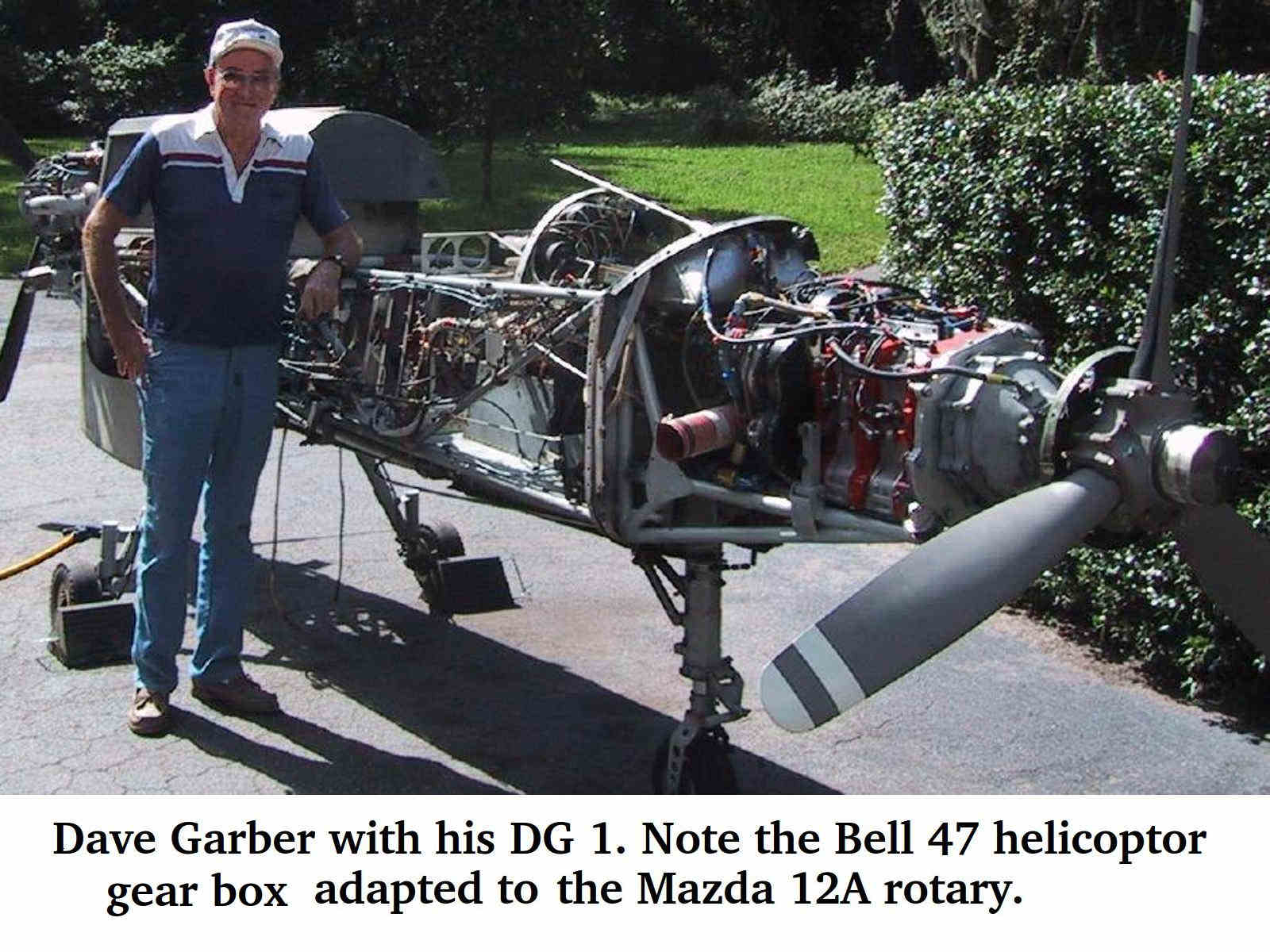
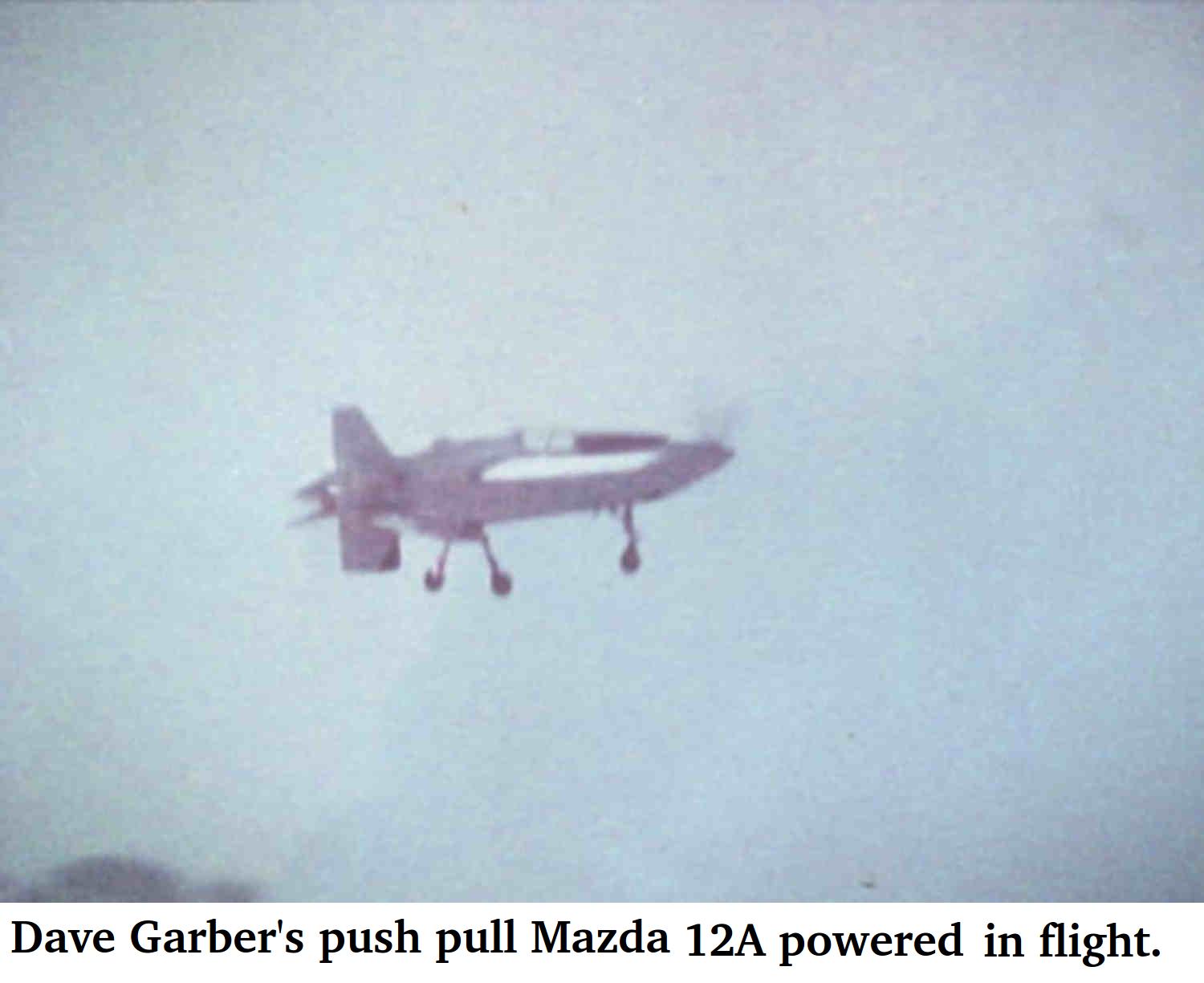
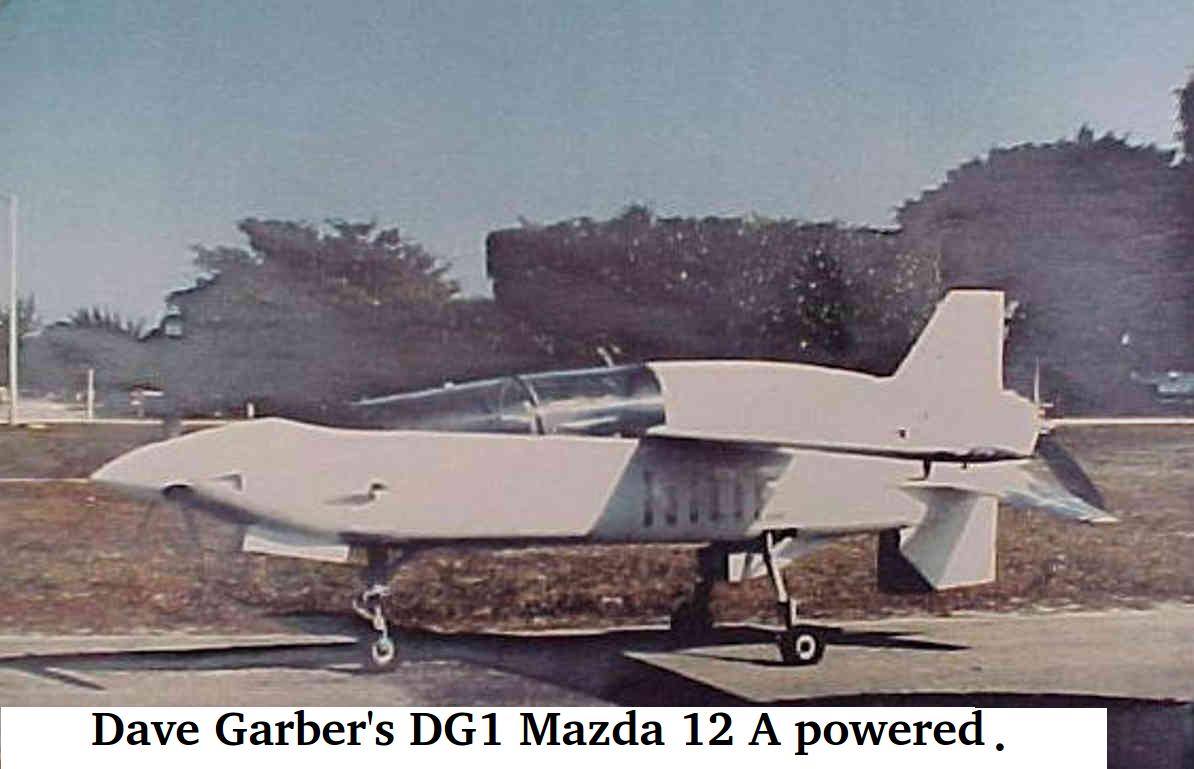
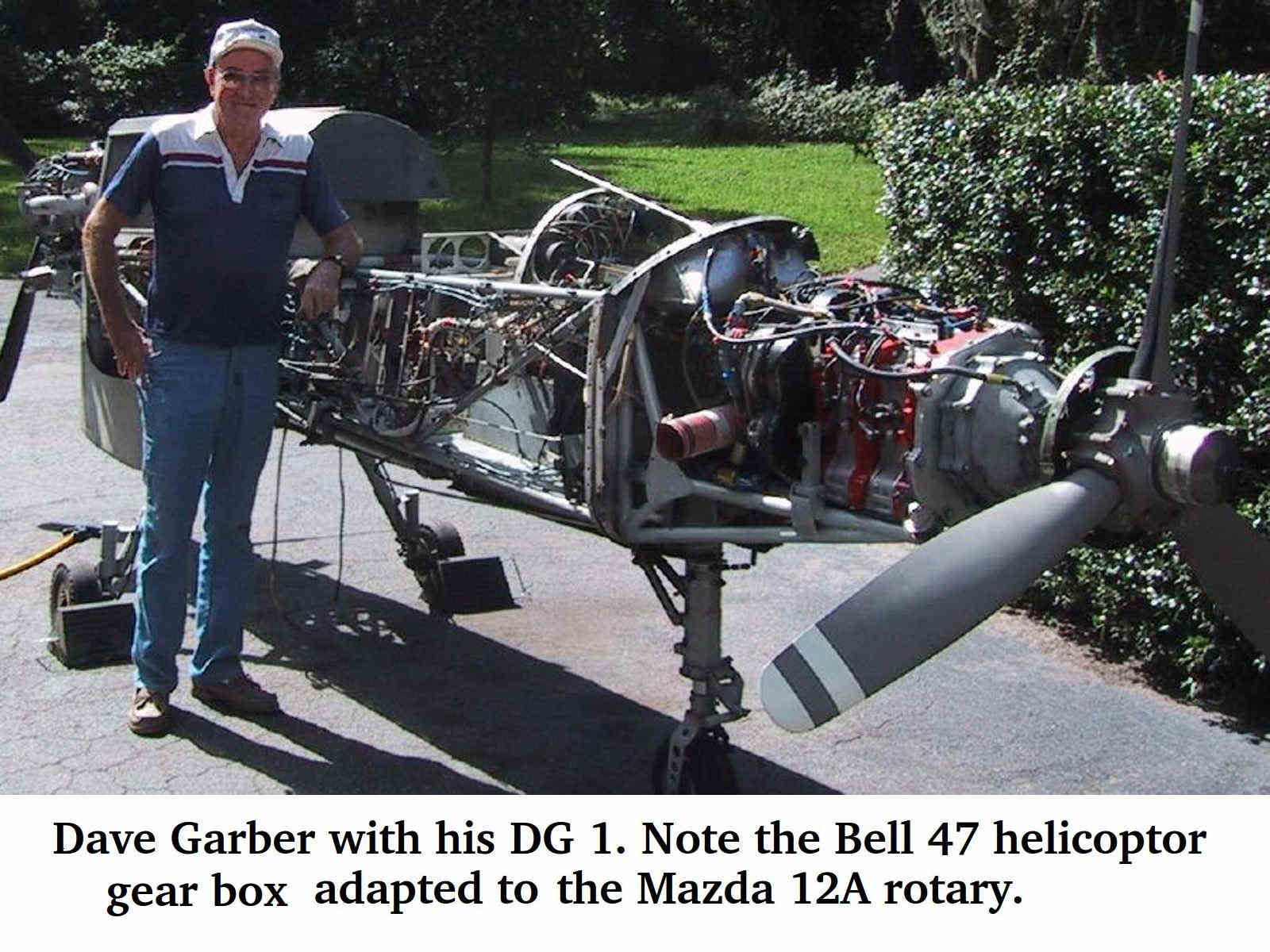
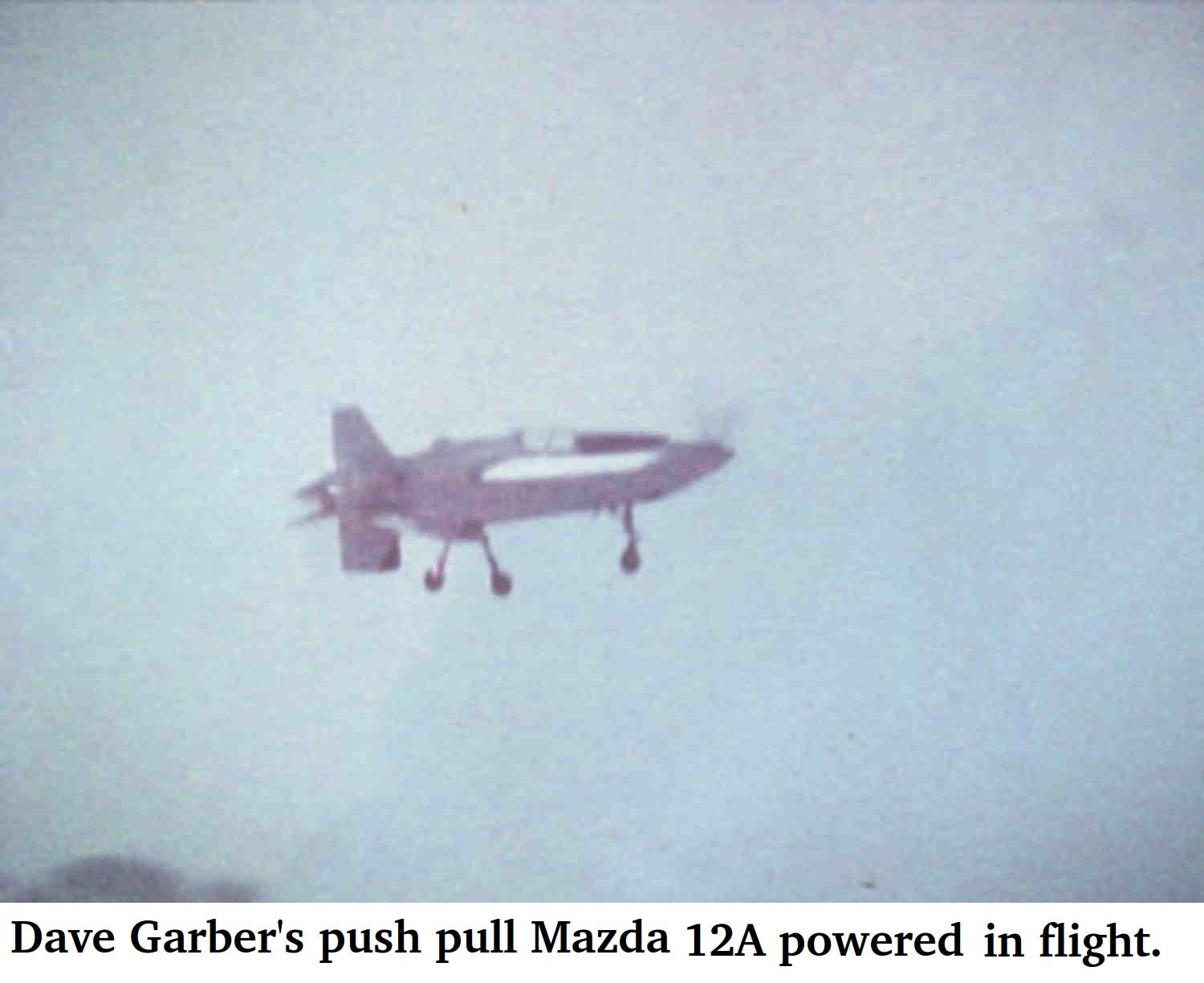
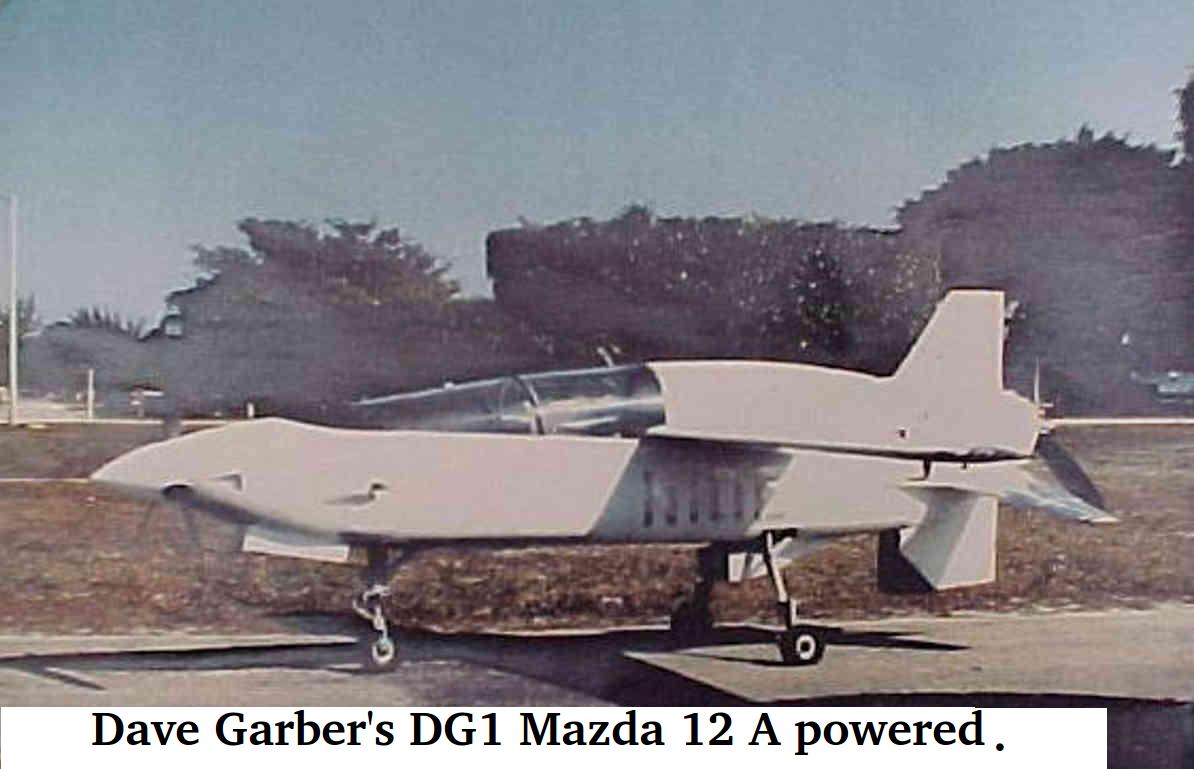
Also around 1973 a Pan AM pilot by the name of Dave Garber designed a
push me pull me Reno racer called the DG1. Dave was far ahead of his
time for recognizing the potential of the Wankel. It had two 12A Mazda
Wankel engines turbo charged to 350 HP each built by Racing Beat in
southern California. These engine used a modified Bell 47 helicopter
final drive planetary gear box. Dave flew the DG1 but never solved the
liquid cooling problems. Despite the water cooled aircraft successfully
used in WW II heat exchanger theory was still in it's infancy. Around
about 2004 he contacted me to work on the cooling system as I just
published a book called How to Cool Your Wankel. I borrowed the airplane
and towed it to Sun & Fun and ran it up in the engine workshop area
where I was a volunteer at the time.
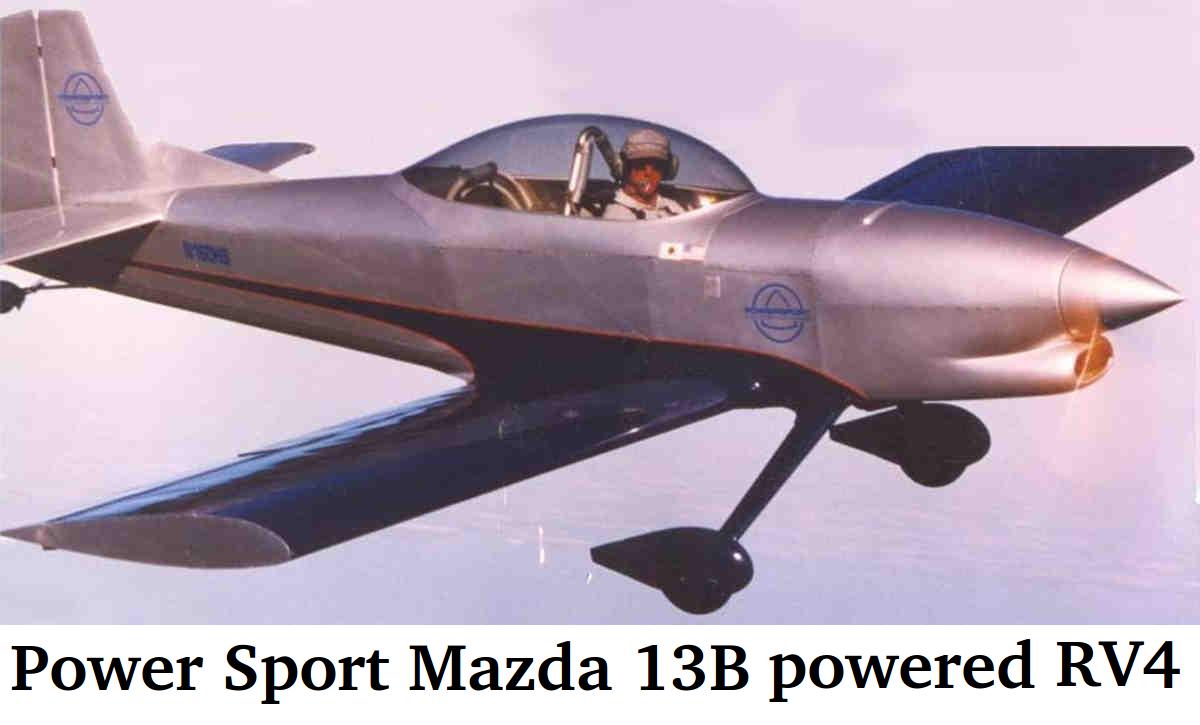
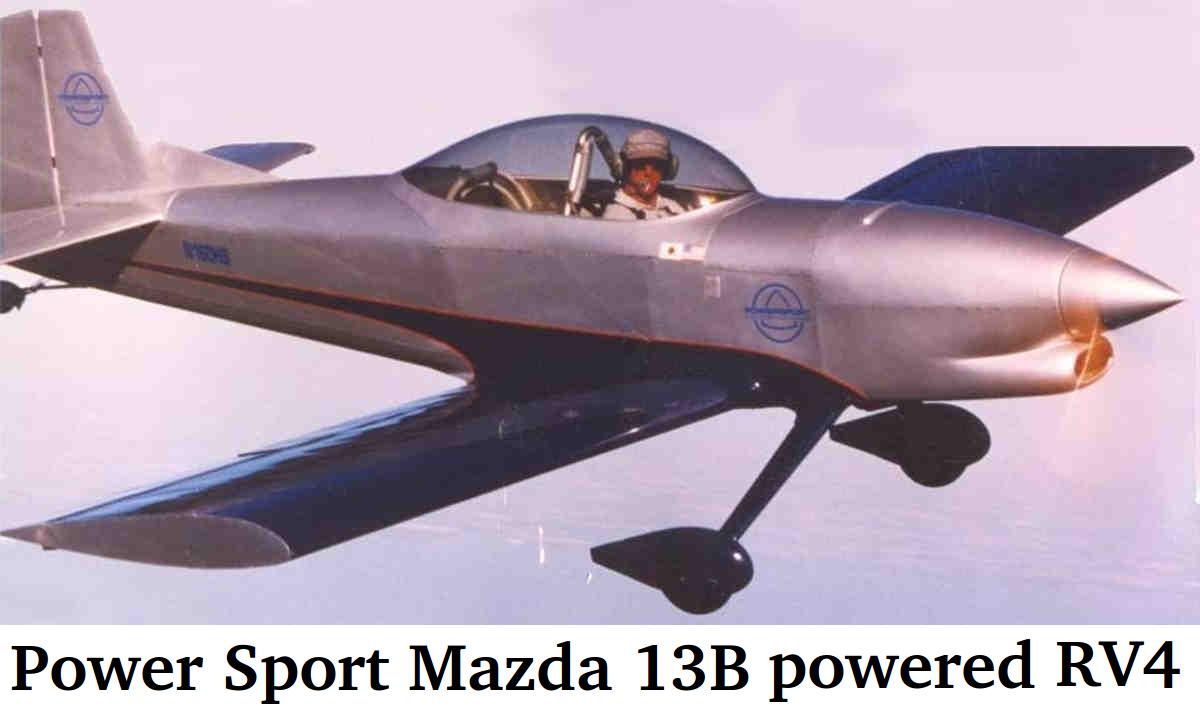
Around 1998 Everette Hatch hatch and Steve Beckham of Power Sport built
some all aluminum versions
of the Mazda rotary. It had a fully assembled weight of 185 pounds,
rated at 200 h.p. including alternator, scavenge and pressure dry sump
pumps, water pump, ignition complete--everything--with 390 Reynolds
aluminum front and rear end housings.
They also installed a modified stock cast iron normally aspirated 13B
in an RV4 and entered it in the Sun 100 air race and went about 235 MPH
as I recall. They also competed in the time to climb to 3000 feet
competition. They achieved 3000 thousand feet in 58 seconds which if not
the record for that altitude was very close to the record.
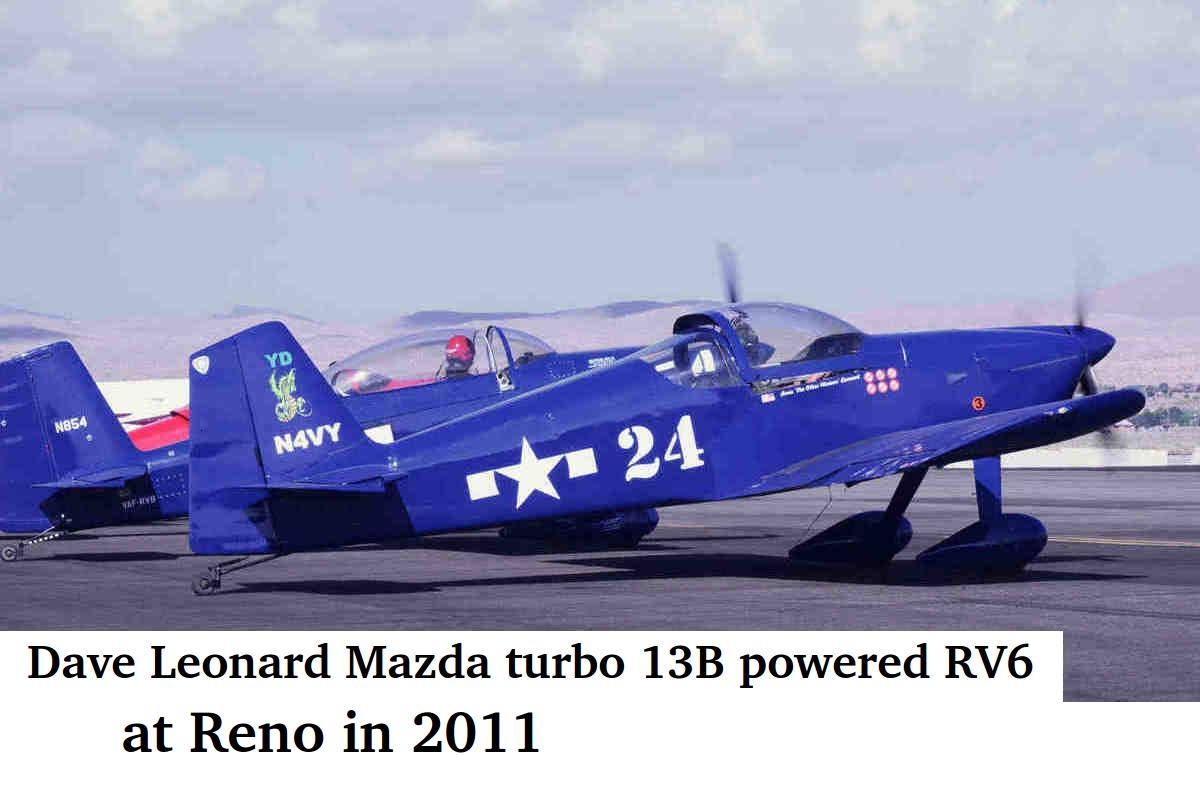
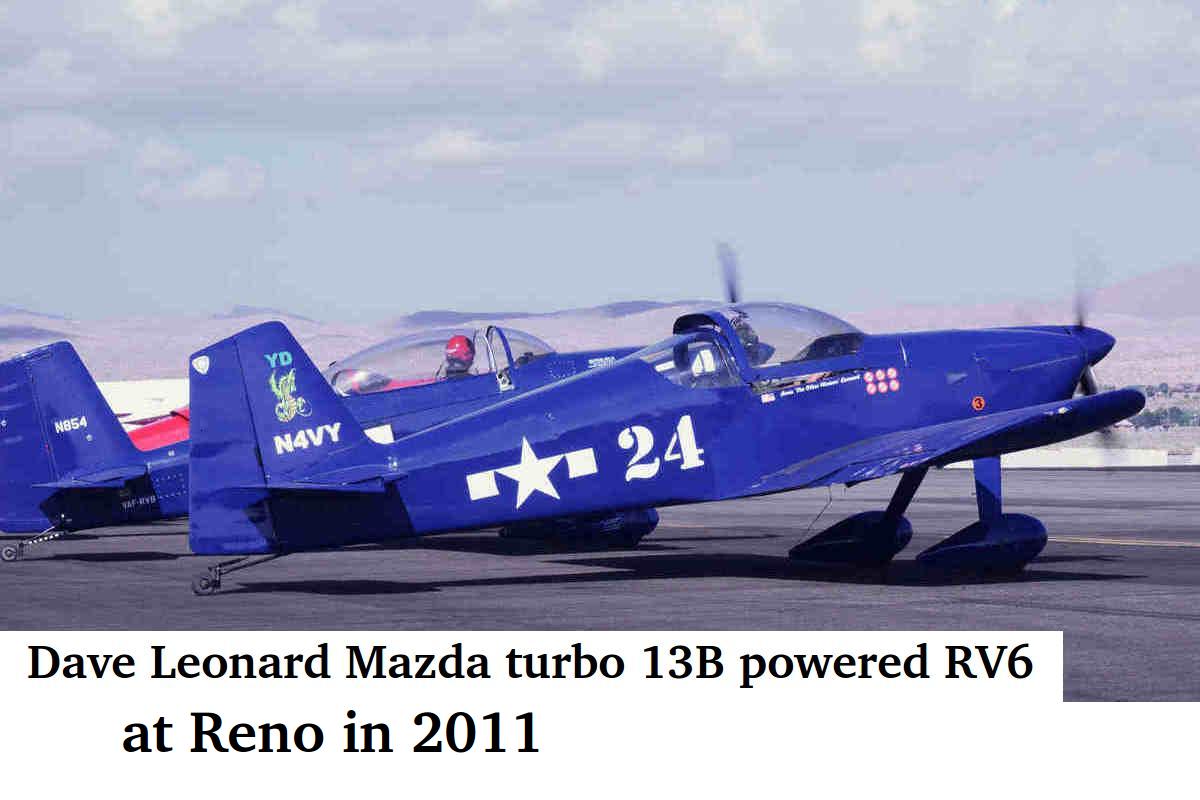
In 2011 retired Navy Commander and anesthesiologist Dave Leonard entered
his turbo 13B Mazda powered RV6 and went 229 MPH in the Reno qualifying
races. That was the year of the fatal and tragic P51 crash, the races
were canceled and Dave did not get a chance to run in an actually race.
Dave still flies this airplane.
Several years ago an American rotor head by the name of Russ McFarland
living New Castle Australia decided to build a Mazda rotary powered
world record attempt time to climb
aircraft. Russ was a long time subscriber to the Rotary Engine News Letter.
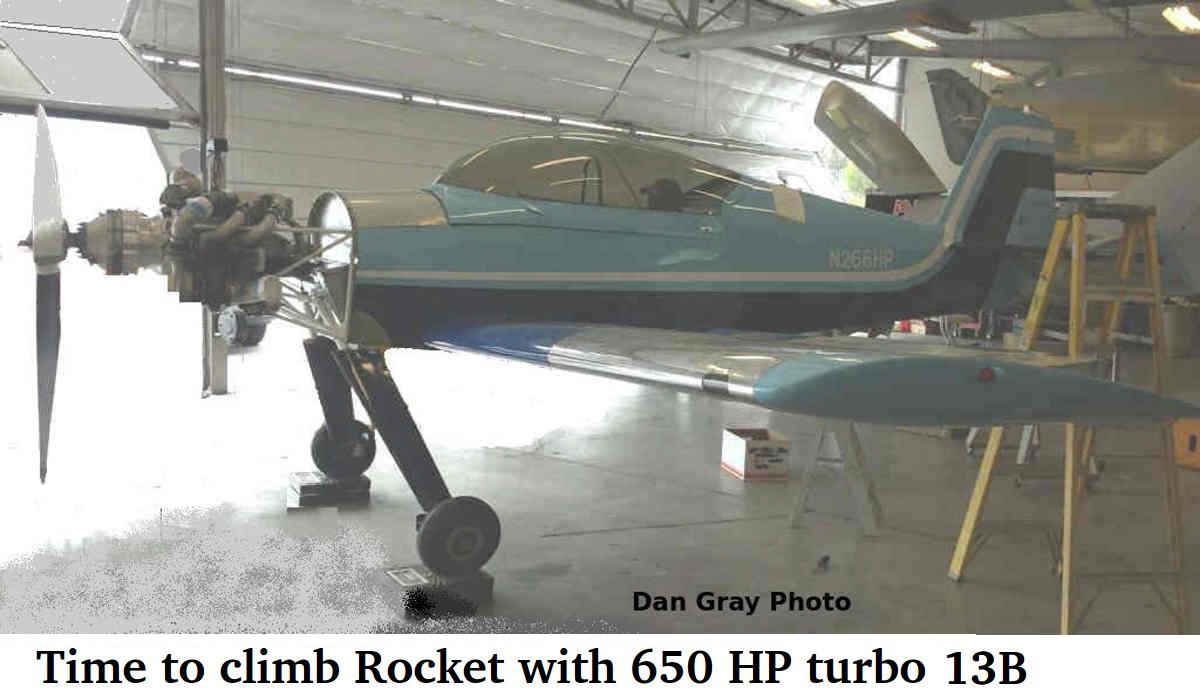
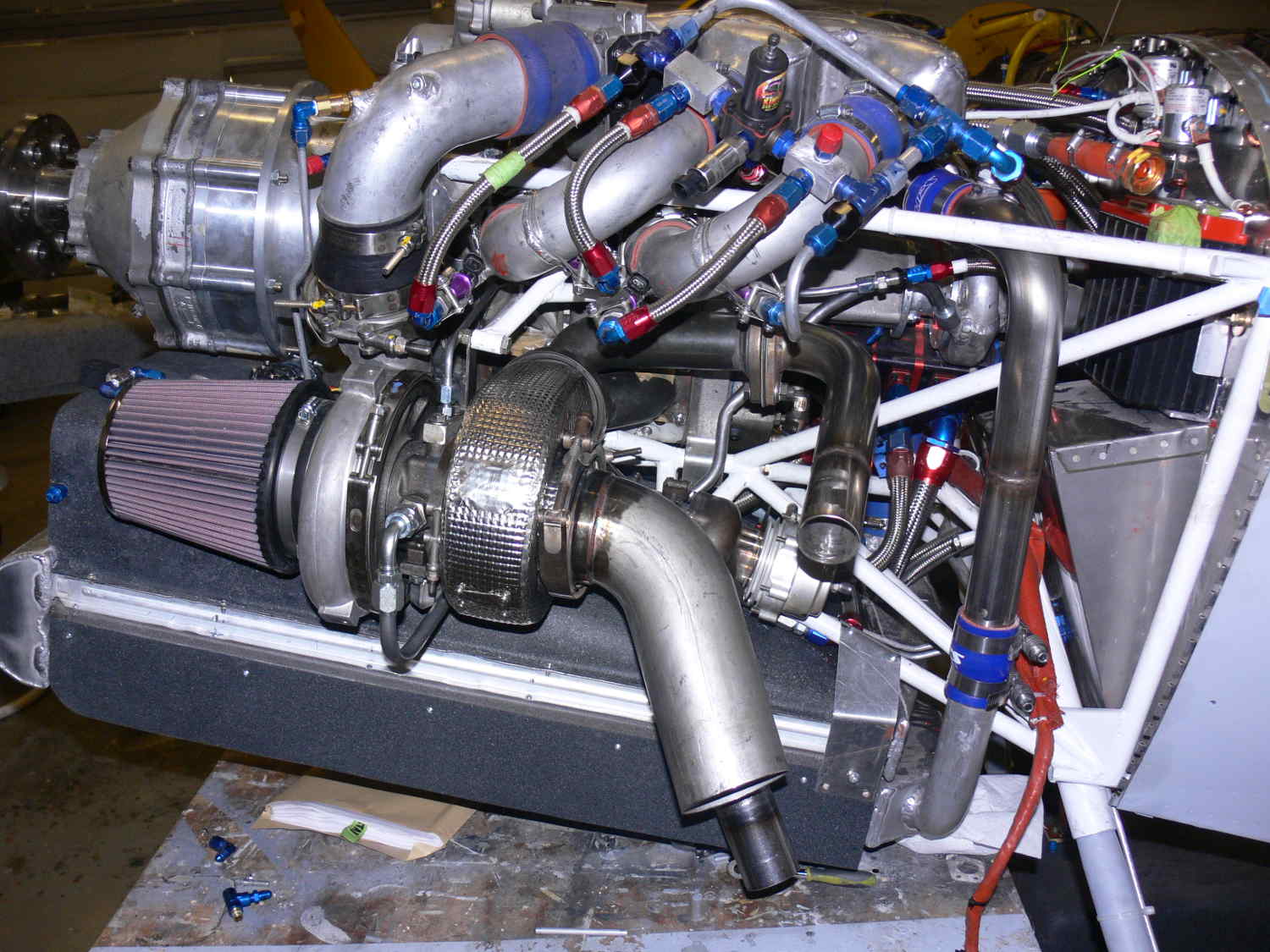
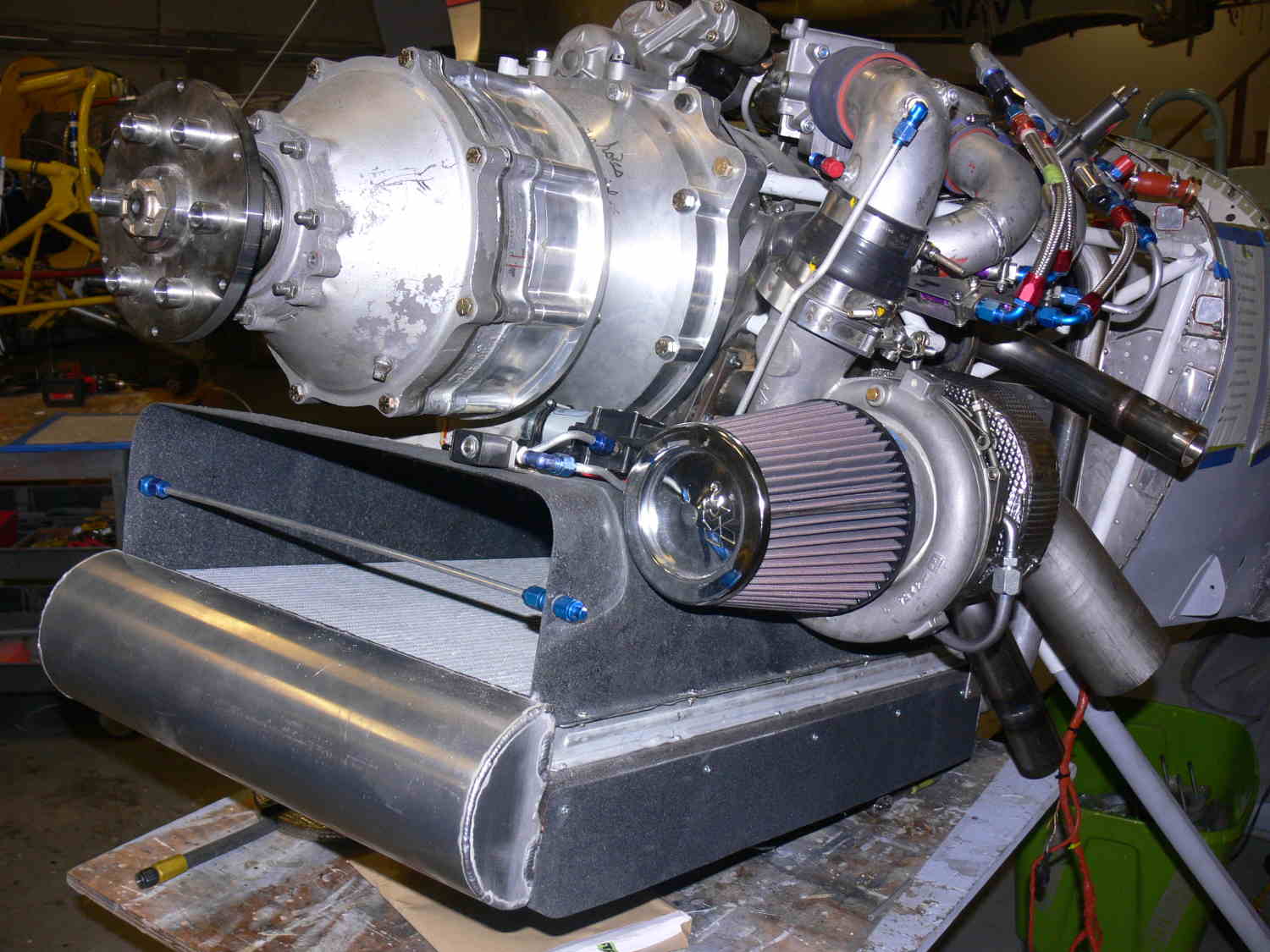
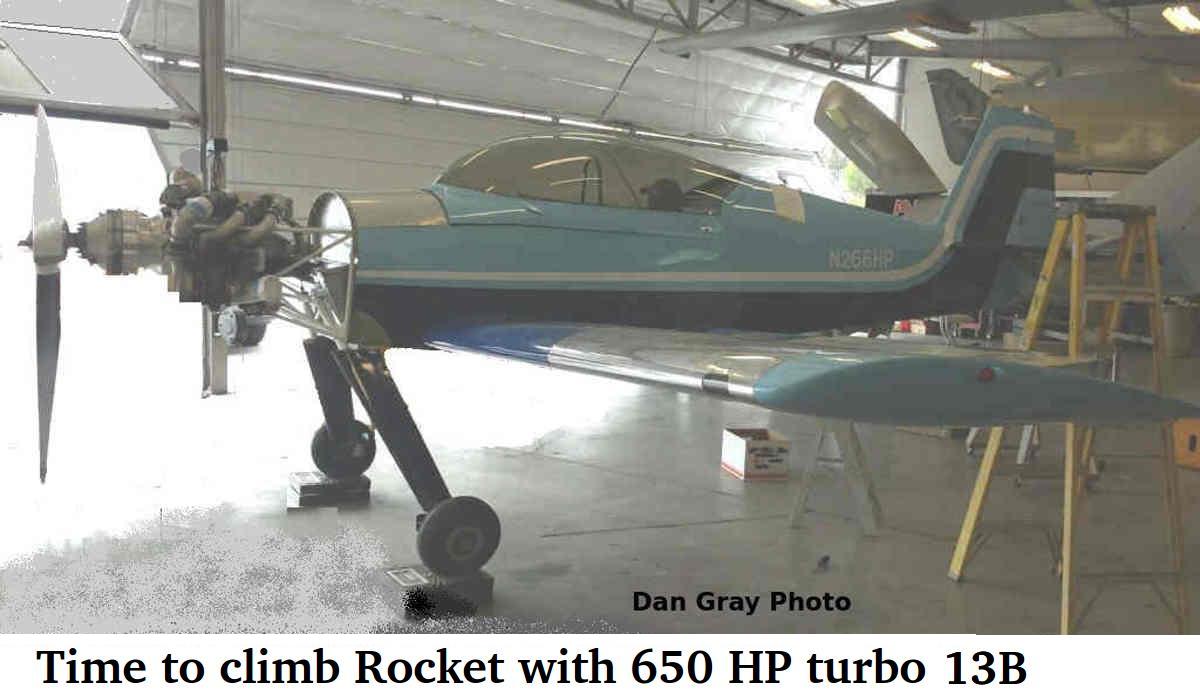
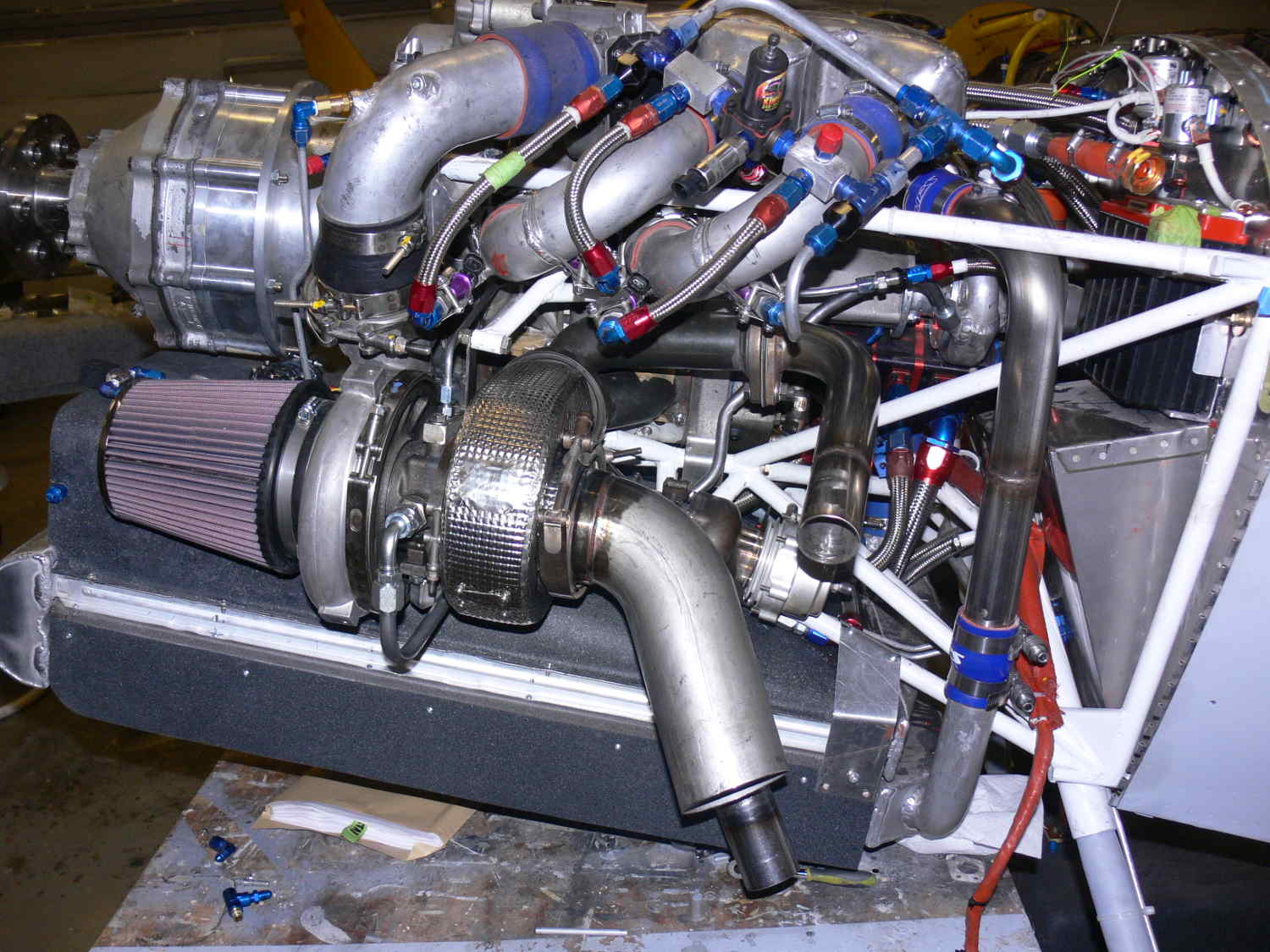
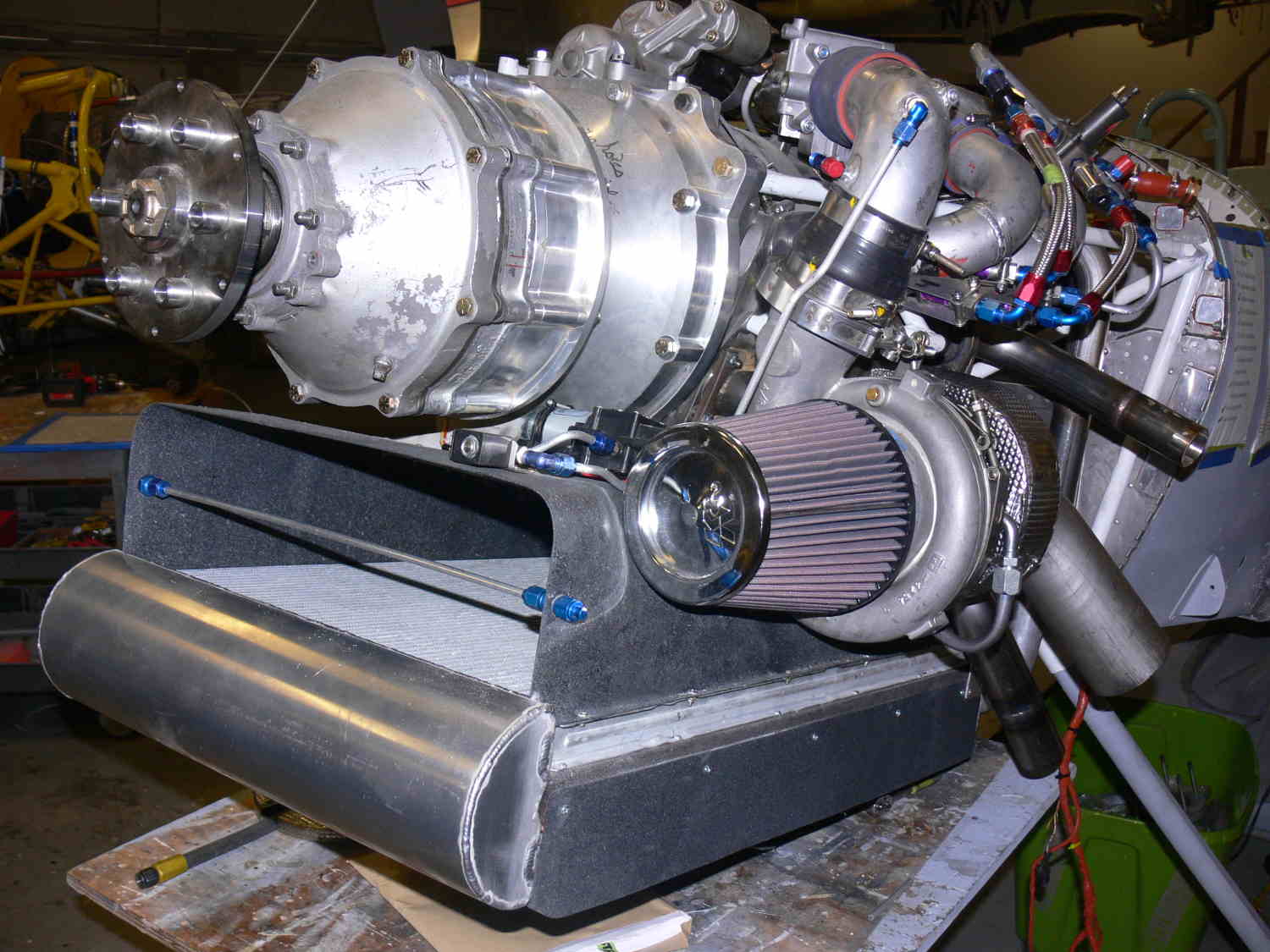
Russ decided to use a 650 HP turbo charged Mazda 13B all aluminum engine
built by the same Racing Beat company that built Dave Garber's DG1
turbo 12A engines. Mazda first engine was called the 12A and was used
from about 1970 to 1985 in several different types of cars. Mazda second
slightly larger engine was used from about 1974 to 2001 in several
different types of cars.
Mazda's third engine was used in the RX8 and we refer to that as the RX8
engine. Same displacement
and over all size as the 13B engine. Mazda also built a 3 rotor version
not sold in the U.S.
The Mazda 13B rotary engine has been around since 1973 in the RX4 and
last sold in 2014 in the RX8. Over 2.5 million have been sold. During
that time no increase in displacement or weight has occurred but the
street HP has increased from 120 to 280. The projected life of ceramic
apex seals is now 20,000 hours. Not 2000 Hours. 20,000 hours! Mazda is
rumored to be working
a turbo compound hybrid engine with 350 HP that will achieve 35 MPG
around town.
This is the same turbo compound hybrid system use in current Formula One
racing engines
Russ was counting on the high power to weight ratio of the Wankel and
it's exceptionable robust nature. This 13B TC engine weighed less than
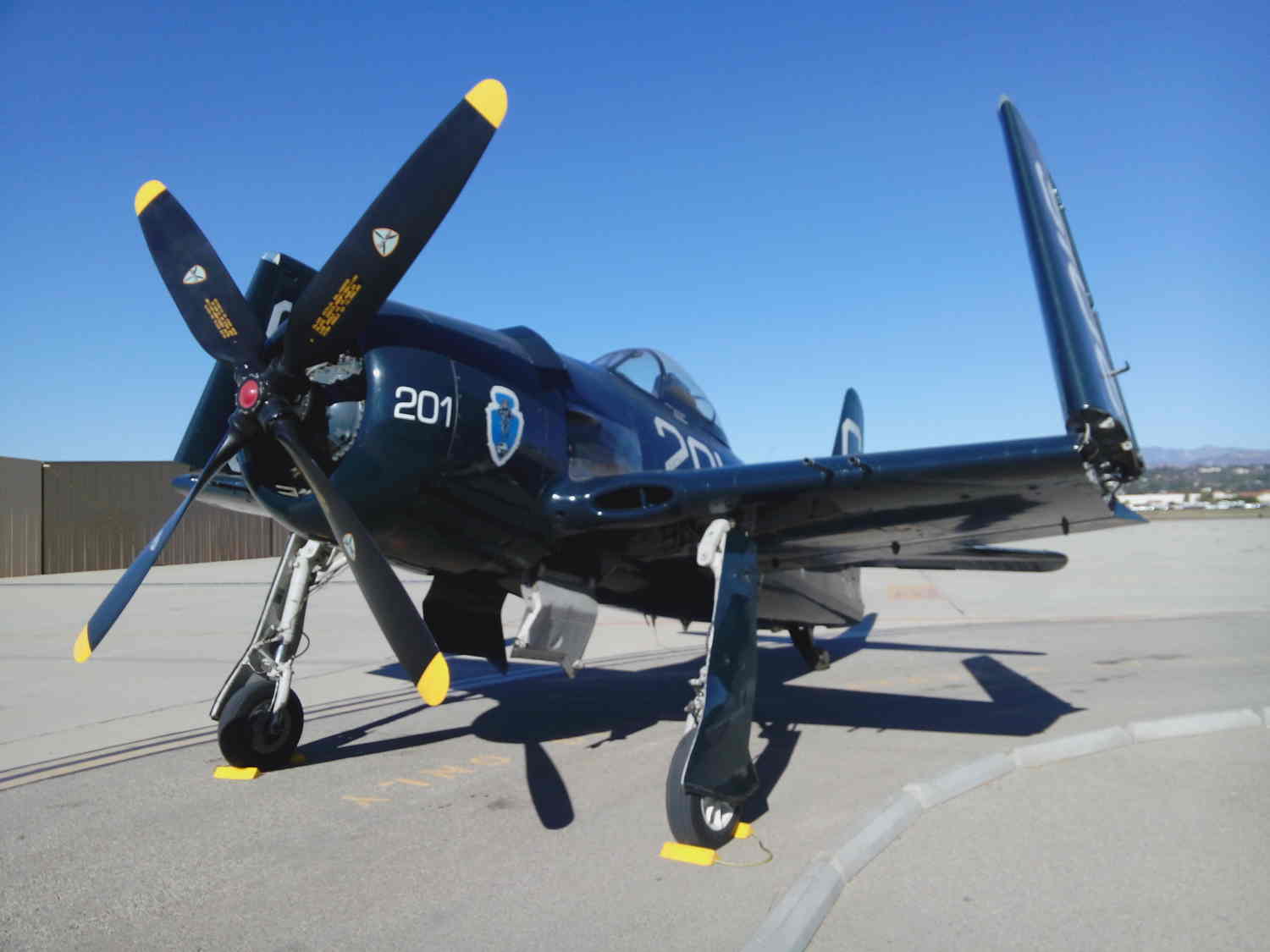
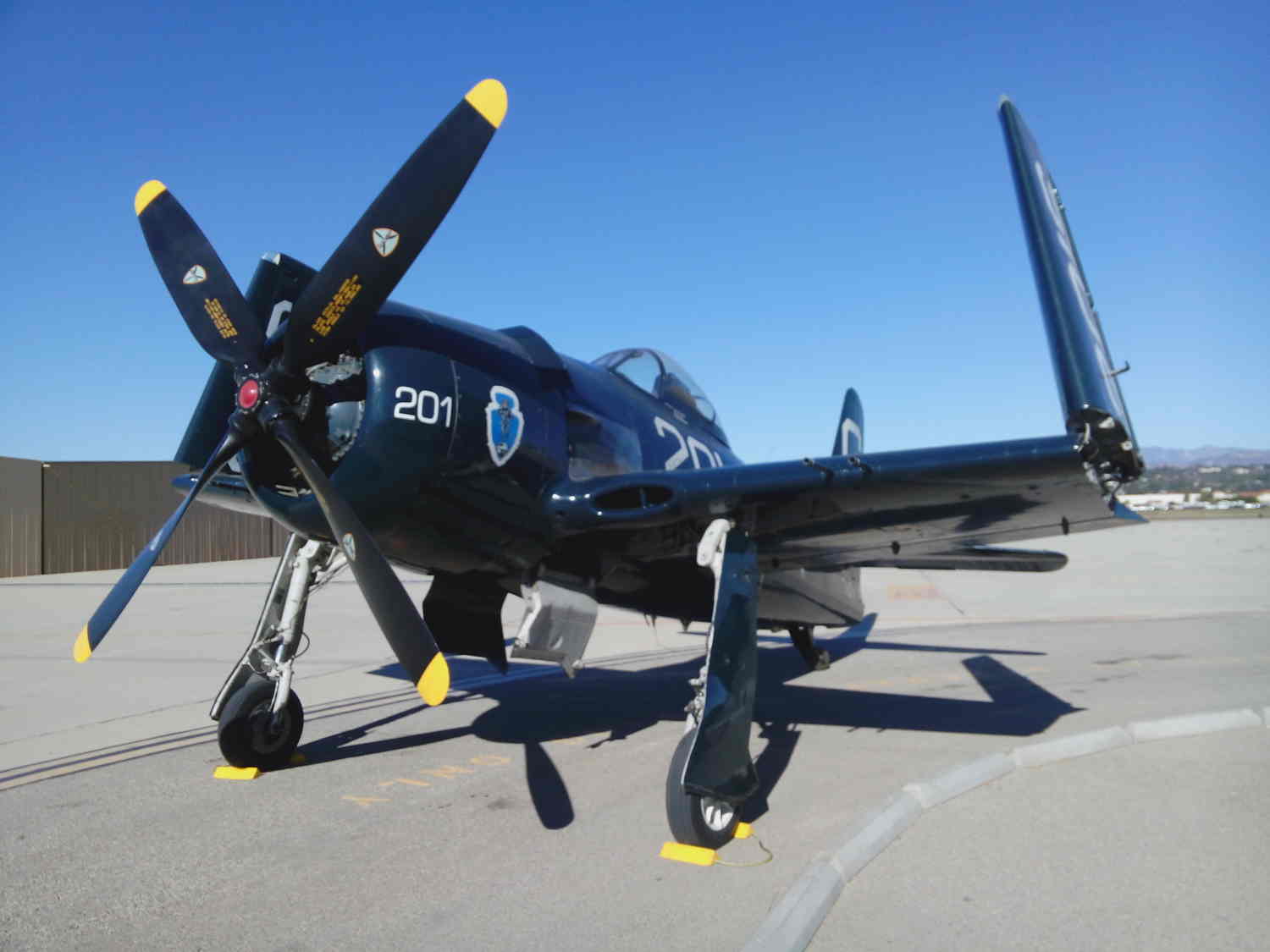
200 pounds with the turbo. The propeller driven absolute time to climb
records is 90 seconds from a dead stop on the runway to 3000 meters I
believe is held by a Grumman Bearcat. This is not a weight class record.
This is an absolute record. If this works the turbo Wankel will go down
in history as another type of viable aircraft engine. Joining piston
engines, turbo props and pure Jets.
Russ contacted the same gentlemen that built Dave Garber's engines back
in 1973. Namely Jim Mederer owner of Racing Beat in Southern CA. BTW Jim
holds the stock car body land speed record at Bonneville at 268 MPH in
an Mazda RX7. Stock body means you cannot improve the aerodynamics
of the car bought off the show room floor.
This time Jim was able to extract 650 HP running on alcohol. Jim also
developed aluminum end housings that dropped the engine weight
from about 300 pounds to 200 pounds. The Mazda 13B block is a sandwich
of 5 castings. It is held to together with 17 long bolts.
The front, middle and rear are cast iron in the production engine. Jim
designed and had cast aluminum housing to replace the three cast iron
housings.
Lots of other engine changes were made. A dry sump oil system was needed
so the oil pan was done away with and replaced with AN pluming that
extracted oil directly from the center and front end housings and send
it to the oil cooler. A new larger capacity water pump was needed. A
p-ported was chosen in instead of the stock side ports.
A Motec after market EFI system was chosen to supply fuel to the engine.
That came with an EFIS. The rotors are modified stock rotors as is the
eccentric shaft.
When Felix Wankel invented this engine back in the 1950's he had no idea
it would
ever generate 650 HP and weigh less than 200 pounds. This is a
monumental achievement.
Historically this development is on a par with the jet engine and the
turbo prop engine on a power to weight basis. The Wankel rotary is almost a
continuous combustion engine like the jet engine. The intake and exhaust
valves never
sleep. They are always open to one or more of the three chambers of a
single rotor
as it orbits around the eccentric shaft.
Actually Felix Wankel did not specifically design the engine with robust
structure in
mind. It just happened that a reasonable geometry Wankel is an
extremely robust mechanism capable of extremely high manifold pressures.
Ask any piston engine engineer/designer about the importance of
structural strength. The end is not insight for the Wankel power and
efficiency. Just wait until Mazda or some one else
builds a turbo compound version. Not only will it best a turbo prop
on power to weight ratio but it will burn half the fuel.
Now for the chosen aircraft to accept this engine.
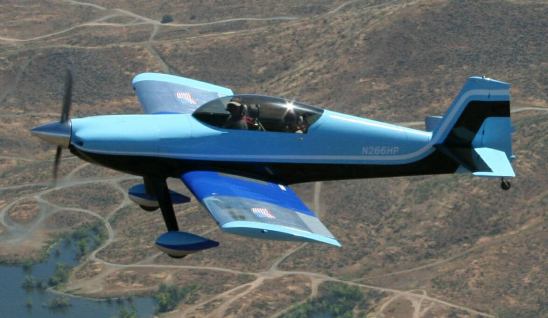
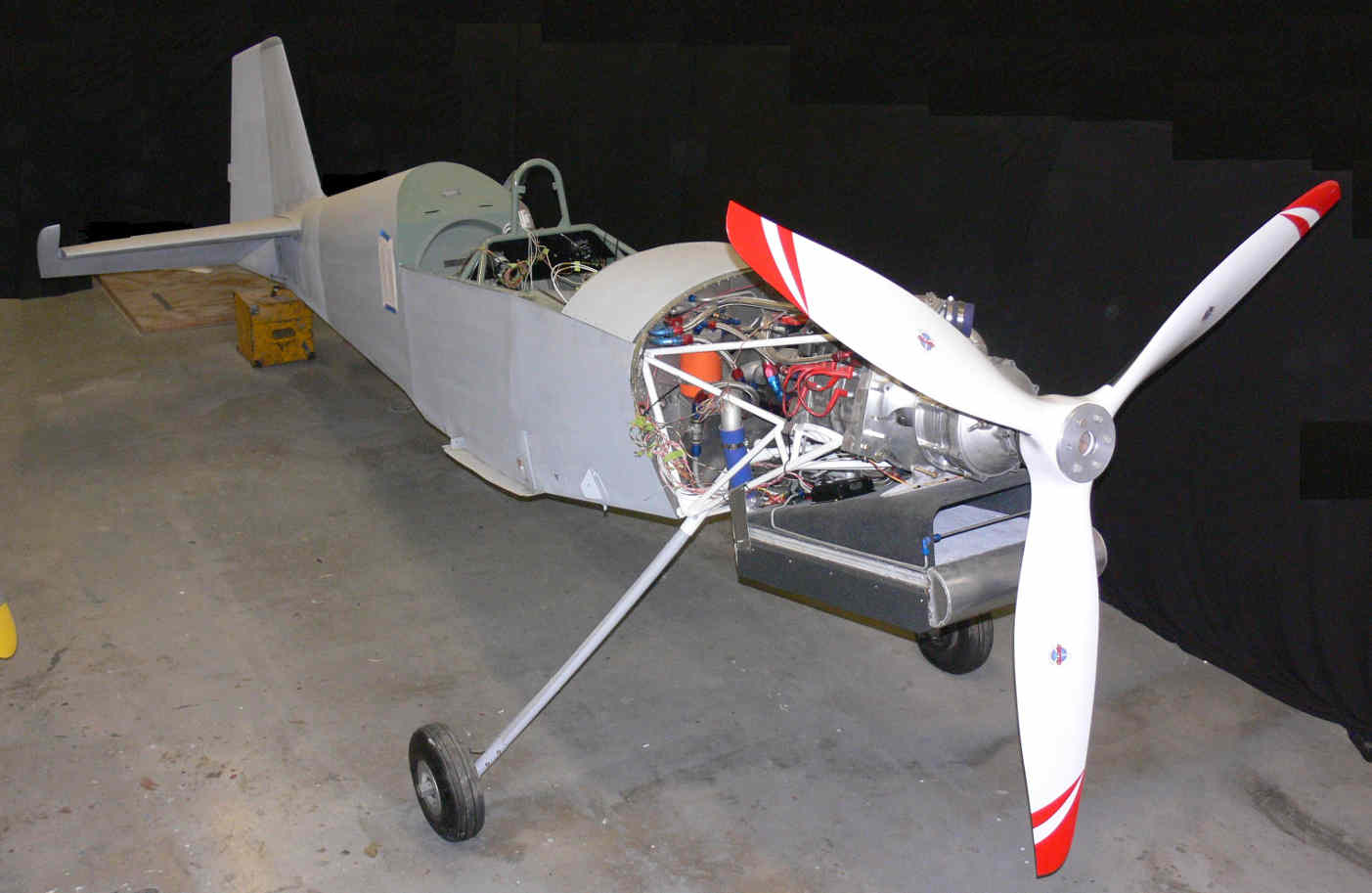
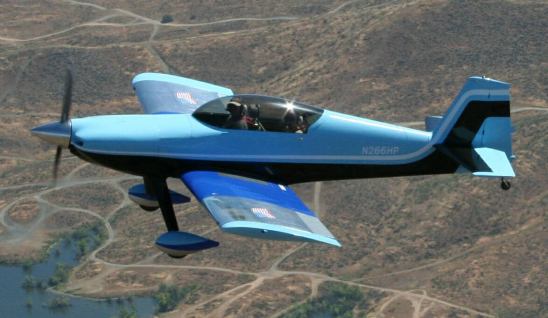
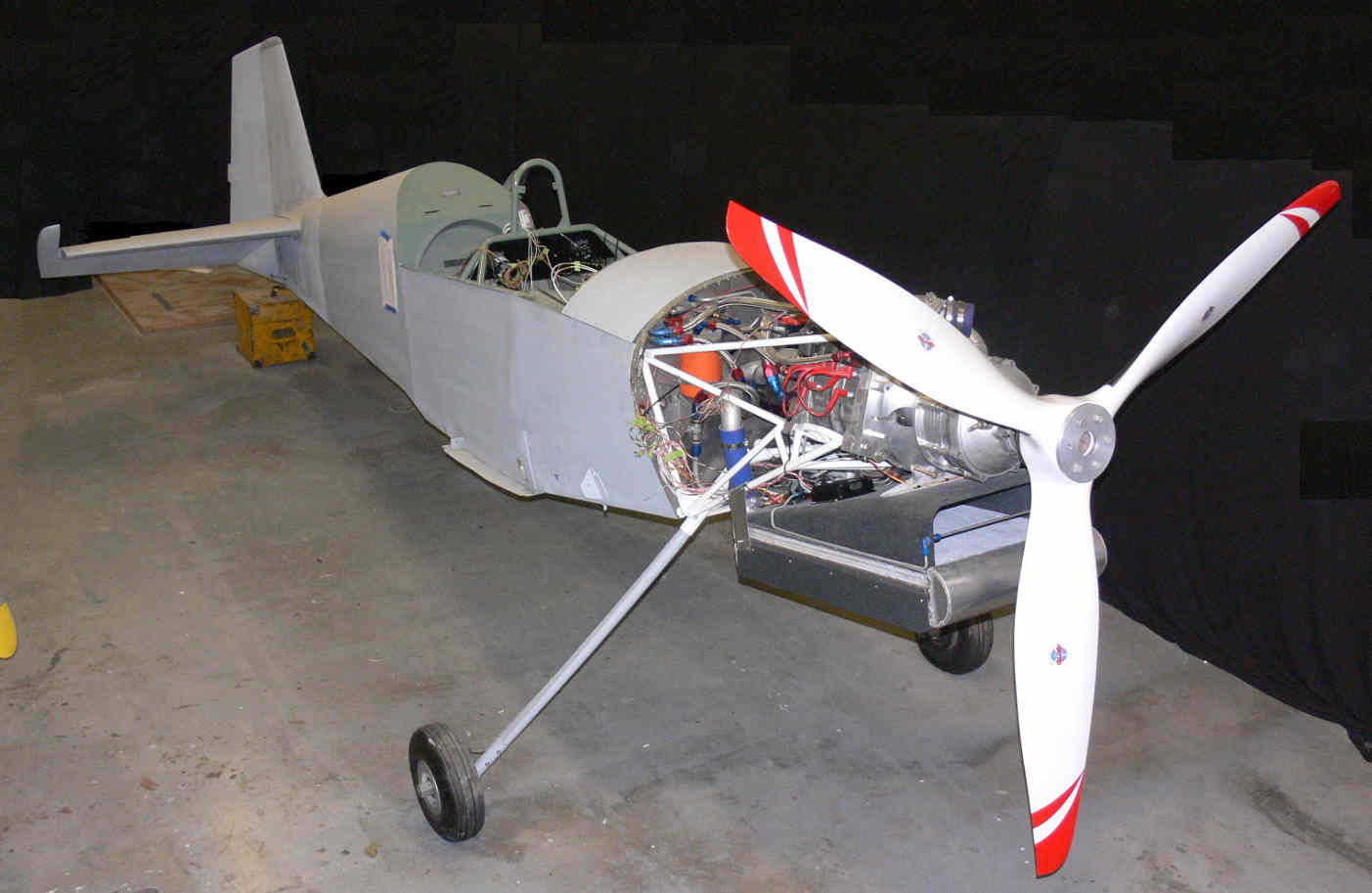
A flying Harmon Rocket was purchased and the Lycoming engine and
instruments were removed.
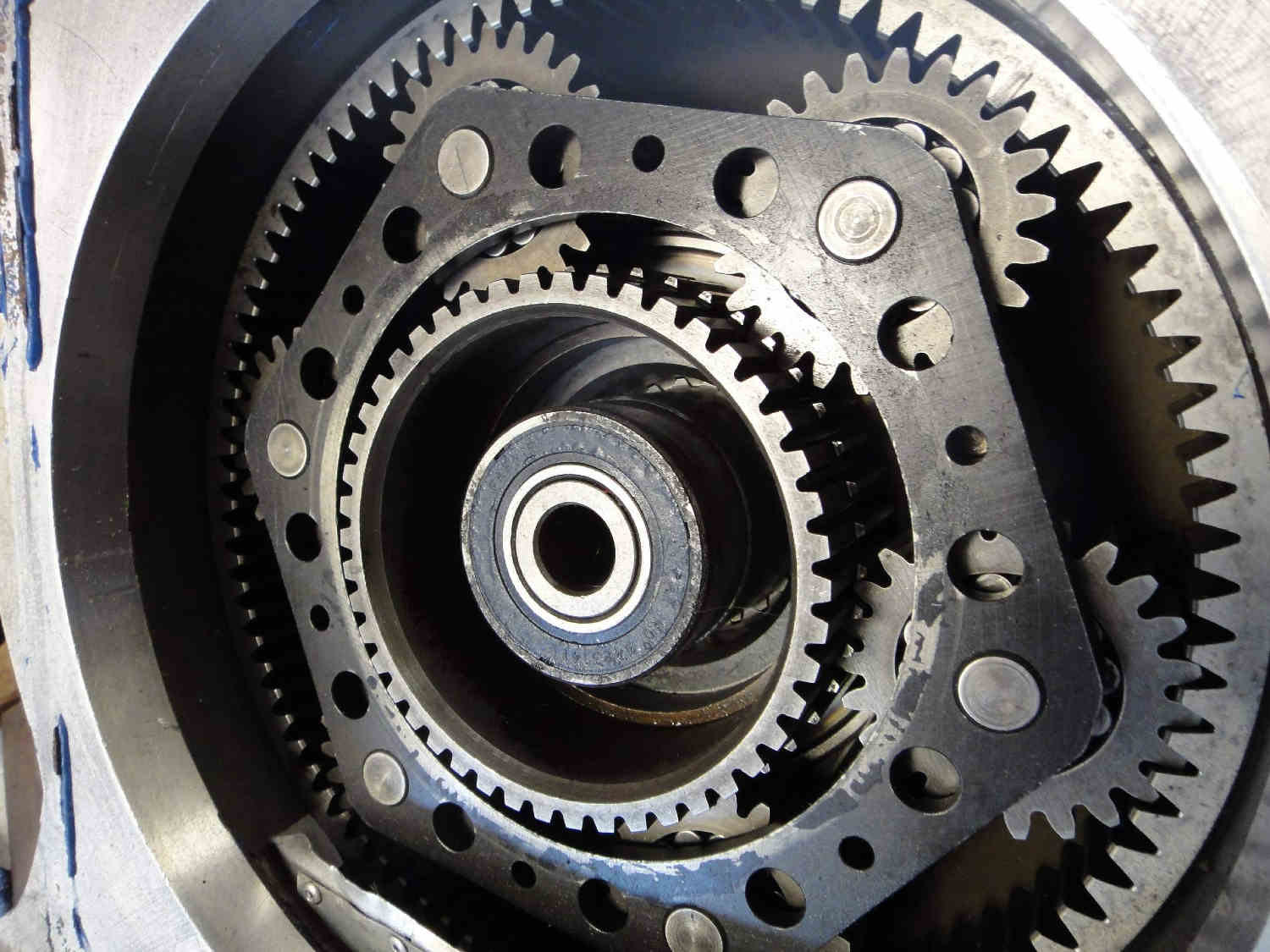
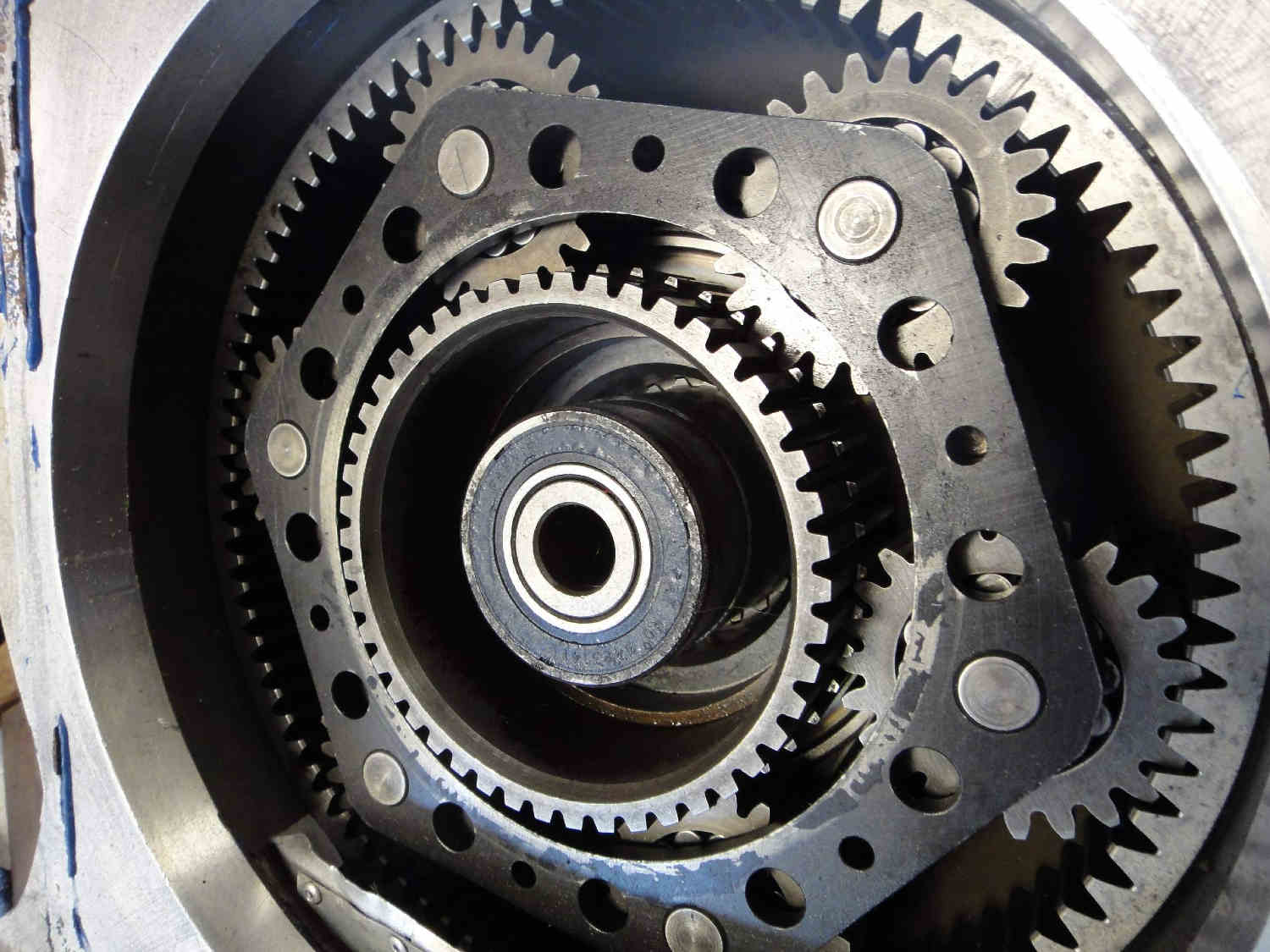
Russ choose the same gear box that Dave Garber used. In fact he obtained
one of Dave's gear boxes from his widow.
Russ choose Dan Gray from Santa Paula to help complete the installation.
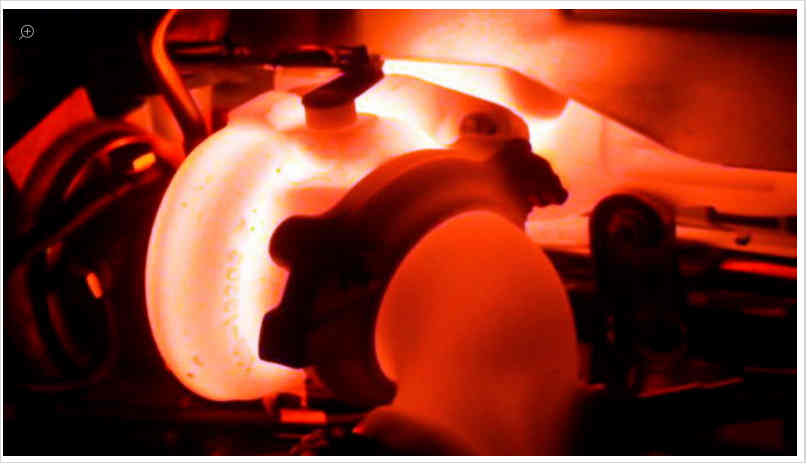
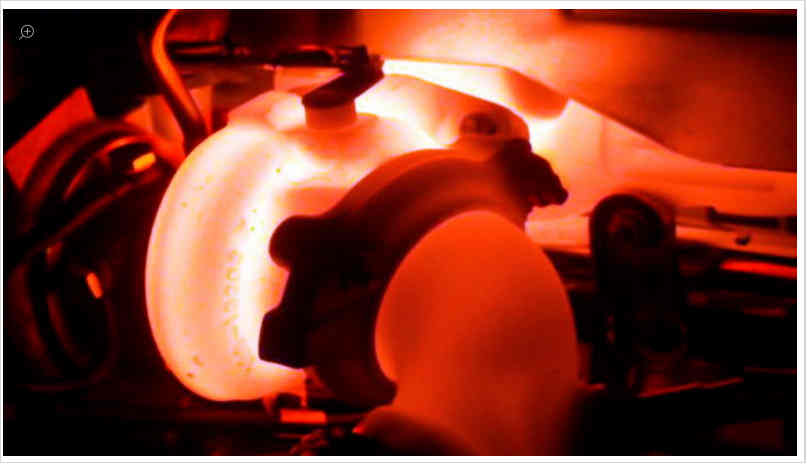
The liquid cooling system was a real challenge so two large Dodge truck
radiators were TIG welded back to back in what is known as a cross
counter flow configuration. Cold water will be sprayed on this radiator
as needed in the evaporation cooling mode.
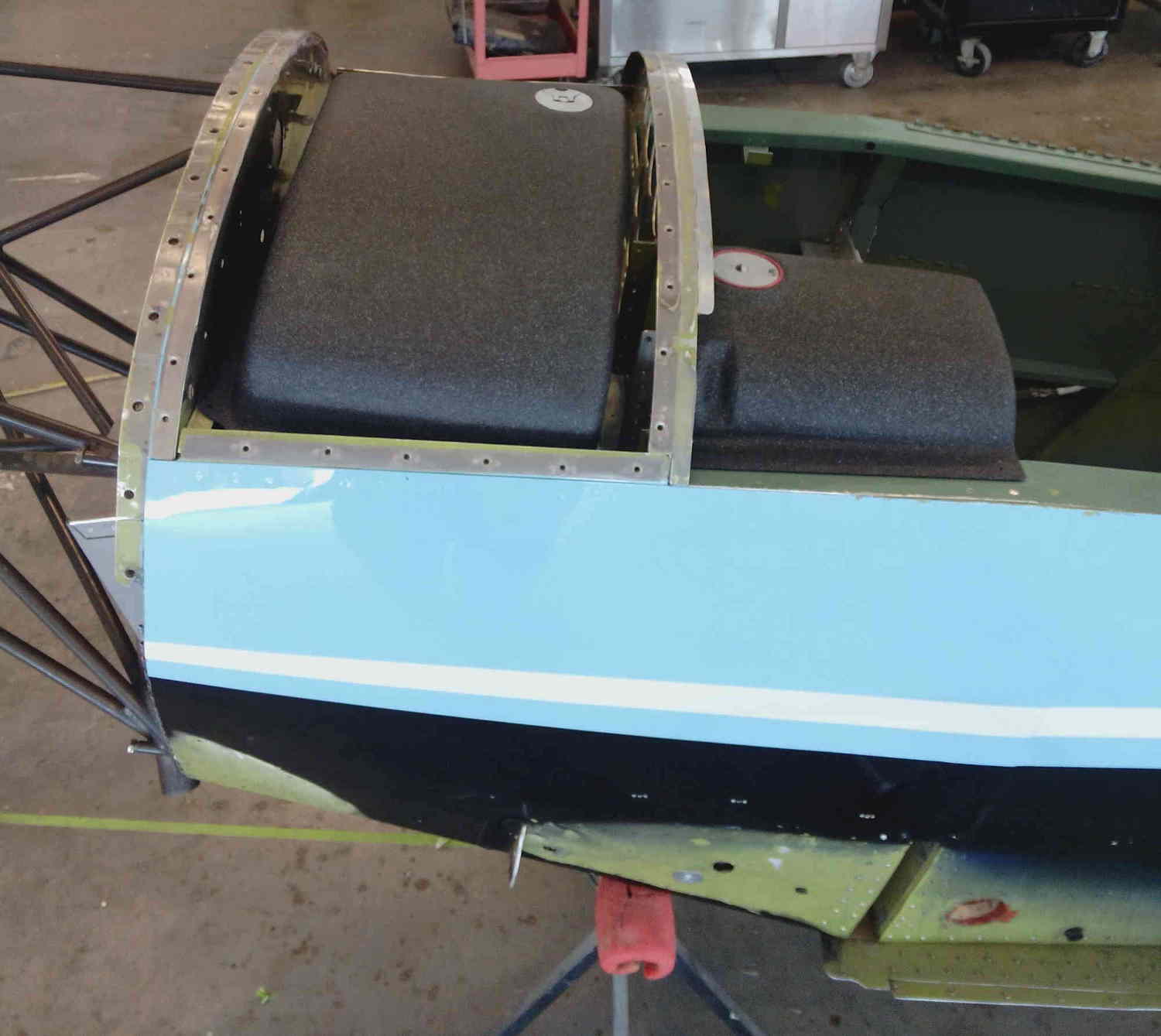
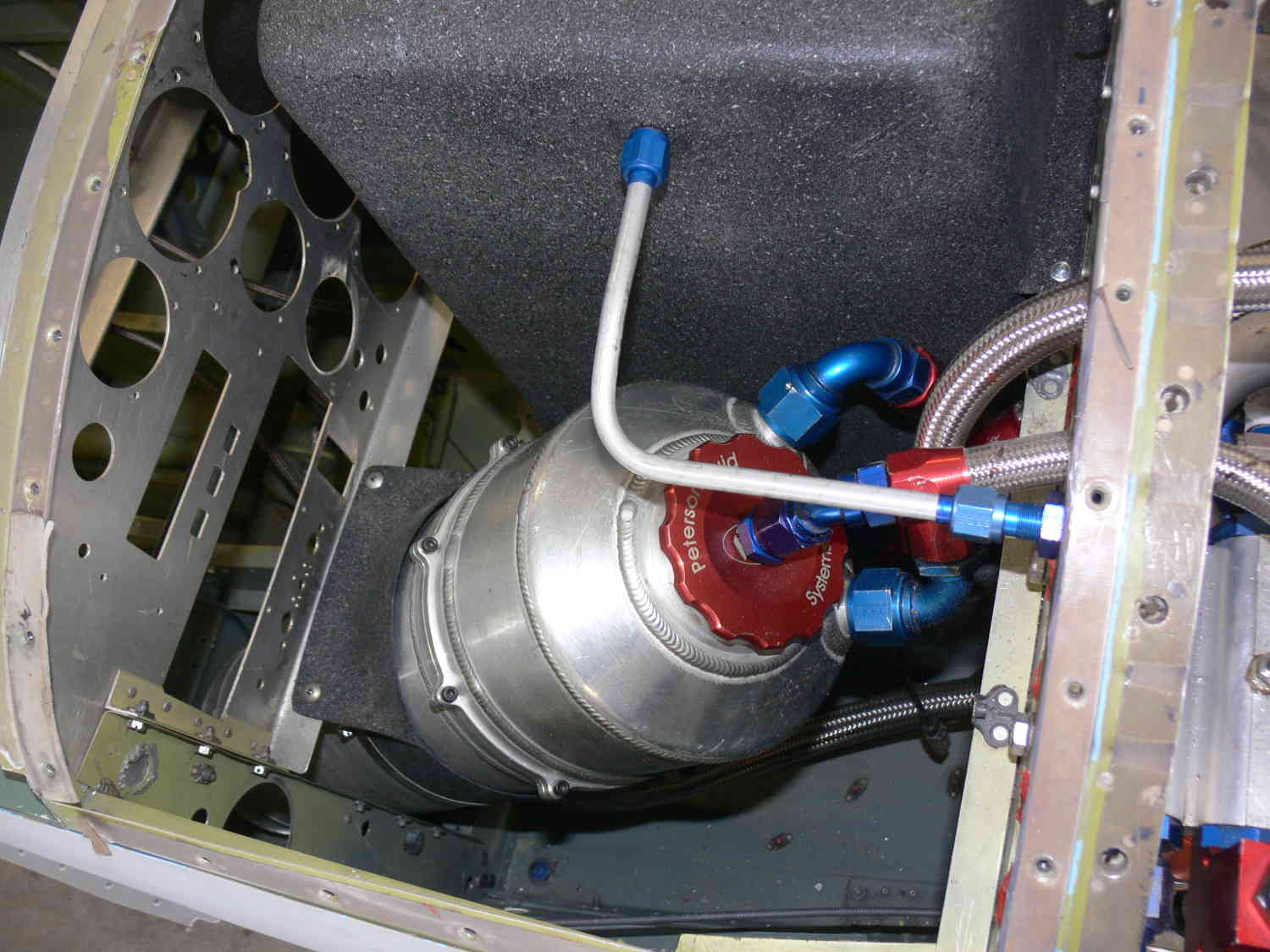
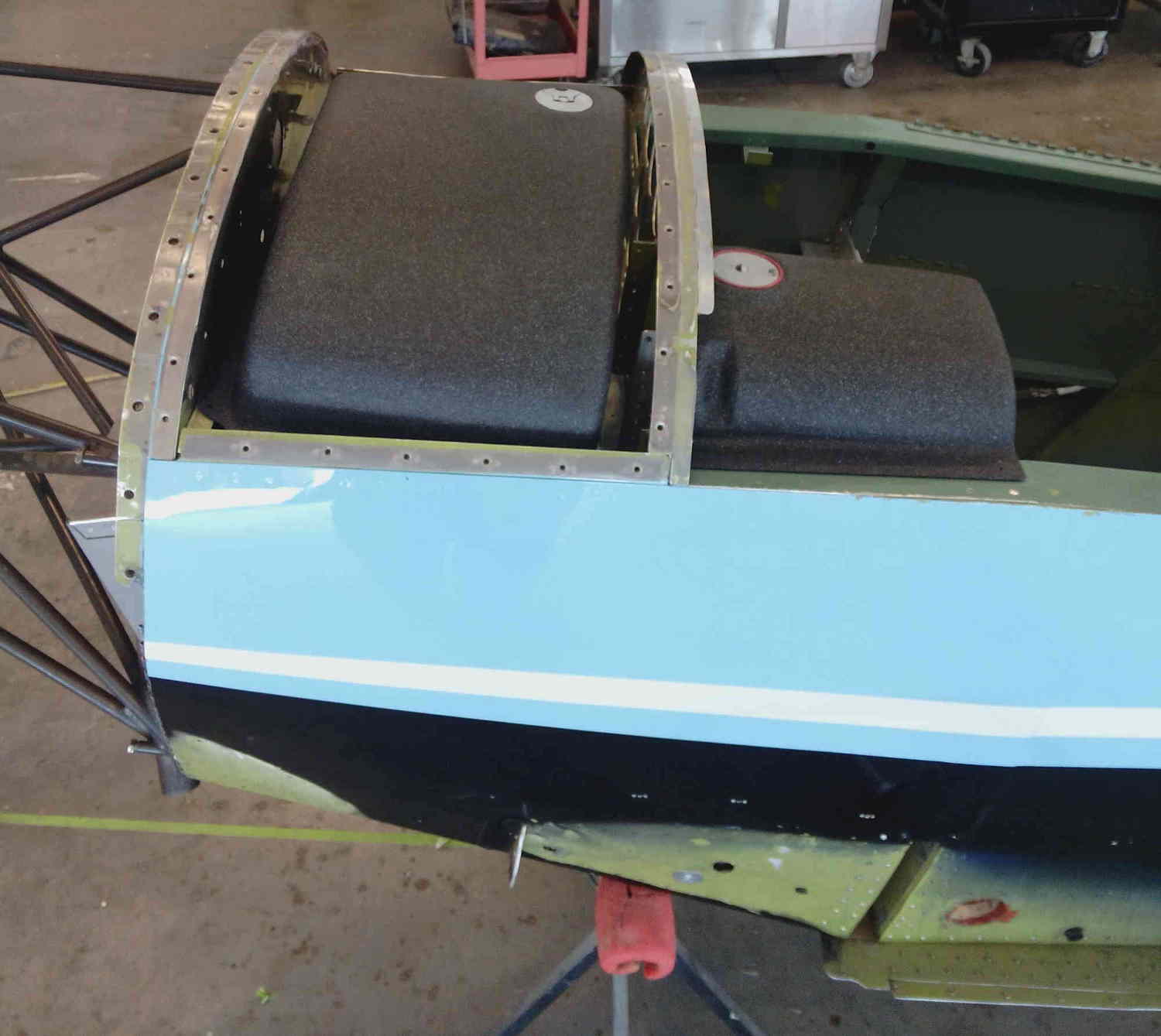
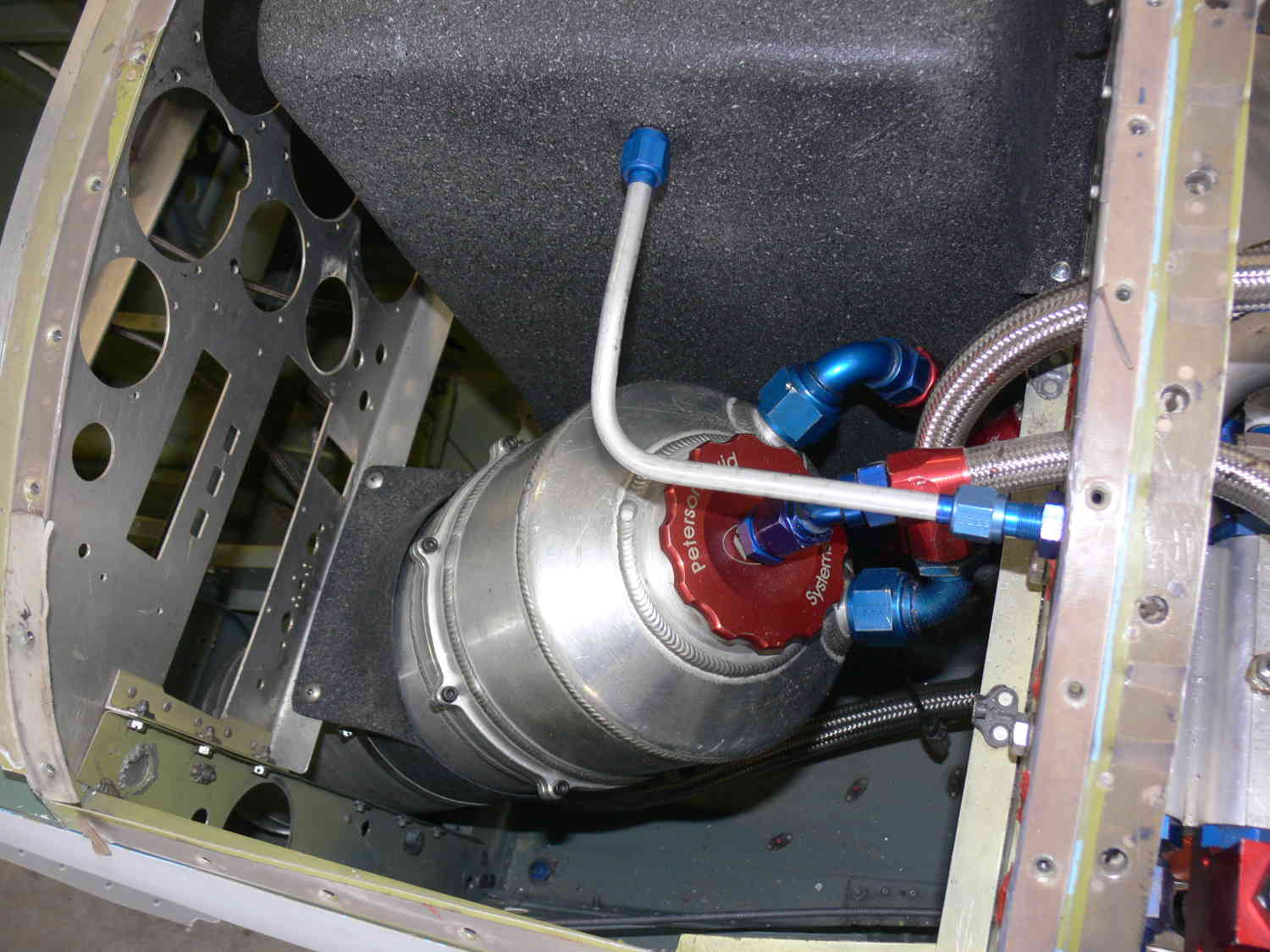
The pilot was moved to the back seat and the fuel, water and oil tanks
were installed in front of and behind the stock instrument panel.
A new carbon fiber instrument panel with altimeter, air speed and EFIS
screen was made.
The power to weight ratio of the Bearcat was approximately 2 pounds per
HP. The power to weight ratio of this aircraft is only 1.5 pound per HP.
Any aeronautical engineer worth the title knows that power to weight ratio
is 90% of the time to climb performance.
We estimate the Harmon Rocket will climb vertically at 175 MPH based on the
exceptional power to weight ratio. This should easily break the 91
second record.
The rotary is now competing with a PT6 in the 650 HP range
while being about half the weight and burning 15 to 20% less fuel.
This is a two rotor version and a 3 rotor would add little weight and
be more conservative. A 4 rotor version would put out about 1300 HP.
---------------------------------------------------------------------------------
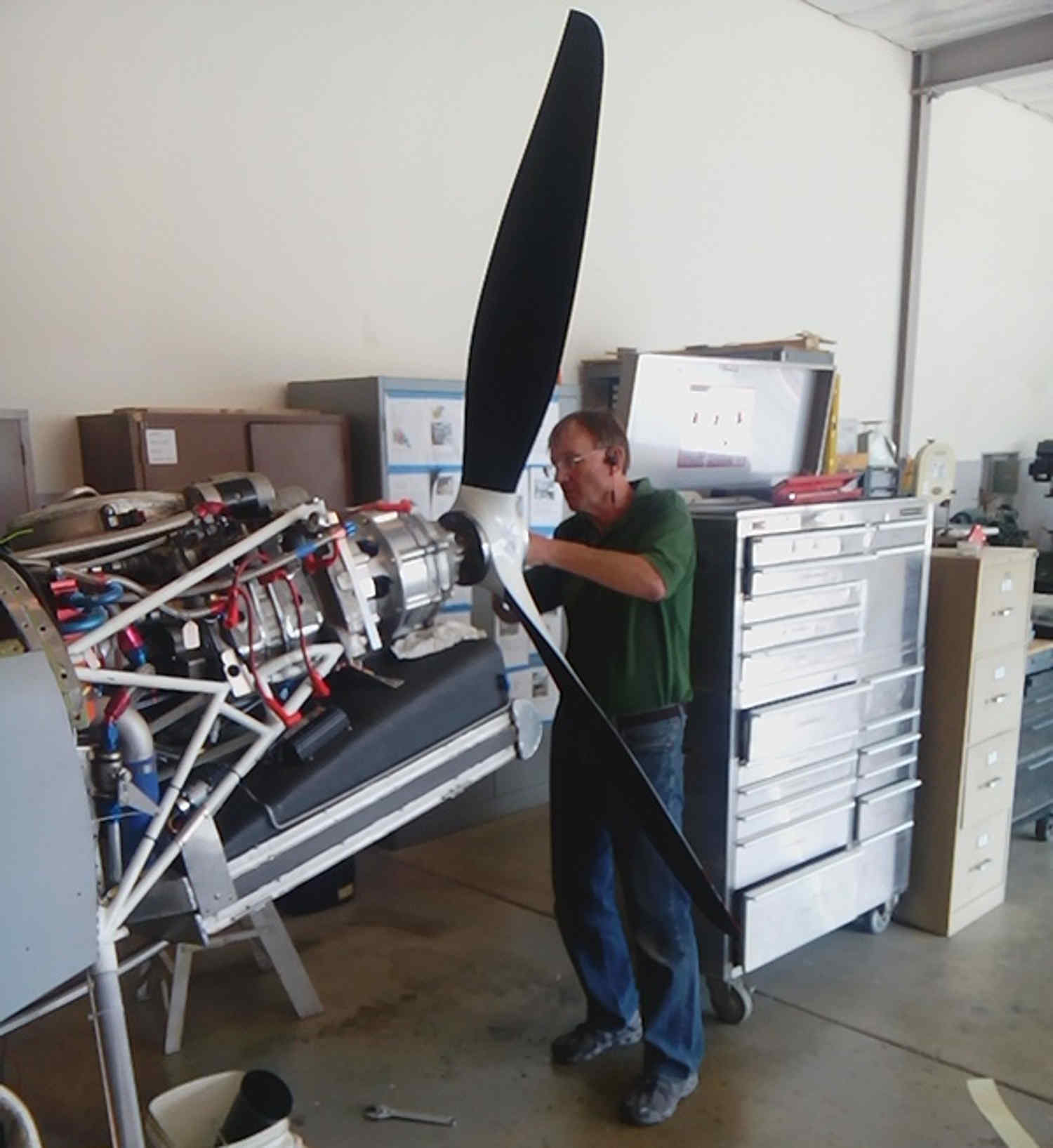
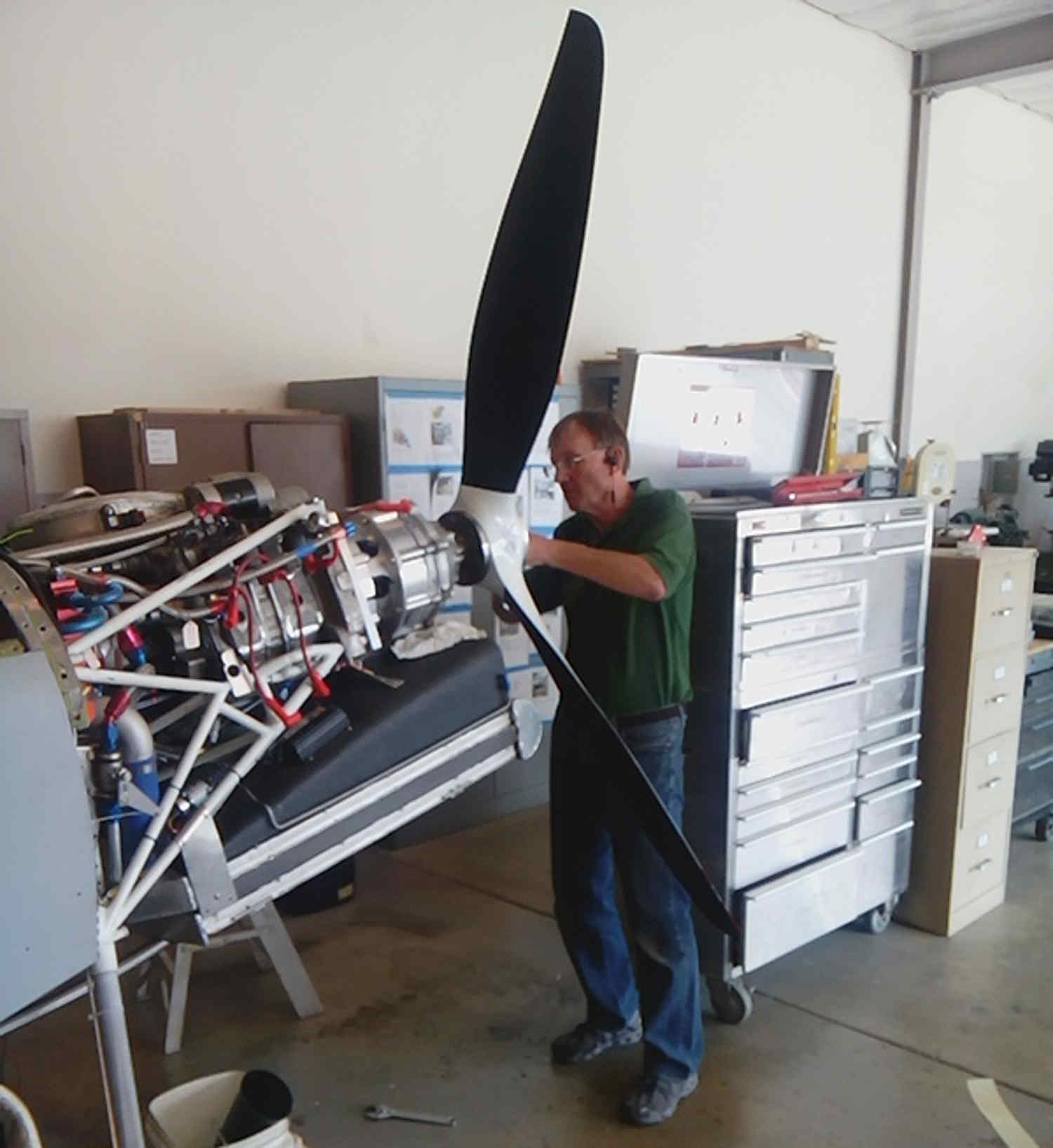
We ran it to 15% of full throttle last week at 3300 RPM.
Full power will be 6500 to 7000 RPM.
We are putting the wings on and we will be ground running it to full
throttle
in the next week or so. Then the record will be attempted at El Mirage
dry lake.
Paul Lamar
The Rotary Engine free News Letter. Powered by Linux. If you want off
the list PLEASE let me know and I will remove you. ACRE NL web
site.
http://www.rotaryeng.net You Tube
http://tinyurl.com/beqqxas
Copyright 1998-2016 All world wide rights reserved.