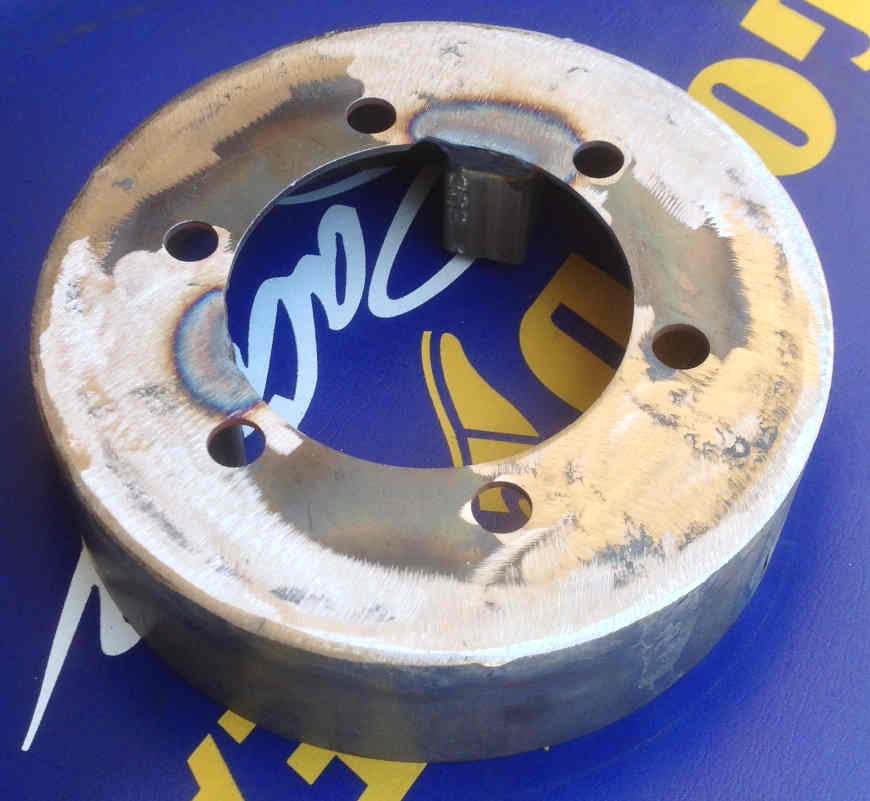
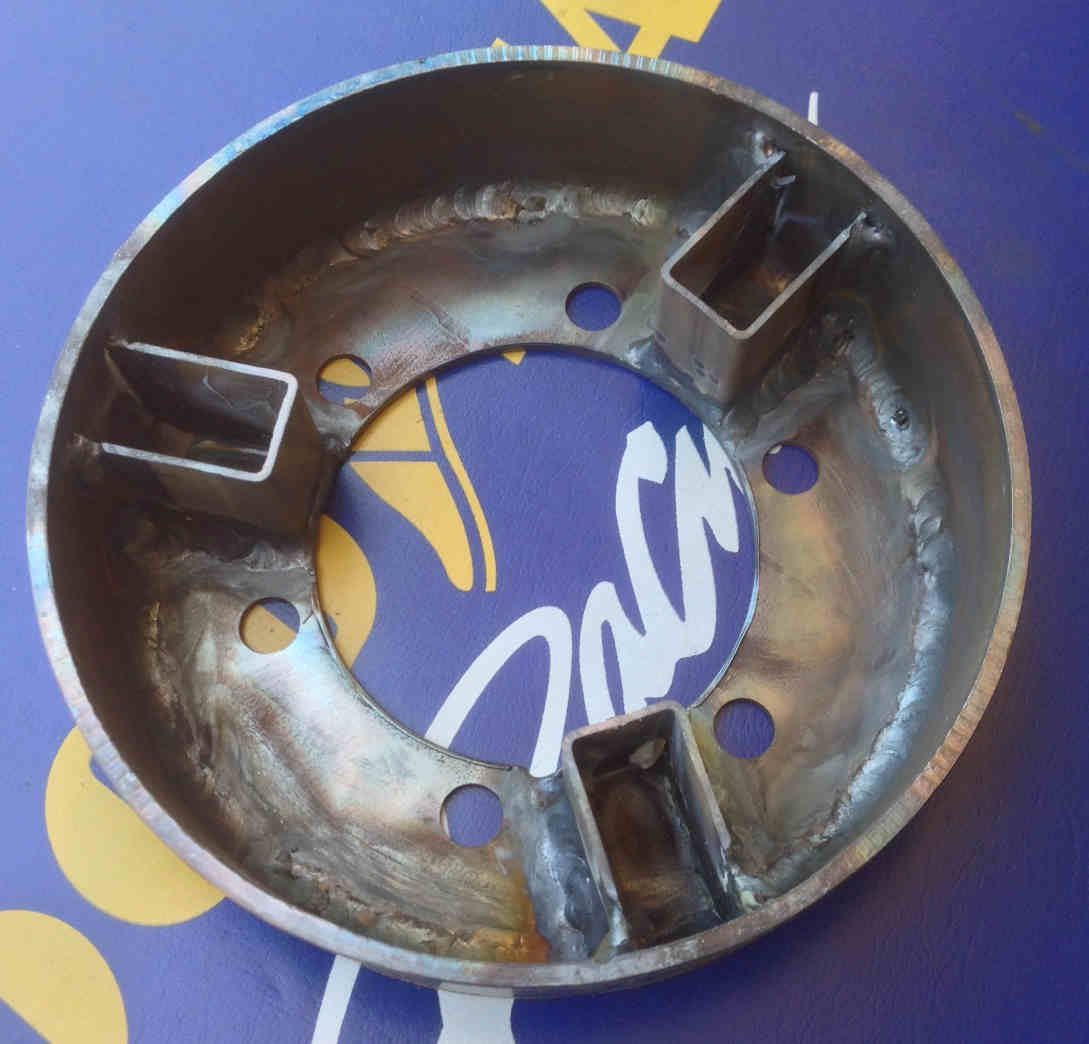
Paul,
Perhaps of interest...........
http://www.ringfeder.com/en/international/news-global/elastic-buffers-ordere
d-in-series-make-tschan-tnr-adjustable/
Kelly Troyer
Yes that looks very interesting.
Paul Lamar
I REALLY LIKE that!
Steve Brazil
It looks like the maximum speed of these units is 4750 RPM Andrew
Campbell.
Hi Steve and Paul, replace the steel flywheel and outer housing with
aluminum, lighten up the hub part and it should work great. Would
be good to closely match weights of elastomeric elements for higher
speed balance.
Murry
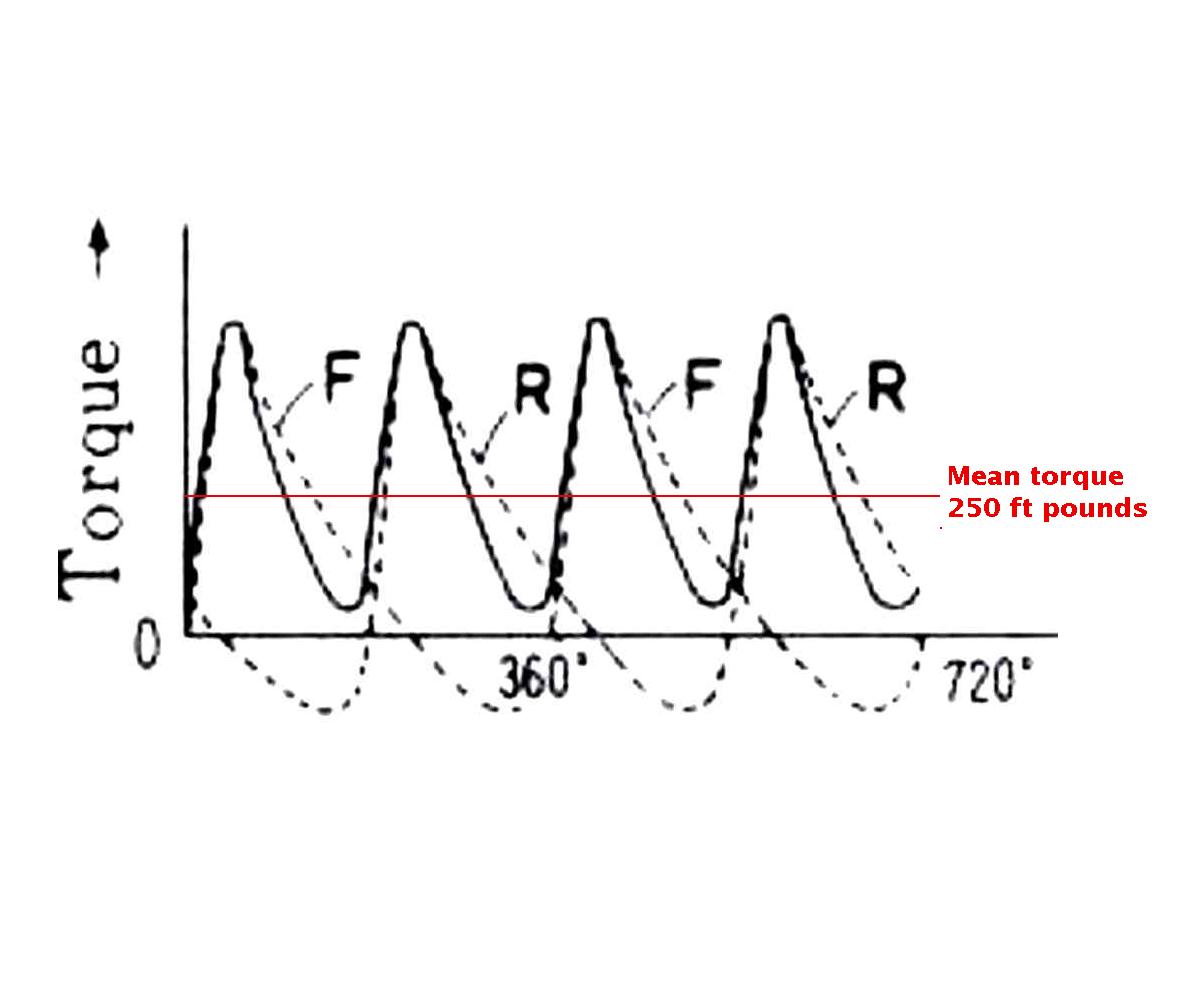
? Failure mode ? What happens if the elastomer drive elements
elements fail ?
Regards Bill McDonald
The engine gets disconnected from the gear box.
Good point.
Our design will still work.
Paul Lamar
Paul,
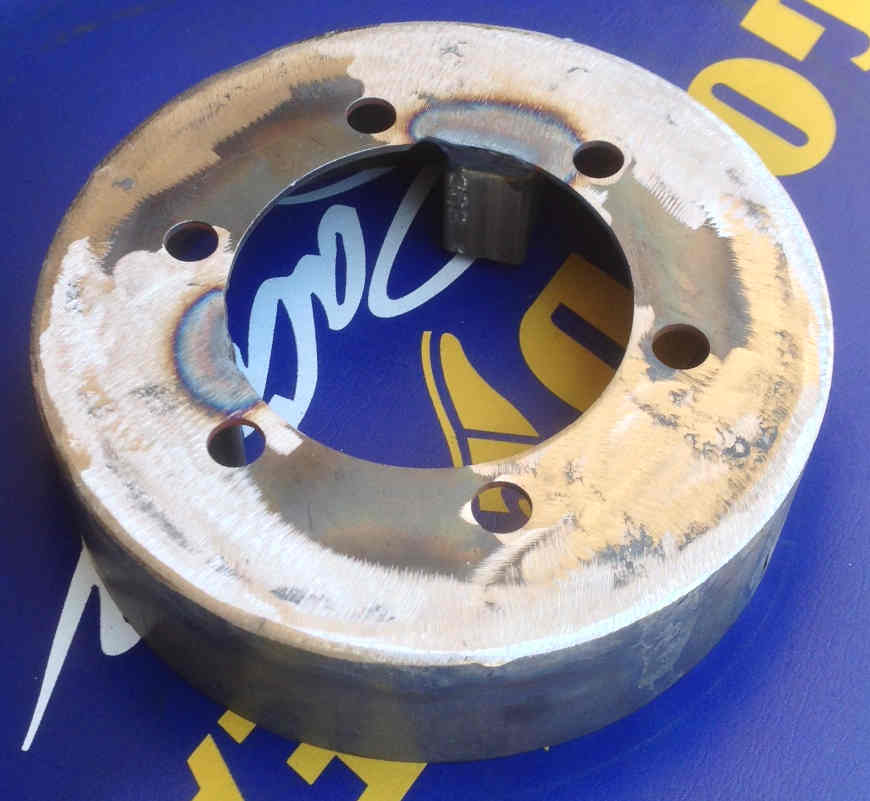
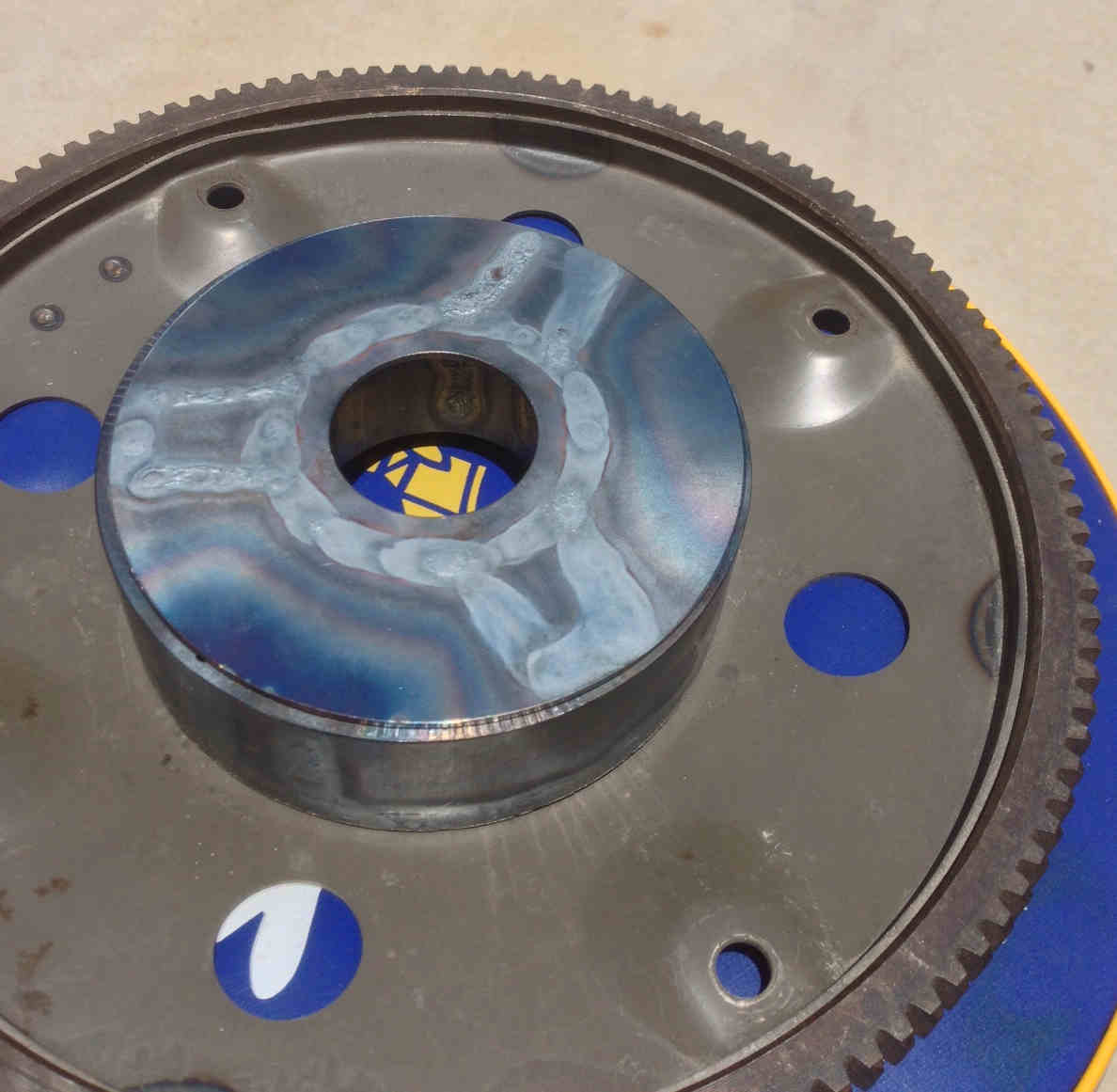
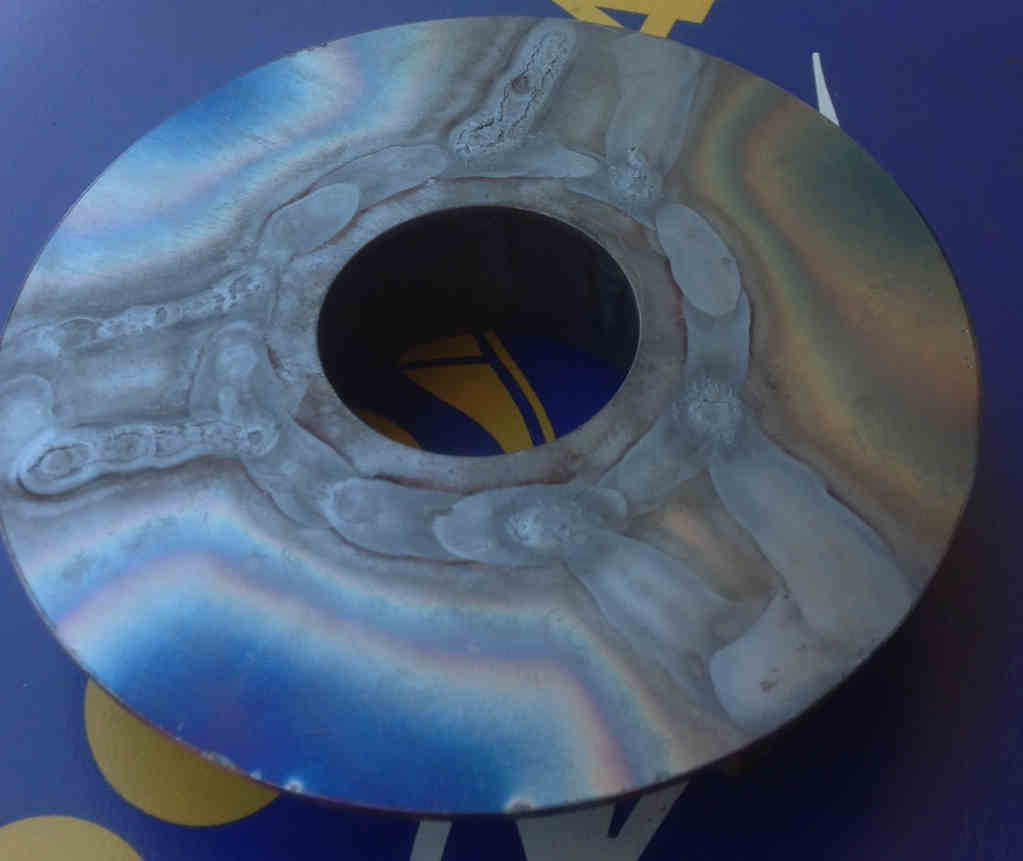
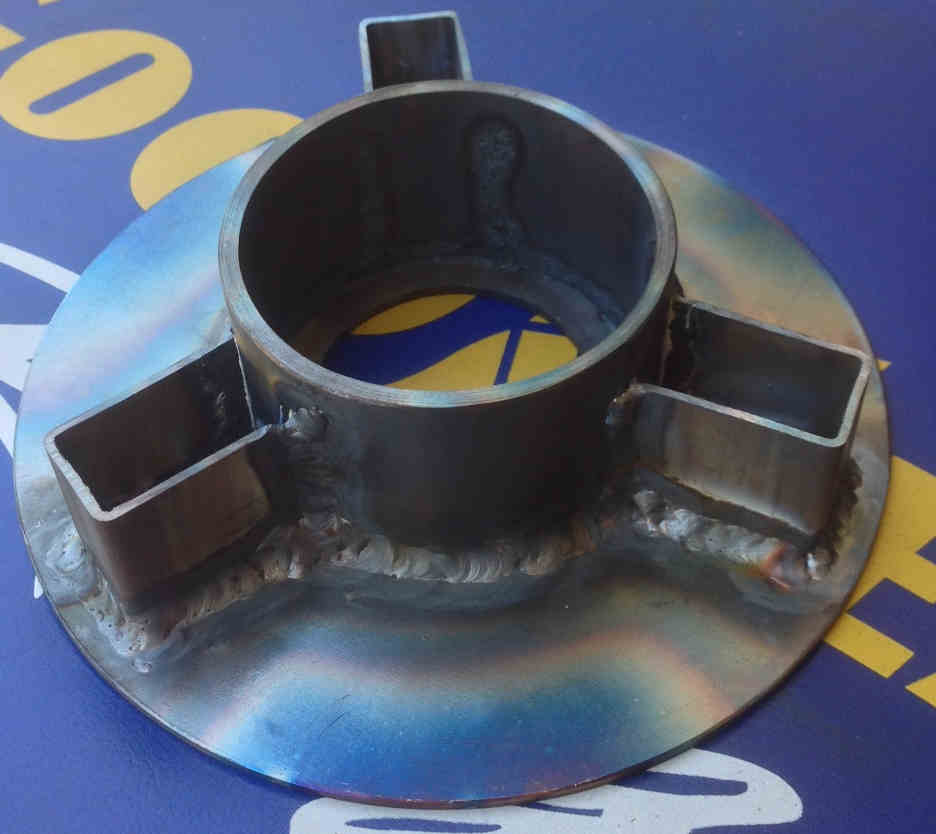
Could you speak to a few questions I have about your awesome coupling?
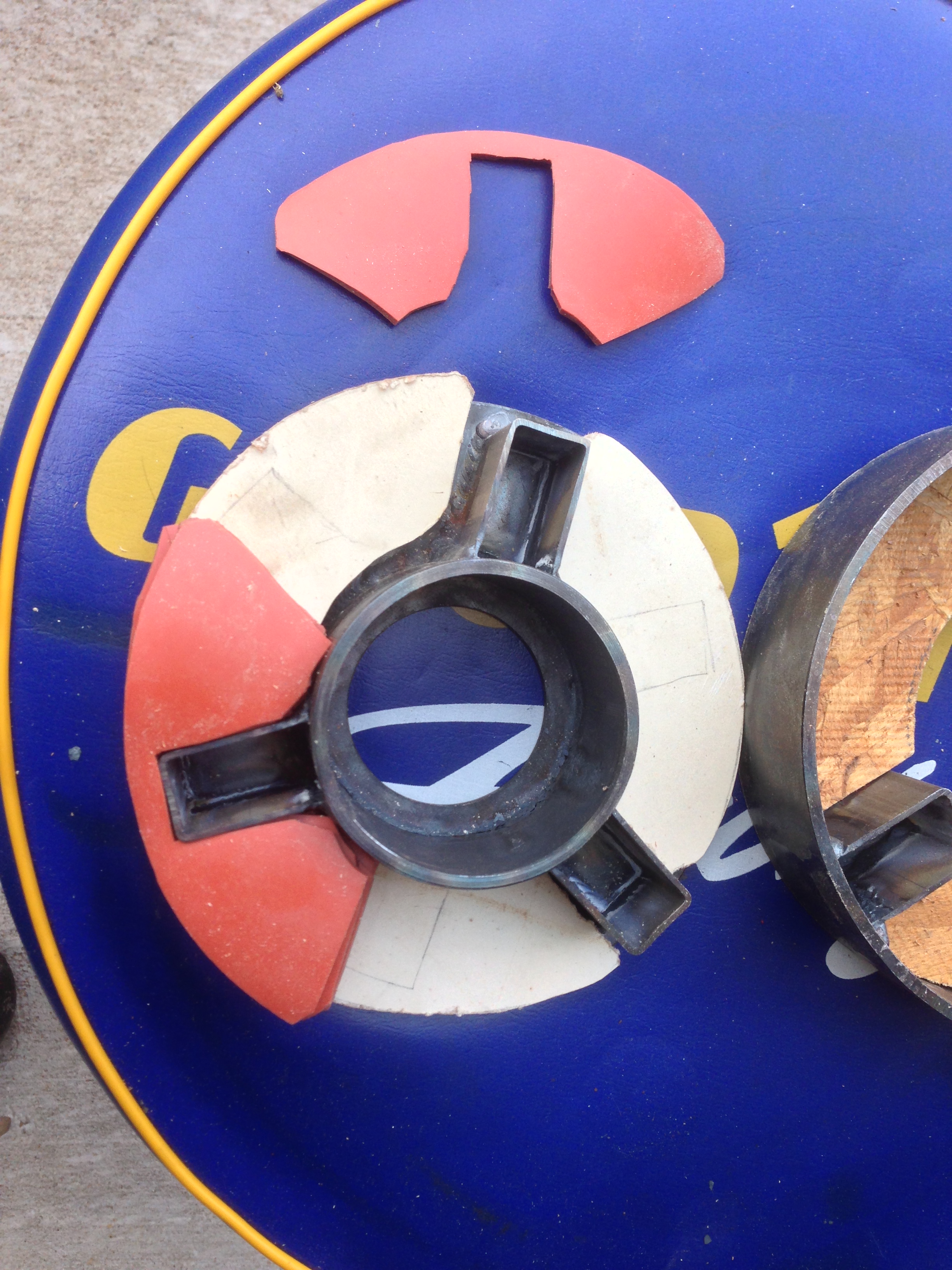
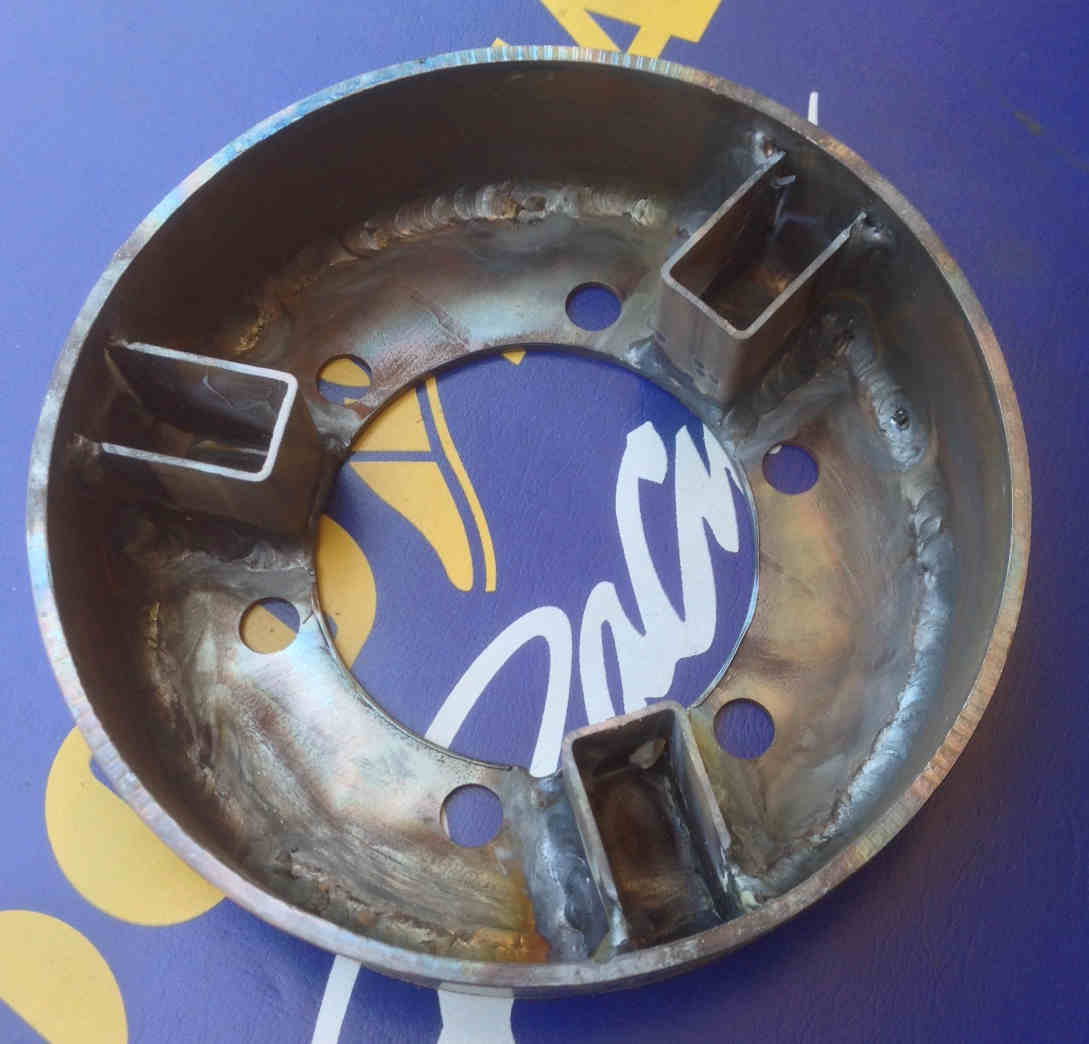
1. I imagine the elastomeric elements will heat up in use. Even though
aluminum is very thermally conductive, I still wonder about the final
equilibrium temperature of those elastomeric elements, and hence their
life span. I know silicon is “good” for up to, perhaps 500 degrees, but
IF this became an issue, interconnecting cooling holes could be drilled
in the female coupling moiety, allowing for some cooling air
circulation. Also, integral circumferential cooling fins could be
machined on the outer surface of the female moiety, reminiscent of
cooling fins on cylinders. I am also envisioning layered elastomeric
elements, instead of solid elements. Between each layer there would be
aluminum sheets or pins which would also be in contact with the inside
of the female housing for better heat conduction and cooling of the
elastomers.
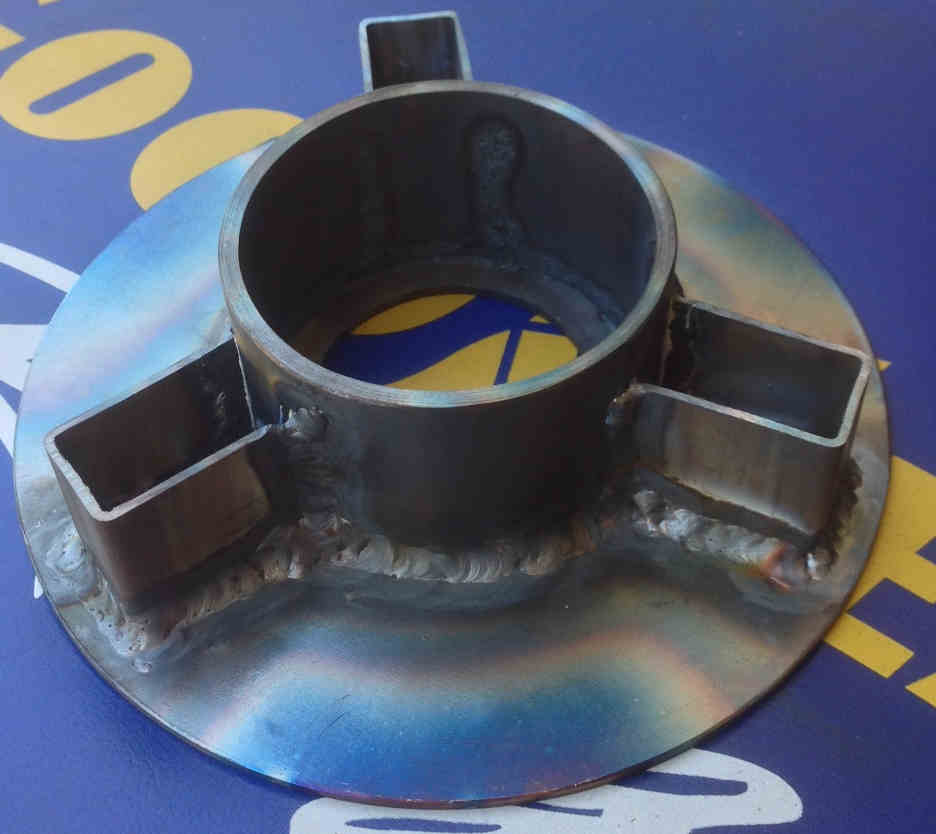
2. Your aluminum splines will fit inside what looks like a steel prop
shaft. With enough heat generated from the elastomeric elements in the
coupling, and conducted through the aluminum male coupling member, the
thermal expansion could cause splitting of the steel prop shaft.
Perhaps the male coupling member could be machined from steel [stainless
steel?] with less thermal conductivity than aluminum. The outer female
coupling member remains aluminum. Just like the rotary itself,
overheating would never cause seizing of the metal parts. However, heat
must still be conducted away, perhaps primarily through the outer female
coupling member. Perhaps cooling fins could also be machined into the
outer surface of the steel prop shaft aft of the Bell 47 gear box, so
that if temperature rises, cooling is enhanced?
3. Is the [steel?] centering pin on the ‘male’ member opposite the
splines a press fit? I also worry about heat build up on this centering
pin, even if the movement is only a slight [few degrees] back and forth
oscillation. What will happen to the press fit when the aluminum
expands more than the steel? Maybe another reason to make this entire
part from steel? I completely realize that this is a proof of concept
prototype, and conceptualizing this is the major innovation. If the
centering pin incorporated a built in bearing which removed with the
coupling, would that be feasible — IF heat became an issue? The outer
race of this integral bearing would not need to be a press fit because
hopefully the bearing mechanism would slide preferentially to any
sliding between it and the inner surface of the female bore.
4. You may have shown this already, and if you did, I really
apologize. Does some kind of extension from the engine mount support
the “prop” end of your set up. That is, does it support the “Bell 47
gear box rear bulkhead”?
5. It looks like the splines on the male part were machined into the
aluminum itself. Depending on the horsepower output and expected
service life, this may or may not eventually be a problem with wear, and
then with torsional “slop”?
I am interested in this coupling because I want to have my prop shaft
independently supported and isolated from the eshaft or crankshaft by an
elastomeric coupling. Thanks for you kind help, as always.
Gene Kahn
It is unlikely the coupling will ever see 200F Perhaps 180F.
We built some steel couplings. You can build one of these if you wish.
Don't forget we have been at this for going on 16 years.
Paul Lamar
The Rotary Engine free News Letter. Powered by Linux. If you want
off the list PLEASE let me know and I will remove you. ACRE NL web
site.
http://www.rotaryeng.net <
http://www.rotaryeng.net/You Tube
http://tinyurl.com/beqqxas <
http://tinyurl.com/beqqxasCopyright
1998-2016 All world wide rights reserved.