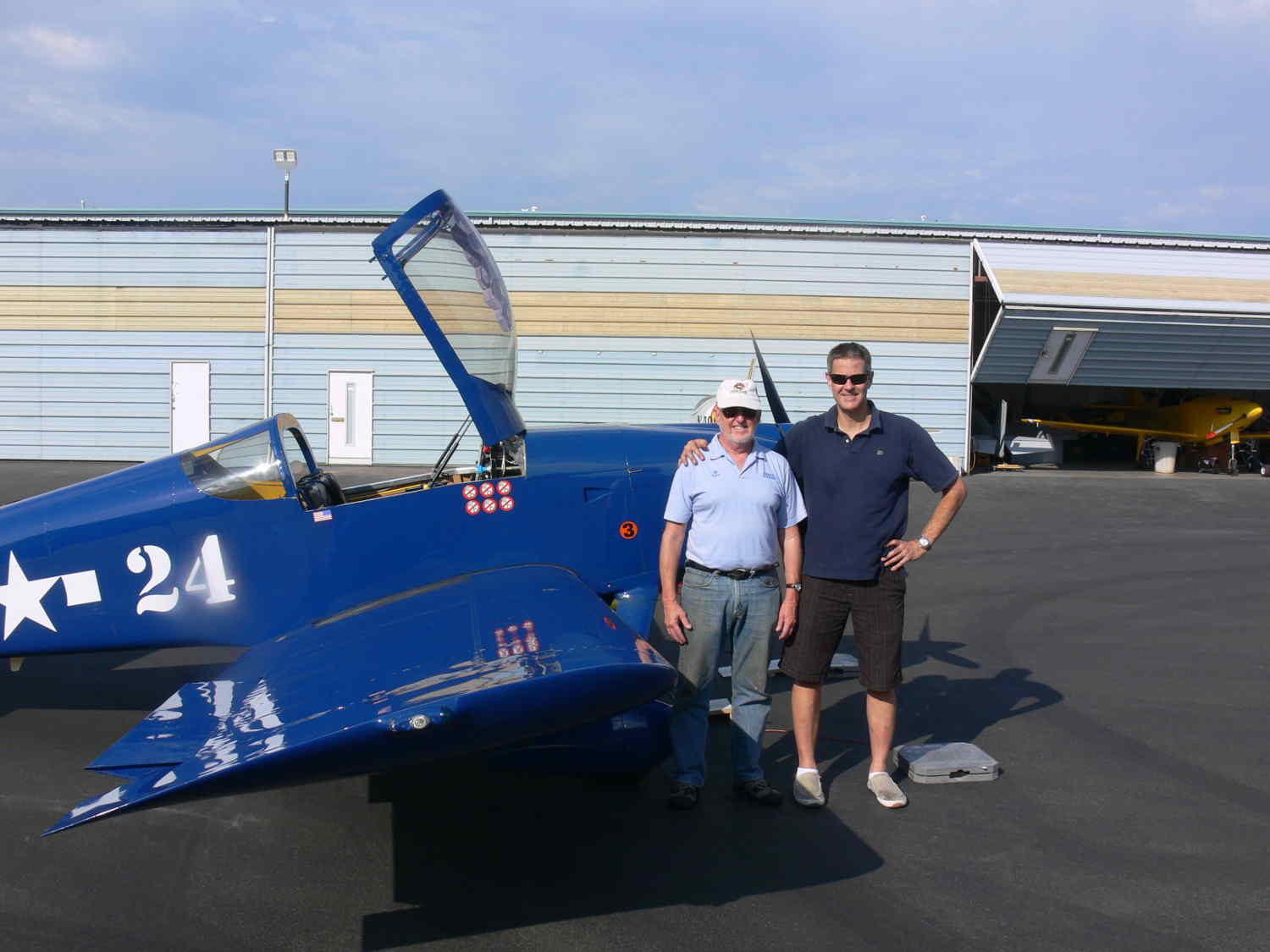
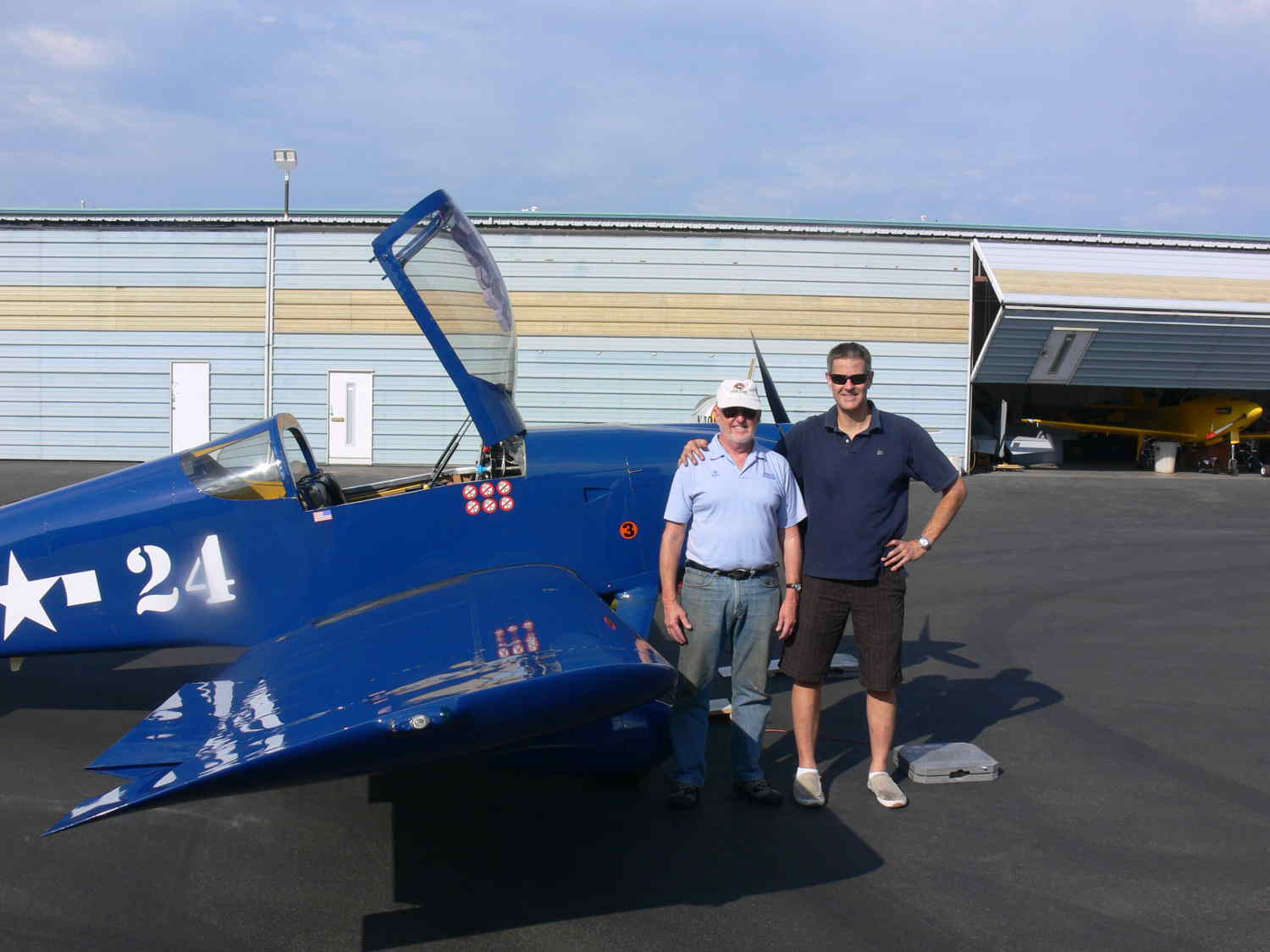
Navy Commander Dave Leonard showed up today at SZP to show
the TTC guys what a rotary looked and sounded like in the air
and to see the TTC engine. Dave has 880 hours on this
airplane and has practiced at Reno at 230 MPH. No race
as that was the year of the P51 disaster.
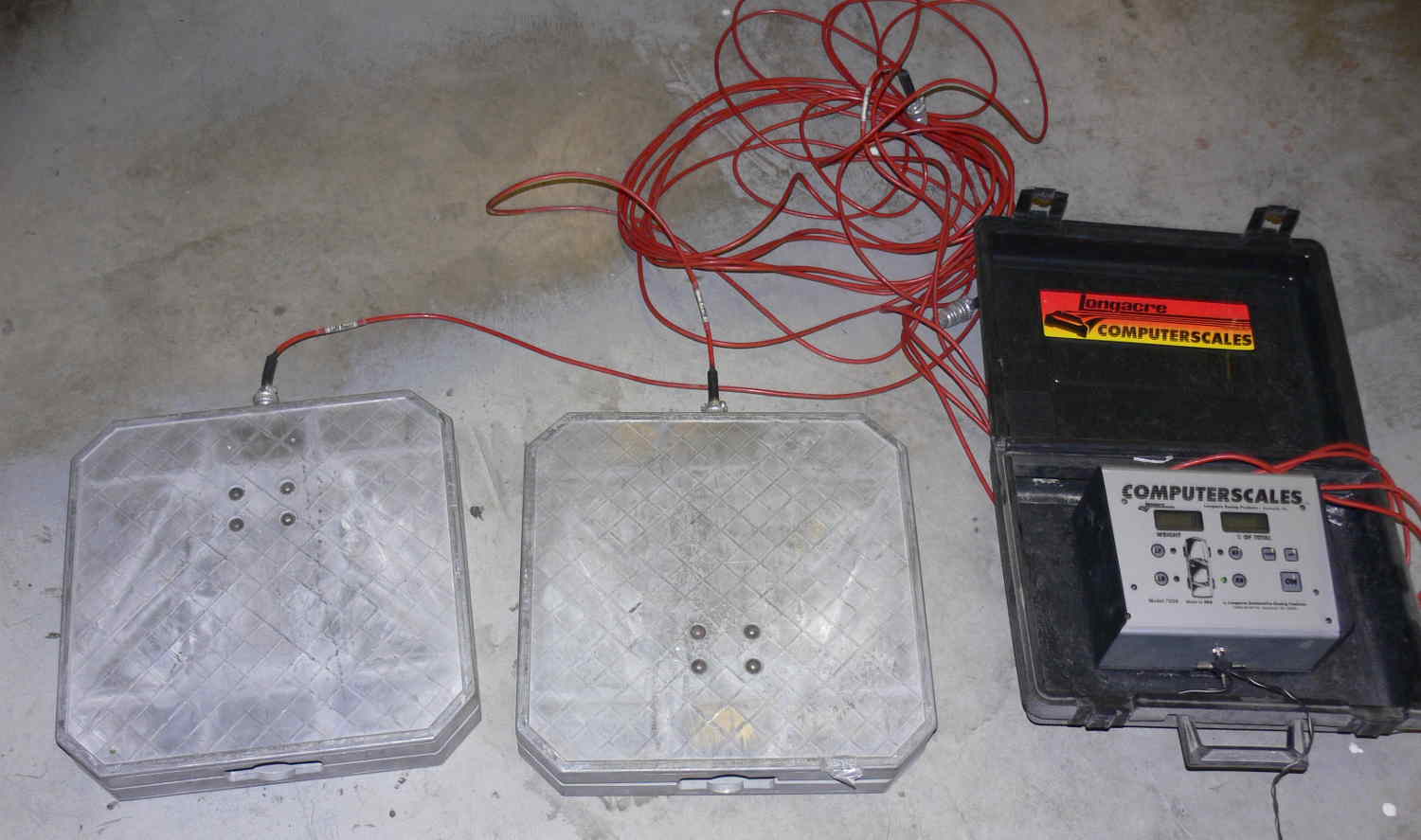
I had an idea that we could measure the HP by using
platform scales to measure the prop torque.
Dan Gray loaned me a set.
The jury is still out. With the wings rocking like that
the readings varied all over the map.
If the data could be sampled and captured by a computer one could
average the data and it might then work but I doubt it.
That was not the case here. One had to quickly read the LCD's
and write down the numbers.
Another factor is the helical slip stream over the wings.
One wing has one angle of attack and the other a different
angle of attack. That would seriously affect the readings.
Not worth doing but we learn from ideas that don't work.
The movie was 5050 RPM and 37" of HG.
Dave's 3 blade prop is about 68" in diameter and 80 pitch.
Ironically this is about what we are getting on the TTC
engine with an 82 inch dia. and 66 pitch prop.
However the TTC engine still has that 1.25 inch diameter hole
in the exhaust manifold. I can't wait to try it with out the hole.
I think Jim M put the hole in there to protect the engine
in case we screwed up on the cooling installation :-)
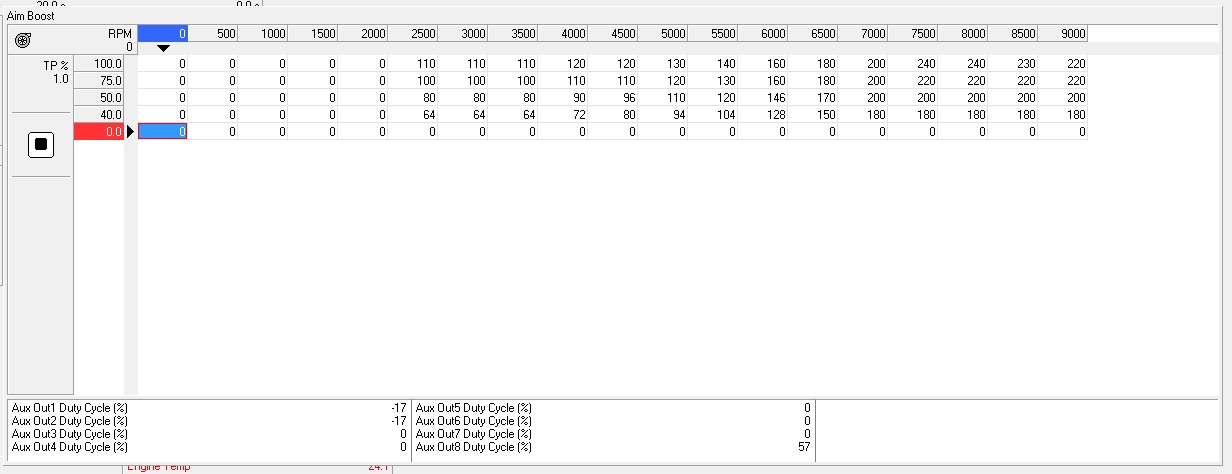
I suspect this is the chart of what the TTC MAP should look like
with out the hole. The numbers are absolute KPas.
BTW discussions I had with Dave and some data from OMC
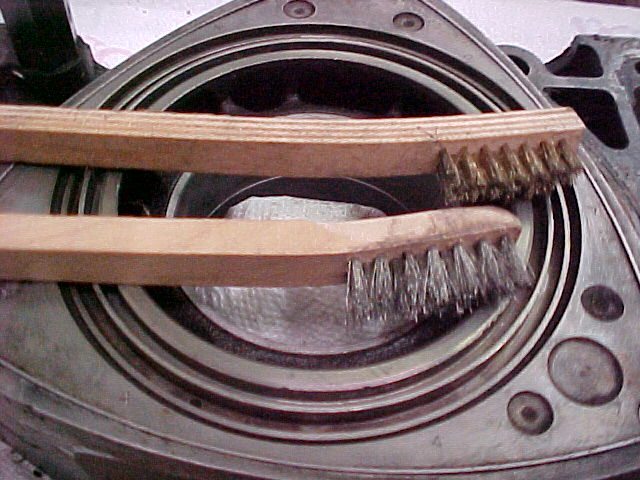
indicates the stock wear rate on the stock iron apex seals is around
.001 inch per hundred hours. That is .010 inch per 1000 hours.
That means you might need to put new apex seals in
about every 1000 hours. I suggest biting the $1200 cost bullet
and put in Iannetti Silicon nitride apex seals when you
build the engine in the first place. The TTC engine has them.
The projected life is then 20,000 hours for the apex seals.
Be sure you use Teflon encapsulated oil scraper O-rings.
Dave's engine is smoking when he starts it up. A sign
that the oil scraper o-rings have melted. This is not
a real problem as I drove my Cosmo for at least 100,000
miles with melted side seal O-rings. 300,000 miles total.
I mentioned this on the web site.
http://www.rotaryeng.net/O-ring-size2.html
The side seals are also subject to wear but Silicon Nitride
side seals are not yet available. Once that is done a turbo
four rotor would be a potent competitor for a P&W PT6.
The four rotor would be half the weight and 85% of the fuel burn. Much less
fuel burn even than that... in a turbo compound configuration.
The PT6 is almost all steel accounting for the high weight.
Paul Lamar
The Rotary Engine free News Letter. Powered by Linux. If you want off
the list PLEASE let me know and I will remove you. ACRE NL web
site.
http://www.rotaryeng.net You Tube
http://tinyurl.com/beqqxas
Copyright 1998-2016 All world wide rights reserved.