Jim here . thanks for your news letter it has been very informative .
I would like to receive more info .
I have a bellanca viking with a lycoming io 540 , it needs a engine top
overhaul cylinders,cam,lifters
mags redone and some others to be done .
I am interested and looking at what it would take to convert a 20b to
this plane ?
How would this change the class of this plane and or put this into
experimental ,or would this be viable ?
I like the minstral planetary drive to a cs prop ( just had mine
overhauled 0 time).
The engine is out of the plane and shop is waiting on which way I want
to go.
The shop is also looking at what it may take to change to a rotary engine.
Does anyone know how the certification with the FAA is going?
Any info and help is appreciated.
Thanks
James Vidican
The FAA will not allow that. If you can convince them you are going to
manufacture aircraft rotary engines for sale they will give you a
restricted
permit for testing only. No pax.
Mistral gave up. Partially because they tried to certify EFI.
A nearly impossibly with the FAA. Lycoming has been trying for years.
I think part of the problem is there are no certified fuel injectors.
Perhaps the only way to get it to happen is build carbon fiber
wings and declare it an experimental air craft :-)
If the wood wing is good you might be able to sell it for a lot
of money.
Paul Lamar
Just a few comments on your Bellanca Viking - I was Chief Engineer at
Bellanca and was in charge of FAA certification on the original Viking
series - Also have done some work on Field Approvals - Other than the
paperwork and extensive testing if you want to try for a
certification, the
biggest problem would be the CG in my opinion - Not that there
wouldn't be a
BUNCH of other difficulties -
Trying for experimental would be the easiest way to go - Suggest if you go
that way you might buy a flying Viking while you spend the time and money
for either experimental or field approval - At least that way you could
still be flying as you age due both time and frustrations - Not trying to
bring ants to your picnic but you should go into this with eyes open -
Roland Friestad
We had an aft CG problem with the Harmon Rocket that had a six
cylinder AC engine. Just make a longer motor mount if it is a problem.
However a four rotor might be about the same weight as a six cyl AC
engine.
Paul Lamar
Paul, interesting but not entirely true, is it?
""
Mistral gave up. Partially because they tried to certify EFI.
A nearly impossibly with the FAA. Lycoming has been trying for years.
I think part of the problem is there are no certified fuel injectors.
""
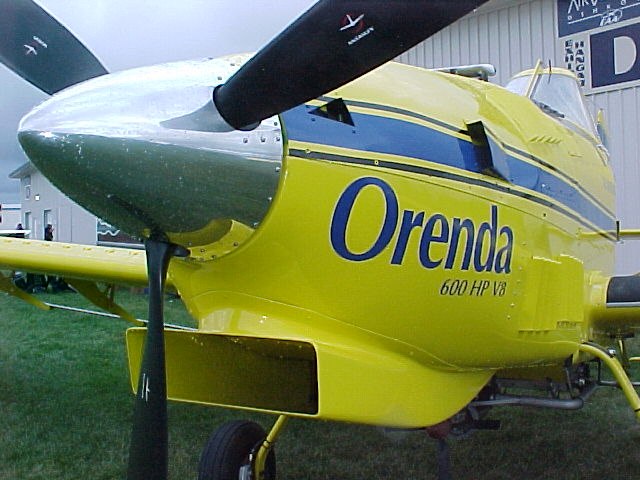
TRACE is certified, fuel injected !
http://www.traceengines.com/engines/OE600
Steve Carlisle
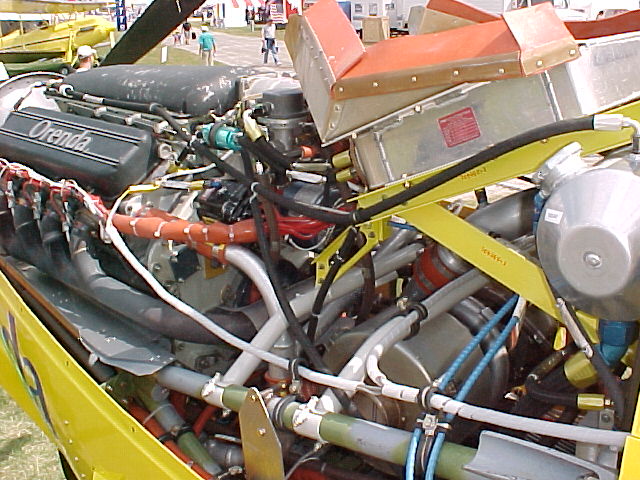
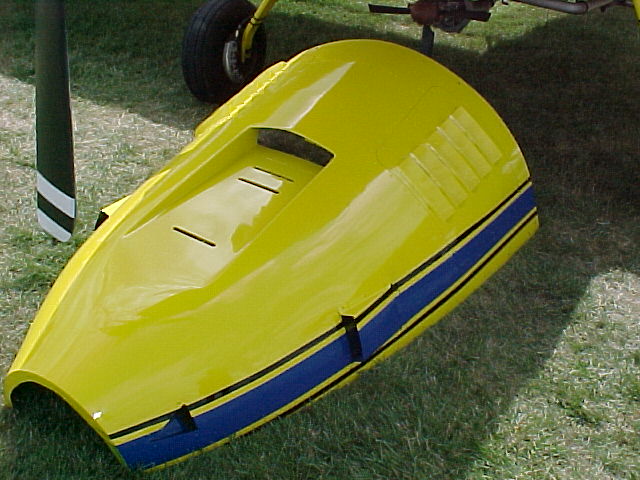
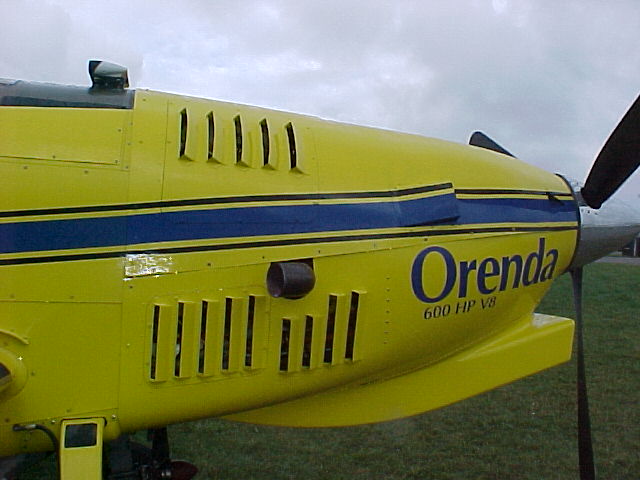
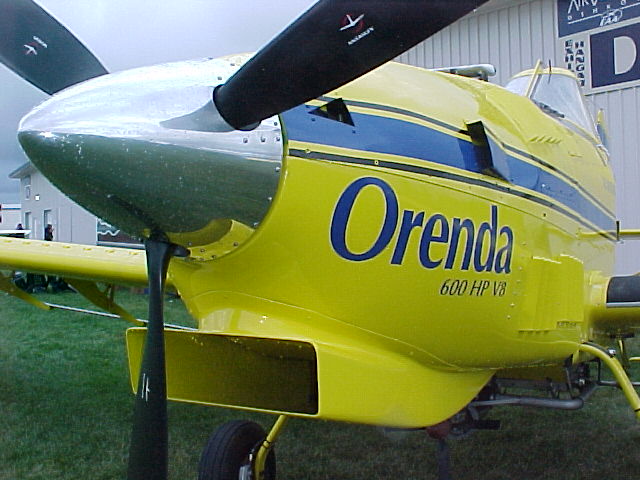
That engine has a long history. It is NOT FAA certified and it is NOT
EFI. It is probably
mechanical fuel injection.
It started life as the Thunder engine and eventually Orenda Canada
bought the program.
They certified it in Canada and there is a reciprocity agreement with
the FAA.
http://www.rotaryeng.net/DS-smith-art.pdf
It is a classic example of why automotive based piston engines won't fly :-)
Hope springs eternal in the case of Trace :-)
Several companies have tried to sell this big block Chevy based engines
for $100,000
and either gave up or went bankrupt. They try to sell it as a Beaver
engine replacement
or a PT6 replacement in dusters. We talked about it way back in 1998.
"Had a long talk with Dick MacCoon (Mr. RPM) at [2003] OSH in the Pulsar
tent
during a thunder storm. Dick is the originator of the Chevy V8 turbo big
block
based Thunder Engine for aircraft. Dick spent ten million and ten years
trying to make it work including $100,000 for a new forged crankshaft die.
Then Orenda in Canada bought the project for an undisclosed amount
and borrowed 30 million from the Canadian tax payers. The project
just closed its doors after another ten years stiffing the Canadian
taxpayer for the 30 million. Seems nobody wanted a 1000 pound firewall
forward package with only 600 HP and a 1200 hour TBO for $100,000.
Sounds like our GAT program where we spent 100 million on the Williams
turbo fan and 10 million on the Continental diesel. Don't give any money
to the
government as they just waste it. It is not their money so they don't
care how
they spend it. There is another such Chevy V8 powered AC program in NASA
as we speak that I will talk about shortly.
Anyway I'll get to the point. Dick has a few rules of thumb for cooling
liquid cooled aircraft engines. He says 2 cubic inches of rad volume
are necessary for every HP. That means we should be cooling with 400
cubic inch rads and right now it is taking 500 to 600. We are not
doing a good enough job on the scoops and ducts.
Another rule is the outlet area should be 150% of the inlet area.
Many of our installations are violating that rule as well.
Dick also subscribes to the old diffuser angle rule that states
the diffuser wall angle must be 7 degrees or less. K & M has modified
this rule with the bell shaped diffuser duct. I guess Dick missed
the K & M book Aerodynamics of Propulsion when it was published in 1953.
In both cases the diffuser length would be out of the question
for mounting the rad under the cowl. Fortunately Kays & London
book Compact Heat Exchangers (still in print) came up with the
oblique diffuser answer."
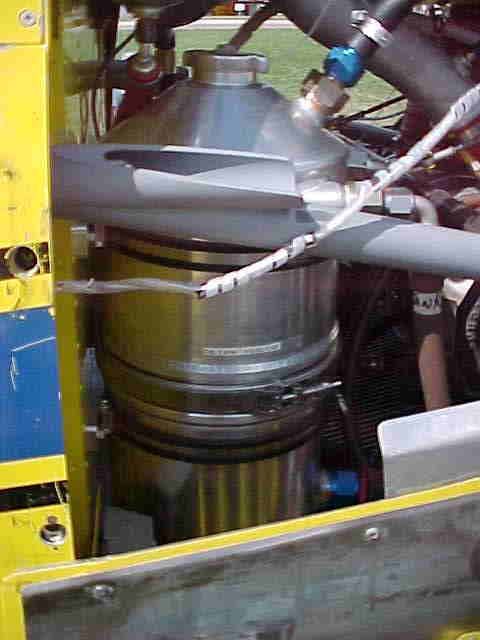
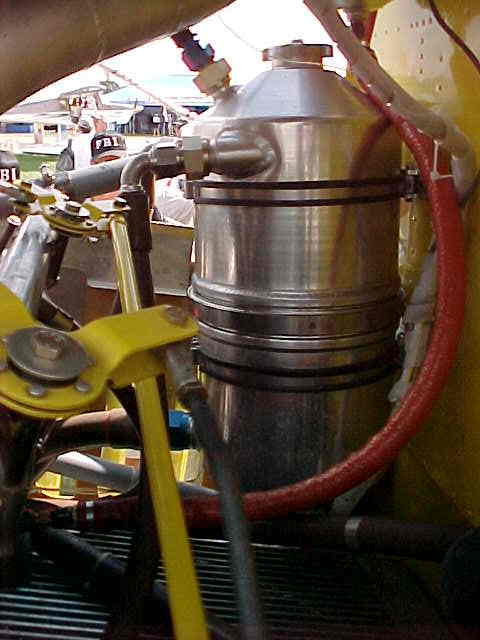
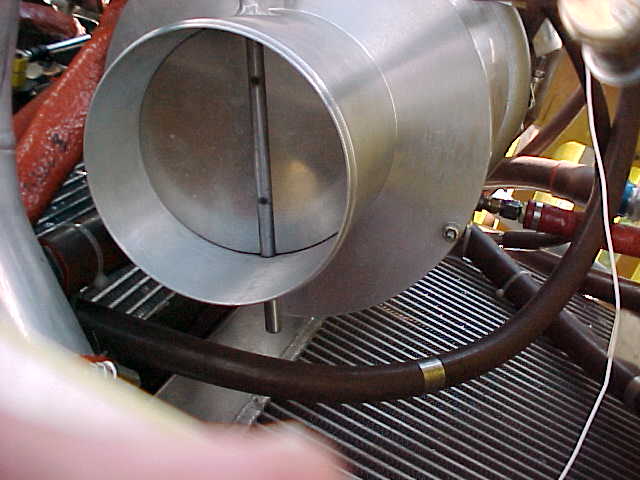
Does that oil tank look familiar? :-) Hint TTC.
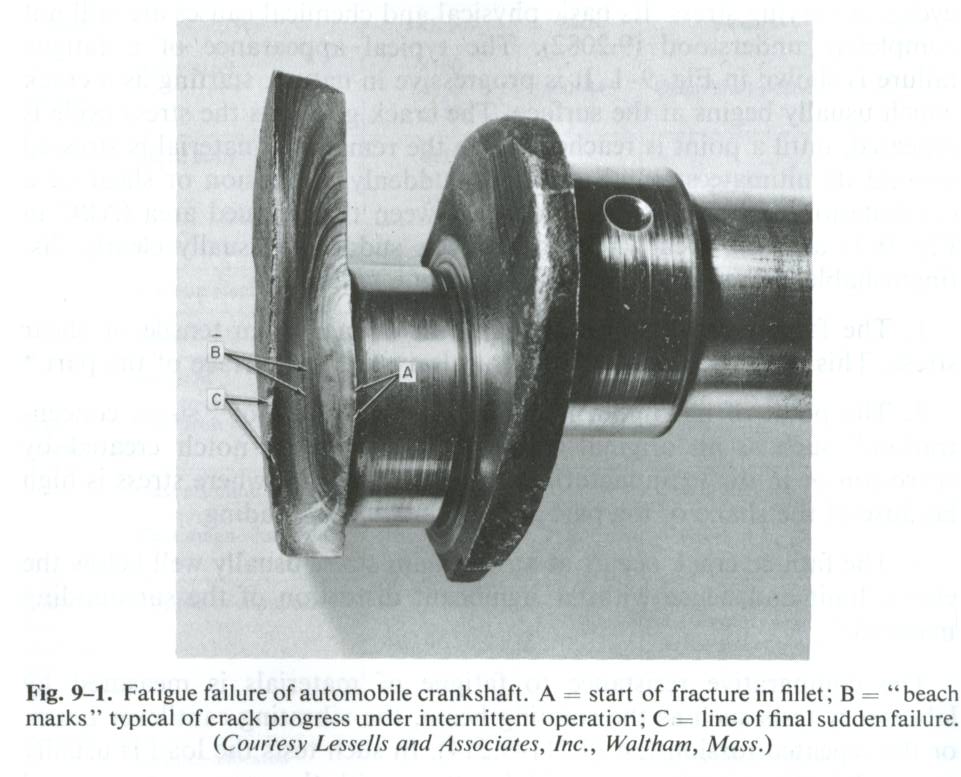
I was at a automotive-engine-for-aircraft conference in Santa Rosa Ca
and the Orenda engineers were there. One of the engineers
told me he would kill his grandmother for an inch longer crankshaft
so he could get a decent radius in the crank corners :-) They kept the bore
spacing of the stock big block chev.
Paul Lamar
The Rotary Engine free News Letter. Powered by Linux. If you want off
the list PLEASE let me know and I will remove you. ACRE NL web
site.
http://www.rotaryeng.net You Tube
http://tinyurl.com/beqqxas
Copyright 1998-2016 All world wide rights reserved.