Paul: Finally got the small peripheral port/intake runner engine
installed on the dyno. Here is a brief video of the engine being
run through its paces with the experimental Helmholtz muffler I
built. The muffler has been the biggest surprise. Has a nice deep
sound signature and performing beyond expect ions. I have detailed
photos of it during construction. The link for video.
Steve Beckham
https://youtu.be/EfreUJt-Fsk
It is a private video. Why? some people (like me) do not want to sign
in. If you just send it to me I will upload it here. I have software
that can make it smaller if it is too big to publish.
Steve Beckham is one of the famous rotary engines in aircraft
pioneers back in the 90's. Back when the United States was great. He
partnered with Everett Hatch. They built one of the first all
aluminum Mazda based rotaries. Here are some pictures.
They competed in the Sun & Fun time to climb to 3000 feet from a dead
stop. As I recall they did it in 59 seconds running NOS. Also Steve's
pilot Allan Tole went 228 MPH in the Sun & Fun 100 and won the
class. Here is a screen capture of the pertinent news paper pages.
They were the first to use P-ports I think.
Steve, we noticed that the bigger the diameter of the final exhaust
pipe the more pleasant the sound.
Paul Lamar
Please try the link now. You should be able to distribute.
https://youtu.be/EfreUJt-Fsk
Thank you,
Scott Strayhan
Can anybody capture that?
Paul Lamar
That's got to be the quietest high output rotary anyone has built!
Neat test setup.
Gary Knutson
That is only about 230 HP. Maybe a little less when running a prop
at 6000 RPM static. Normally aspirated. Steve's intake runners are a bit
smaller in diameter as I recall. Lately we have been using 2 inch OD
and on a dyno run we were getting 250 HP at 7000. In the air the RPM will
pick up when the prop comes out of stall.
In rotaries the HP curve is not a curve. It is a straight line :-)
With a 2 inch OD p-port and shorter runners you can get 300 HP
at 10,000 RPM. The big problem with that is the gear box is
only about 3:1 at best. If we could find a 4:1 planetary then
we could get more HP. They make them but they are very expensive
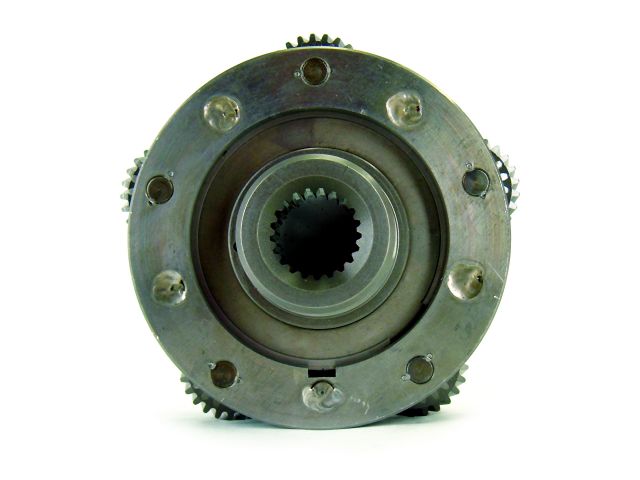
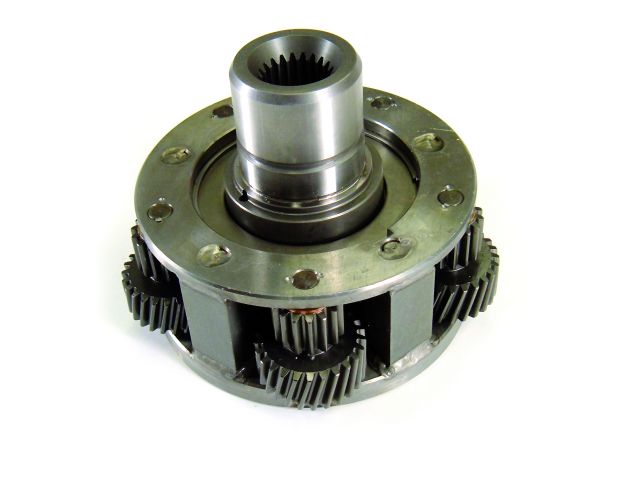
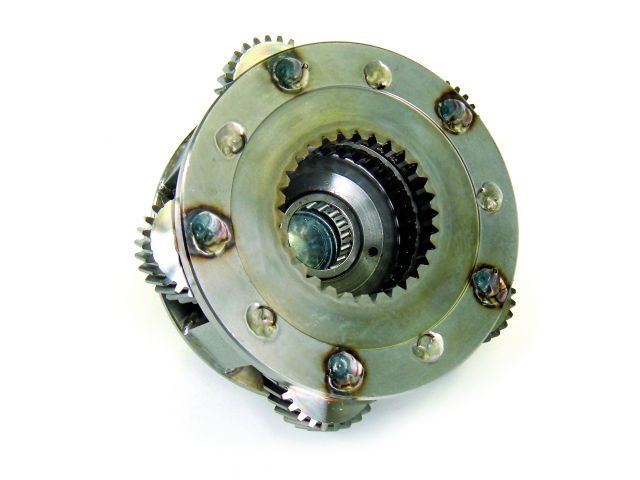
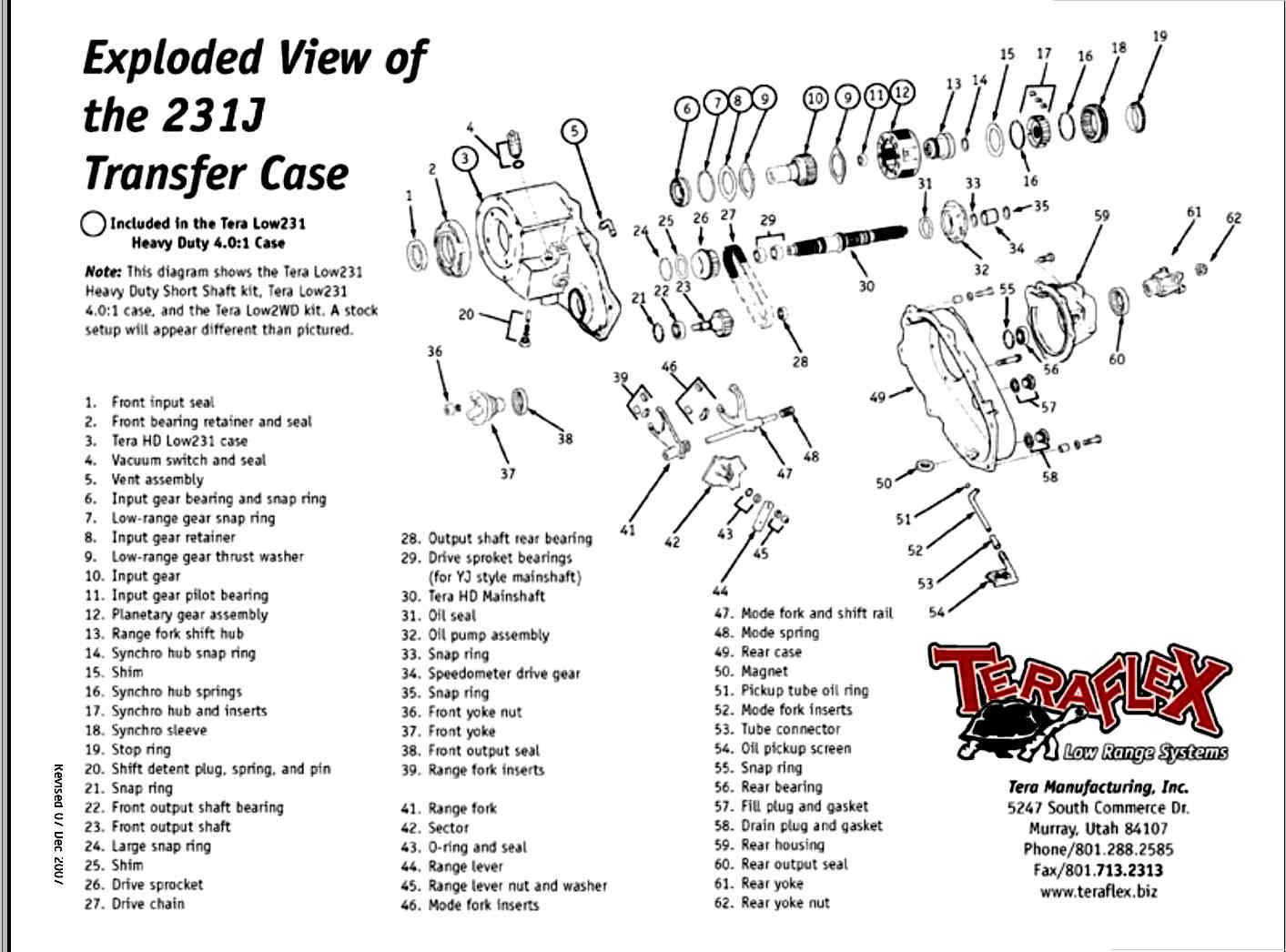
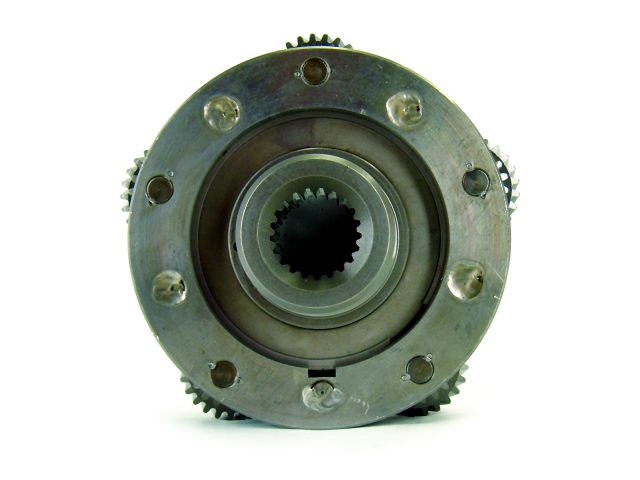
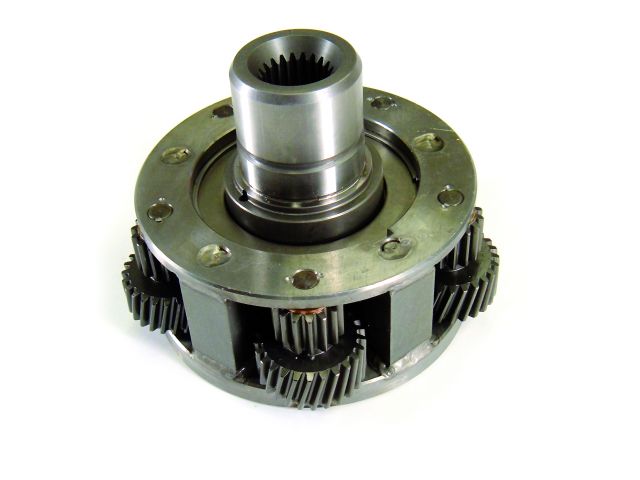
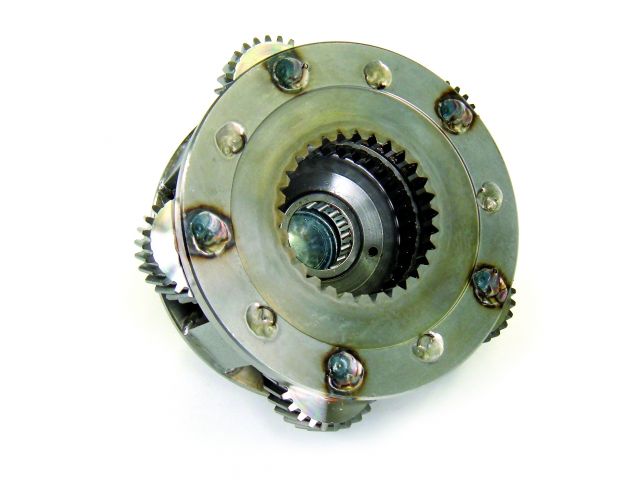
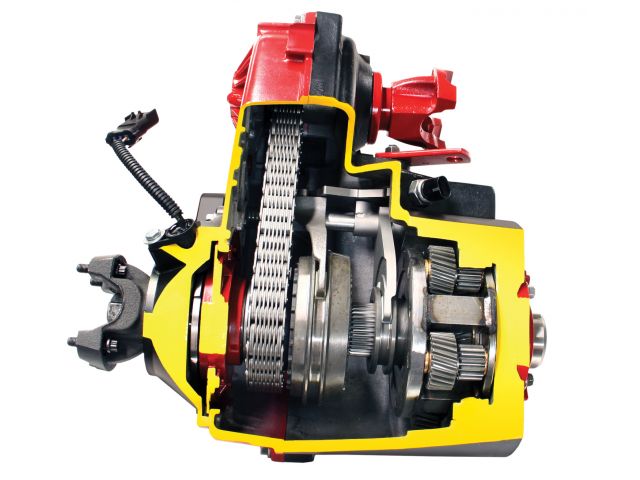
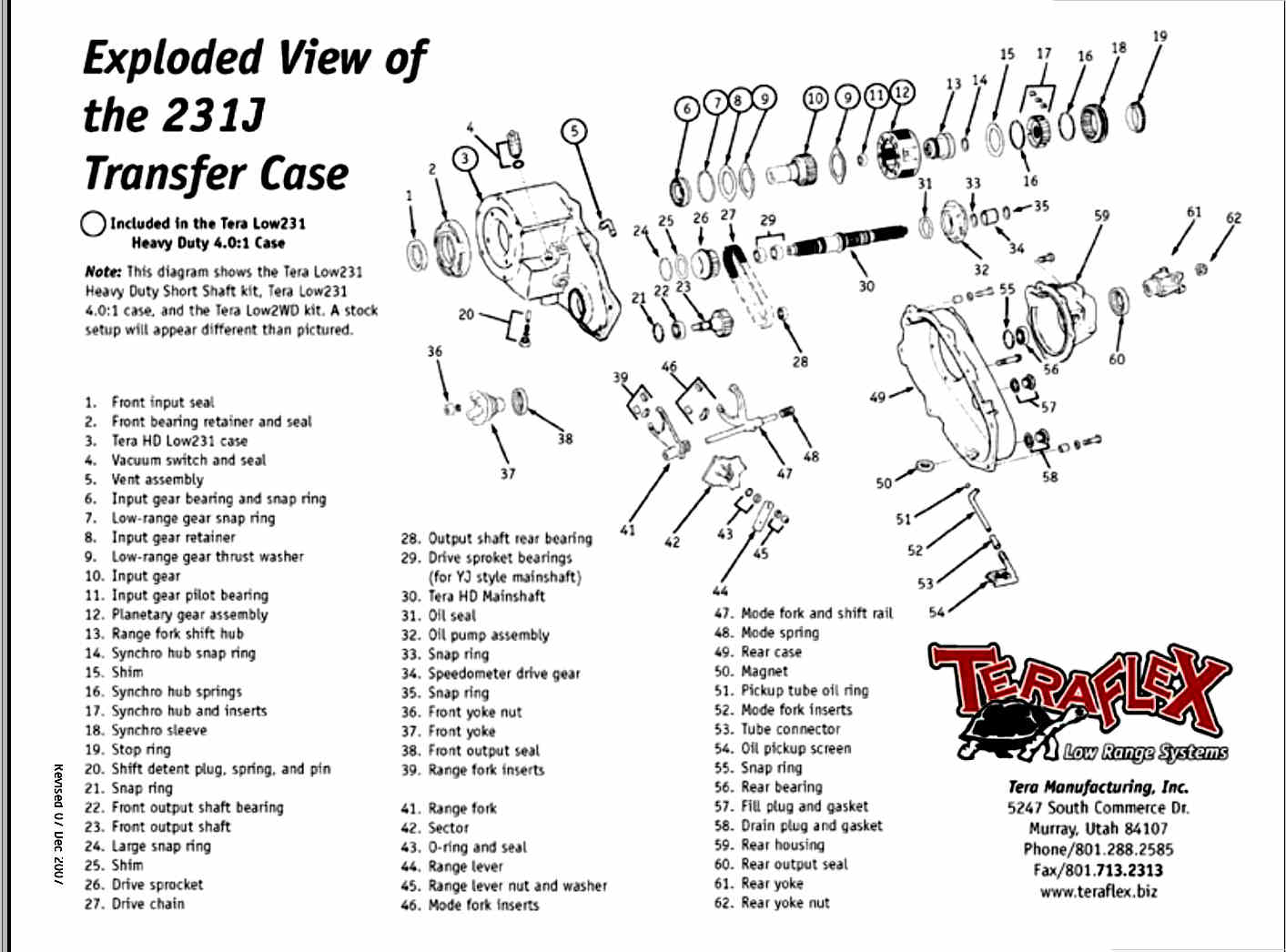
and rare. They look like this.
There are 2 planet gears on each planet shaft.
A small one and a larger one. They are connected together.
The sun gear drives the small one and the ring gear
reacts the larger one. They tend to be weaker than
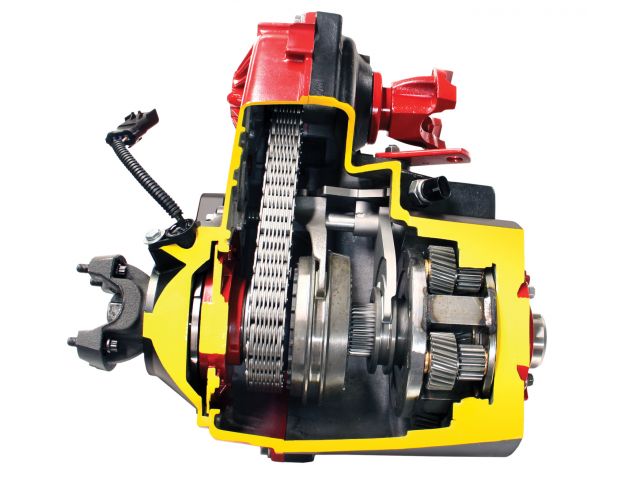
a simple planet. They are used in Jeep transfer cases.
Paul Lamar
The Rotary Engine free News Letter. Powered by Linux. If you want off
the list PLEASE let me know and I will remove you. ACRE NL web
site.
http://www.rotaryeng.net You Tube
http://tinyurl.com/beqqxas
Copyright 1998-2016 All world wide rights reserved.