Paul et al,
The recent TTC engine run postings, turbo compound threads,
and my own
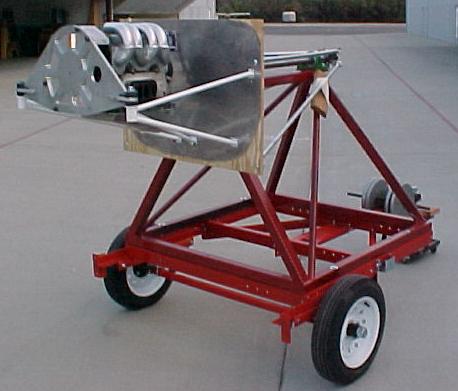
efforts have started me thinking about an engine test stand
and the
features/performance it should demonstrate.
Obviously a control/instrument panel would incorporate some
of the basic parameters like...
oil pressure
oil temp
engine (coolant) temp
exhaust temp
manifold pressure
air/fuel ratio
rpm
throttle position
fuel flow/totalizer
time
hobbs
throttle
mixture
ignition
What other controls/measurements should be incorporated on a
basic level?
What about on a more advanced, special situation level (e.g.
waste gate position when testing turbos)?
Should it be easily transportable?
And what about safety features (fire extinguishers, kill
switches, etc.)? What do you suggested?
Ideally a data acquisition and control system would collect,
log, and display the data. I use National Instruments LabVIEW
software and hardware (along with other manufacturers like
Omega, Interface, Banner, etc.) for such at work. But it looks
like other solutions are available through some of the systems
discussed in postings here. Personally I'd prefer to use
something available and proven in order to get to the engine
testing instead of debugging I/O systems (even though I do
that a lot with NI LabVIEW!!). What is available and what are
your thoughts on that?
There are many automotive type test stands out there for
basic run in testing. But I would expect an aircraft test
stand to measure torque and thrust for a prop generated load.
Not too many (none???) out there that I saw, but please let me
know about any that you know of.
Is there any sort of "standard" test prop that would be
suited for initial or comparative testing?
A DIY stand seems more practical from a cost and achieving
desired capability standpoint.
Therefore, what would be a good upper limit of each value to
start sizing a stand?
Max engine torque = ?
Max engine thrust = ?
Obviously the answers to my questions are very subjective
with many variables and personal preferences that could affect
the answers. At this point I'm just looking for some rough
initial numbers for the upper limits and capabilities
that "amateur home builder" folks like us might like to see a
stand incorporate.
I think the TTC engine might be representative of such
performance limits? Yes? No?
And what are the thrust and torque goals for TTC?
Is anyone else interested in building such a stand?
So put on your thinking caps, let your imagination run wild,
and let me now your thoughts on this matter.
Looking forward to your responses!
Warm Regards to All,
Brad Chubb
Be careful optimizing thrust. The best static thrust is not
the best prop pitch for an
airplane.
Here are some prop dyno ideas.
Airplanes fly on HP.
HP = Torque X RPM / 5252
If you measure the torque and of course the RPM you know the
HP.
An aircraft engine will increase the RPM until the prop
torque requirements are met.
Paul Lamar
The Rotary Engine free News Letter. Powered by Linux. If you want
off
site.