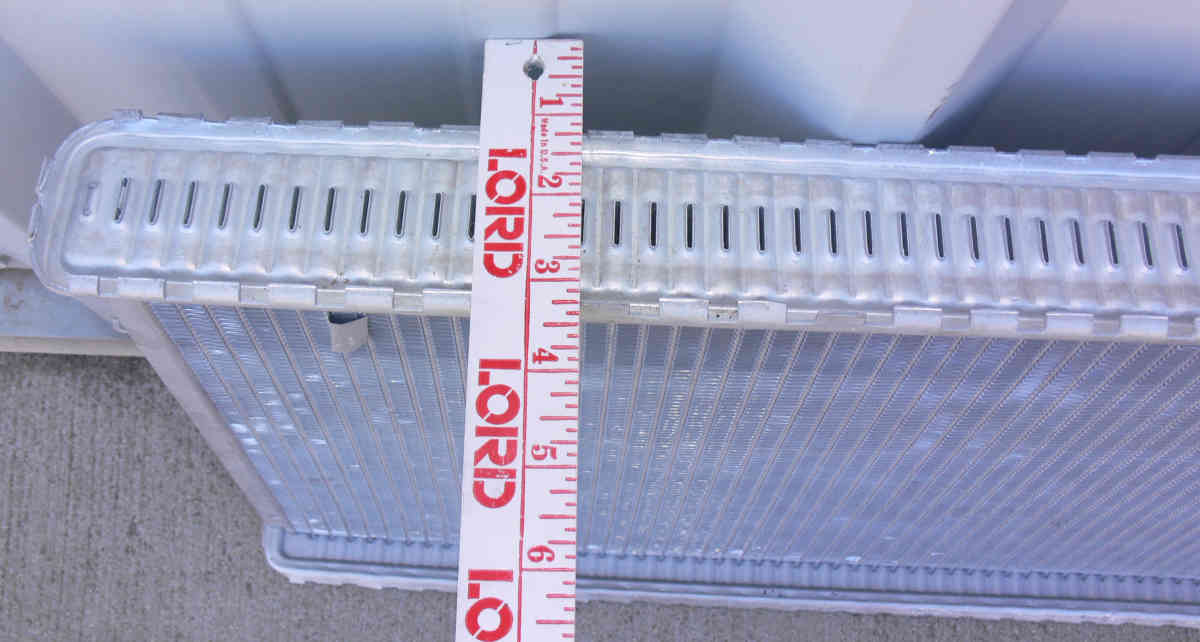
The RX8 core is a good core to use as are Chrysler Doge pick up
cores. Large frontal area with thin cores. The Dodge core is 20" by
30" and is very very effective in a cross counter flow configuration
on the TTC engine. Two cores back to back.
Let's take the Dodge in a non cross flow config.
20 by 30 is 900 square inches.
We have learned more about this subject since Neil Ungar started
flying and on the time to climb engine. Neil complained about over
cooling. It appears we can reduce the intake area of the wedge
diffuser to 15%, of the frontal area of the core, from the 20%
recommended previously.
In other words 15% of 600 square inches is 90 square inches. The
core is 20 inches wide so the height of the 4.5 inches high and 20
inches wide.
Both Neil and the TTC rads are directly in the prop blast so if that
is not the case then you may note higher water temp when taxiing.
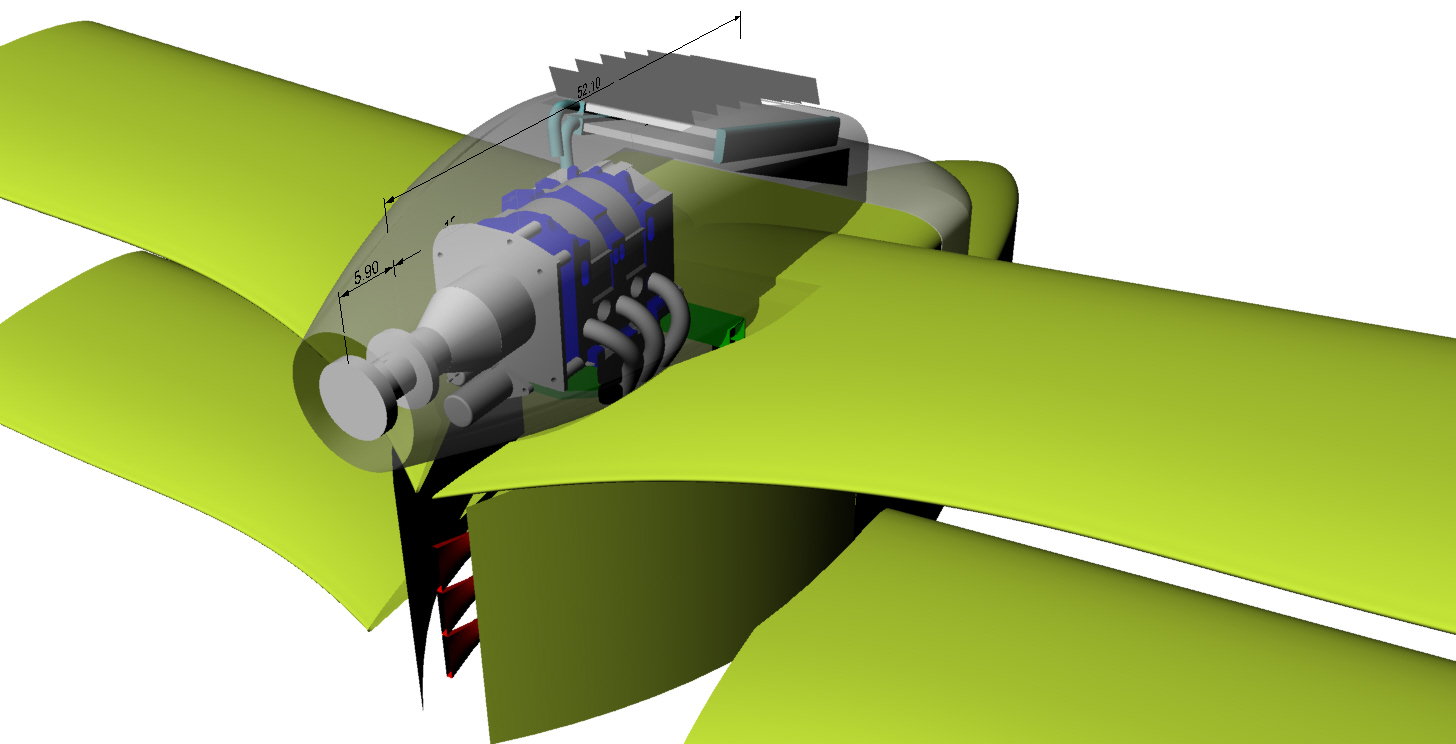
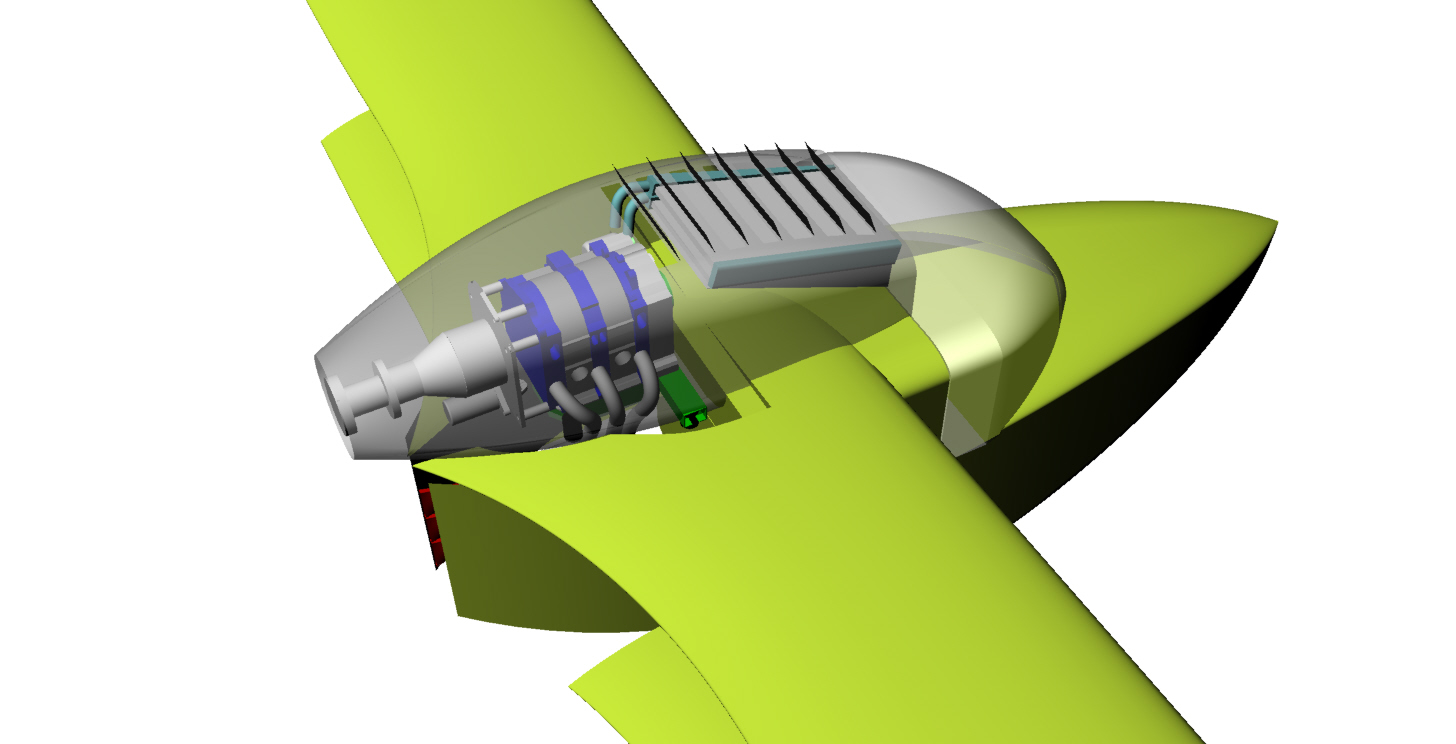
Here is the dodge core on top with the diffuser underneath. Yet
another 3D :-) It is far enough forward to give room for the intake
manifold behind it. This leaves room underneath for and oil cooler.
The exhaust out the back of the cabin may help to attach more air to
the aft sides of the cabin. This is a problem that was addressed by
vortex generators previously (or in addition).
Paul Lamar
Excellent recommendations, thank you! I was thinking of having the
radiators on the top/back (low pressure) of the upper cowling with a
long K&L duct. Your version may be easier. I will play with some
radiator models on the actual engine. The smaller the rad size the
easier it will be to fit. 20x30 will be a challenge.
In this model, it seems that two 20x30x1 counterflow radiators would
give a total volume of 1200ci? Is it correct that we need about 600ci
for water cooling and 200ci for oil? If so, I assume that using cross
counterflow rads would each need to be about 1/2 the Dodge size as long
as I have 600ci?
My RX8 has twin oil coolers about 8x10x2. The single RX7 oil cooler is
about the same volume. The latter should fit up front if the water
cooler intake is a little higher.
Has anyone used 3D printing to create their engine cowling?
Scott Gettings
Those volume numbers depend on the thickness of the core. Thinner core
less cubic inches
are required as thin cores are far more efficient for a given volume.
Dodge were leading
the way with other manufactures catching on.
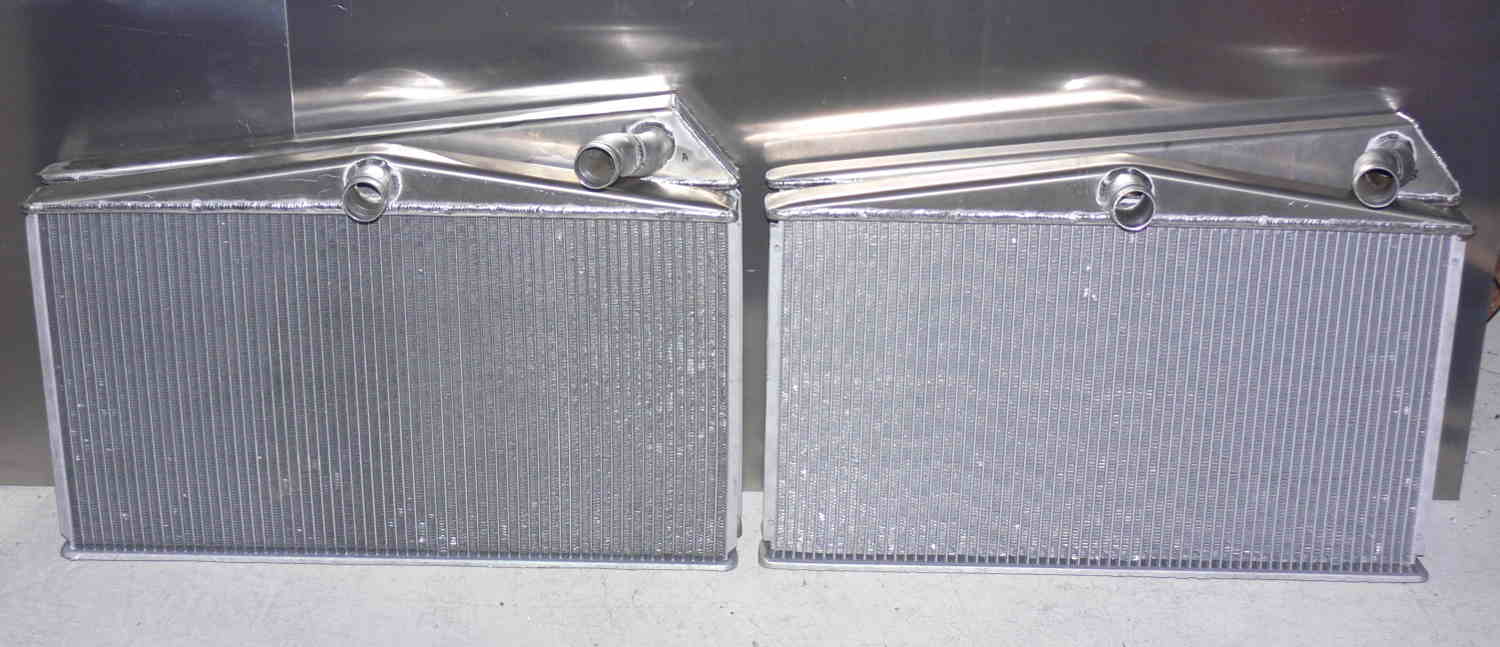
This is a cross counter flow rad for a Tango
14" by 24" They are Dodge Neon cores.
Some what more compact at higher cost to make. You also need a skilled
tig welder.
-------------------------------------------------------------------------
Scott,
We should change the standard to square inches of frontal area because all
the recent cores are around 5/8 to 3/4 inch thick including the RX8.
Rad core frontal area is more correlated to cooling than volume.
600 square inches frontal area for 250 HP single core.
2 x 300 square inches for cross counter flow. Two Neon rads are about that.
Maybe a bit more so they should handle a mild turbo charge.
BTW have you considered a 8" prop extension to help the air stick to the
cabin sides?
You can lesson the angel at which they go back. If you go back at 7
degrees and
then cut it off flat that will implement the Kamm effect. Same as the recent
Priuses.
Paul Lamar
The Rotary Engine free News Letter. Powered by Linux. If you want off
the list PLEASE let me know and I will remove you. ACRE NL web
site.
http://www.rotaryeng.net You Tube
http://tinyurl.com/beqqxas
Copyright 1998-2016 All world wide rights reserved.