Hi, are you talking about AOI ?
Steve Carlisle
No :-)
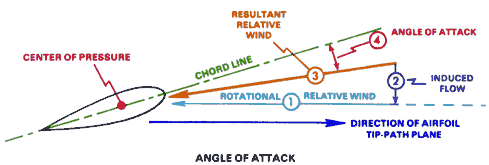
"Angle of Incidence (or AOI) is the angle between the blade chord line
and the
plane of rotation of the rotor system." ???
I am talking about the panels behind the cockpit relative to the
direction of flight
that are greater than 7 degrees. The Glass Goose is an example.
There are a limited number of single engine sea plane configurations
that minimize drag.
None of them have that configuration.
Lake, Coot and Sea Wind. High mounted engines that allow more or less
perfectly stream lined
fuselages. The High mount is necessary to keep the prop out of the
water spray.
The Coot did not take full advantages of the possibilities. Also the
prop could have been
driven by a longer belt lowering the weight of the engine and moving the
prop higher.
See the attached picture. These airplane have rather bad handling due to the
weight and thrust of the high mounted engines relative to the wing.
More power causes
a nose down moment as does landing in water due to the inertia of the high
mounted heavy engine.
IMHO the Sea wind is the best of the group.
For twins there is more variation. Gull wings are a good one Dornier DO
26, Martin PBM,
and an Italian lite sea plane that I don't remember the name of.
The next category is pylon mounted wings with multiple engines. The PBY
is the best example.
Dorneir D18D is another. These usually have some high drag strut bracing.
BTW if the pilot and passenger are semi reclined the cabin top of the
Glass Goose AKA
Sea Hawker could be lowered and the wing supported with a short pylon
above the cabin top which would benefit the aerodynamics some what.
Then the deep fuselage with wing mounted engines. There is a whole raft
of those including
the Spruce Goose and the Martin Mars. The only feature that causes extra
drag is
the step and the extra deep or high fuselage. As they get bigger this is
less of a problem.
All the older strut mounted high wing sea planes are high drag.
The Dorneir Wal was the best of the group.
Sea planes are a difficult design problem due to the two mediums it must
operate in.
Paul Lamar
Thanks for the info Paul, sorry about the confusion, I was meaning AOI
in regards to airplanes.
Steve Carlisle
What is your definition?
Paul Lamar
Hi Paul, just learning this stuff, but angle of incidence and angle of
attack seem to be one in the same, is that right?
Steve C
They seem to be but AOI is associated with propellers however it is
rarely used
Pitch is used most often. That is not an angle per se. It is far the
propeller will
go in one revolution.
AOA is used very very frequently to refer to wings. In fact there is an
AOA instrument
to warn the pilot of a stall among other uses. Navy pilots were taught
to use
an AOA instrument as I recall .
Paul Lamar
The Rotary Engine free News Letter. Powered by Linux. If you want off
the list PLEASE let me know and I will remove you. ACRE NL web
site.
http://www.rotaryeng.net You Tube
http://tinyurl.com/beqqxas
Copyright 1998-2016 All world wide rights reserved.
The Rotary Engine free News Letter. Powered by Linux. If you want
off the list PLEASE let me know and I will remove you. ACRE NL web
site.
http://www.rotaryeng.net You Tube
http://tinyurl.com/beqqxas
Copyright 1998-2016 All world wide rights reserved.