This is going to take someone with CFD to get it in the ball park.
Think of air as a whole bunch of sticky tiny marbles.
It has mass, therefore it has inertia.
It has viscosity (stickyness)
The idea here is the low pressure at the back wall is lower pressure
than the air trying to turn the corner. This is an attempt to help it turn
the corner by sucking it in down the line on the side wall.
The prop draft of course is instrumental.
The side wall angle shown is not seven degrees. It is about 11 degrees.
The optimum shape of the duct remains to be determined. It could be
tapered with the slot on the side wall narrower than the slot on the back
wall increase effectiveness.
So too the position of the slot on the side wall.
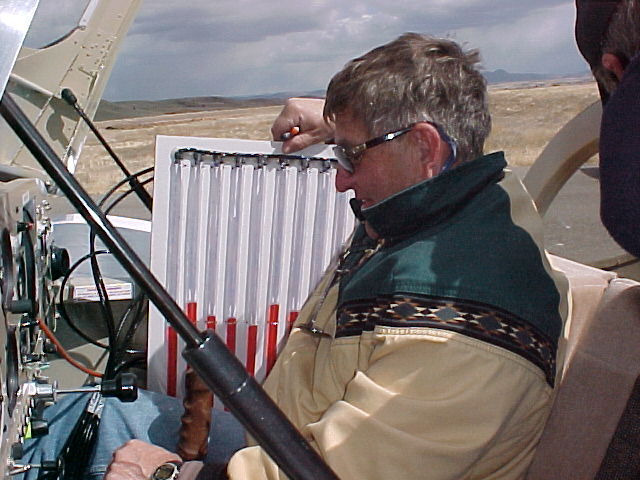
A watter manometer would go a long way towards a better understanding.
Peter, do you have a copy of my book?
We plan to short hop the TTC this week at SZP.
Paul Lamar
The Rotary Engine free News Letter. Powered by Linux. If you want off
the list PLEASE let me know and I will remove you. ACRE NL web
site.
http://www.rotaryeng.net You Tube
http://tinyurl.com/beqqxas
Copyright 1998-2016 All world wide rights reserved.