A 500 HP turbo two rotor could be made and sold for less than
$20,000 using stock Mazda e-shaft, rotor housings and rotors.
Aluminium end and center housings.
The 500 HP two rotor rotary is needed to get off fast on short,
rough runways.
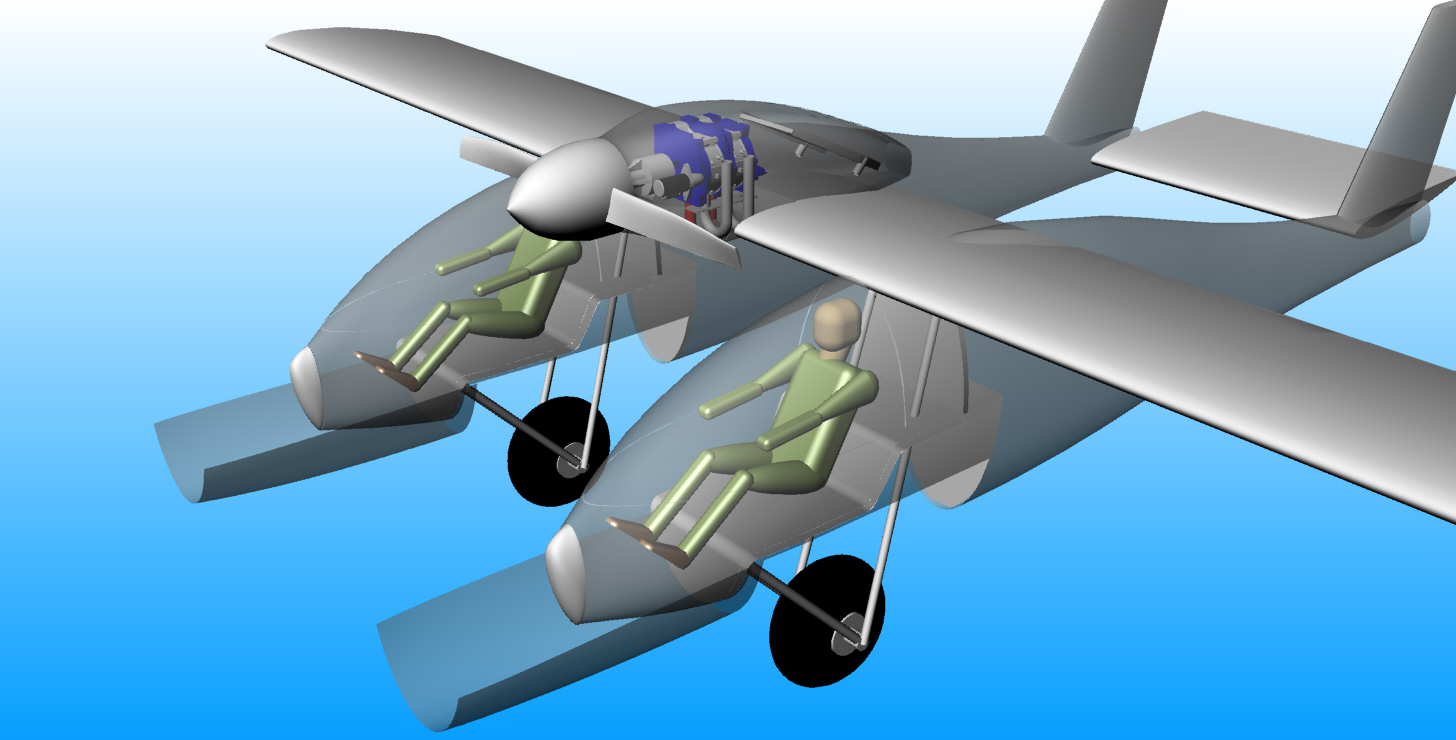
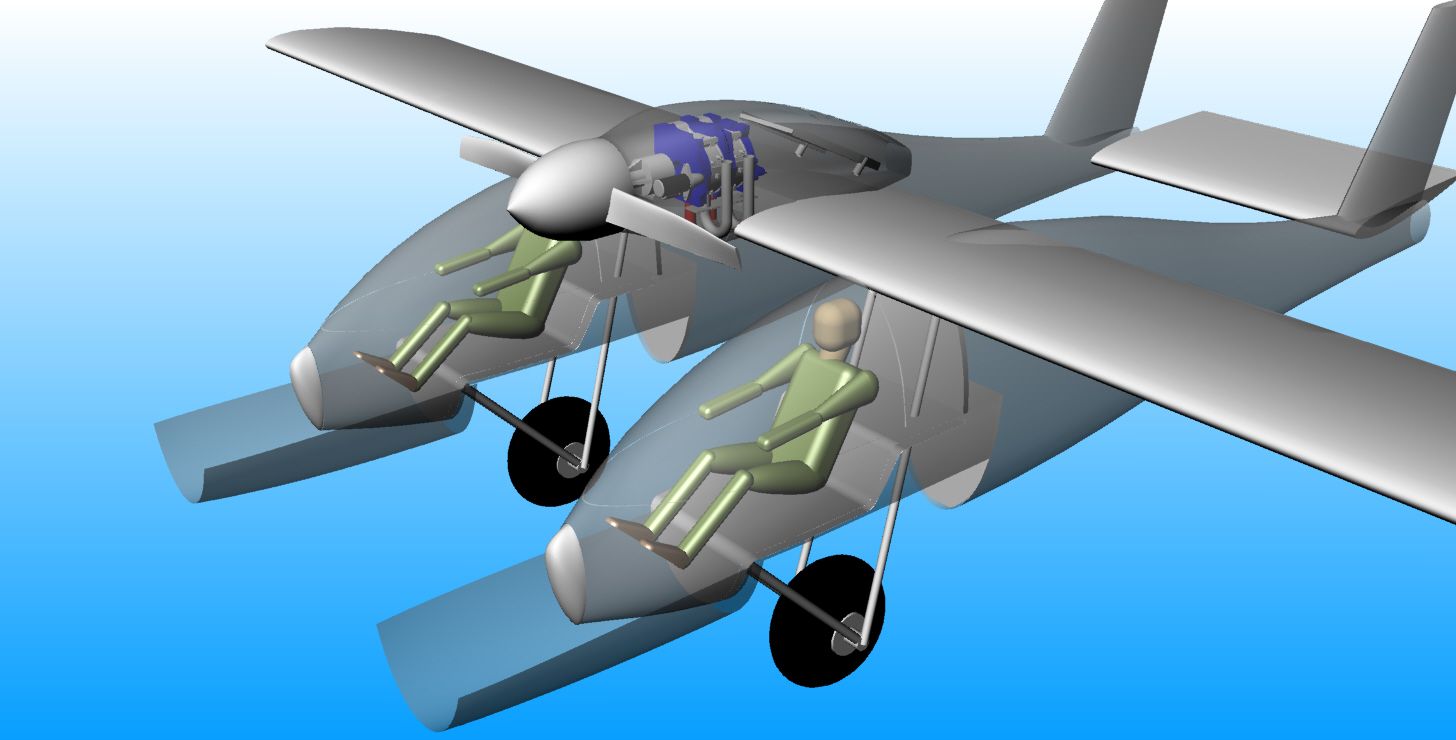
This will hold four people or two people and two stretchers.
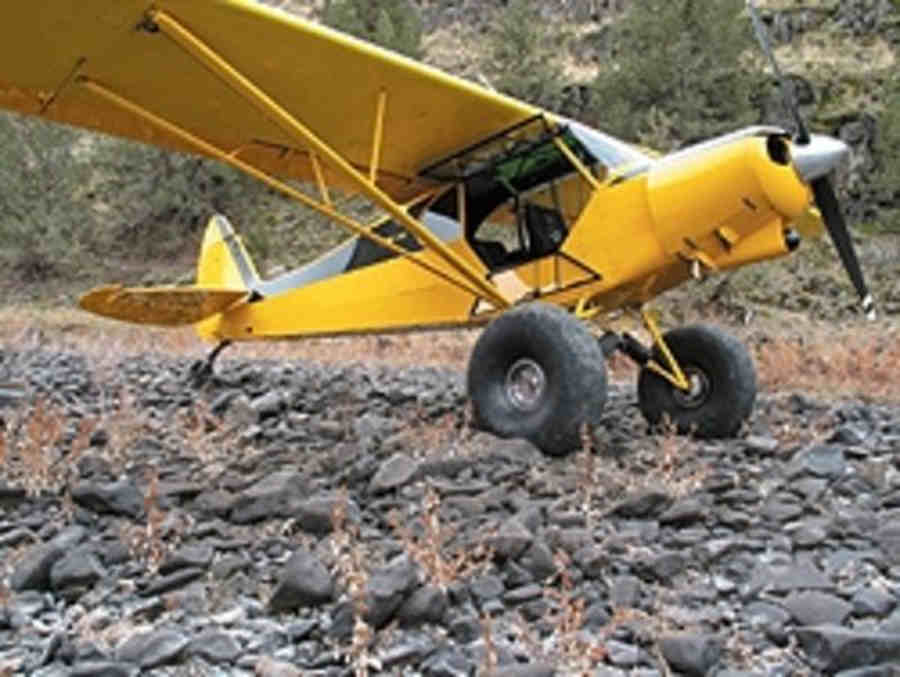
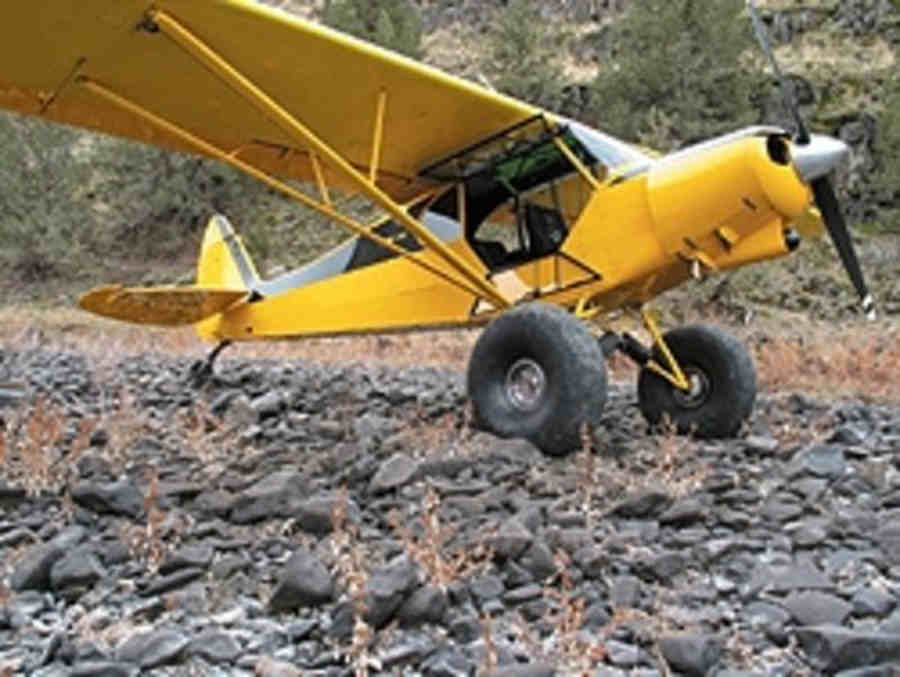
The key to a bush plane is great big balloon tires. Unfortunately
they are a lot of drag which effects the speed and range.
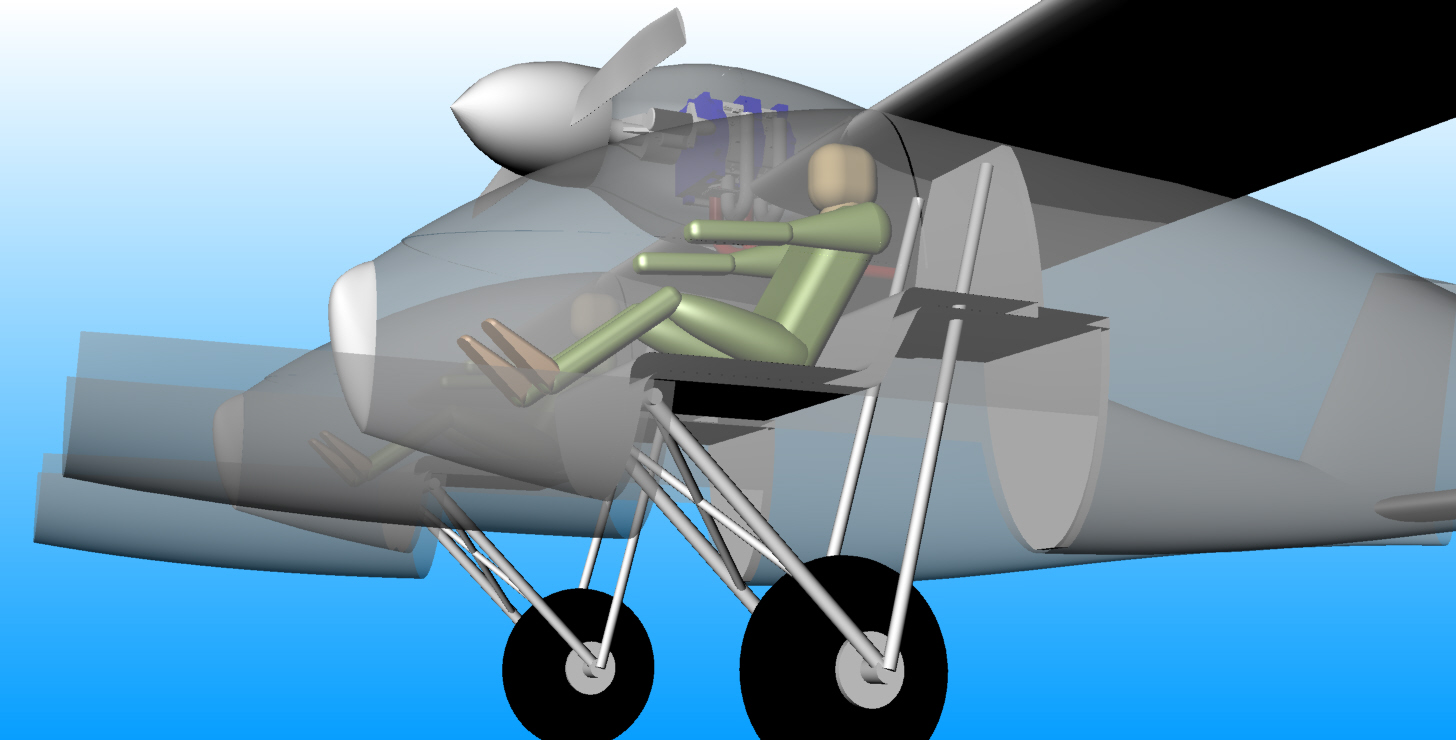
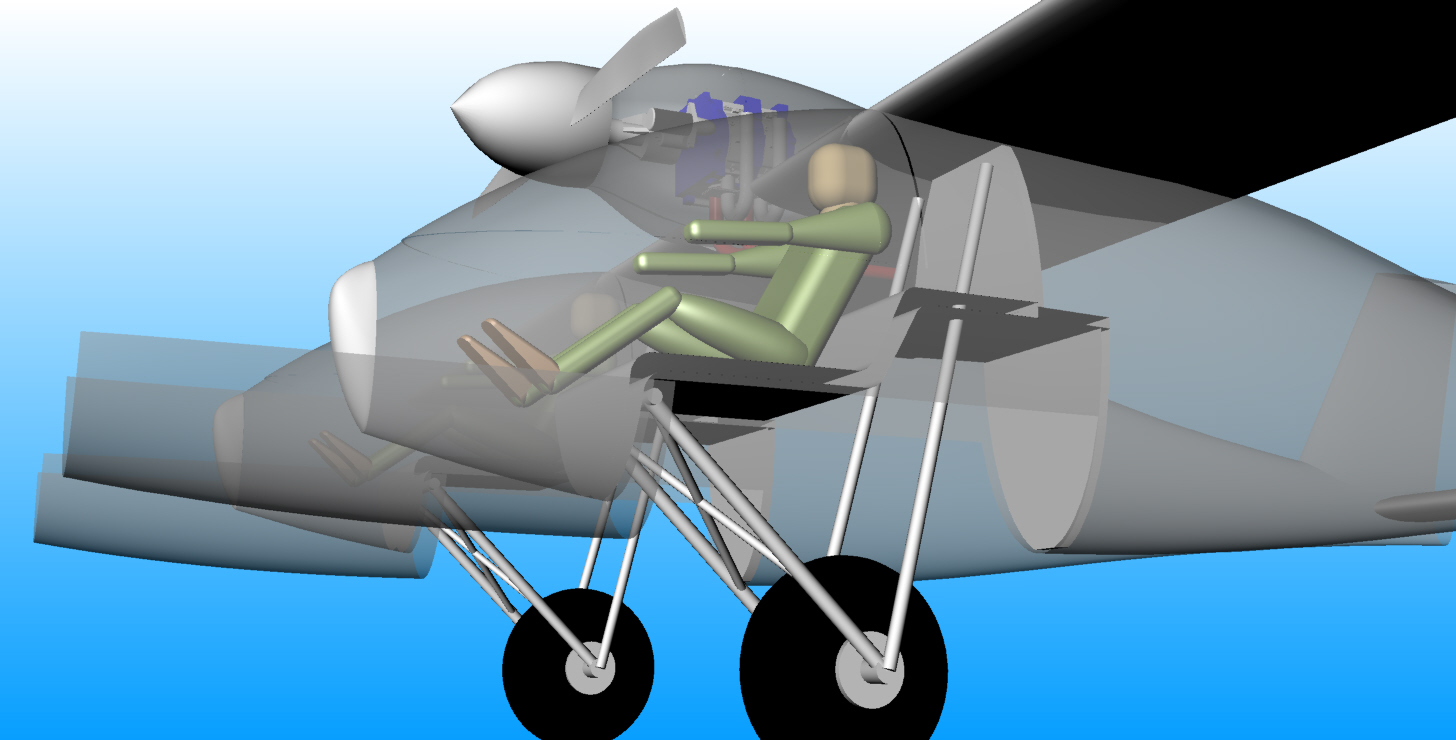
The catamaran configuration is ideal to retract two large balloon
tires with out adding a lot of drag and complication.
The two long hydraulic cylinders on each wheel feed into an
accumulator when in the landing mode. When retracting the accumulator
is turned off and the oil sucked out of the top of the cylinders to
retract the gear.
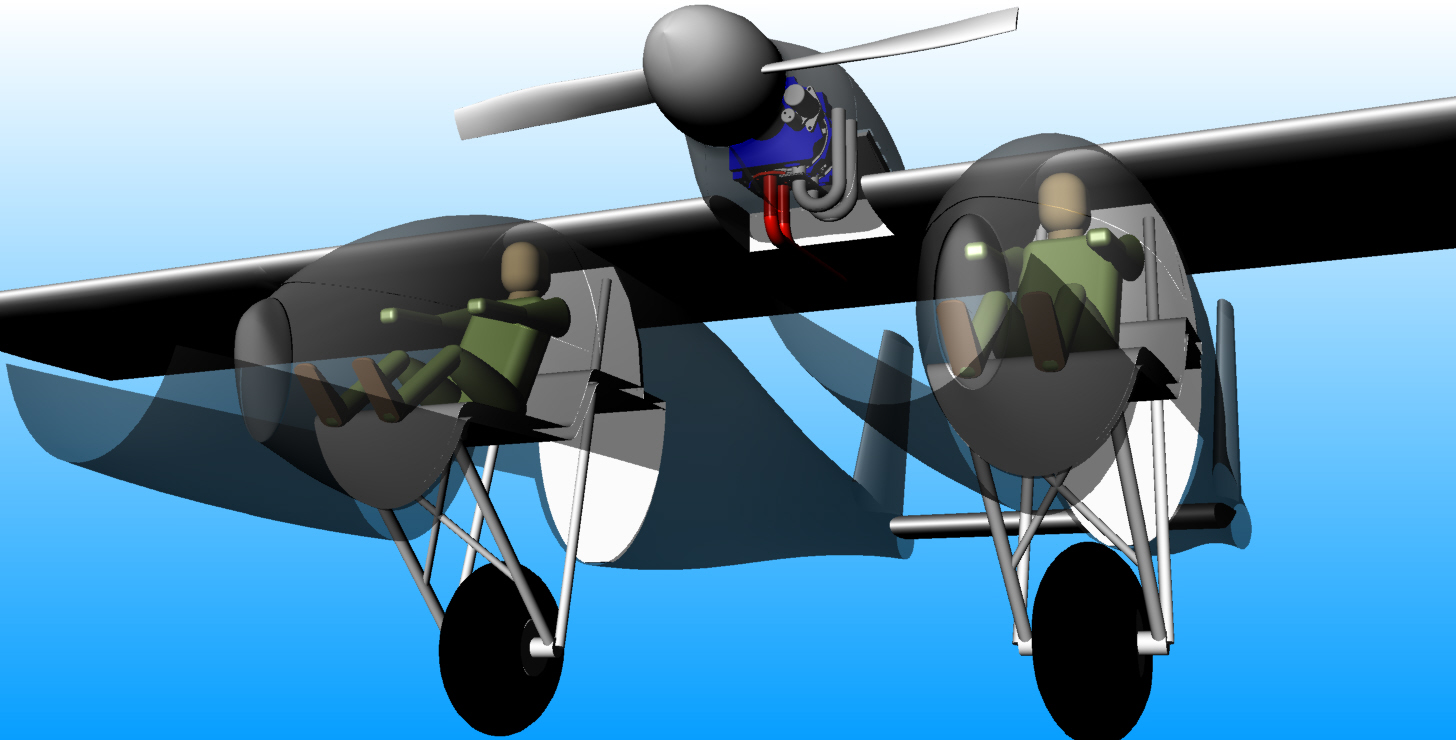
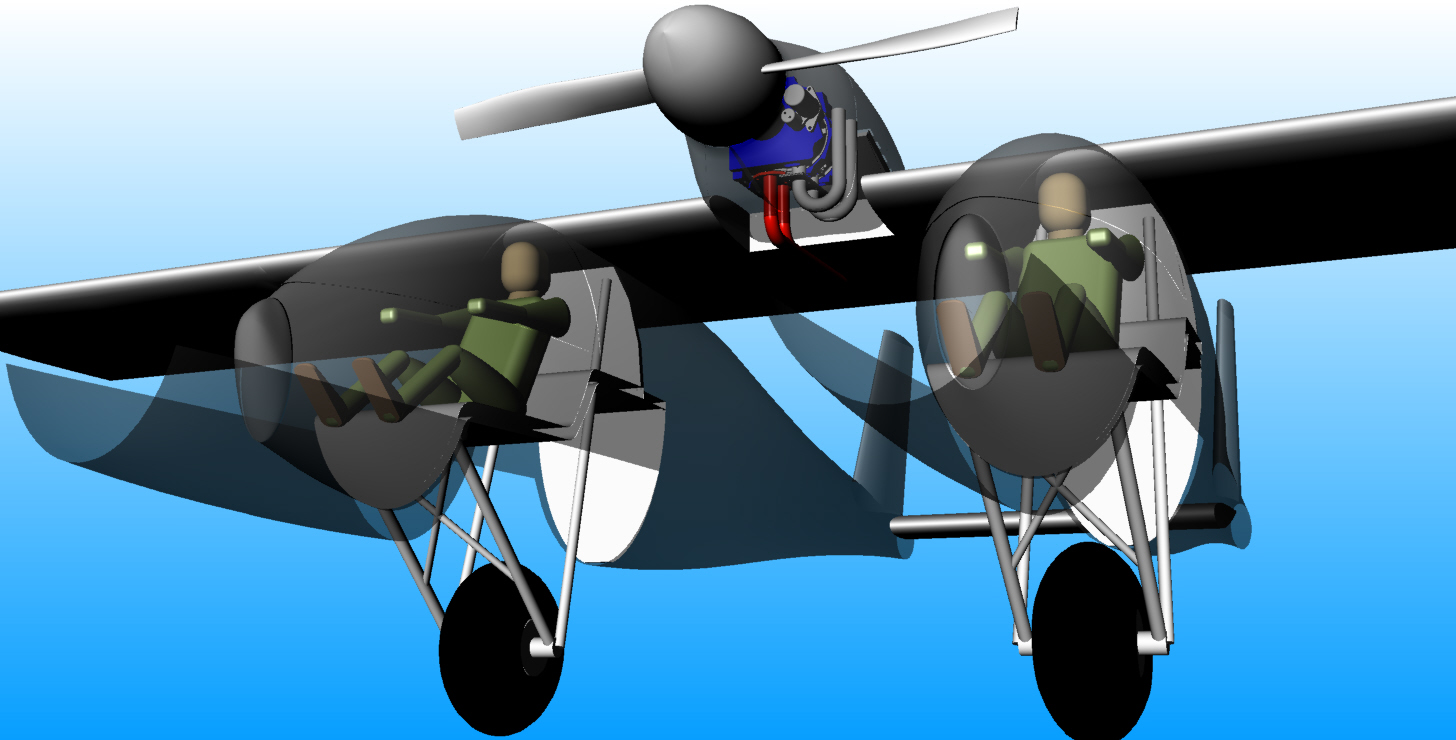
Almost all loads from the gear feed directly into the spar. The
strongest place in any airplane. The engine is mounted above and to
the spar. It can be a tractor or pusher.
Keep it simple.
I'll bet some one can get a grant from the Oz gov as it is much lower
cost than the turbo props they are using now. This is low cost
enough so ranchers, farmers and so fourth can afford it. No need for
waiting for a flying doctor turbo prop to get there if someone is
injured or gets sick.
You can show this at Oz-Kosh Dave.
Paul Lamar
Very nice. So could you have balloon tires and hydro foils in one
configuration?
Thanks, Paul.
Sincerely,
Boyd Thompson
I thought about that but it is difficult as the gear and the hydro
foils, I think, want to be in the same position relative to the CG.
The other problem is the empty weight would be higher.
What can be done is seal the wheel wells, beef up the gear doors and
land in water if absolutely necessary. For example running out of
gas.
I am working on a simpler and cheaper mold for making the composite
fuselage. Part of it can be flat and consequently plywood can be
used for some of the male mold.
What works for mold separation is ordinary duct tape. You cover the
entire male buck with it. Plywood and all so it matters not what you
make the male buck out of. One could use blue Styrofoam (expensive)
for the compound surfaces or ordinary wall plaster. Much cheaper.
Also thin galvanized sheet steel as found in air coordinating ducts
could be used for simple curved surfaces.
We used special auto body styling clay at Chaparral.
The key is slather on micro balloons mixture on the cured layup and
sand most of it off. That tells you were the depressions are. Works
for foam core fibreglass wings as well.
Here is a hood for an Austin Healy Sprite I made 55 years ago. The
silver bumpers are part of the hood made from fiberglass. Beefed up
of course.
If I knew then what I know now learned from Dan Gray about making
fibreglass molds it would have been much smoother :-)
I don't think we had duct tape in those days either :-)
Paul Lamar
Paul,
The perfect, reasonably fast bush plane already exists. It is the
Helio Courier, and if you want more, there is the Helio Stallion.
Replace the GO-480 Lycoming in the Courier and the PT-6 in the
Stallion.
http://helioaircraft.com/default.htm
Steve Brazil
Good bush planes for fairly hard, relatively smooth surfaces. Not so
for soft sand or rocks.
The best bush planes have balloon tires or floats.
Around Ventura we have a lot of ploughed fields.
One could probably land in the direction of the furrows or even in
the river bed with balloon tires.
-----------------------------------------------------------------
Some pictures of the out back.
With balloon tires one could probably land successfully in this high grass.
The balloon tires would probably push it down.
If you carried a scathe one could probably cut enough of it down to take
off.
---------------------------------------------------------------------------------------------
I have been working on it some more to clean up the cosmetics and
change the landing gear doors. It is possible to move the one piece doors
down and forward and back up. The required mechanisms is doable
geometrically
speaking and is rather simple. Not shown yet.
This I think would help in tall grass. It makes the doors more robust.
Also it is easier
to seal the door for emergency landing in water or deep snow. I don't think
they have snow in Oz. NZ snow for sure :-) The wheel wells would be sealed
to keep the water out of the fuselage at large. The balloon tires will
help if the water leaks past the gear door seals.
The forward doors would help in a frontal impact if something like that
happened
More frangible material to dissipate the crash energy,
I will extend the fuselage out a bit to better support the open doors.
The turbo rotary makes a lot of sense as gobs of power can be had to get
off fast
and get off with a lot of fuel for long range. I would say a 150
gallons would
be possible in wing and fuselage tanks just behind the pilot. In other words
almost a 1000 pounds of fuel. No pax or cargo. The light weight engine
helps.
At ten gallons an hour at 140 MPH (best climb speed) that is 15 or 16
hours
which is 2250 or 2400 statute miles. That is SFO to Honolulu.
Or say Goose Bay to Iceland. Or Newfoundland island to the Azores
is 1700 miles. If you have to go swimming the water is warmer.
You can cruise at half power or less for maximum range.
500 HP on gasoline would be no problem.
The engine would weigh less than 200 pounds with out the gear box. I
suspect with
careful design a gear box could be made that weighed less than 40 pounds.
Of course a turbo compound engine would give you 30% more of everything :-)
Paul Lamar
The Rotary Engine free News Letter. Powered by Linux. If you want
off the list PLEASE let me know and I will remove you. ACRE NL web
site.
http://www.rotaryeng.net You Tube
http://tinyurl.com/beqqxas
Copyright 1998-2016 All world wide rights reserved.