Does anyone have experience with rotary powered light sport aircraft?
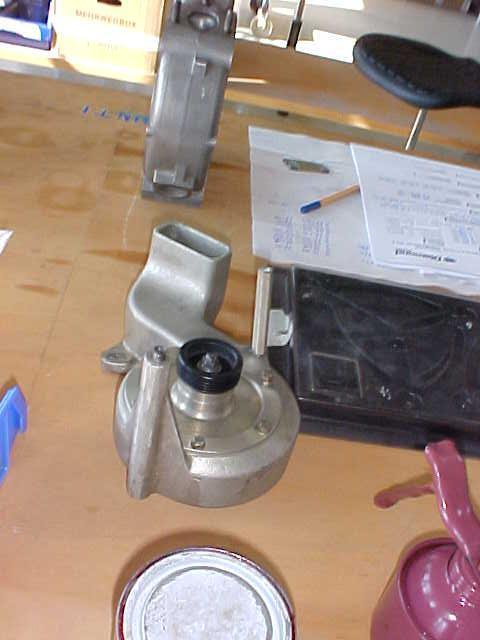
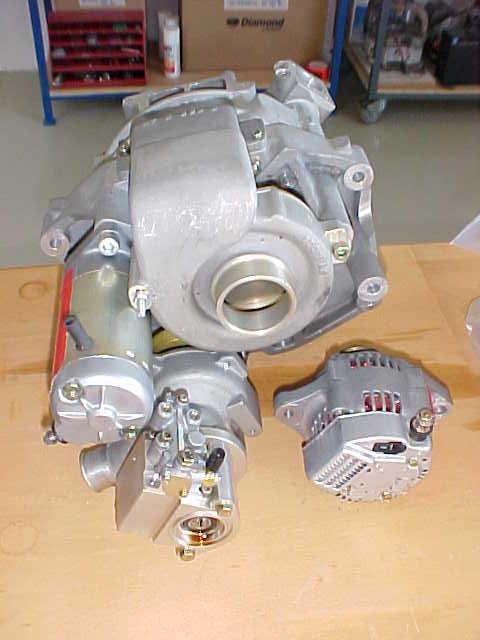
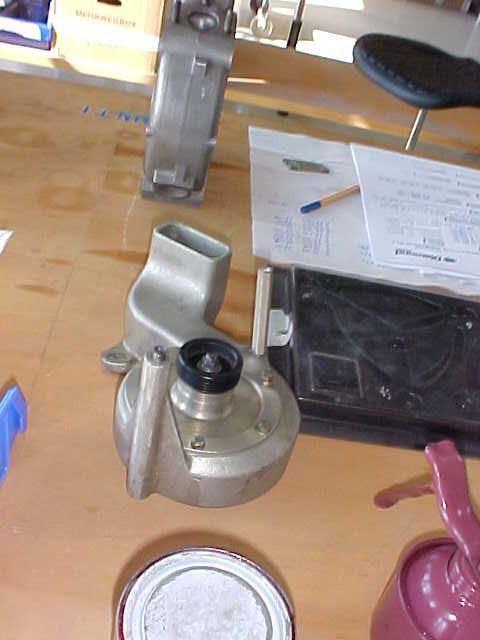
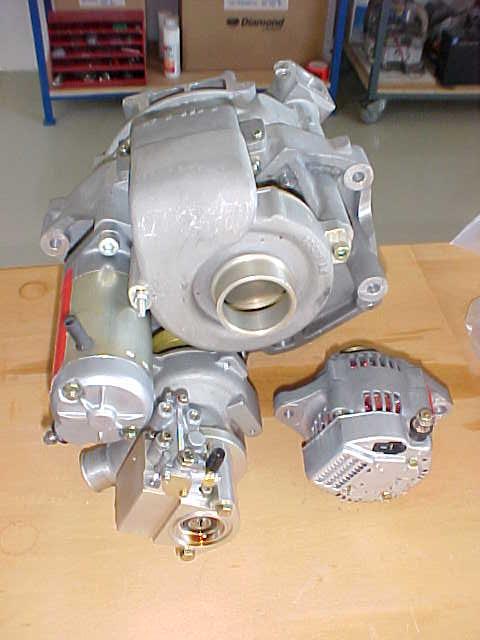
I know Austro makes the AE50R which from what I understand is in the
under 80 lb weight range with a "no loss lubrication system" and is
currently working on an 80 horsepower rotary to "replace" a Rotax 912
80hp. Anyone know anything about these? Are there other less
expensive options I haven't found yet?
Jenn Kimball
Nothing certified other than the Austro Engine. Over 500 of the 50
HP versions have been sold to Alexander Schleicher motor gliders
.
LSA requires certification. There may be an LSA experimental
category. I am not really all that up on the rules.
Lots of Mazda one rotors however.
What did you hear about 80 horsepower rotary to "replace" a Rotax
912?
Paul Lamar
Light Sport Aircraft (LSA) fall under a specific definition of
performance and capability set forth by the FAA. They are not
"certified" by definition. There are three types of LSA. LSA,
factory built, S-LSA, Amateur built from a kit supplied by the
manufacturer of the same factory built LSA model, and EAB-LSA.
Light Sport Aircraft (LSA) are certified by their manufacturers, not
the FAA, to be in compliance with ASTM standards. There is no FAA
certification for any of their equipment including engines. They are
granted an air worthiness certificate by the manufacturer. Like any
other factory built aircraft they are not subject to Phase 1/2 fight
testing . They may not be legally modified without written
permission from the manufacturer. The condition inspection may be
done by anyone who has completed a 40 hour course to become
certified as an LSA inspector, or by an A&P Mechanic. Factory built
LSA my be rented and used for flight training.
Special Light Sport Aircraft (S-LSA) are designed to be in compliance
with the Light Sport Aircraft rules set forth by the FAA. They are
amateur built to be fully in compliance with the factory built S-LSA
version of the same aircraft. They are granted an air worthiness
certificate by the FAA. S-LSA are subject to usual Phase 1/2 flight
testing but only 20 hours of Phase 1 time. S-LSA must comply with
the factory specifications and may not be legally modified without
written permission from the manufacturer. Condition inspections may
be done by the builder, an LSA inspector, or an A&P Mechanic. S-LSA
aircraft my not be used commercially or rented for any purpose.
There is still the EAB class of airplanes. The builder is
responsible for certifying that the airplane is in compliance with
the LSA requirements set forth by the FAA. They are subject to
usual Phase 1/2 flight testing. They can be flown by anyone holding
Sport Pilot privileges, just like any other LSA. Being Experimental
Amateur Built any modifications desired may be made, even if those
changes would cause the airplane to no longer be in compliance with
the LSA requirements set forth by the FAA. Once the airplane is no
longer in compliance with the LSA requirements the pilot must then
hold a Private Pilot or Recreational Pilot certification to fly it.
Once modified to be outside of the LSA definition it my NEVER be
returned to LSA status even if the modifications are removed. It
will forever be EAB and cannot be flown by a person holding only
Sport Pilot privileges. EAB aircraft my not be used commercially or
rented for any purpose.
You can get flight training in your own EAB-LSA, or EAB, if you can
get past the insurance hurdles and you can find a CFI willing to
train you in your own aircraft. You cannot use your own EAB-LSA or
EAB aircraft to give flight training for compensation.
If an LSA manufacturer chose to install a rotary engine, even with
full FADEC controls, the FAA would have nothing to say about that.
The manufacturer has to answer to the ASTM standard and certify that
the aircraft design and fabrication are in compliance with the ASTM
standard.
Sorry for the long spew. ;-)
Mark LaPierre
"Dear Bill,
Here's the reply regarding the Ae50. More to come
"we are happy to hear you are aware of our aviation certified AE50R
engine and also interested in it. In general the Schleicher dealer in
USA is
http://www.williamssoaring.com/ where Mr. Rex Mayes is the
main contact person. He is also well known here at Austro Engine and
you can buy a brand new engine also from him."
Bill Rayfield
Wow! Finally! this will help the rotary acceptance. If a few of these
are sold maybe Austro will market their certified 110 HP two rotor
version. Better for LSA.
Paul Lamar
I've emailed the vendor and we will see what the response is.
I'm betting they are pricy and will not be a viable alternative for a
50hp engine class. Hopefully I will be proven wrong!
I would love a 65lb 55hp engine and no two stroke issues!
More to come
Bill Rayfield
It is fundamentally more efficient to pump fluid for a given cooling
effect than to pump
air. Quote Kays & London.
"The design of a heat exchanger involves a consideration of both the
heat transfer rates between the fluids and the mechanical pumping power
expended to overcome fluid friction and move the fluids through the heat
exchanger. For a heat exchanger operating with high-density fluids, the
friction-power expenditure is generally small relative to the heat
transfer rate, with the result that the friction-power expenditure is
seldom of controlling influence."
[What they are saying here is the HP consumed by the water pump is of
minor importance. In fact the Mazda pump only consumes about 3 HP.]
"However, for low-density fluids, such as gases, it is very easy to
expend as much mechanical energy in overcoming friction power as is
transferred as heat."
[What is being said here is HP is consumed by cooling drag. Since
cooling drag can be as high as 30% of over all drag the HP could be as
much as 30% of 200 HP or 60 HP. As you can see cooling drag becomes a
very important issue.]
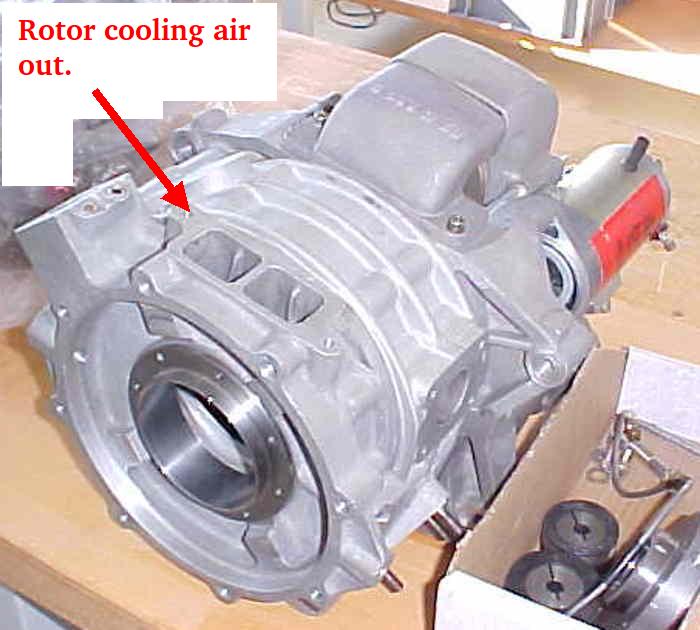
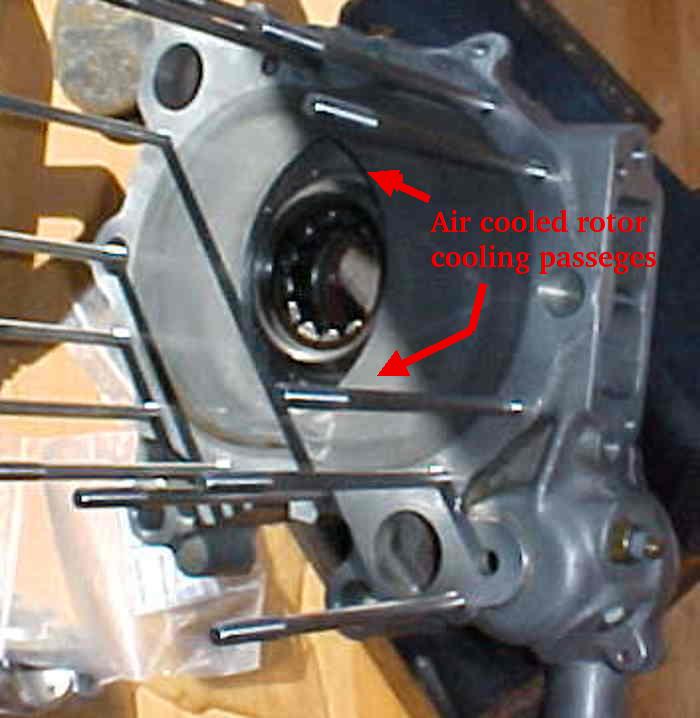
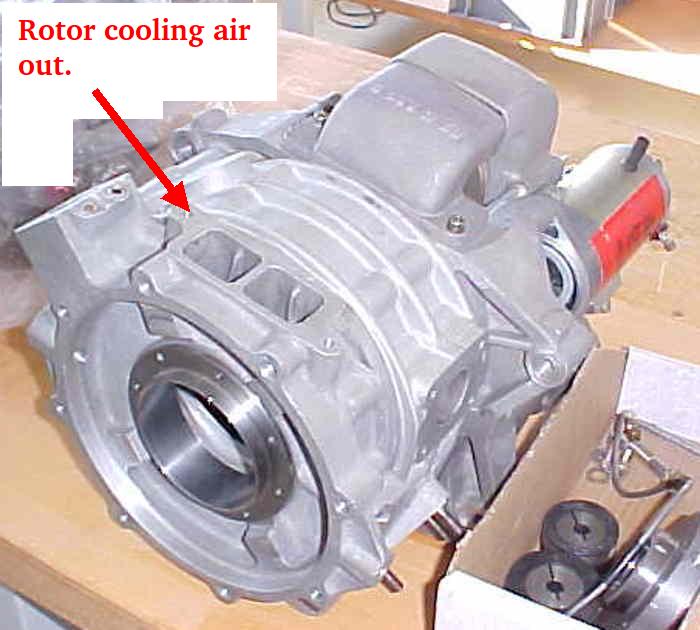
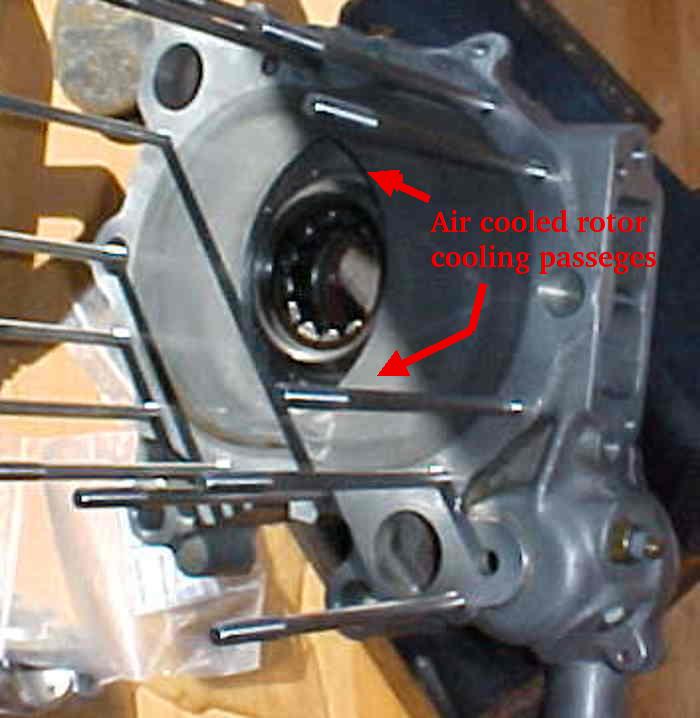
If Austro replaced the rotor cooling air pump with our charge cooled
oil cooling
system it would reduce the fuel burn. The same cooling passages are
found in
the Austro end housings.
I should get a patent on that.
The BSFC on this engine is about .52. The current p-port Mazda is .47
leaned.
That is 10% increase in fuel burn. Not significant for just putzing
around. A 50 HP aircraft is not something one would use to fly cross
country. With a head wind you might find your self flying backwards :-)
Paul Lamar
The Rotary Engine free News Letter. Powered by Linux. If you want off
the list PLEASE let me know and I will remove you. ACRE NL web
site.
http://www.rotaryeng.net You Tube
http://tinyurl.com/beqqxas
Copyright 1998-2016 All world wide rights reserved.