To get the 16X displacement and they also narrowed the rotor width.
They are doing that after finding out the flame propagation does not
get all the way to the sides when the width is over 75mm. The 13B is
80mm.
To increase displacement from 1146cc (12A) which was 75mm wide
rotors, to about 1600cc the eccentricity and radius need to be
increased. E of 17.5mm and radius of 122.5mm which is up from 15 mm
and 105mm. E17.5,R 122.5, W 70 gives 1560cc. E 18, R 126, W 70 gives
1660cc. Either would increase torque and help the combustion
efficiency.
Dale Davies
They did not try side by side plugs. Austro engines has a wide rotor
with plugs side by side.
Paul Lamar
If you pushed the rotor width to 80mm and dual s x s plugs with your
coils would give 3.6 to 3.8 liter displacement with gobs of torque.
For autos run lower RIM for a bit better fuel economy.
Dale Davies
You mean wider than 80 MM right? The current displacement is 2,6
liters.
For 3.9 it would be 120 mm wide.
Paul Lamar
The side-by-side plugs are probably done for redundancy. Mazda's
16X paper describes the best width and length ratios and their
effect on flame speed. When the flame front touches the side walls
or the adjacent spark plug's flame front it slows down. The 12A
has the proper ratio. The 13 B does not. As Dale Davies just
pointed out the 16 X would return to the proper ratio.
Barry Bordes
Do you have a scanned copy of that paper?
Paul Lamar
Paul, it is from a Patent 2009 0101103 0A1 attached in a word doc.
Barry Bordes
Thanks for the patent Barry. Too big to publish just yet. I'll
convert it to a pdf and see if I can make it smaller.
No mention of side by side plugs nor are there any illustrations of
side by side by side plugs in the patent.
The text runs on to pages and pages. It is an attempt to over whelm
the patent office with bull shit :-)
Super Tech in Germany has built some engines with narrower rotors. I
am surprised Mazda was granted a patent on it.
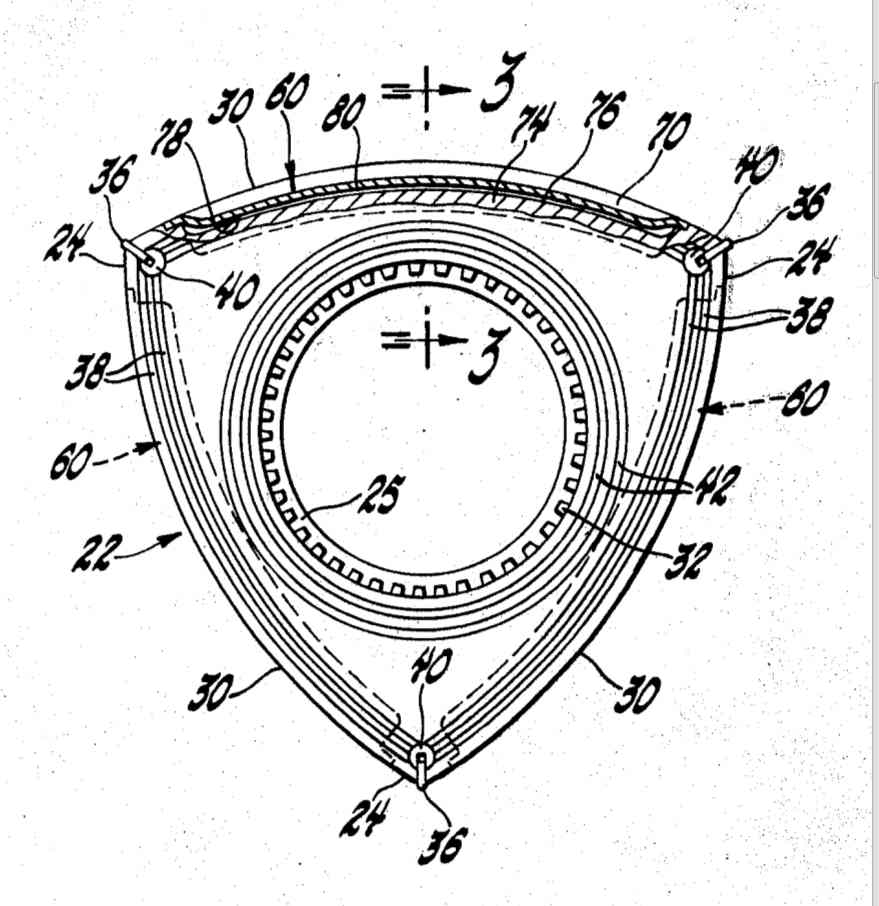
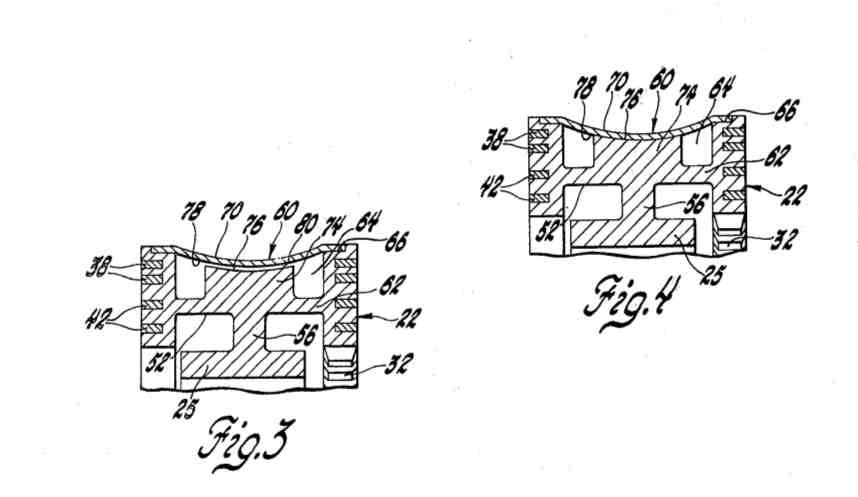
Here is a view of the Austro wide rotor. Note the cooling fins inside
the rotor. Will work real well with the oil squirter. Here too is a
picture of the Kantana powered with a 2 rotor. Most of these picture
were taken at the factory by Mark Wrathal and myself.
Paul Lamar
Mazda went to the narrower rotor for 16X design to get the fuel burn
to the rotor sides with single plugs. Dual would help also especially
in aircraft. The leading/trailing is not really dual plug as
certification would go. You might be able to baffle the powers that
be with BS.
4
Dale Davies
It will run on either one. Your can diddle with the plugs until you
are blue in the face.
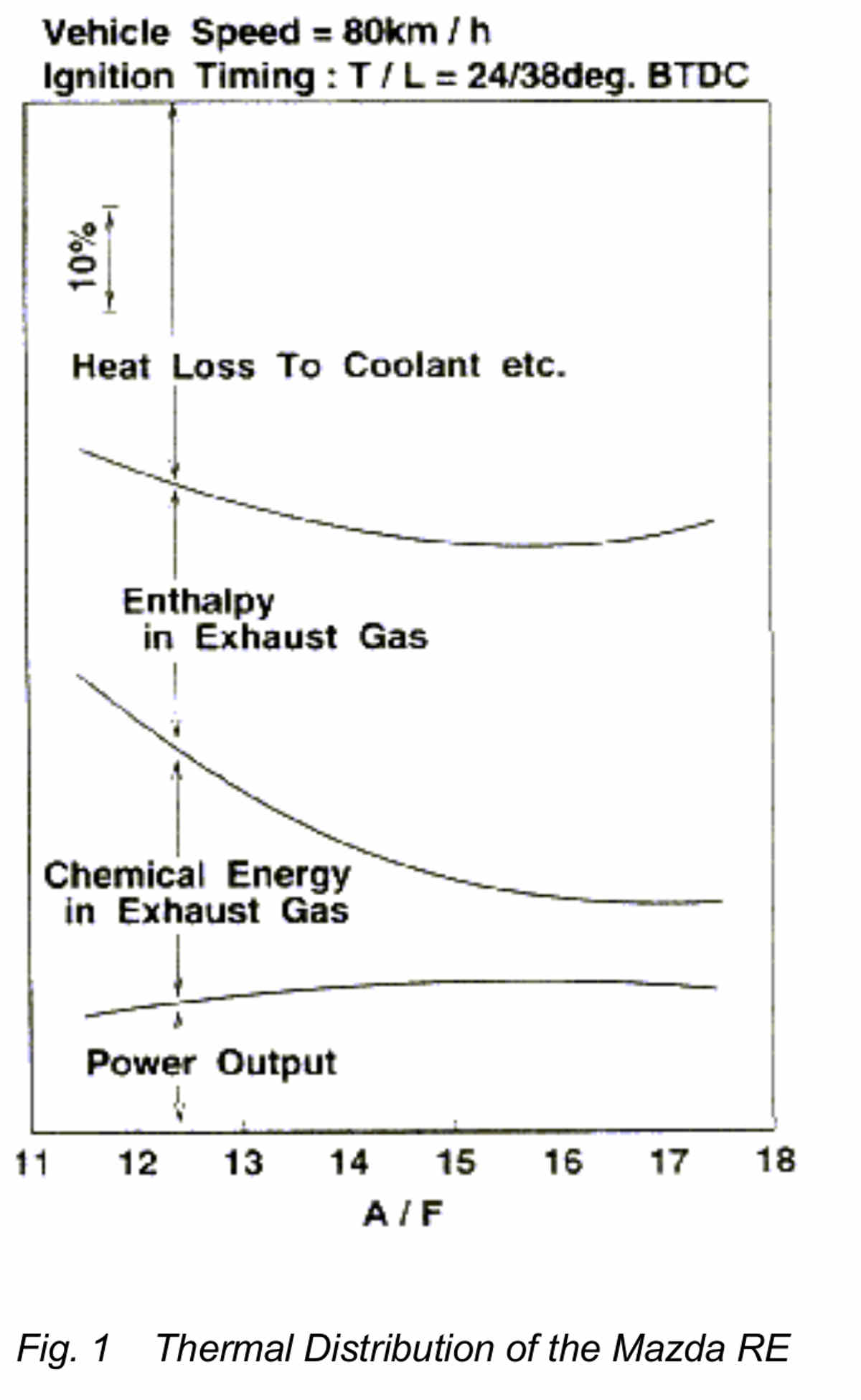
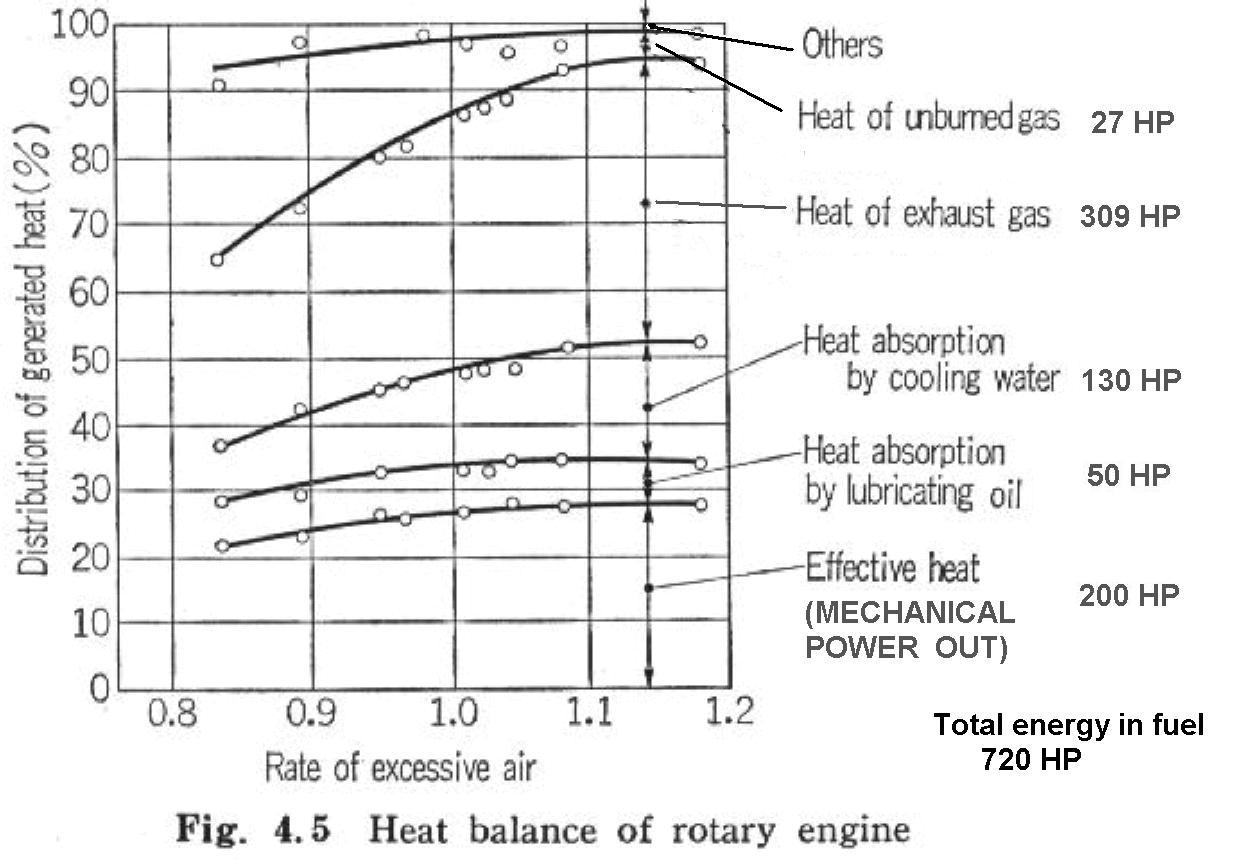
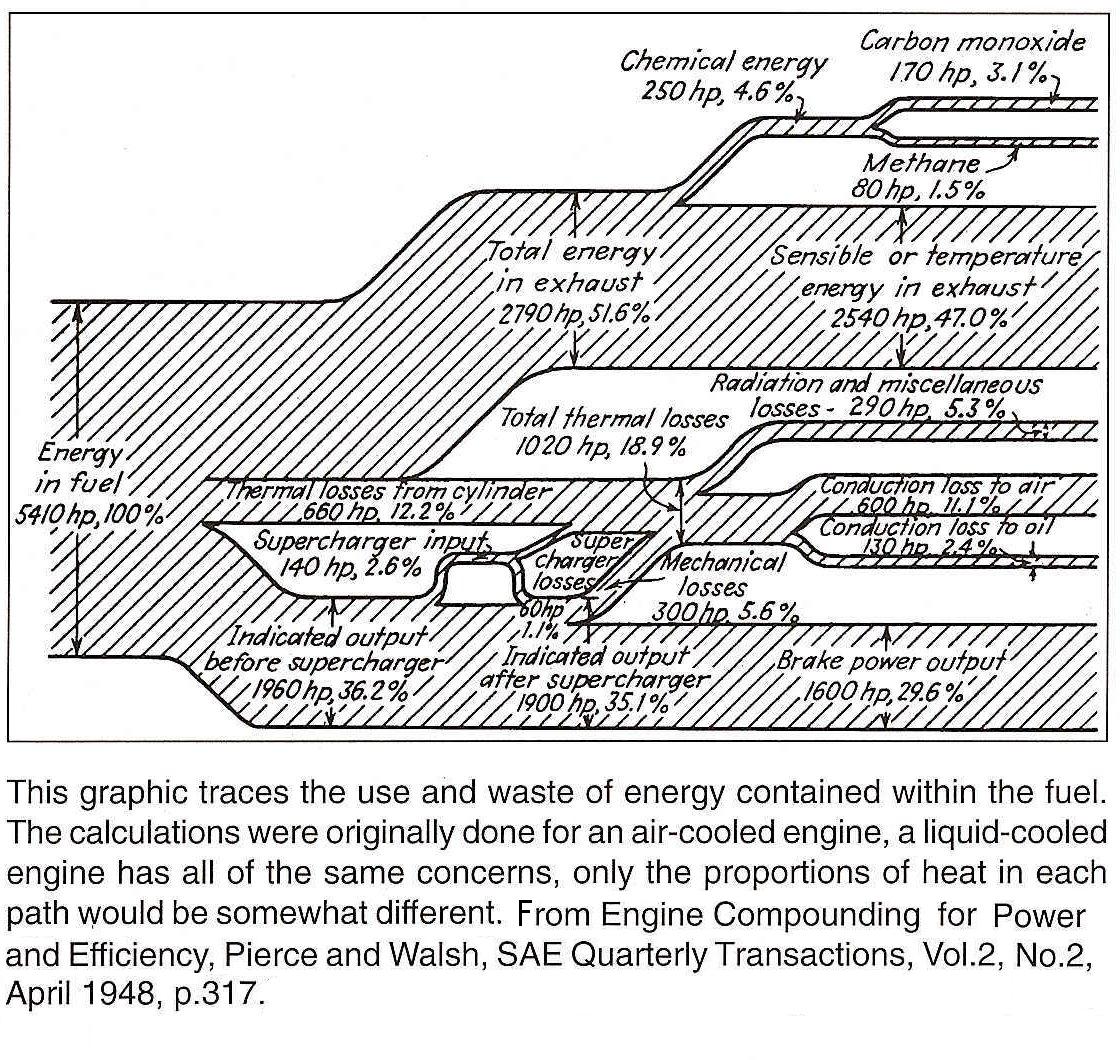
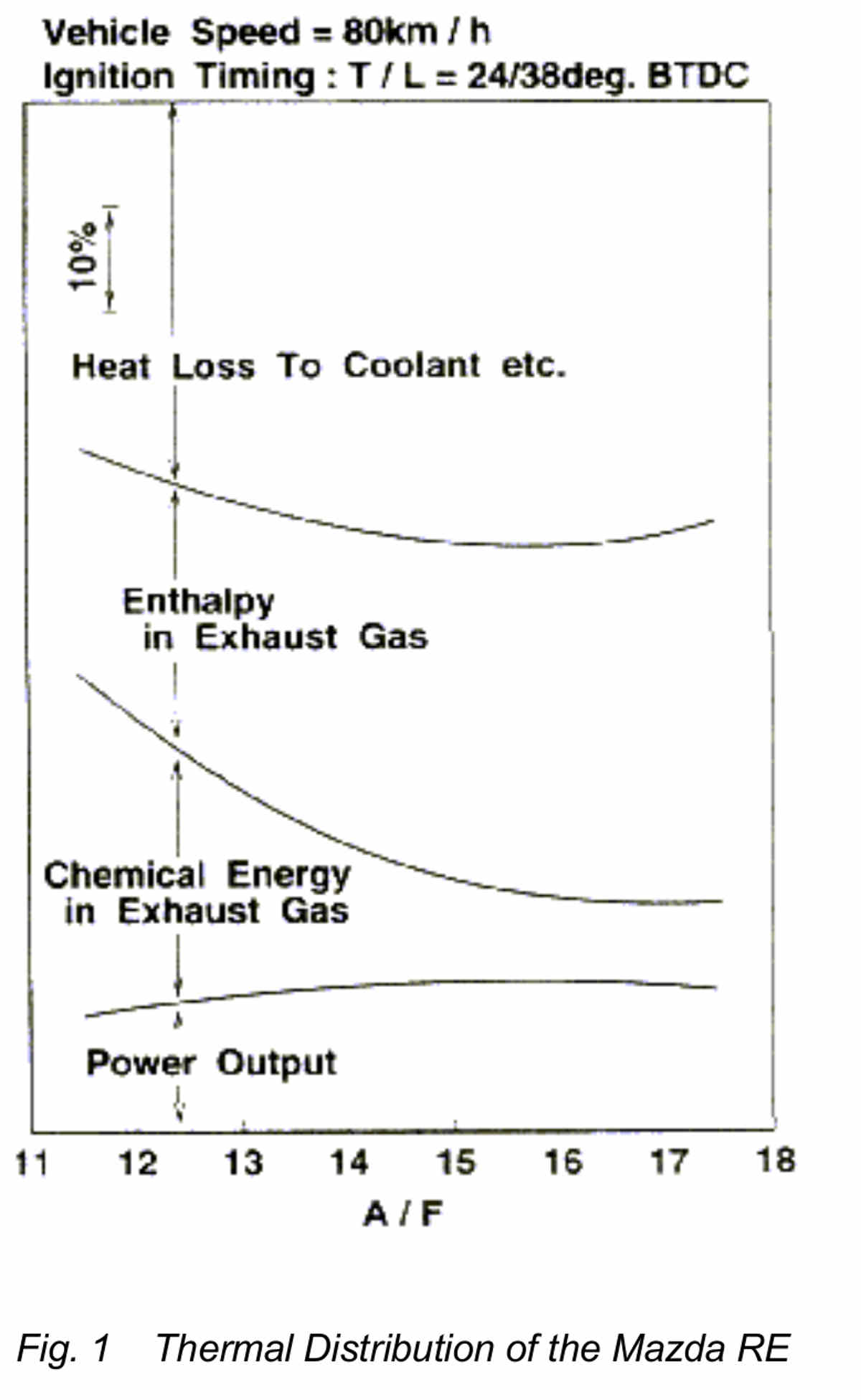
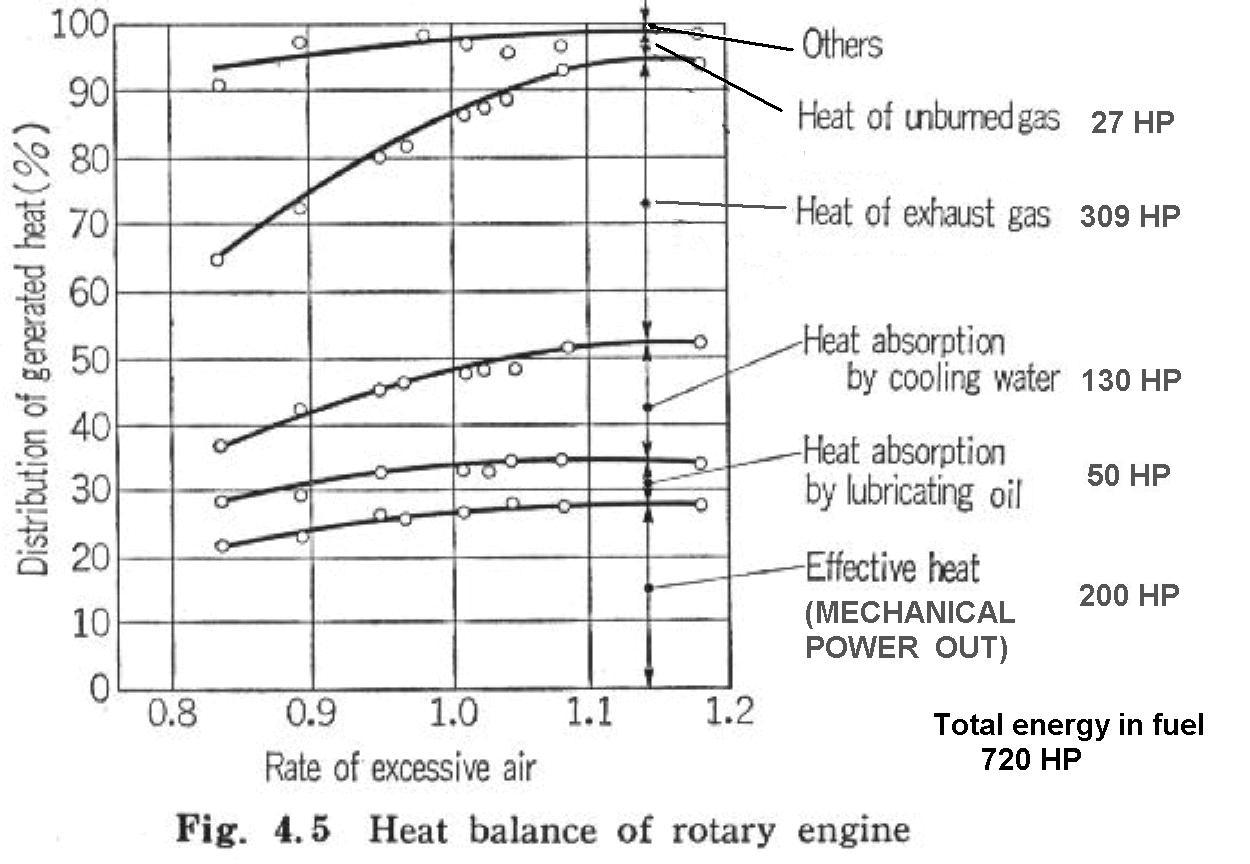
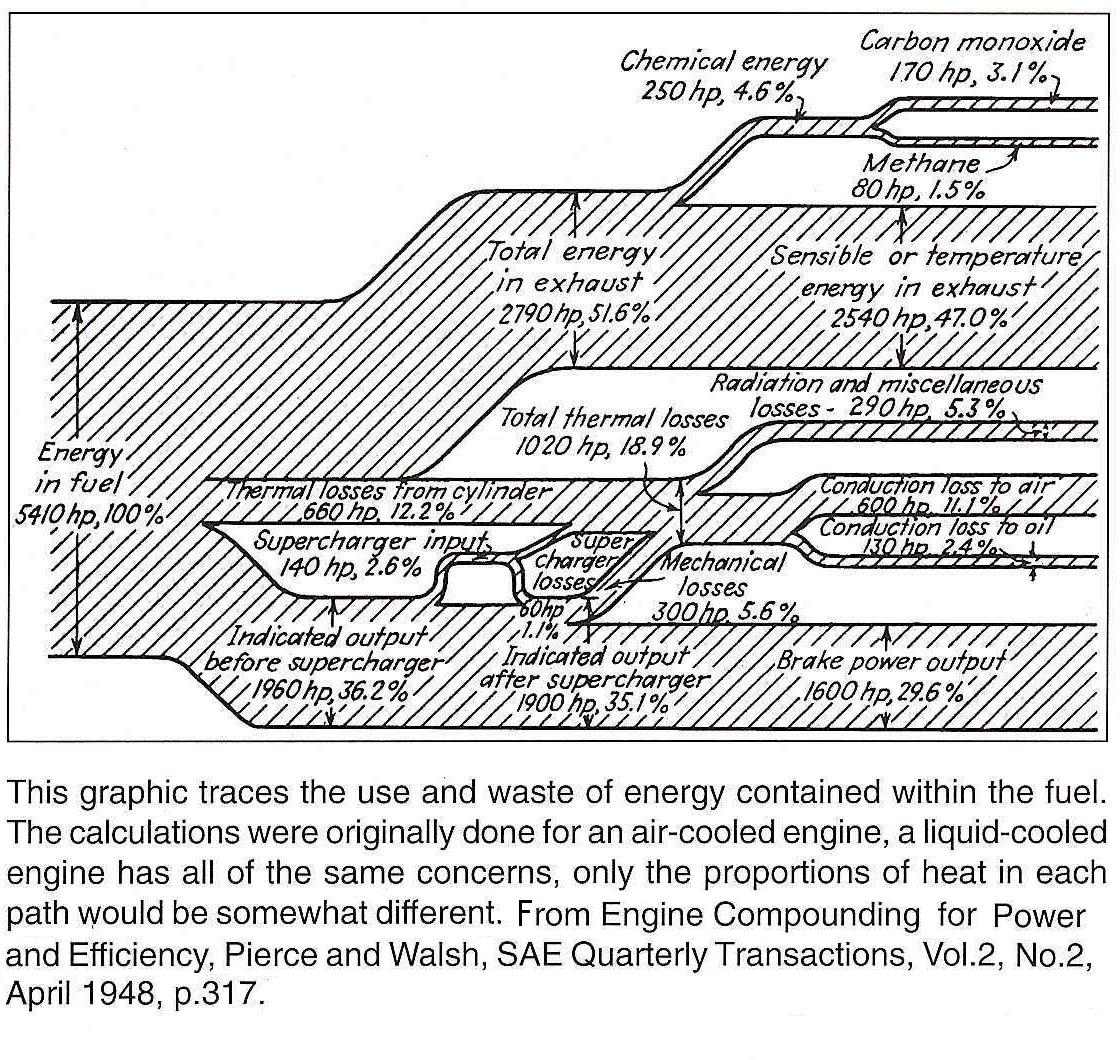
Someone needs to focus on heat loss.
A good start would be a stainless steel rotor. SS conducts heat much
less than cast iron.
Paul Lamar
Paul , The first attachment is the essence of the Patent showing the
ratio of length to breadth and how it slows flame speed after
collision. This is why Mazda changed "bore to stroke" ratio in the
16X. (our "rectangular bore" is 22 sq in and our stroke is only
.625")
The second attachment shows how Mazda addressed this problem with
the 13B by moving the leading plug down a few millimeters but this
just presented a new problem. Notice the that the most critical water
passage in the engine is made smaller!
Compare this to the same water passages on the 26B LeMans
engine.(attachment 3)
On the last attachment, the I find most difficult for people to
comprehend, notice the small crooks in the burn rates when the
collision of flame fronts occur.
Barry Bordes
I am not disagreeing with any of that.
........................SO WHAT?
THEY DID NOT TRY TWO SPARK PLUGS SIDE BY SIDE !!!!!
Far far cheaper to do that to the current engine instead of buying a
new 2 billion dollar factory to build 16B's.
Paul Lamar
Paul,
Mazda did not include their tests on side by side plugs because it is
the worst of two worlds. With the plugs side-by-side the flame front
hits both the sidewall and each other... Causing a double slowing of the
burn rate.
This kills the fuel economy, and adds emissions, and lowers power.
This is probably done only in air cooled charge engines because as you
know and have described Max power would make more heat... They are
cooling the engine with unburned fuel!
Barry Bordes
NOT TRUE!!
Your assuming a fixed 13B rotor width. Lets say we made it twice as wide
as the 12A and we used two spark plugs side by side (or four). Then the
distance to
the second flame front and the distance to the wall would be exactly the
same.
THE REAL PROBLEM IS HEAT LOSS TO ALL THE WALLS OF THE COMBUSTION
CHAMBER.
A sphere is ideal, second is a cylinder, third is a cube. fourth is
rectangular box.
That led to the Chrysler Hemi and is the REAL reason the rectangular
box Wankel
is less efficient.
A square chamber (or cube) has less surface area than a rectangular
chamber of
the same displacement so lets make the rotor as wide as it is long.
We are still not done. We need to change the material the square box
is made of to further reduce the heat transfer to the coolant.
Everett Hatch and I discussed this years ago we decided that a cast iron
rotor housing would be better than an aluminum rotor housing.
The Mazda rotor housing is better than most aluminum rotor
housing Wankels as it has a chrome plated chrome molly hard steel liner.
The chrome reflects the heat radiation (just like a thermos bottle) and
chrome molly is almost as good as stainless steel in low heat transfer.
Bottom line.
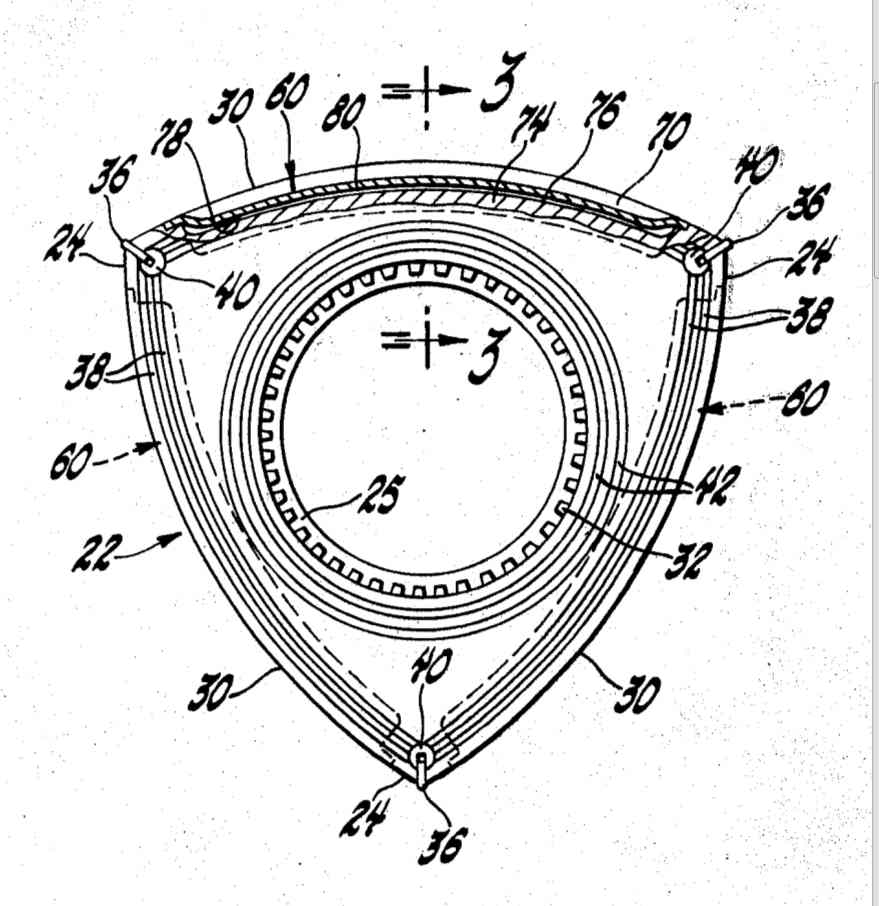
So we need a wider rotor made from stainless steel chrome plated.
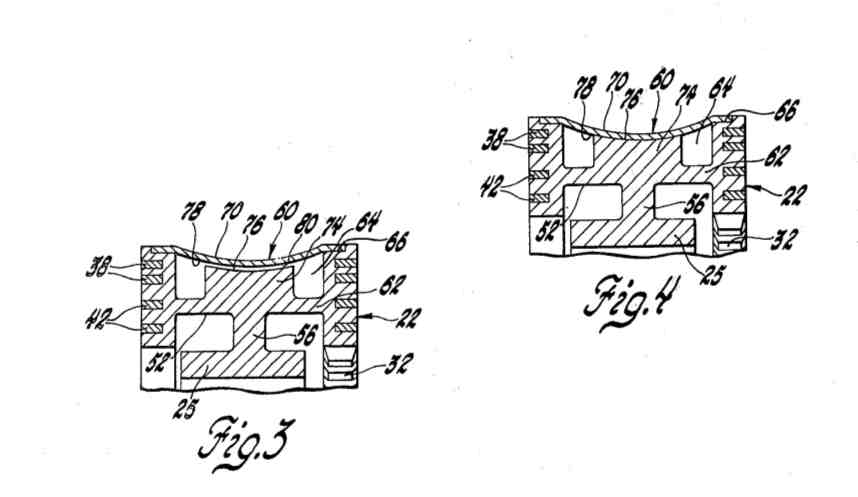
Maybe a vacuum chamber in the rotor surfaces.
GM has a patent on a multi piece rotor for that reason.
"3995602
HIGH COMBUSTION SURFACE TE11PERATURE ROTOR FOR AN INTERNAL COMBUSTION
ROTARY ENGINE This invention relates to a high combustion surface
temperature rotor for an. internal combustion rotary engine and more
particularity to such a structure wherein the combustion surface
temperatures limited to below the per-ignition temperature. In
internal combustion engines it is known that raising the combustion
chamber wall temperature can be effective in reducing HC emissions
reducing the quenching effect of the wall. In the current production
type rotary engine whose chambers have a higher surface-to-volume ratio
than a piston engine there are thus believed to be even greater possible
gains HC reduction by this method. Typically such rotary engine
combustion chambers are formed by a peripheral wall and opposing side
walls which are cooled by circulating coolant therein past while the
rotor which forms the remainder an a substantial part of the moving
moving chambers is cooled by circulating therein a portion of the oil
used in lubrication."
Paul Lamar
The Rotary Engine free News Letter. Powered by Linux. If you want off
the list PLEASE let me know and I will remove you. ACRE NL web
site.
http://www.rotaryeng.net You Tube
http://tinyurl.com/beqqxas
Copyright 1998-2016 All world wide rights reserved.