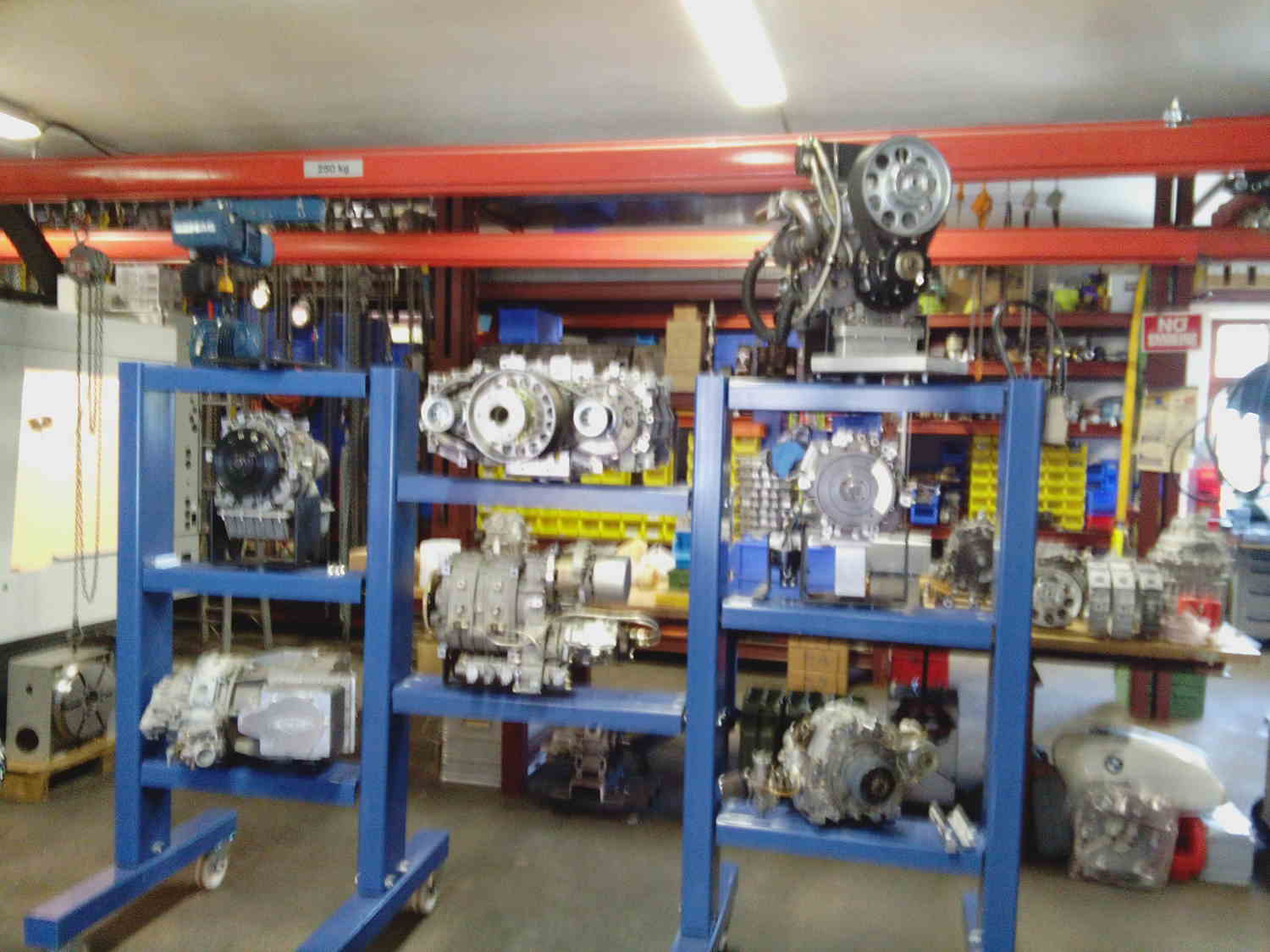
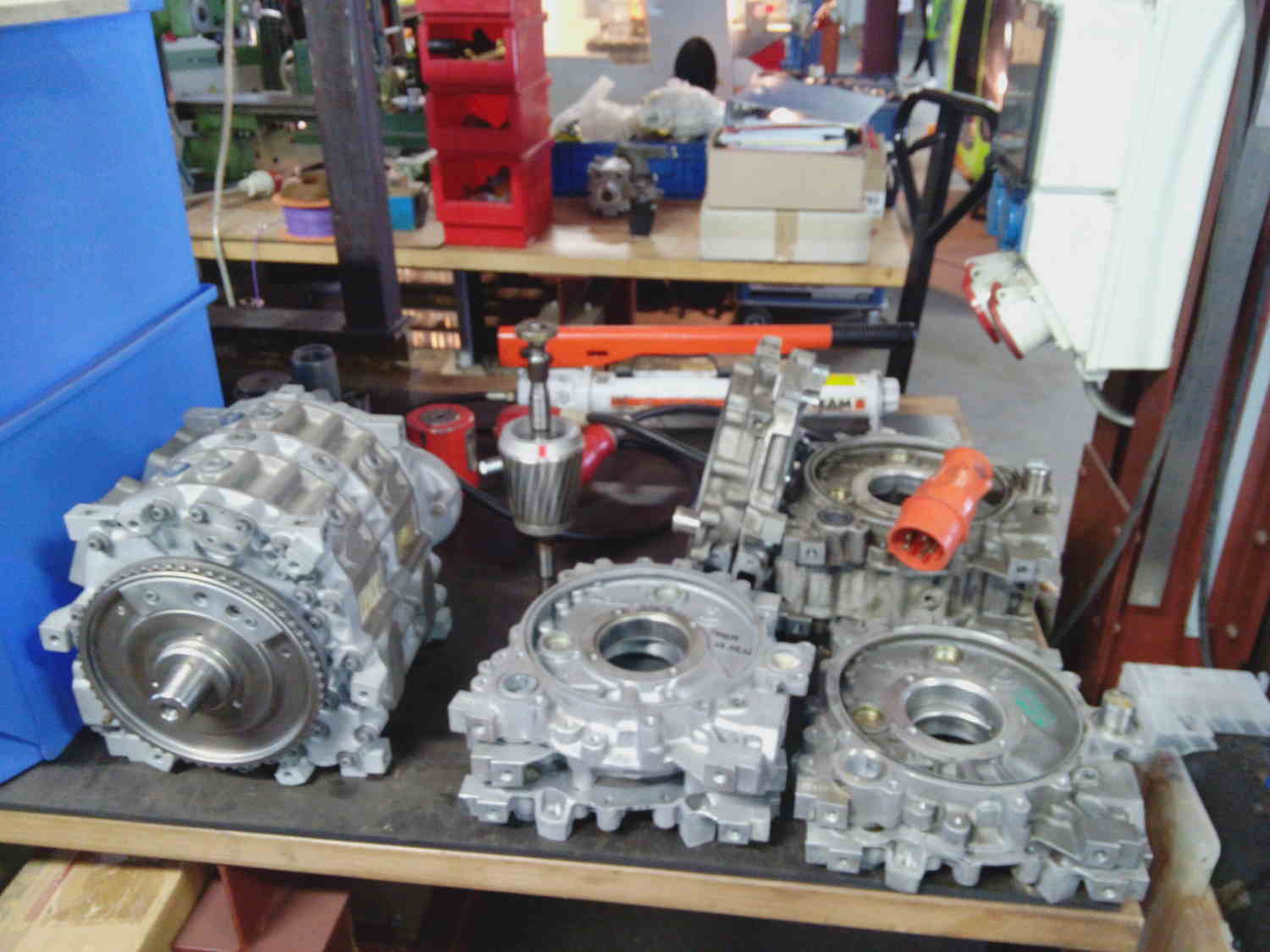
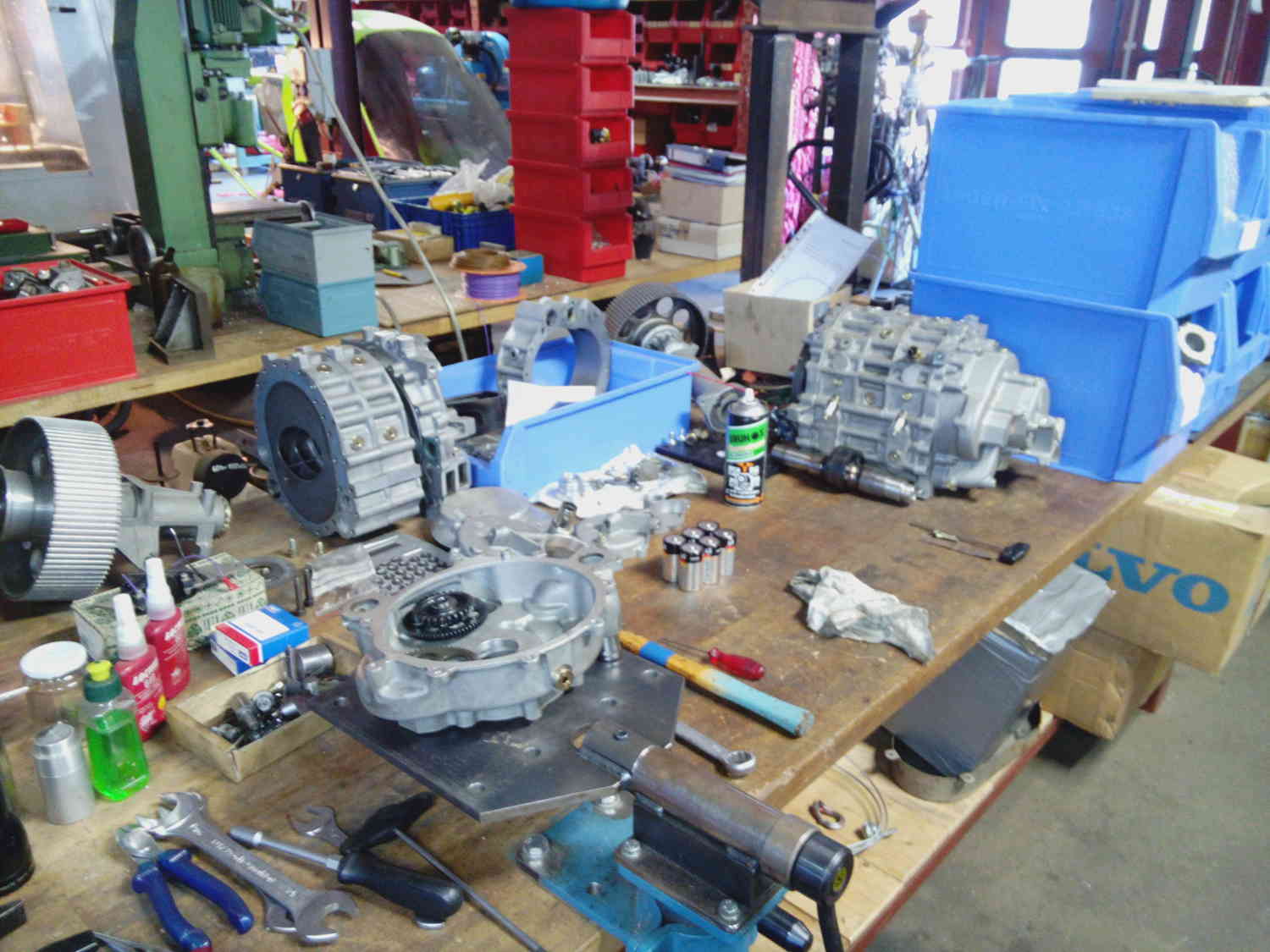
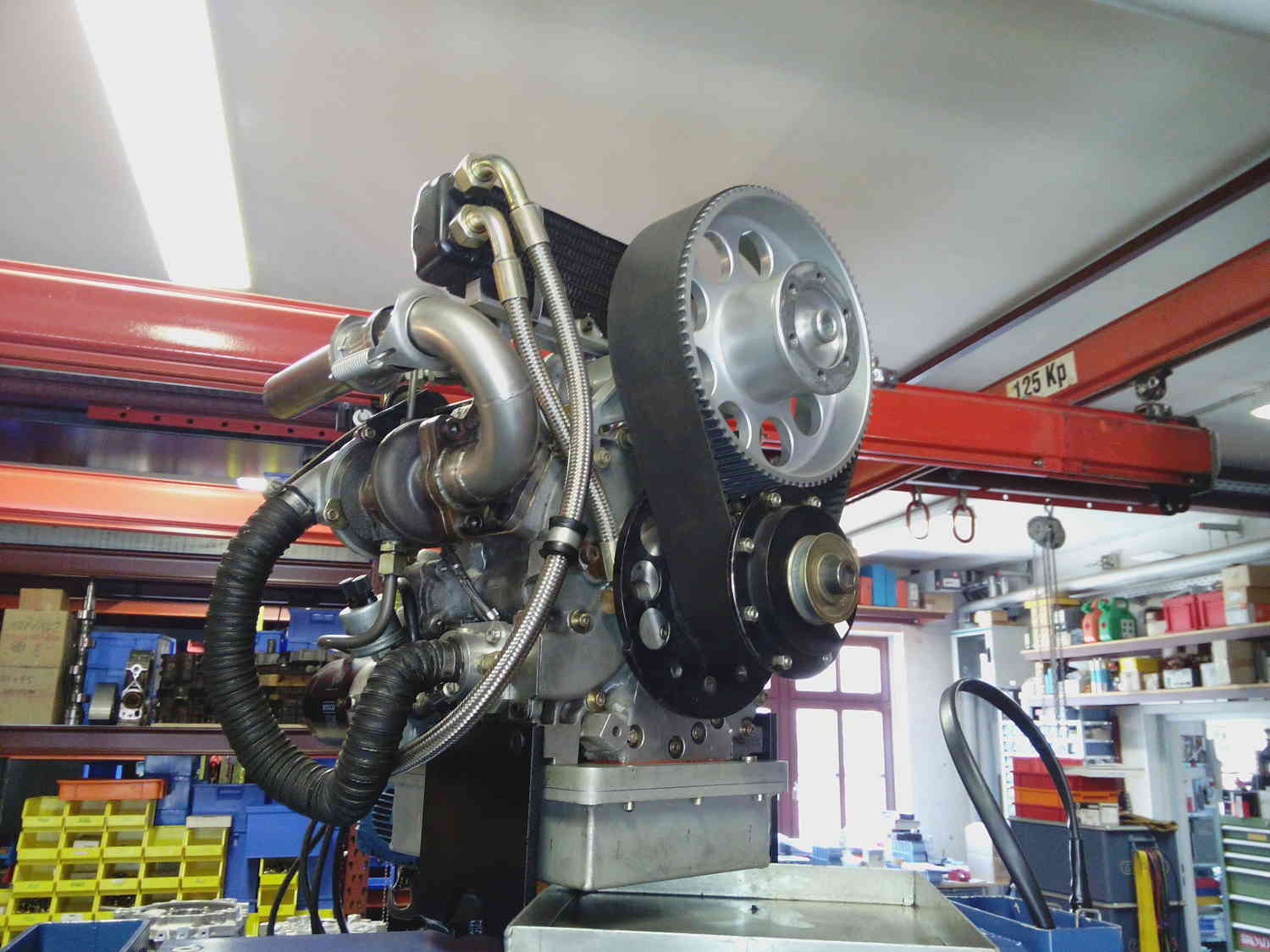
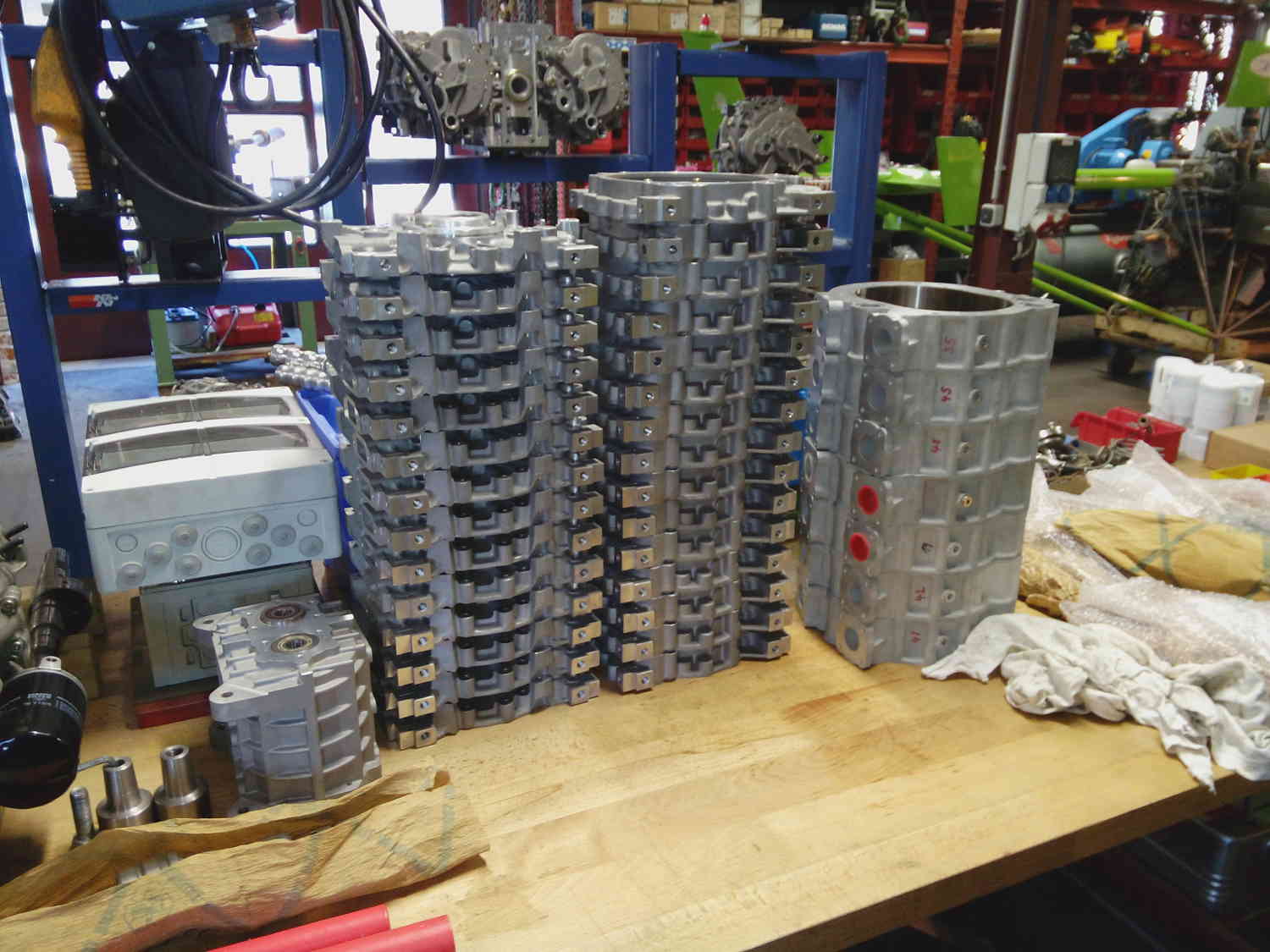
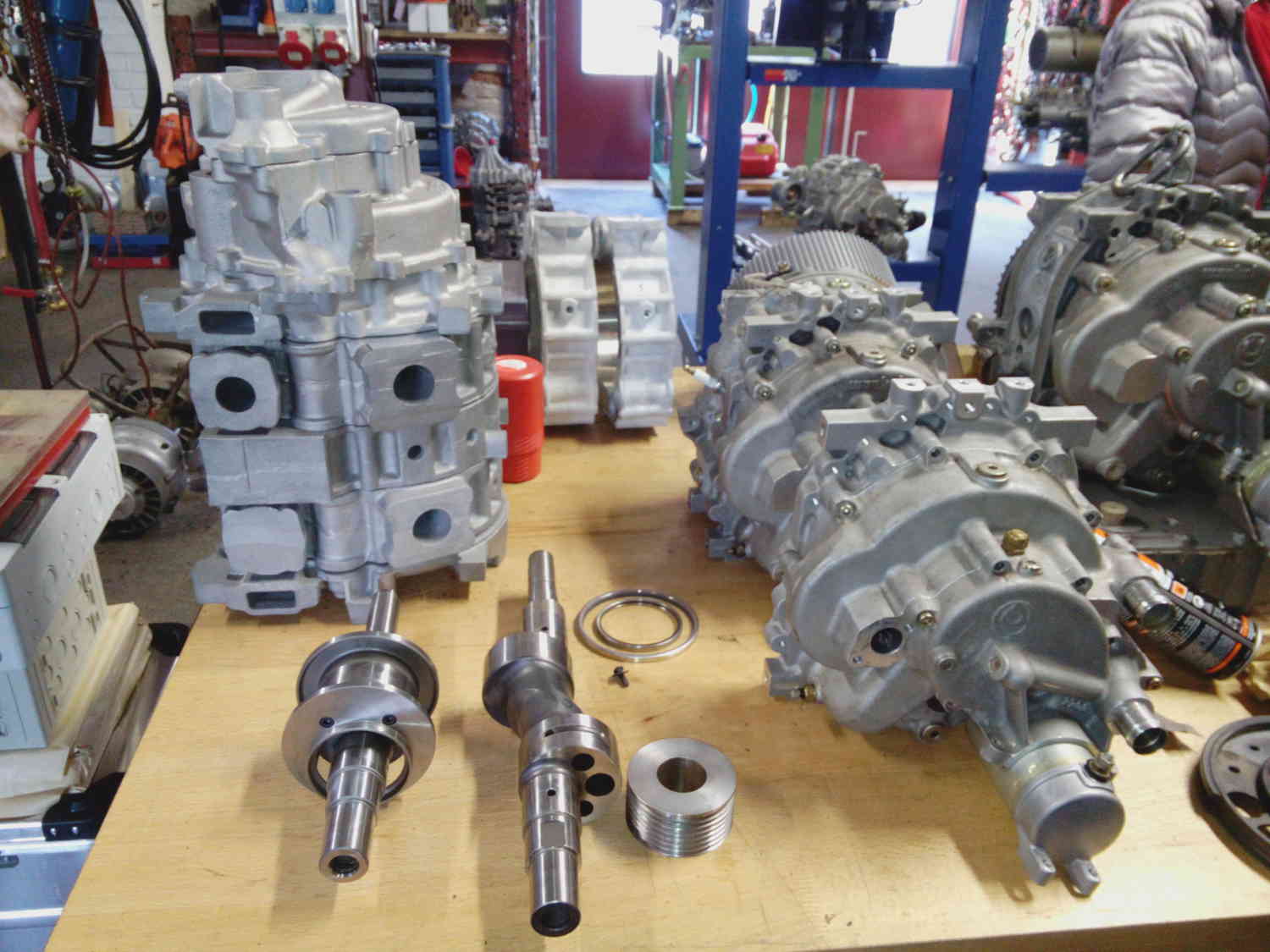
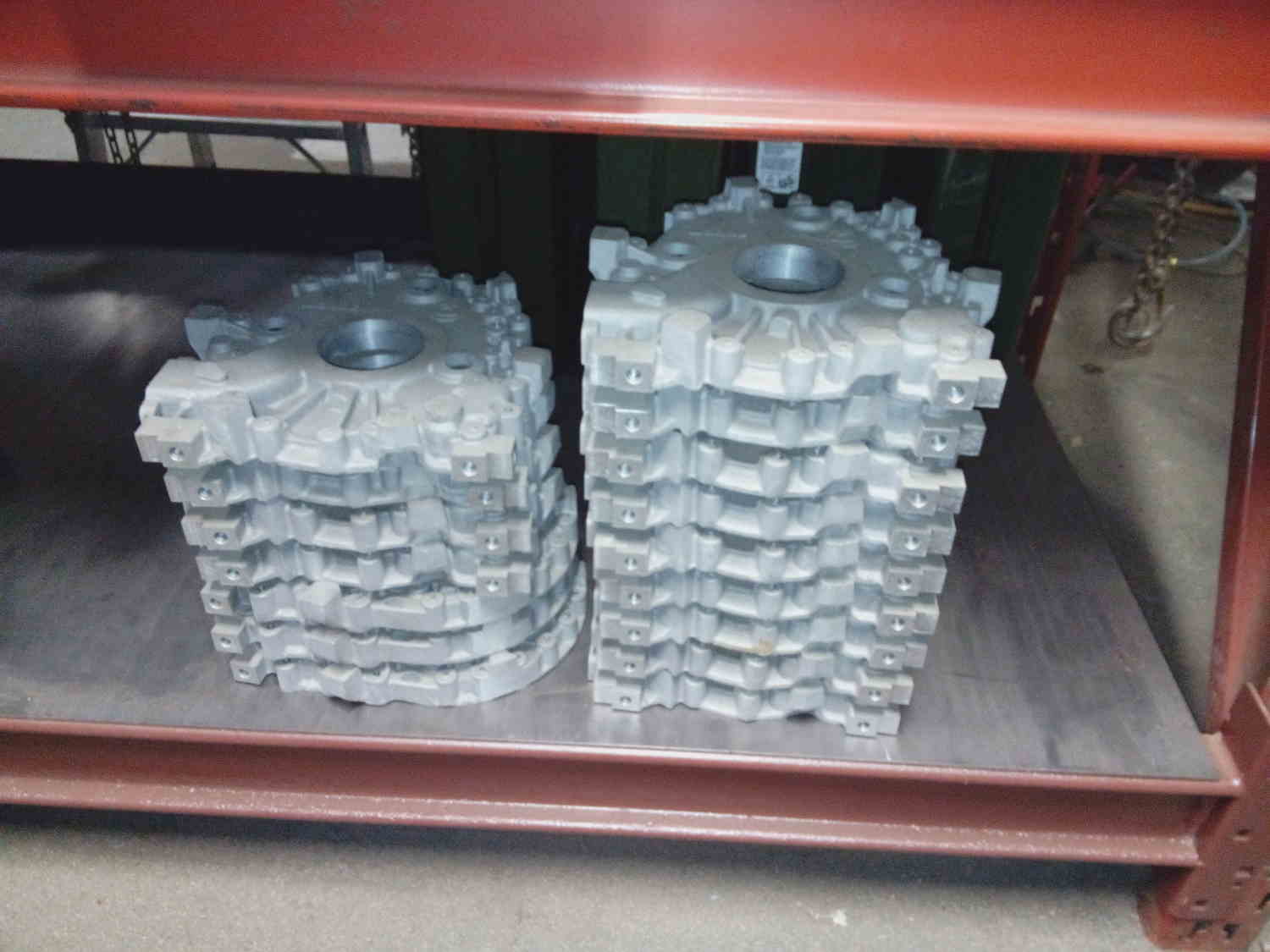
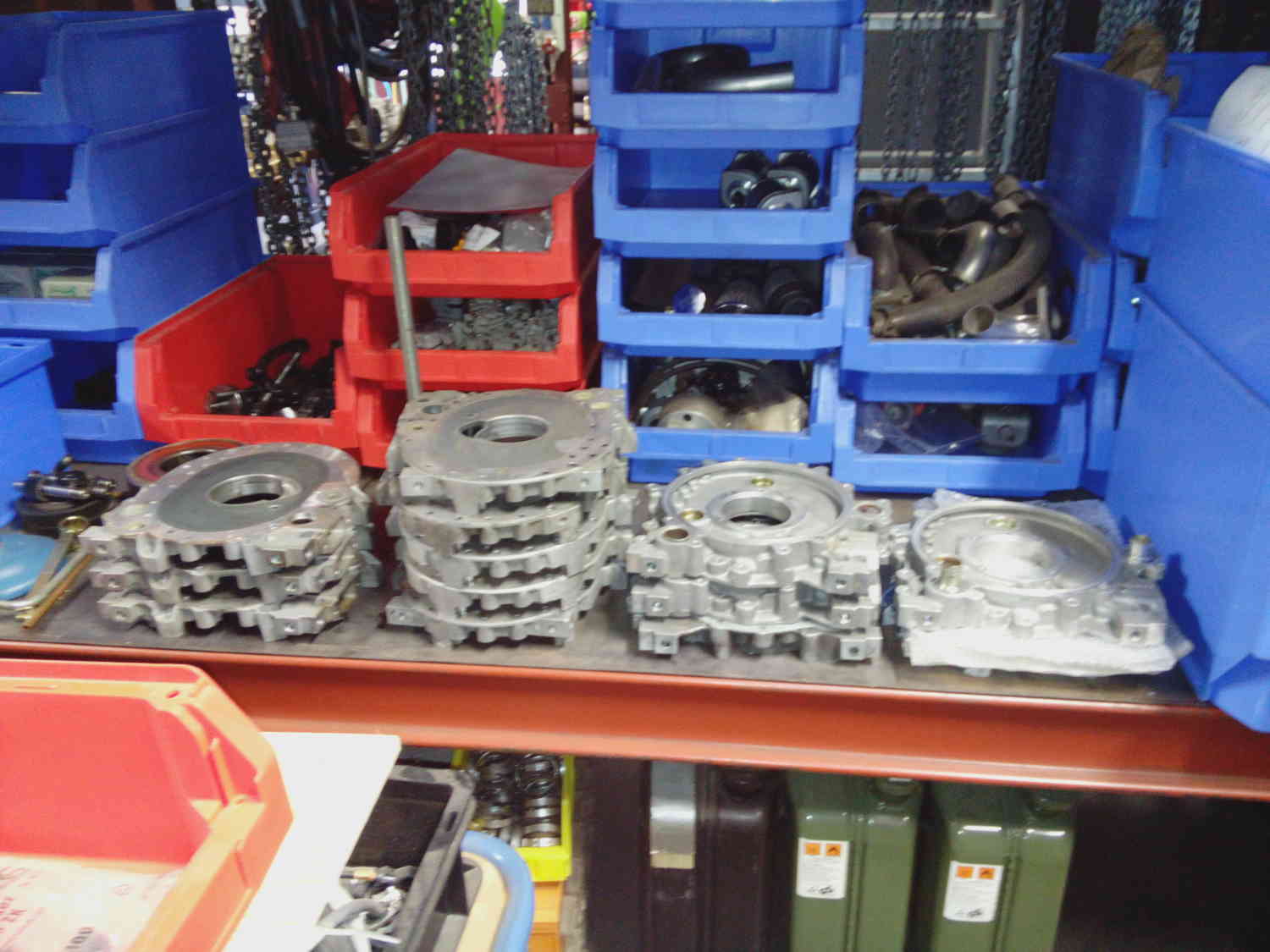
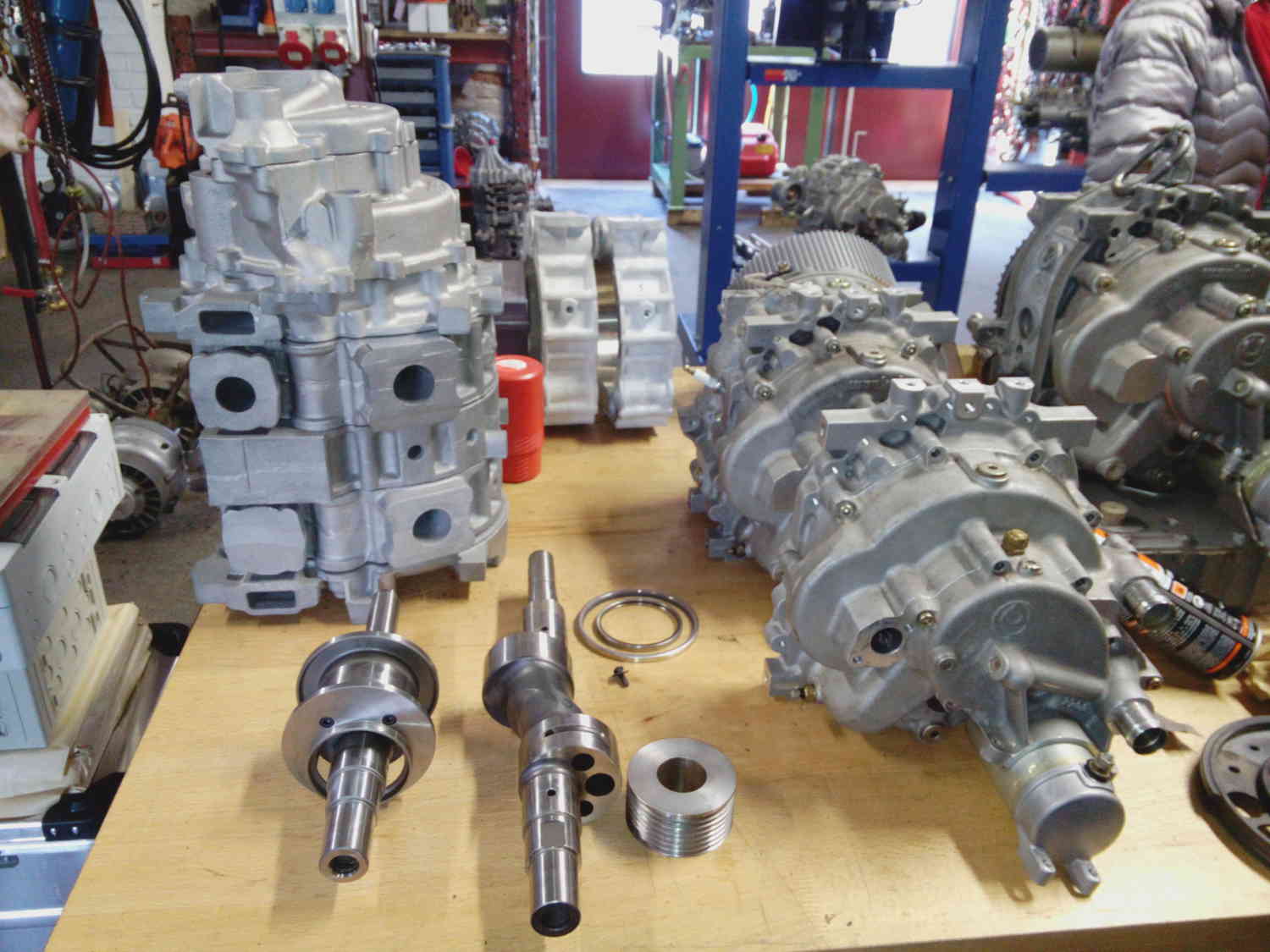
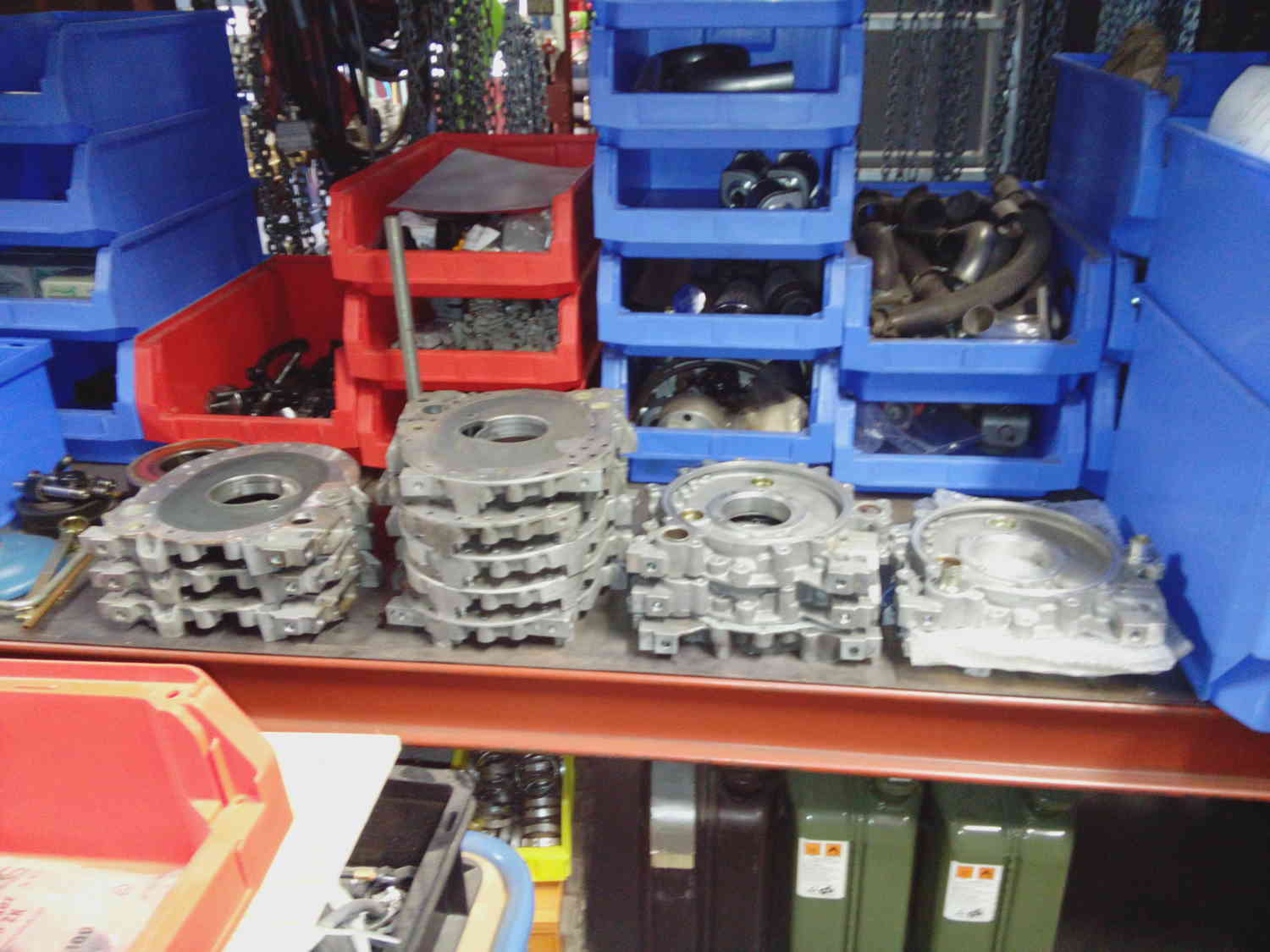
Ok, so today I took the time to take apart a Sachs 293 38hp rotary.
I have attached some pictures. Now I saw and heard this engine running
so I was surprised when i took it apart and saw metalset epoxy used to
repair the inside surface where the apex seals run, also the entire
engine case is made from aluminum. The only steel is used in the end
plates where the bearings are.
Anyway here are some pictures to look over. Ask questions if you want
and i will do my best to answer them.
David Mikesell
Great pictures David. Thanks.
You can fix this by tig welding some aluminum on the bad spots and
sanding them
to shape.
An oil squirter in the end house can cool the rotor with a pressure
pump and
scavenge pump or just an oil pan instead of the scavenge pump . A hose
can run
to a container under the engine and gravity will scavenge it.
Close off the return passages for the charge cooling.
Paul Lamar
Well I was thinking of keeping the charge passages as a way for the
cooling oil to drain from the engine. Those passages line up with the
rotor cooling passages so oil will get slung out the charge passages on
each side, plus they are the way the shaft bearings were oiled, I will
use them as the oil return passages for the bearings. I will put
the oil
injectors just past those passages in the direction of rotation. That
way the oil will get about 300 degrees of rotation to soak up heat from
the rotor before it is pushed out the charge passages.
My goal is not only to oil cool the rotor, with synthetic oil being
injected on to it, but to water cool the engine also. I am sure the
block is cast from A356 aluminum like most light weight engine
blocks. I
can get the dimensions from this one and design a new body with a bit
larger outer dimension to allow for water cooling. And new end plates
too for water cooling.
I am going with 6061T6 and use my cnc mill to make the new parts.
6061T6
is pretty close to A356 as far as temperature limits and strength.
I can
also get it coated with Niksal or another type of high strength and
high
temp coating. I think the first ones will be bare just for testing the
set up to see if it works.
David Mikesell
You don't need them. The oil will find its way out through the way it
came in. That is exactly the way the Mazda works.
Where are you David? Tell me by private email if you wish?
Paul Lamar
San Jose, CA. Not far from Simon's shop, about a mile from my house.
My shop is near San Juan Bautista, right off hwy 101
How does the oil leave the block in the Mazda rotaries?
David Mikesell
It drains back through the center housing.
Here are some cut aways.
Paul Lamar
What is the banana effect? I saw it the pointer it in one of the
pictures.
David Mikesell
That is a theory that the hot side of the engine would expand more
than the cool side and looking down from the top the engine would
have a banana shape.
The serial cooling (AKA axial flow) was supposed to mitigate this
but no
evidences of this happening was ever detected. Probably because the
steel tension bolts on the hot side did not expand enough to detect.
Unfortunately the rear rotor runs hotter than the front rotor due
to serial cooling. NSU used parallel cooling more of less. Both
rotors ran at the same temperature. All serious liquid cooled engine
have parallel cooling. No car engines!!! Car engines are all serial.
Max Bentele designed this when he was working for Curtice Wright.
Mazda copied it unfortunately.
"Max Bentele (January 15, 1909 - May 19, 2006) was a German born
pioneer
in the field of jet aircraft turbines and mechanical engineering. His
contributions to the development of the Wankel engine earned him the
title, "Father of the Wankel Engine in the United States"."
Cylinder heads have the same problem. One side is hot and
the other side is cool. No one notices the banana effect.
Paul Lamar
Paul,
I have my first of 3 OMC 45 hp engines apart - This one was seized and
damaged the outer housing - Sort of a learning experience - In the
back of
what passes for my mind I'm thinking about using my CNC equipment
to make
new parts including the housing - Would be interested in
communicating with
David Mikesell, off the list if possible, to swap some CNC programming
details that may not be of interest to the rest of the folks -
Roland Friestad
I am interested. There are several people on here that have CNC
machines.
However if you want to keep it secret that is OK.
BTW I just re-read Max's rotary chapter in his book and he increased
the water velocity in
the hot areas around the lower spark plug with small holes in
the passages. You can see them in this picture of a Mazda rotor
housing.
According to him that carried away the nucleate boiling air bubbles.
Mazda used most of what CW developed and incorporated their own
developments.
I can't wait until some one tries oil squirter's on a charged cooled
engine :-)
Great things will happen as you are starting with cool oil and
not warm oil that has already gone through part of the engine.
Here also is the mechanical info on glass filled Teflon.
What would be even better for apex seals is carbon fiber filled
Teflon.
Paul Lamar
Question for you Paul.
Now I know the Sachs rotary is all aluminum except for the rotor and
e-shaft. The exhaust port and 4 inches of the exhaust duct is also
aluminum. Will a water jacket around this area keep the aluminum from
getting damaged from the higher exhaust temps due to the higher horsepower?
On the Mazda engines it is a strong exhaust duct right?
David Mikesell
I don't really know. I have seen other rotaries with out the inserts.
Here are some Wankel Wankels with out the inserts. They just have
a lot of meat around the exhaust ports.
Paul Lamar
The Rotary Engine free News Letter. Powered by Linux. If you want off
the list PLEASE let me know and I will remove you. ACRE NL web
site.
http://www.rotaryeng.net You Tube
http://tinyurl.com/beqqxas
Copyright 1998-2016 All world wide rights reserved.