The trouble with any kind of wear coating on bare aluminum is there are
only a couple of molecules between you and disaster. It is extremely
sensitive to any kind of foreign particles. The only kind of tried and
true, robust and reliable wear surface for piston engines and rotary
engines is a hard steel steel liner.
Paul Lamar
Paul, earlier you said that the steel liner increased thermal
efficiency, would putting a 2 or 3 times thicker liner in, make a
significant difference?
Dave James
I think it would as heat transfer is a function of the distance it must
travel. Everything I have learned on this subject in regard to the
rotary has to do with keeping the oil working between the apex seal and
the wear surface. That is what the cooling system is required to do.
In that case just using synthetic oil should cut the cooling
requirements. I discussed this with the Mazda factory several times and
their attitude was we did not try Mobil One so it is not endorsed one
way or the other.
However the large Japanese oil company Idemitsu sells synthetic oil for
the Mazda. I use it in my RX8.
So far I have not seen a tech paper on this subject where synthetic oil
was tried back to back. It should be investigated with both iron and
silicon nitride seals. The question is: What temperature can the wear
surface be and still work?
Perhaps Frank Herfert can help in regard to a tech paper on this subject.
Here is some info from Rotary Engine.
This is relevant to piston engines as well.
Paul Lamar
This is an interesting chart from Heinz Heisler book Advanced Engine
Technology. You can see how the oil film would cool the apex seal.
Organic oils break down around 250 F so the OMC was designed around that
factor. Synthetic oils help a lot.
The apex seal takes the brunt of the heat as it sweeps all the hot gas
stagnant film in front of it. The steel wall temperature is quite low.
My guess is 300 F.
Silicon Nitride seals are a major advance and should be used in all
rotary aircraft engines as they will tolerate 1000 F.
Paul Lamar
Paul,
Mazda went trough hell and high water to solve the chatter problem.
Since then 2.5 million steel lined chrome plated rotary engines
have been sold. All others have failed.
Henry Ford said : "Show me a pioneer in technology and I will show
you candidate for bankruptcy" . Or words to that effect.
I agree with Henry :-)
If it were me I would copy Mazda with regard to the wear surface.
Paul Lamar
Nice Paul, good info on the apex seals.
The chrome plating of the rotor housing is the same technique used
for Chrome plated piston cylinders?
David Mikesell
Yes. I would think any chrome shop could do it. I think they
reverse the current for a short while after it is done to get a bit of
porosity on the chrome layer to enhance oil wetting.
This would be far less expensive than any other kind of effective
coating on aluminum.
2.5 million rotary engines prove it works.
I think they can mask off the surfaces that do not need to be chromed.
My name for the all steel new design is "Unsymmetrical Rotary"
Copyright Paul Lamar 2016
I will scale it up to Mazda size and determine the weight.
I'll bet it is not much more than a stock Mazda rotor housing.
I was right! The stock Mazda ( mostly aluminum) rotor housing
weighs 6.5 pounds.
The Unsymet all steel water cooled weighs 7 pounds. Plus or minus a
few ounces.
It is all that useless junk on the cold side of the Mazda rotor
housings.
The air cooled Mazda version would be about the same weight.
The way to make the aluminum heat sink fins is gang slitting saws.
This is the way P&W and CW did it in the old days on radial engine
cylinders.
The way to get rid of most of the material in the big block of
steel is drill a trochoide pattern roughly in the center. Then band saw
it out. That is the way the Wright brothers built their first crank
shaft. They drilled a big block of steel then they sawed it to rough shape.
Anybody for an air cooled one rotor Mazda size rotary engine weighing
70 pounds and putting out 130 HP ?
E-shaft and rotor the same Mazda parts.
Of course :-)
Paul Lamar
Paul,
You have got to stop thinking, you are causing me to consider too
many good new ideas,
milo Burroghs
I think you wil have to wait from me to die :-)
I just figured out how to use off the shelf heat sinks :-)
Paul Lamar
Some people's Grey matter just comes up with stuff. Some need to ponder
a problem for a while; likely most of us. And then some just get by. In
my case I have multiple interests while a few I know are just content to
get by.
Dale Davies
Hi Paul,
Sorry to be pedantic, but if you are thinking of an 'unsymmetrical
rotary 'it should be' asymmetric' to be correct.
Chris Hoskins
Right Chris. Actually I like 'unsymmetric" better. It is more specific
and descriptive.
I made up a new word :-)
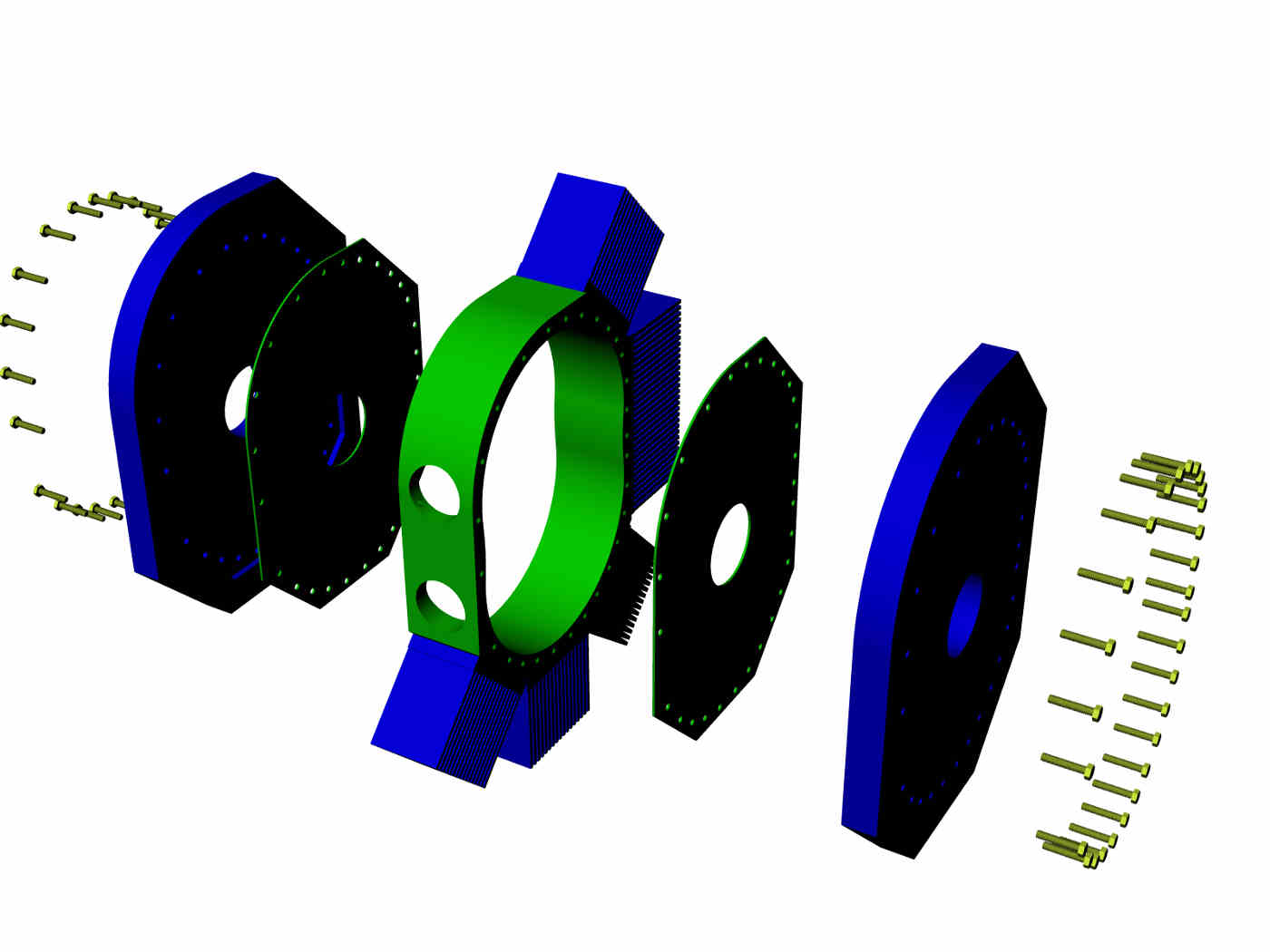
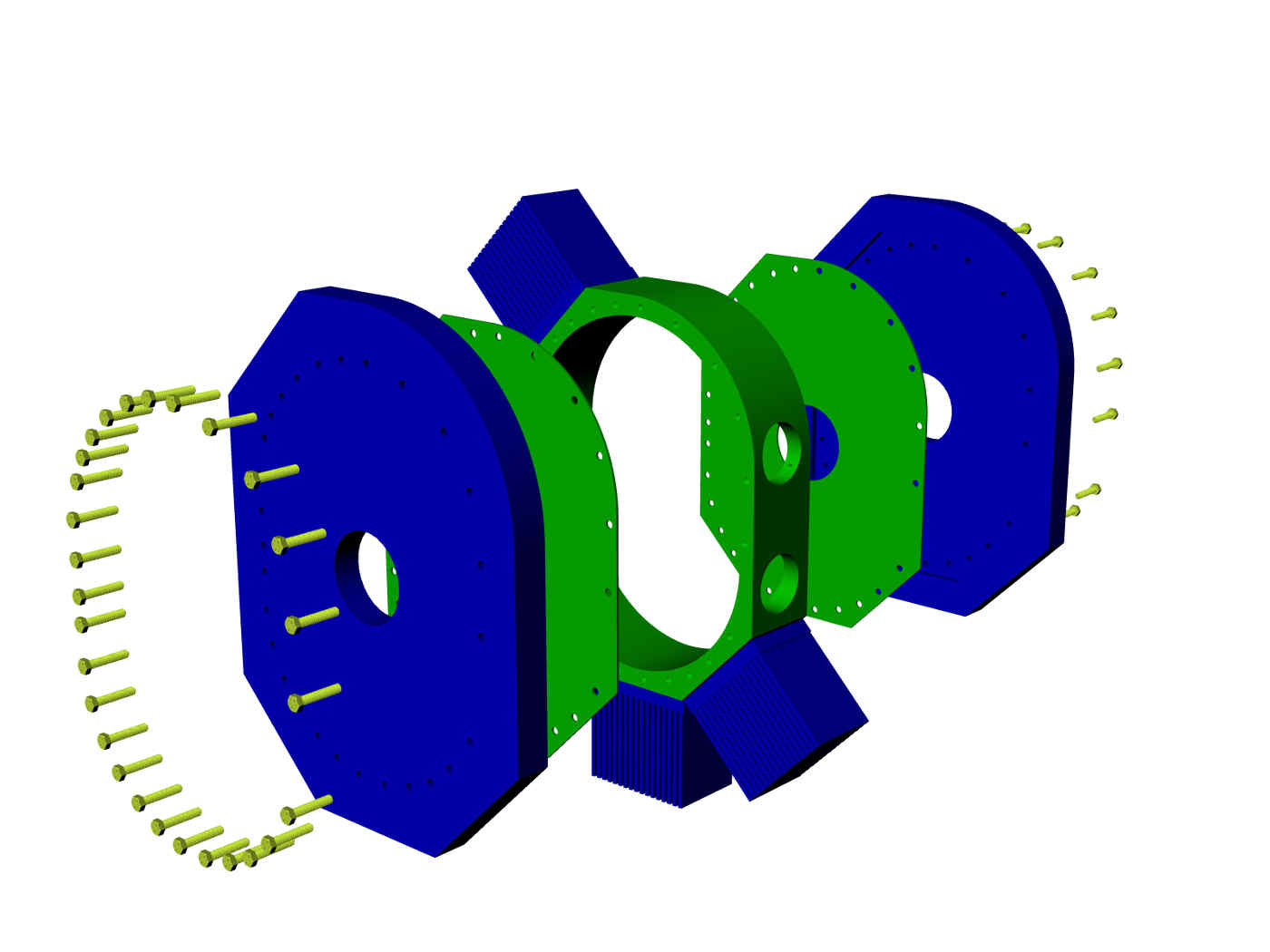
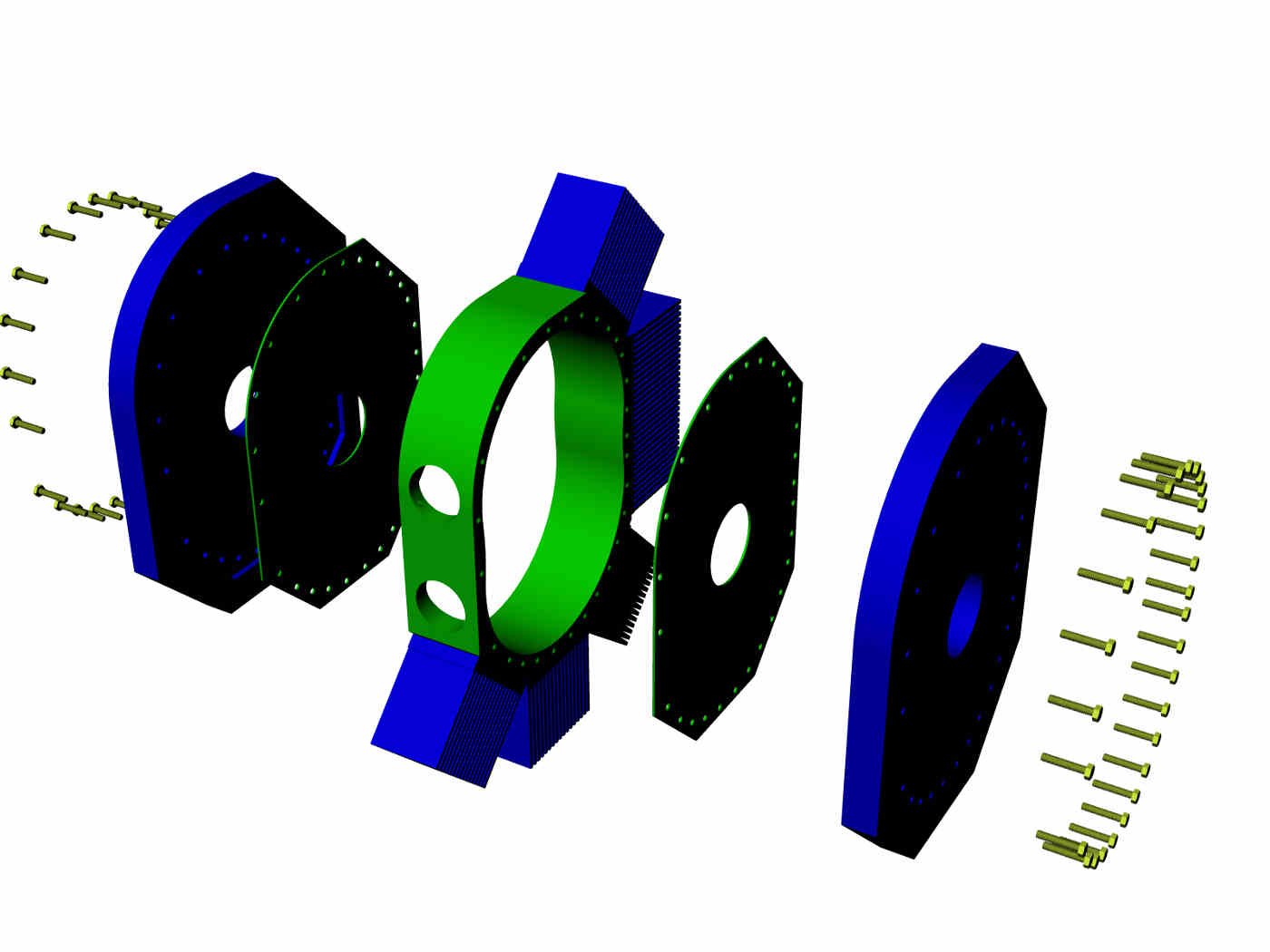
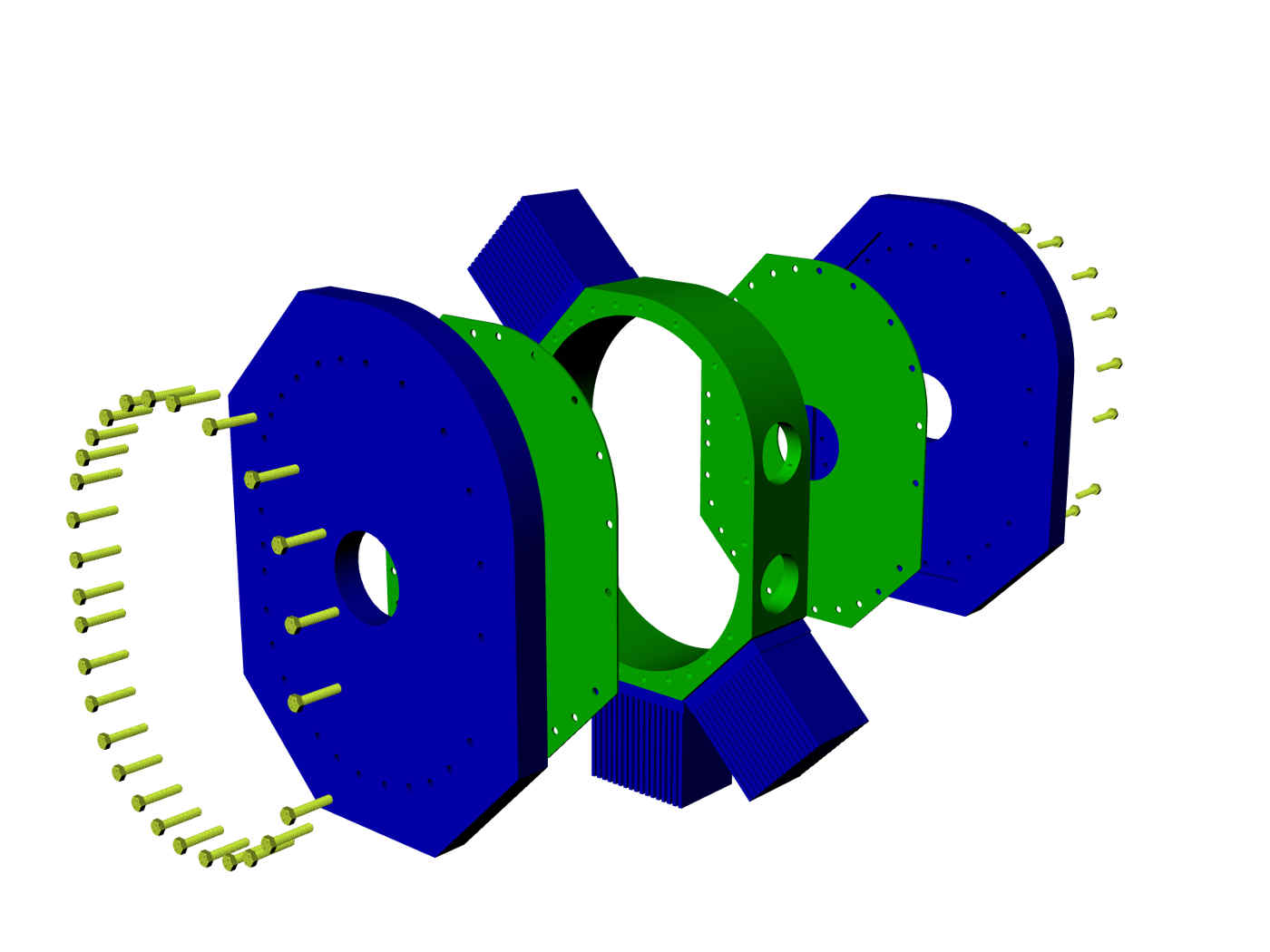
Here are the latest 3D's. Yet to go on the endhousing cooling fins if any.
Paul Lamar
So possible stock housing with side plate attachment bolts going through
the water jacket, flats machined into stock
Mazda housing , more narrow heat sinks, heat transfer paste, and bolts
from the side plate holding them in position.
Steve Carlisle
Yes. If you experiment with an old Mazda rotor housing take some
picture after it is cut down.
Here are the latest 3D's.
Paul Lamar
The Rotary Engine free News Letter. Powered by Linux. If you want off
the list PLEASE let me know and I will remove you. ACRE NL web
site.
http://www.rotaryeng.net You Tube
http://tinyurl.com/beqqxas
Copyright 1998-2016 All world wide rights reserved.