Changing the shape of wing design using "digital materials"
Though we're used to airplane wings with moving flaps that control the
craft's movements, the first flying machine built by the Wright brothers
in 1908 used a different technique called wing warping.
Instead of tilting airfoils attached to the trailing edges of wings,
warping uses wires and pulleys to alter the shape of wood and canvas
wings to perform the function that ailerons and flaps do in modern
airplanes.
According to the NASA/MIT team, there have been numerous attempts to
revive this technology, but these have relied on mechanisms inside the
wing to bend it. The problem has been that this machinery usually turns
out to be too heavy and complicated, which offsets any increases in
aerodynamic efficiency.
A newly developed wing architecture could greatly simplify the
manufacturing process and reduce fuel consumption by...
The NASA/MIT approach is to not just do away with the internal
mechanism, but to fundamentally redesign the structure of the wing so it
is capable of bending by itself. The design achieves this by dividing
the wing into lightweight, overlapping scale- or feather-like
sub-segments. These are supported by tunable and actively deformable
modular building blocks, dubbed "digital materials," that are made of
carbon fiber-reinforced polymers that can be quickly engineered and
snapped together and allow the wing to deform while maintaining a
smooth, aerodynamic surface.
This modular approach would allow the individual support pieces to be
mass produced and combined in an almost endless variety of shapes, which
could be constructed by simple minature robots that crawl along the
exterior or even the interior of the structure as it is constructed.
Though the researchers have already developed prototype robots, they
built the initial test structure by hand and used skin panels instead of
scales that would be used the ultimate version.
The units used were morphed manually using two small motors to twist the
wingtips and bend the wing uniformly along its entire length.
The purpose of this test piece was to get the wing to twist in the same
manner as if it was made of separate scales instead of panels by
fine-tuning the structure so it twists on command into the desired
aerodynamic shape.
So far, wind tunnel tests have shown the test wing has aerodynamic
properties of a conventional wing weighing 10 times more. The team then
built a drone aircraft flown from the ground by a certified test pilot,
who found it responsive enough to do aerobatics.
Gershenfeld sees this technology as not only leading to super-efficient
long-range drones, but as having applications beyond aerospace
engineering, inlcuding in wind turbines, skyscrapers, bridges, and space
structures. It could also be used to create soft robots that can bend
wherever desired without joints, are lighter than equivalent robots, yet
can maintain the desired level of stiffness for the job. Repairs of
machines built with the units would be cheaper and easier as damaged
units could be replaced by maintenance robots with new ones.
MIT <
http://news.mit.edu/2016/morphing-airplane-wing-design-1103 View
gallery - 5 images
John Dinkel
Where are the puns? :-)
Paul Lamar
Paul,
On an even less punishing note. A I read these advances in aero, I
think to myself that we are on the cusp of our ability to control and
develop materials that will take us to the stars. Can our control of
gravity, magnetism and dark matter be that far in the future? Maybe 10
years????
Or maybe we’ve had much of this tech since Roswell . . .
John Dinkel
IMHO all the space stuff is a huge waste of money.
Paul Lamar
Paul, I agree. This is a bit of a waste of money in my opinion. Too much
technology is too much. If we keep up at this pace we will be living on
a planet that looks like the death star not too long from now. LOL
At least the wings have the "cool" factor I guess.
End of unnecessary 2cents
jenn kimball
NASA/NACA had a good program going on the rotary as an aircraft engine
awhile back.
That went by the wayside when they got involved with all this space stuff.
The third temperature chart is of interest right now and is relevant to
the steel rotor housing air cooled one rotor. This is from an IAA paper
back in 1984.
Paul Lamar
Hi Paul,
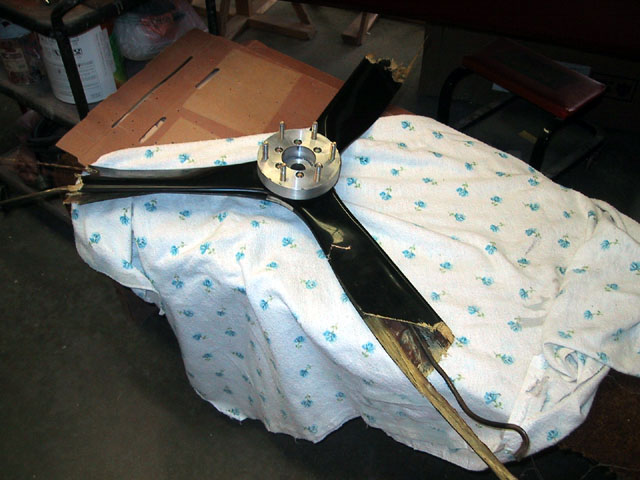
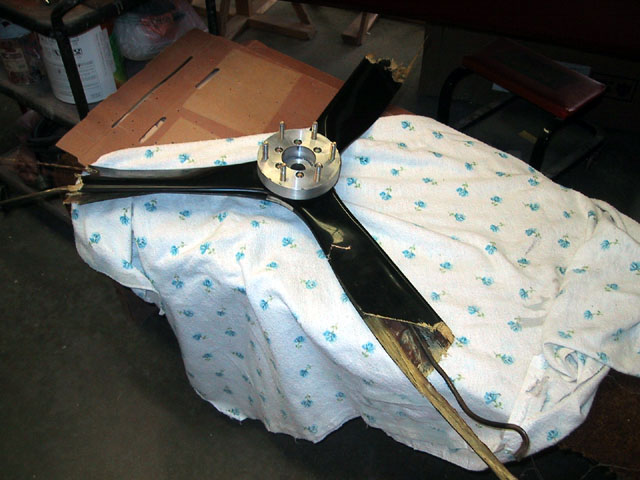
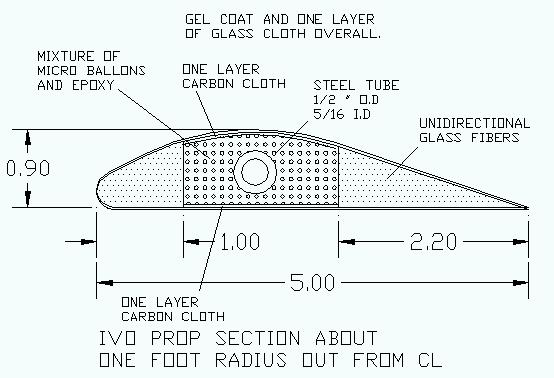
I would have thought that the easiest way to warp a wing would be
like the Ivo prop. The wing itself would need to be composite of course
with the fibre orientation in the appropriate direction.
Chris Hoskins
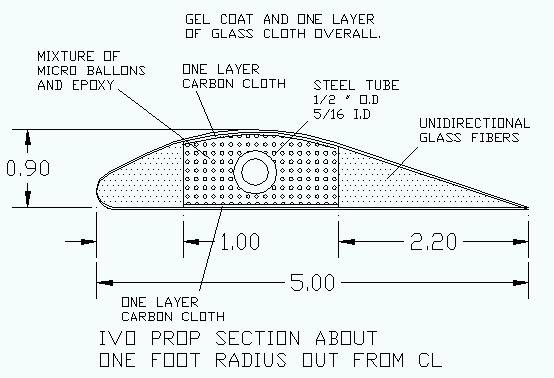
The IVO prop has a thick steel tube in side that applies the twist to
the outer section.
scaled up to wing size it would be heavy. However a carbon tube about
the diameter
of the wing thickness might be viable. If it could take the place of a
spar that would
be even better. Two ball bearing on the tube where it goes into the fuse
would
be required to take the "spar" bending loads. Is it worth replacing the
ailerons?
I doubt it. The up side wing would be more drag anyway due to lift while
a properly designed aileron
on the down side has a feature that adds drag to the lower wing that makes
the turns coordinated with out the need for rudder.
The Wright brothers discovered this and added a rudder control to
compensate.
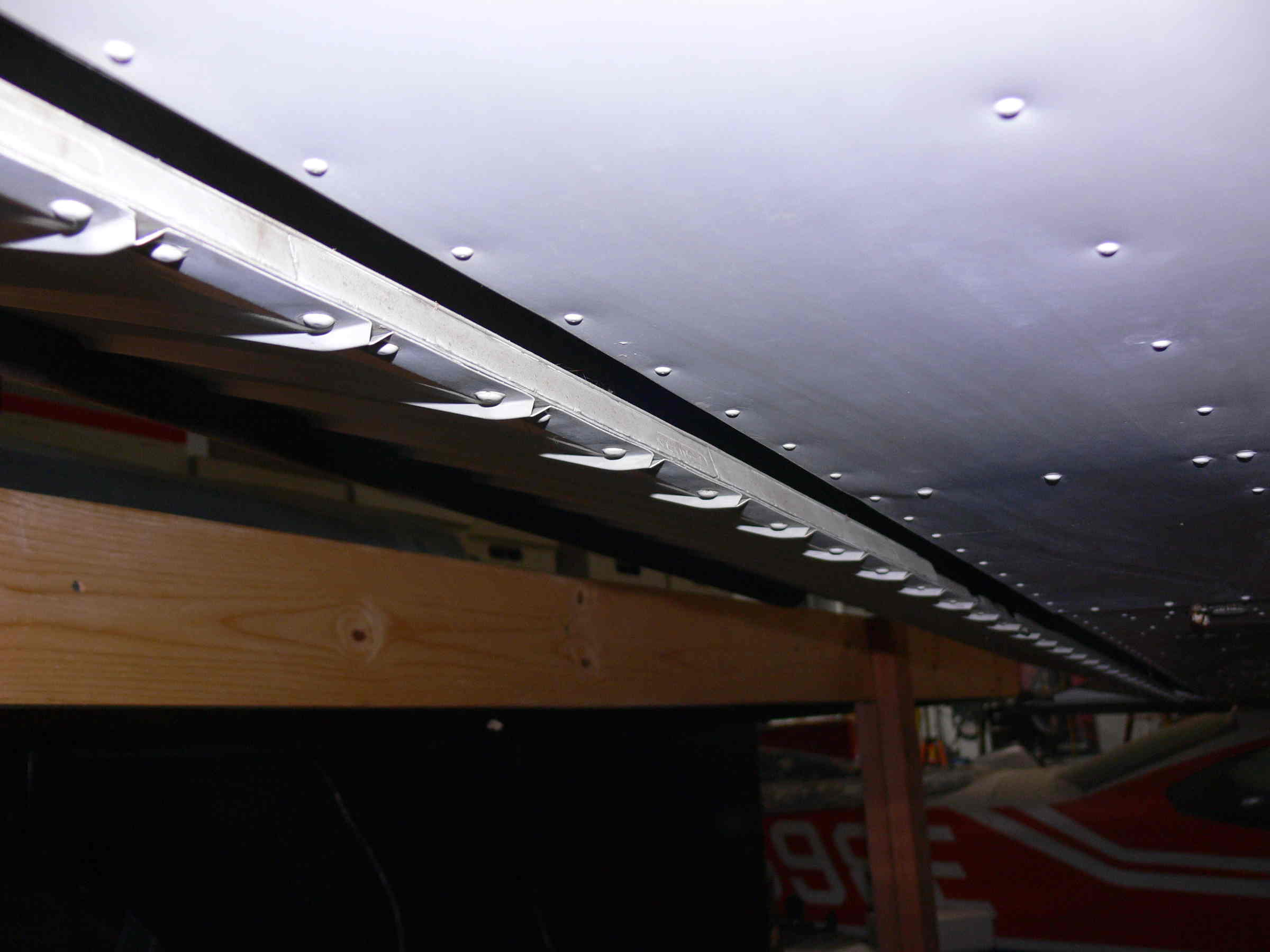
The bottom of the down side aileron on the C182 catches air causing drag
on that side
automatically compensating for the tendency to yaw counter to the
desired turn.
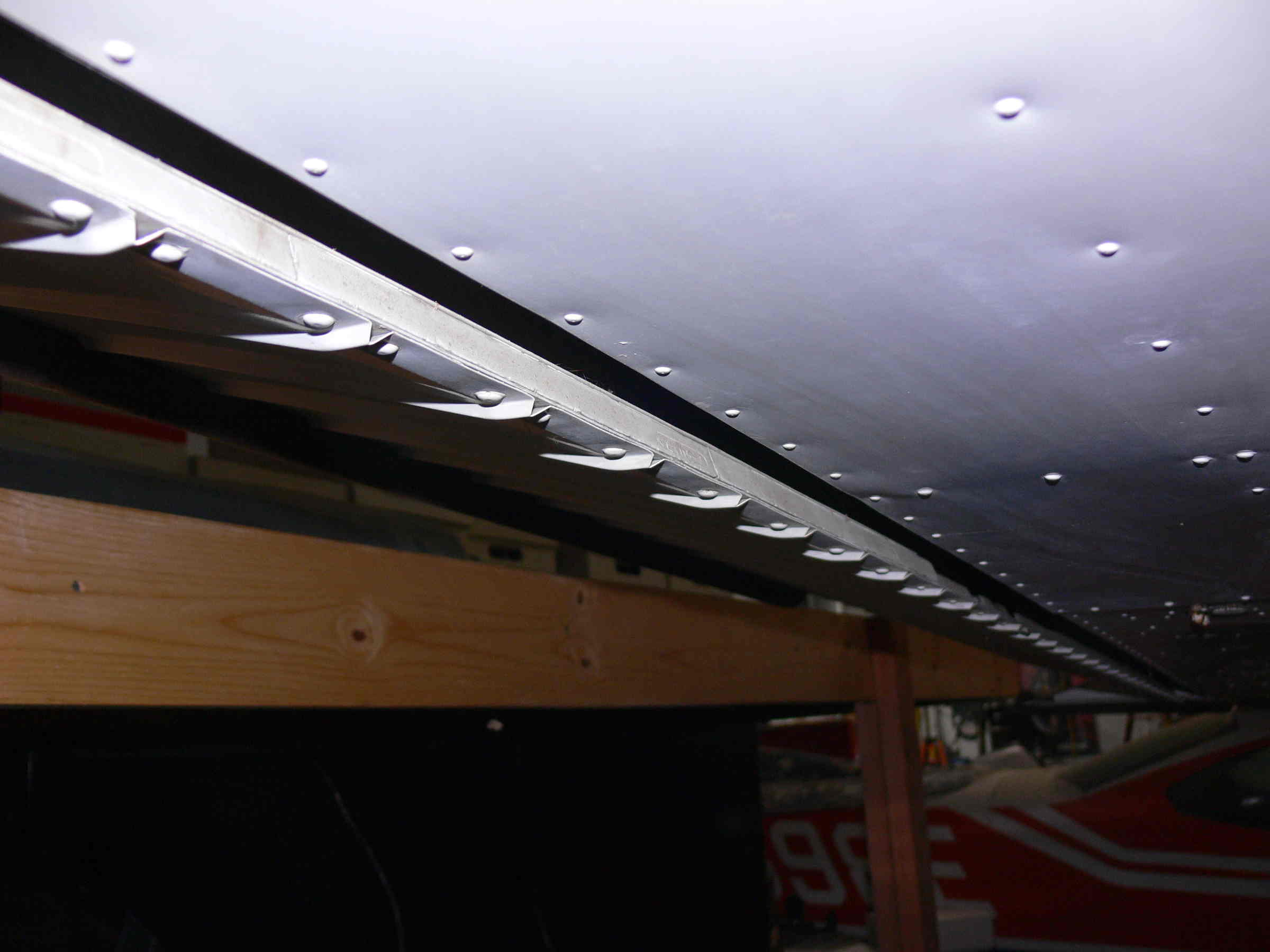
You can see it in this picture.
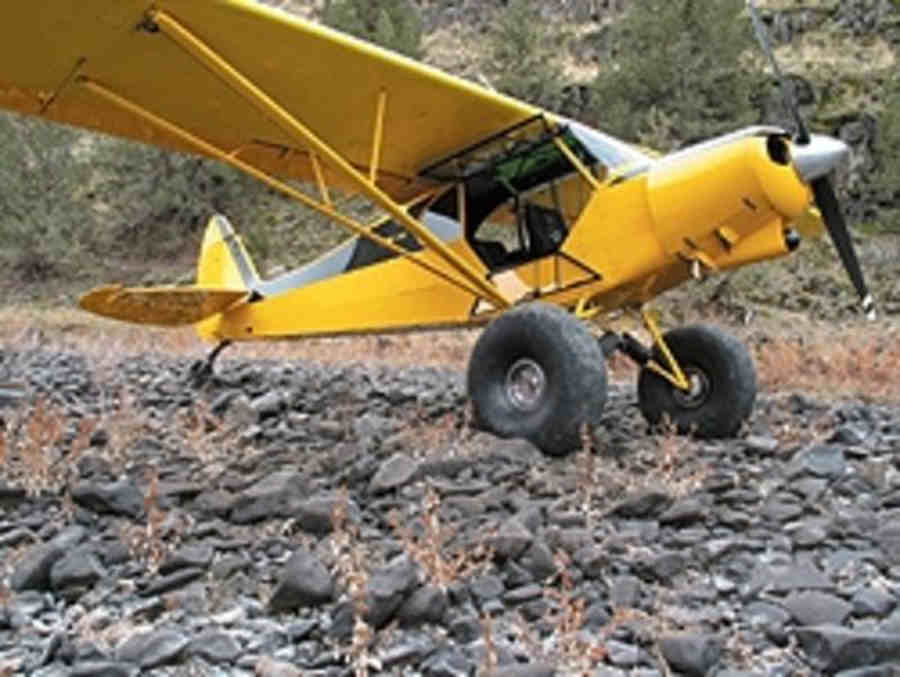
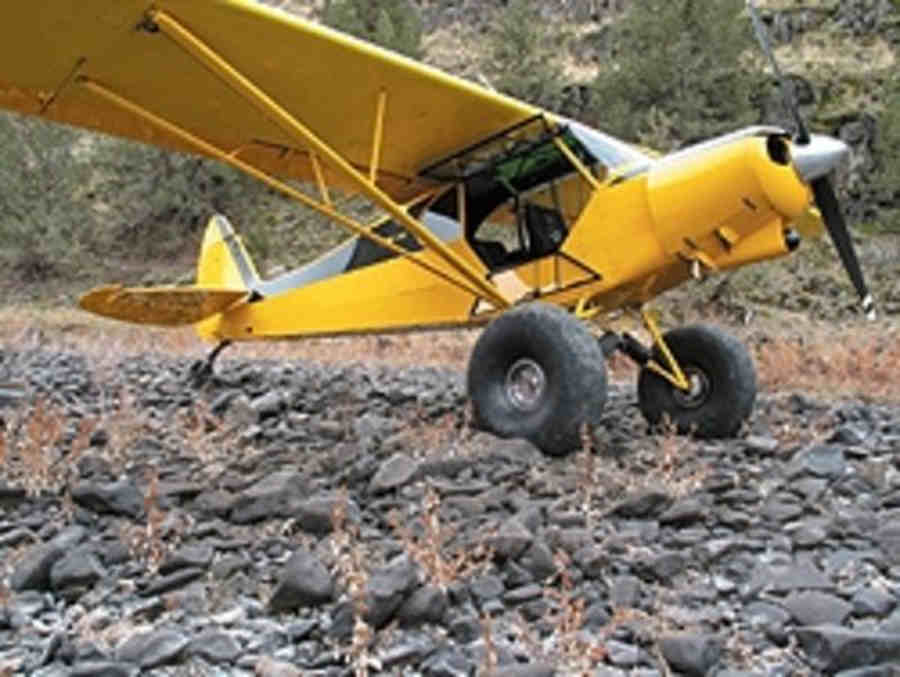
I will copy the Cessna 182 wing exactly in carbon if I build my 200 MPH
STOL bush plane with retractable balloon tires. The C182 is already a
pretty good bush plane
except for the landing gear.
My C182 flies great with perfectly coordinated turns and I never have
to touch the
rudder pedals unless I am slipping it in :-)
Paul Lamar
The Rotary Engine free News Letter. Powered by Linux. If you want off
the list PLEASE let me know and I will remove you. ACRE NL web
site.
http://www.rotaryeng.net You Tube
http://tinyurl.com/beqqxas
Copyright 1998-2016 All world wide rights reserved.