Paul, I have your "how to cool a wankel" book and didn't know if this
question is for the general newsletter or not since I'm attaching a
picture right from it.
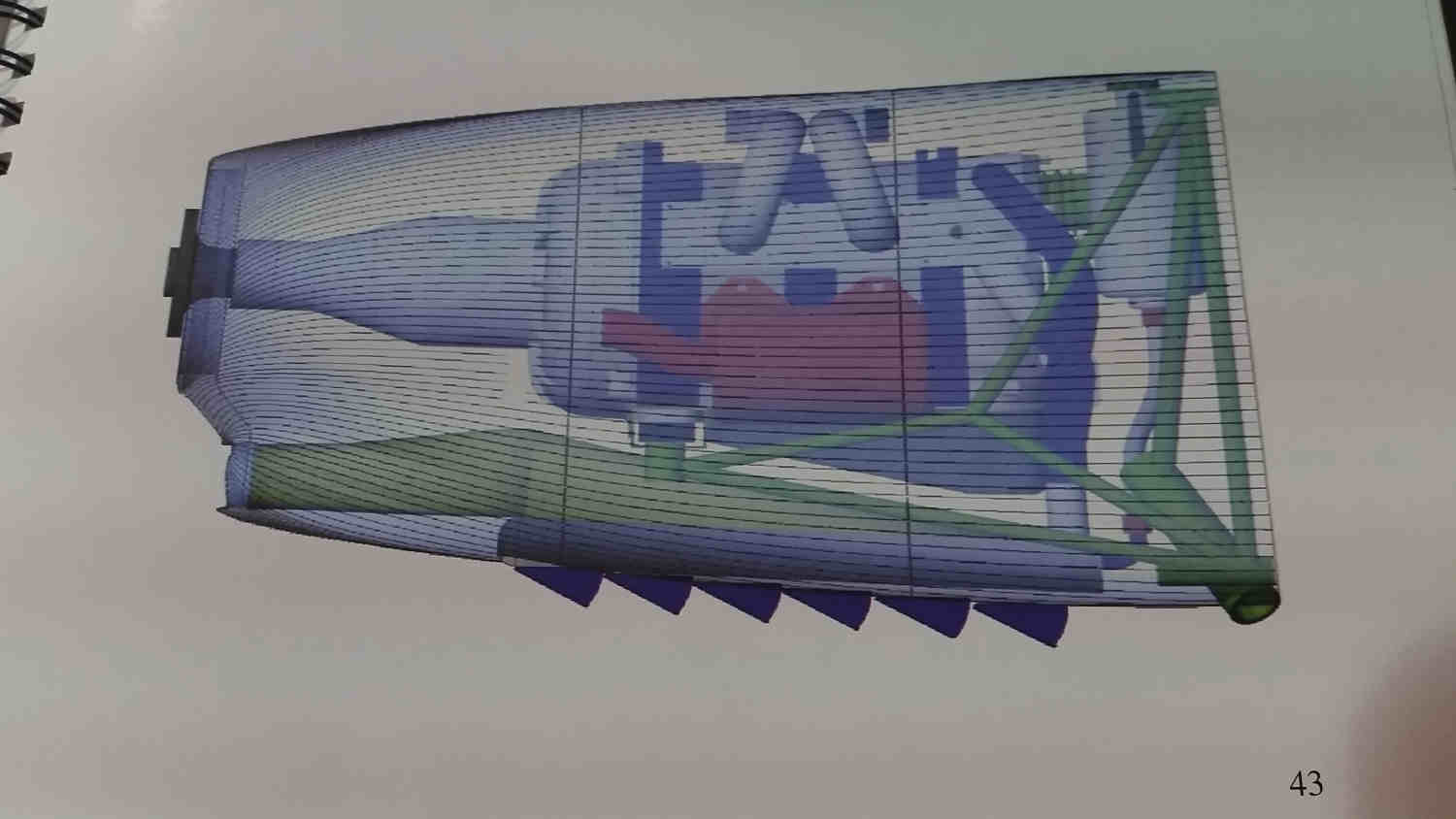
The picture of page 37 is of Kays and London diffuser. Is there a
formula for U, A, Vm, etc?
I remeber hearing, the opening is 20% or 15% of your surface area. Or I
could be getting confused with Kuchemann and Weber.
- Matt Boiteau
We first said in the book but later experience has shown in the TTC and
Neil's Glastar 15% is too big,
It is more like 7.5%. One reason for that is.....it is always in the
prop blast. Surprisingly, with a 15%
opening in the TTC, it never gets above 120 degrees F :-) I am stupefied
by that :-)
That Kay's and London wedge diffuser works extremely well. In the TTC
we also have
very good venetian blind cowl flaps that are fixed open. These cowl flaps
are a 90 degree arc shaped. I am sure that is helping a bunch to draw
the air
through the rad. Neil's are flat but adjustable.
If you want it to work even better... Ian Beadle in OZ used the K &
L.... S shaped diffuser and made
the opening even smaller. Here is a shot of his airplane. It is hot in
the outback and this works.
I went for a ride. This cools both water and oil.
Paul Lamar
I'm starting to really like the idea of having adjustable louver flaps
directly under the rad instead of ducting the air to follow the bottom
of the cowl to exit at the back with exhaust / oil / radiant cowl air.
The front opening of the rad to the front of the cowl is only 4.5
inches. So I'm going to have a tight squeeze to come up with an S-shape
/ K&W diffuser. Too bad we didn't have more pictures and info on Ian's
setup. I have pictures saved from a few months ago when his plane popped
up on here.
This is my math so far.
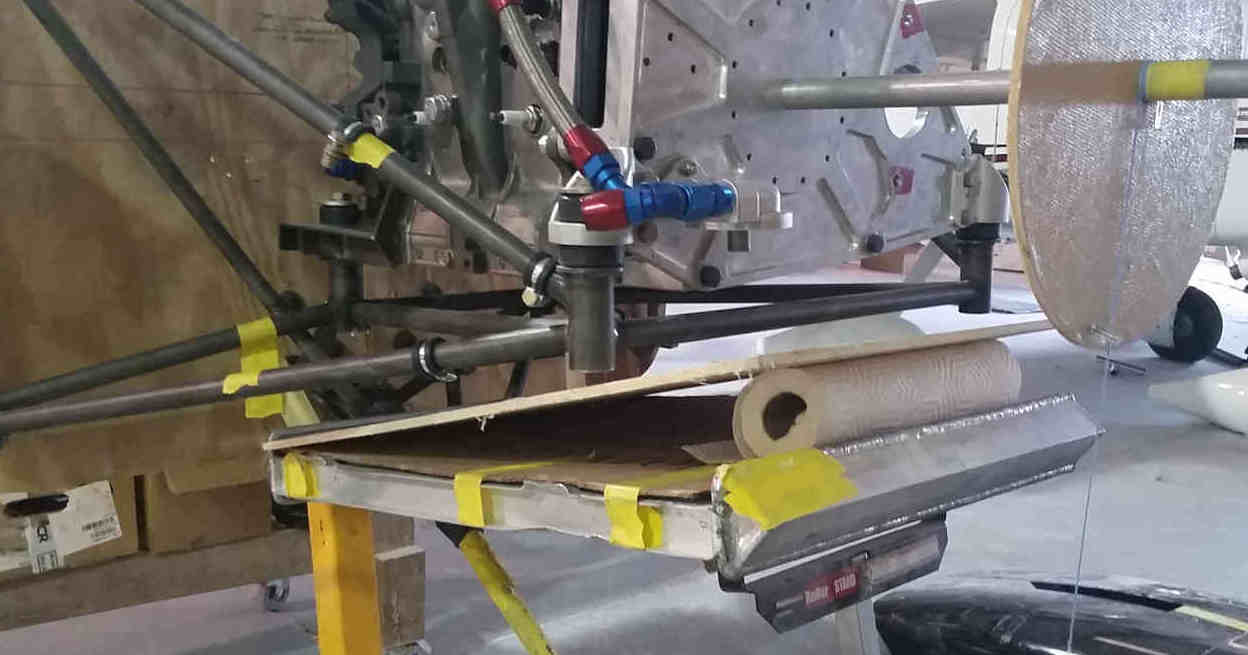
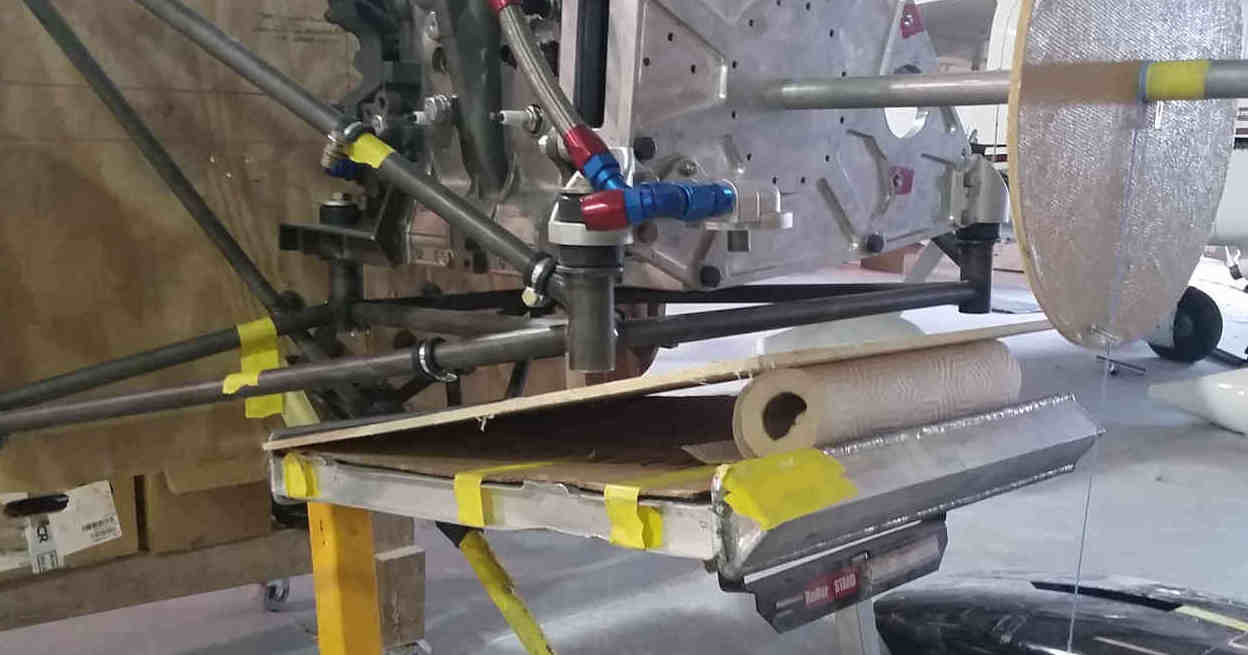
Rad is 18.75"W x 24.25"L = 454sq inch.
Using 10% to find the height, the K&L opening is 2.4"H x 18.75"W
Paper towel roll gives me a good reference for the angle. It's hard to
take good pictures when there is so much crap in the background.
- Matt Boiteau
Nice welding on the motor mount Matt.
The trouble with a duct under the rad ( unless it is very deep) back
pressure will be built up
in the duct and the flow will be reduced. See page 46, 47, 48 and 49 in
my book.
Some sort of louvers are essential.
Paul Lamar
The Rotary Engine free News Letter. Powered by Linux. If you want off
the list PLEASE let me know and I will remove you. ACRE NL web
site.
http://www.rotaryeng.net You Tube
http://tinyurl.com/beqqxas
Copyright 1998-2016 All world wide rights reserved.