That TTC project looks really nice guys ! I know that you have the
knowhow and the right set of hands to get this accomplished. In
Europe, we're still only a rare few to fly rotary, there's an RV10
in Denmark, a Sportsman in Germany, and me with my Glasair in
France. I'm hoping to get the g-300 Maule flying for mistral in the
near future.
Noise is my greatest concern. We still fly with the non-compatible
absorption muffler, and i'm really worried about the bad reputation
the rotary is getting here because of noise. I keep flying limited
to 3 flights per month because of that, a hard feat after spending
12.000 hrs building.
I'm now sticking my antenna's out and aim to get a good solution.
Mistral is helping but they have other priorities for the near
future. I gather you have less pressure to get low noise emission in
the US, but if you find a good ( even temporary solution) i'd like
to hear from you.
Paul sent me a good set of data on a muffler which was used on an
RV, but i tried that and it was still too loud. The tangential
muffler by rochhausen in munich is promising, but i'd say there's
still a lot to be squeezed out in Db. Good luck and have fun with the
project
Paul Janssens
IMHO That anti private airplane noise is just a political ploy to
punish non egalitarians :-) There are too few private pilots in
Europe so the counter political power is inadequate. We have the
AOPA and the EAA fighting the boring alcoholic egalitarians :-)
There is a Breezy in Germany as well. Karl Frederich Schmidt is
building a Breezy'
You may need two mufflers. A tangentially in the cowl with a 3 meter
long coaxial under the air plane.
The large diameter of the coaxial out let lowers the frequency of
the noise making it more acceptable to people.
Start with 25... 5 mm holes in the inner pipe. If that affects the
power drill more. Larger holes are shown but the area of 25 ....5 mm
holes should be sufficient. The 150 mm size of the outer pipe will
lower the noise frequency.
The stationary noise will be higher so don't compare. The only valid
comparison is a fly over. The air flow between the outer pipe and
inner pipe is key to the coaxial. It also cools well..
Here are the 3D's
Paul Lamar
Hey Paul,
A few quick thoughts: shouldn't both pipes have scallops/chevrons?
Also should there be round radiuses to the peaks and valleys of the
chevrons? (sharp angled corners are stress risers, pulse jet reed
valves have extremely short life even with rounded) Lastly, is there
a certain depth/height vs diameter of pipe that is optimal?
-Dan G.
The inner pipe is plugged on the ass end. The idea is to get all the
exhaust gases to come out the little holes and mix with the cooling
air flowing between the pipes. In theory that adds to the mass flow.
In a way it is a small ram jet engine and should generate a bit of
thrust. Probably not enough to over come the drag of the bottom
muffler but all European private aircraft have add on bottom
mufflers. Even all Cessnas. Their noise laws are strict. They hate
general aviation.
It cost $15 each time you make a touch and go. Avgas 100LL is well
over $10 a gallon.
Yes on the radius but by that time that pipe is pretty cool.
Here are some more pictures and noise spectrums.
And a video for the sound.
Paul Lamar
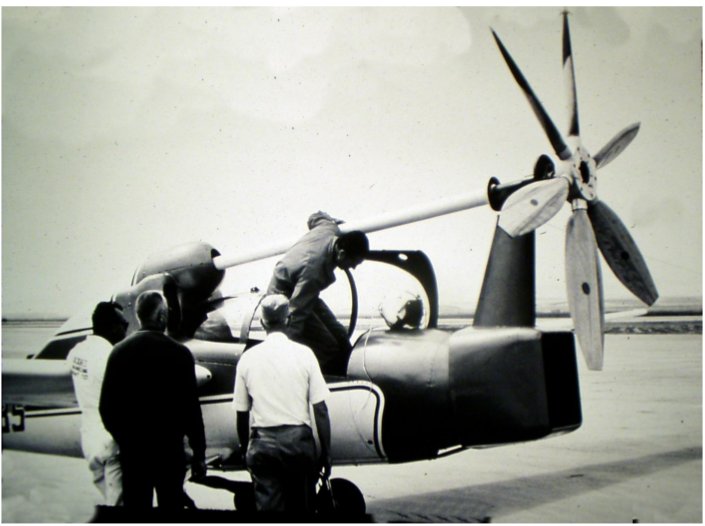
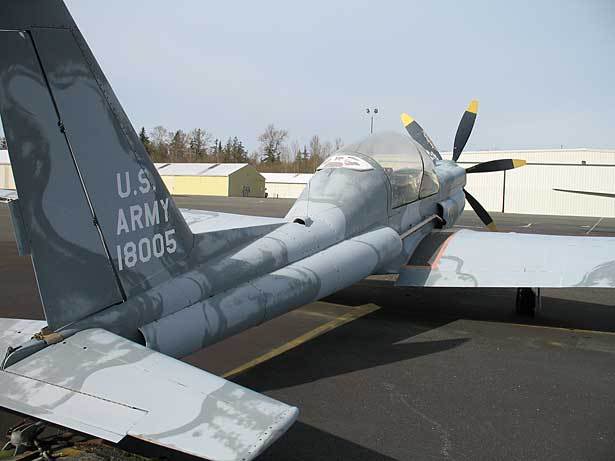
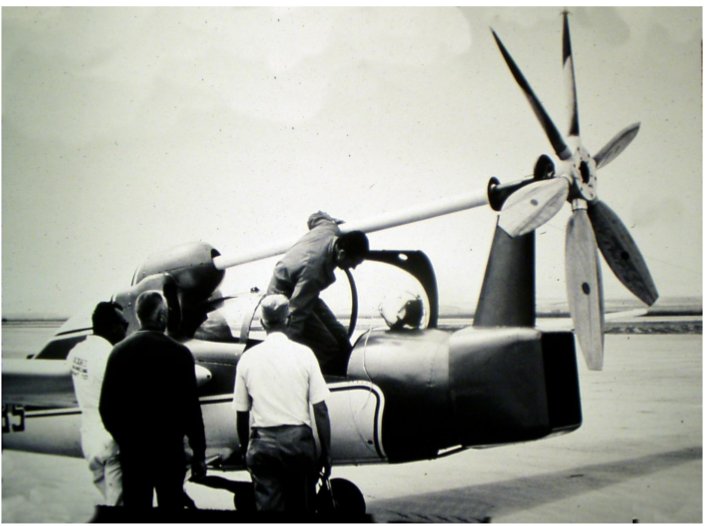
Paul, the muffler you have described is a smaller version of half of the
sound reduction system used on the YO-3A aircraft built for stealth
operations in Vietnam. Theirs is about twice as long, and is the
dissipative section. There is also a conventional chamber muffler ahead
of this "piccolo pipe" dissipative section, tuned to the exhaust note
(firing rate.) You need both. There are reports on the YO-3A design and
evaluation on dtic.mil and ntrs.nasa.gov, and a complete set of
blueprints is available for inspection (but not copying) at the Museum
of Flight in Seattle.
Indeed an overflight is the only way to test. The YO-3A using a
Continental O-360 is inaudible at 250 ft AGL on a quiet night, unless
some access panel was left loose so it whistles.
David Josephson
The Rotary Engine free News Letter. Powered by Linux. If you want off
the list PLEASE let me know and I will remove you. ACRE NL web
site.
http://www.rotaryeng.net You Tube
http://tinyurl.com/beqqxas
Copyright 1998-2016 All world wide rights reserved.