Paul,
Merry Christmas!
Would there be any advantage to "cutting out" the rear rotor in a two
rotor application similar to how some cars drop cylinders in eco mode to
improve mileage?
Is it even possible in a rotary? (Is lubrication an issue?) I could
envision starting on two for safety testing/uniform warm up, then
shutting the rear one down during taxi to prevent overheating, then
restarting X minutes prior to departure. I could also see using both
rotors for takeoff and shutting one down for a low power cruise. Or
cruise on both but shut one down on descent.
Maybe rig the FADEC/throttle such that pushing the power up beyond say
70% automatically engages the second rotor as in a go around/missed
approach profile and shutdown when below 30%. Another option would be to
engage the second rotor if the rate of throttle movement exceeded a
certain parameter. Would second rotor "cut in" cause a shock/pulse to
the shaft/prop? How hard would it be to start a cold soaked rotor?
Would it be cold as the other rotor would heat it? Would this be an
uneven heating that would cause distortion and binding?
Could this also be a safety option if one rotor started to run poorly,
use it to start the other, then shut the bad one down? Fully independent
elec, fuel, cool, and lube would almost be like flying a twin but
without the added cost, structure, prop, etc.
Rob Brawley
State College
It will run on one rotor. However the reason that works in a car is
related to the low duty
cycle of car engines. At low manifold pressures (low HP) engines are
much less efficient.
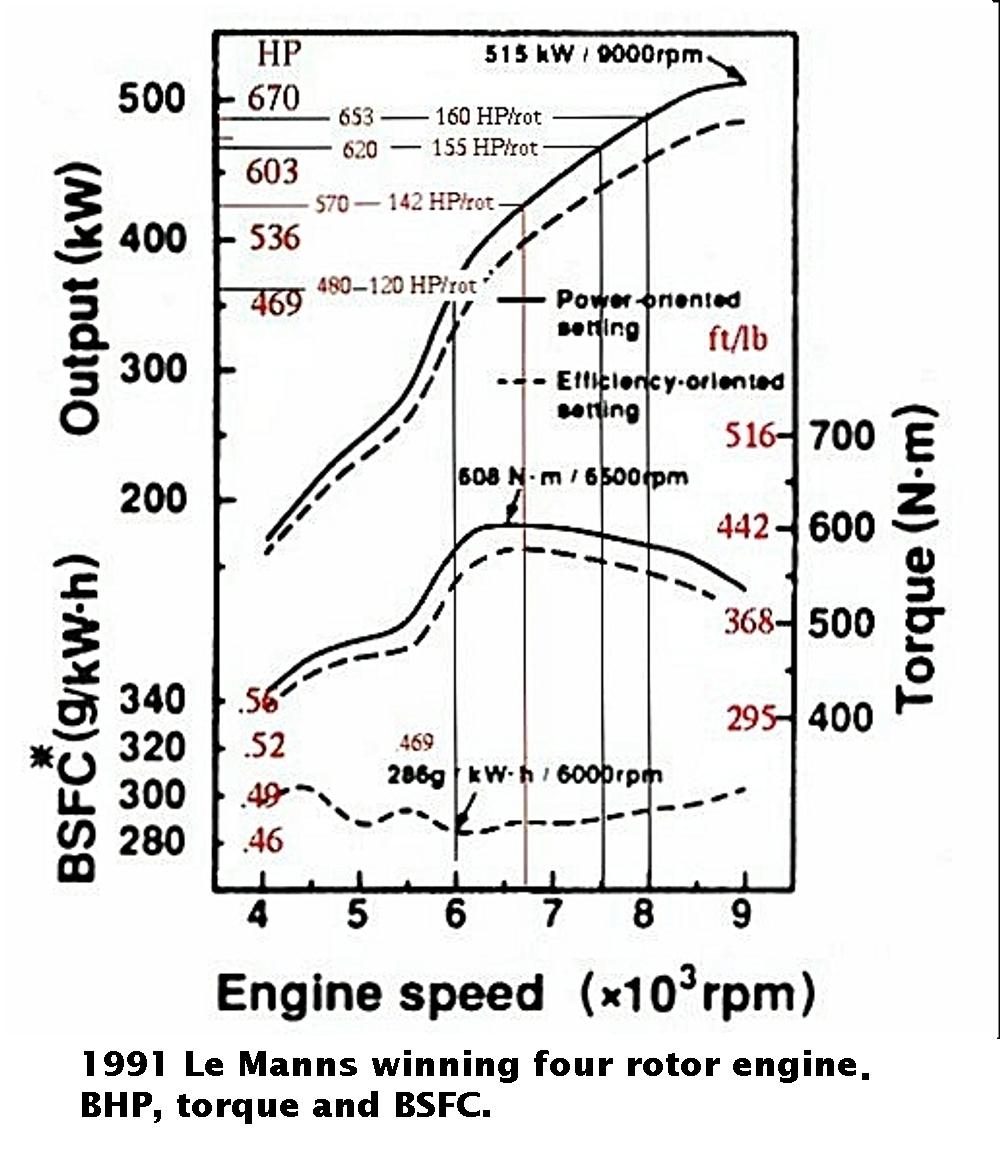
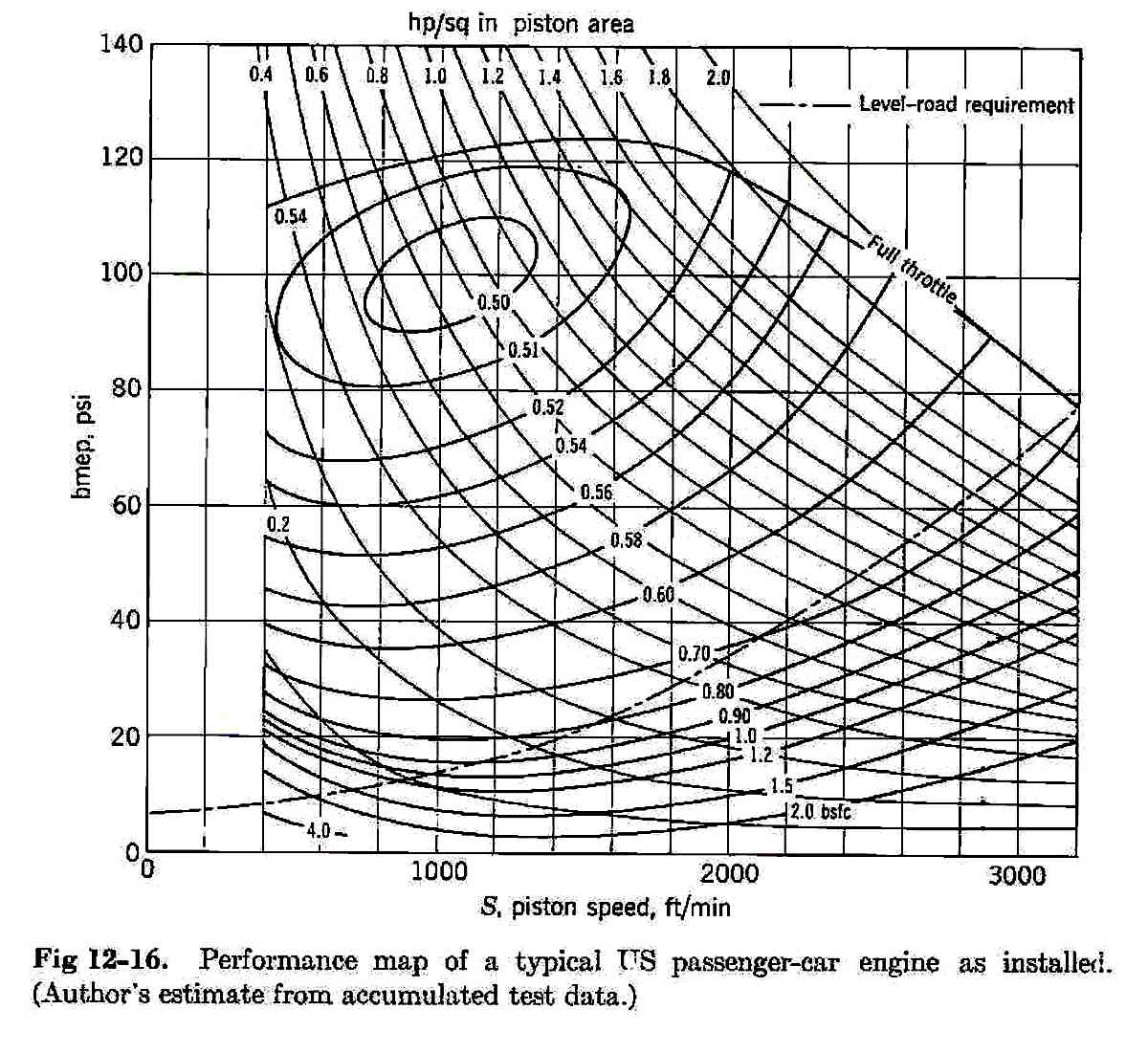
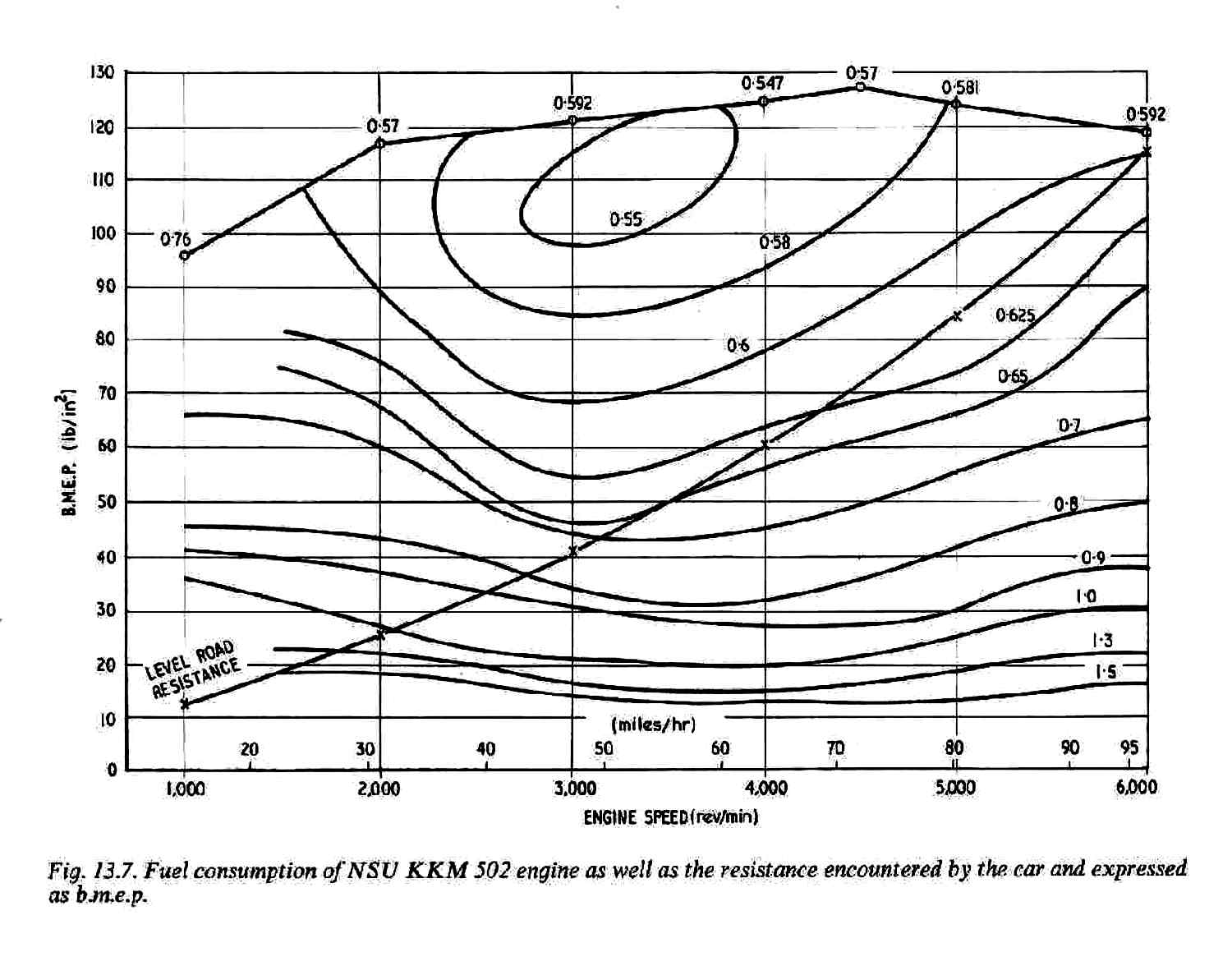
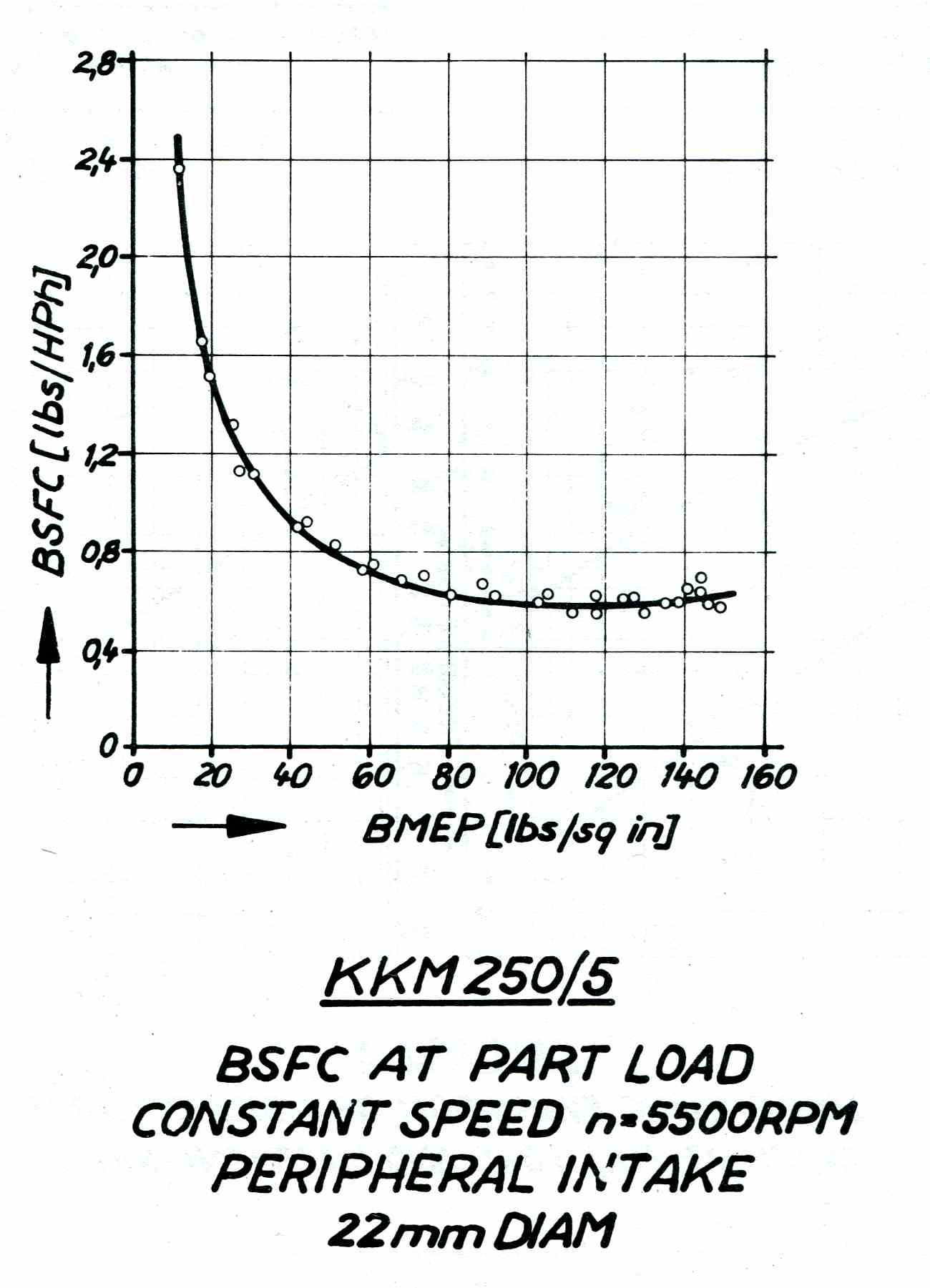
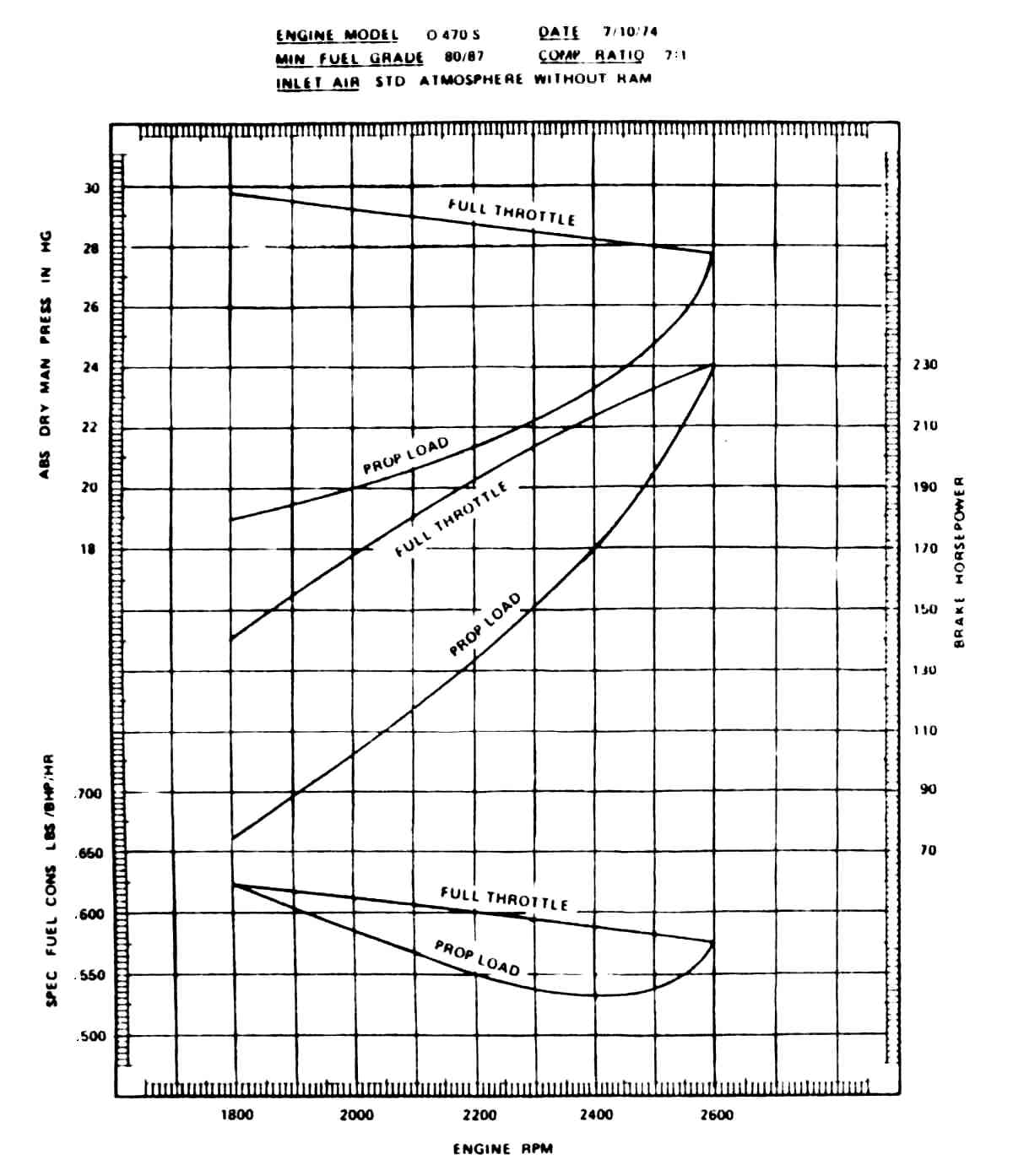
Take a look at the attached charts. Some show the amount of HP required
for a level road
plotted on a map of BSFC. Brake Specific Fuel Consumption is a way of
stating and comparing
the efficiency of all engines. BSFC is the weight of fuel consumed for
each HP generated for one
hour. Basically by shutting off a rotor or a few cylinders you are
moving the load higher for the
remaining smaller engine nearer the best BSFC island. The same thing
happens when you lower the
RPM and increase the rear axle ratio in a car. A modern Corvette goes 80
MPH at 1800 RPM.
Unfortunately Mazda did not get the point on the RX8. Perhaps the RX9
will be much better
in this regard.
Aircraft engines are operating at a much higher duty cycle that is much
closer to the best
BSFC island. The best thing to do is change the pitch on the propeller.
The power to weight
ratio of most rotary powered airplanes is already above the norm for
certified aircraft engines.
They take off in less distance so a variable pitch prop is not cost and
weight effective unless you
are building an STOL. The best thing to do is increase the pitch on the
ground and sacrifice some
take off distance.
That is why I advocate a ground adjustable pitch propeller.
Cooling the rotary on the ground is no longer a problem if you have my book
"How to Cool Your Wankel" :-)
Paul Lamar Merry Christmas.
The Rotary Engine free News Letter. Powered by Linux. If you want off
the list PLEASE let me know and I will remove you. ACRE NL web
site.
http://www.rotaryeng.net You Tube
http://tinyurl.com/beqqxas
Copyright 1998-2016 All world wide rights reserved.