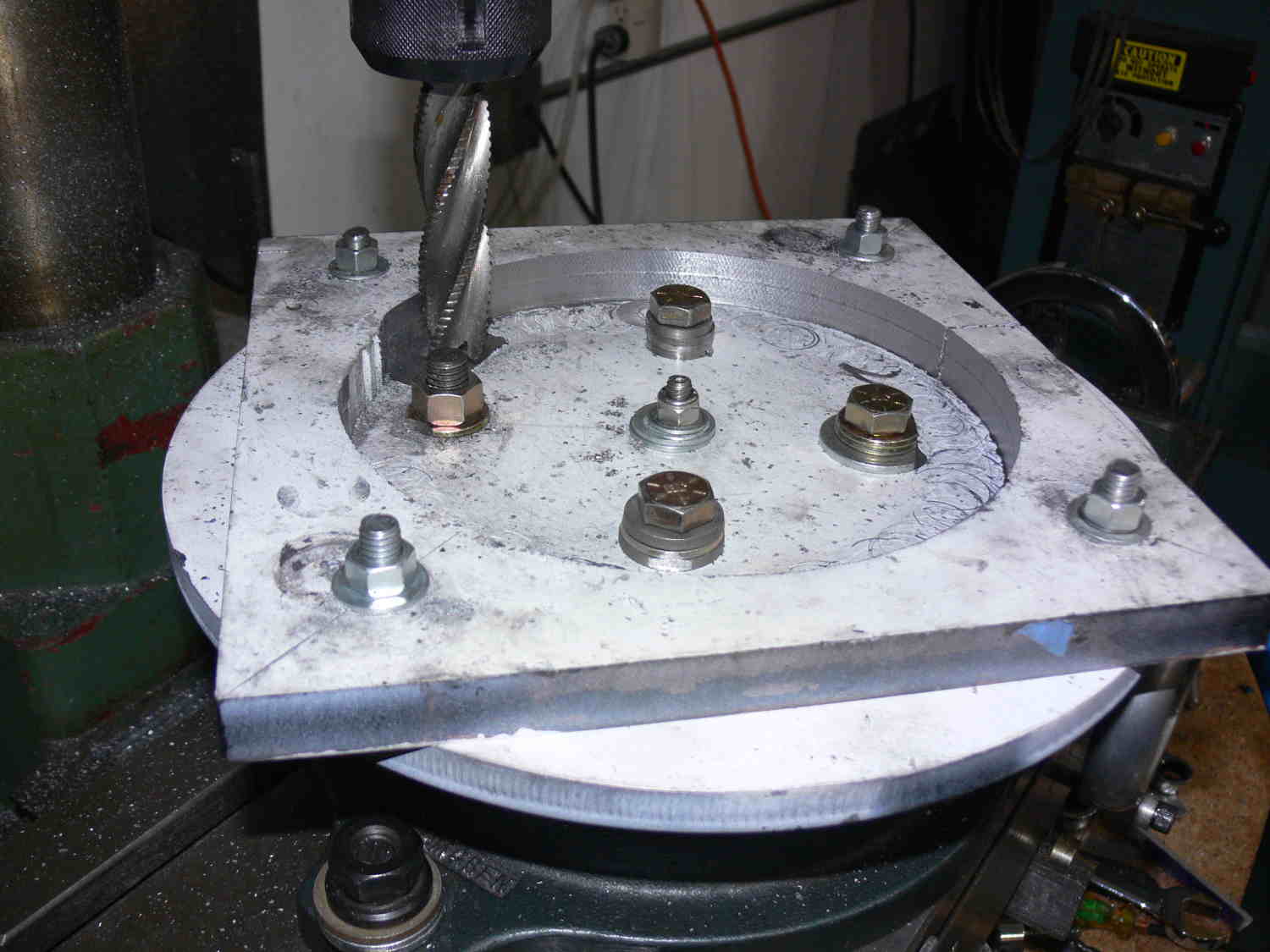
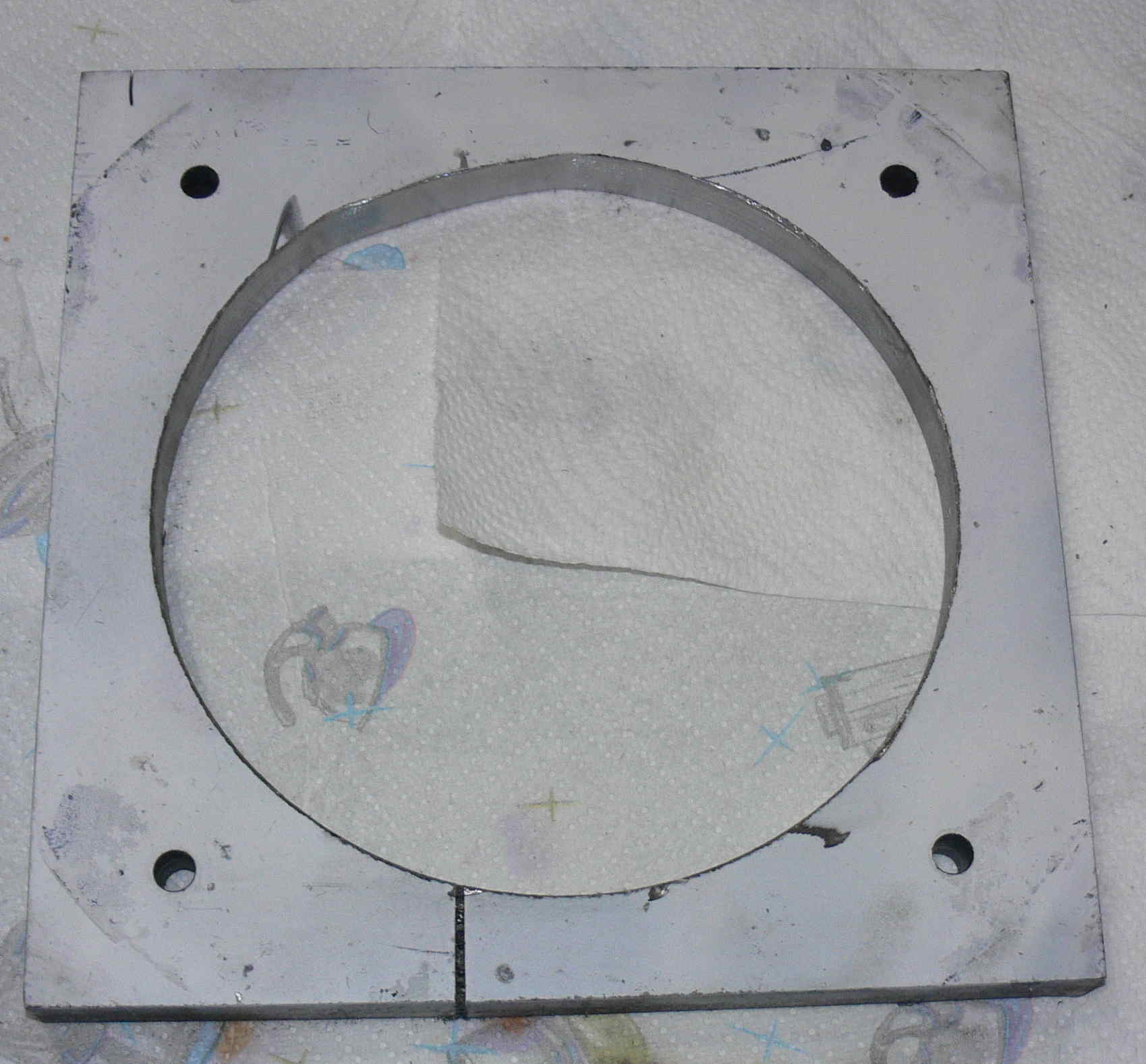
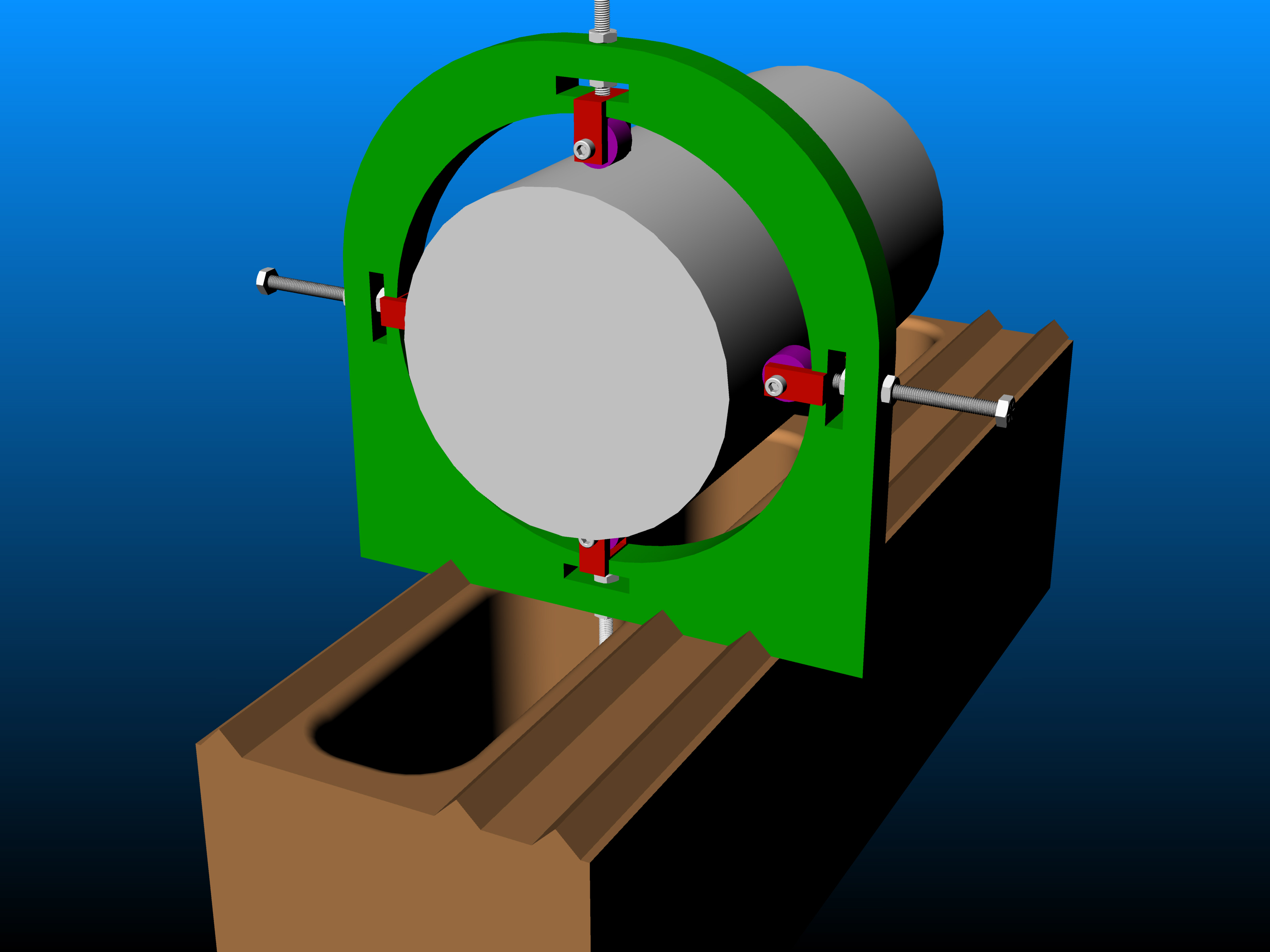
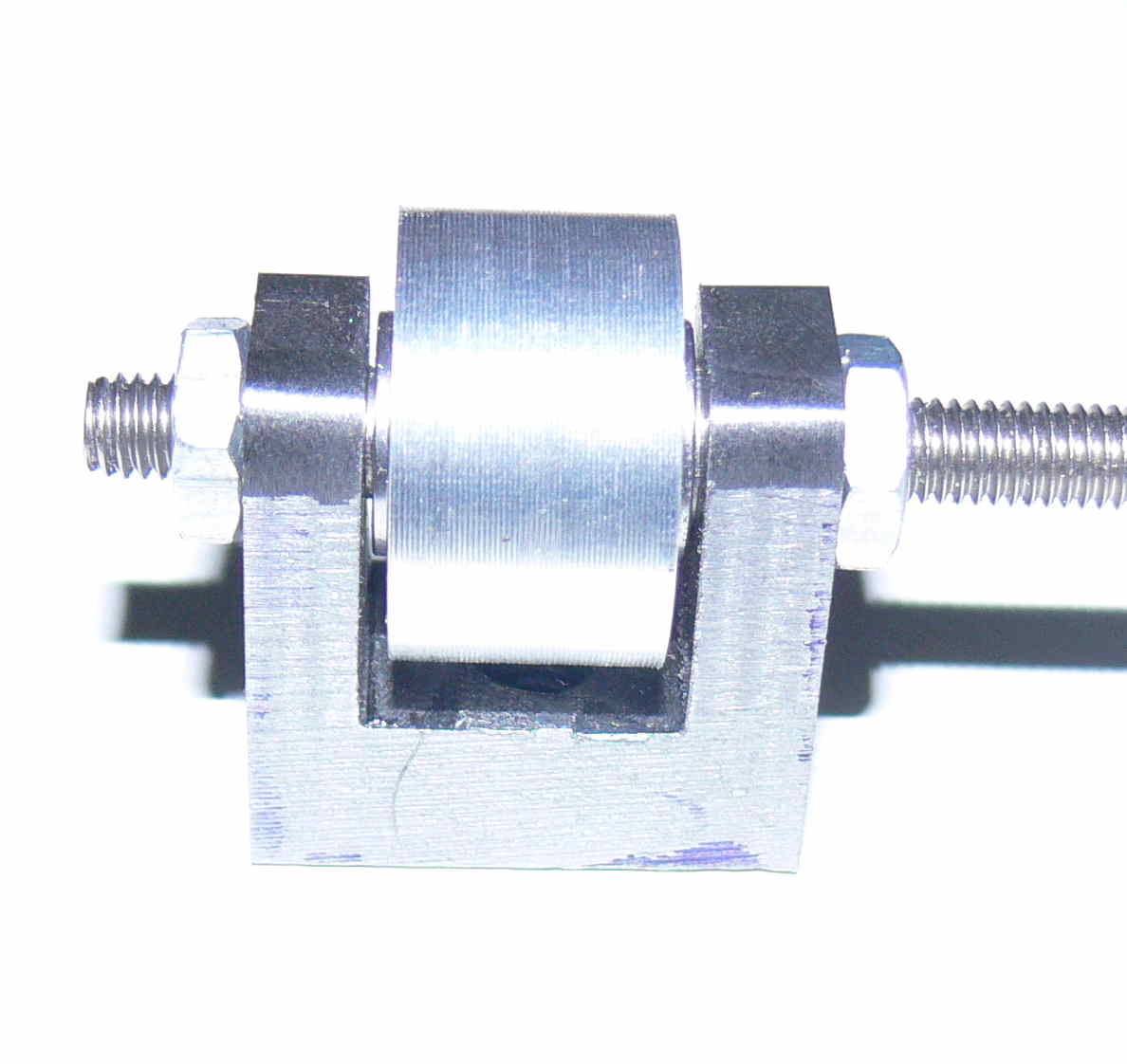
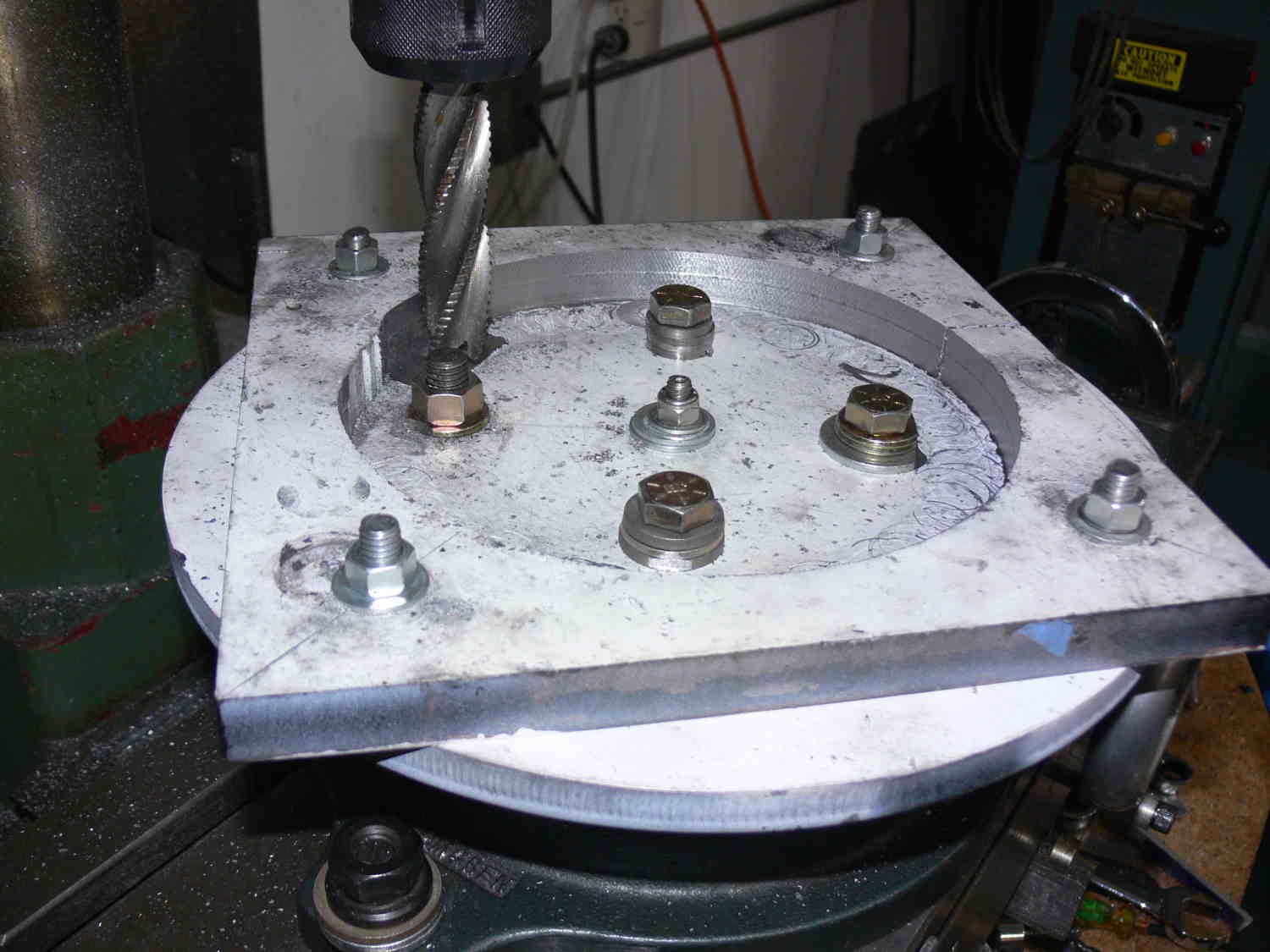
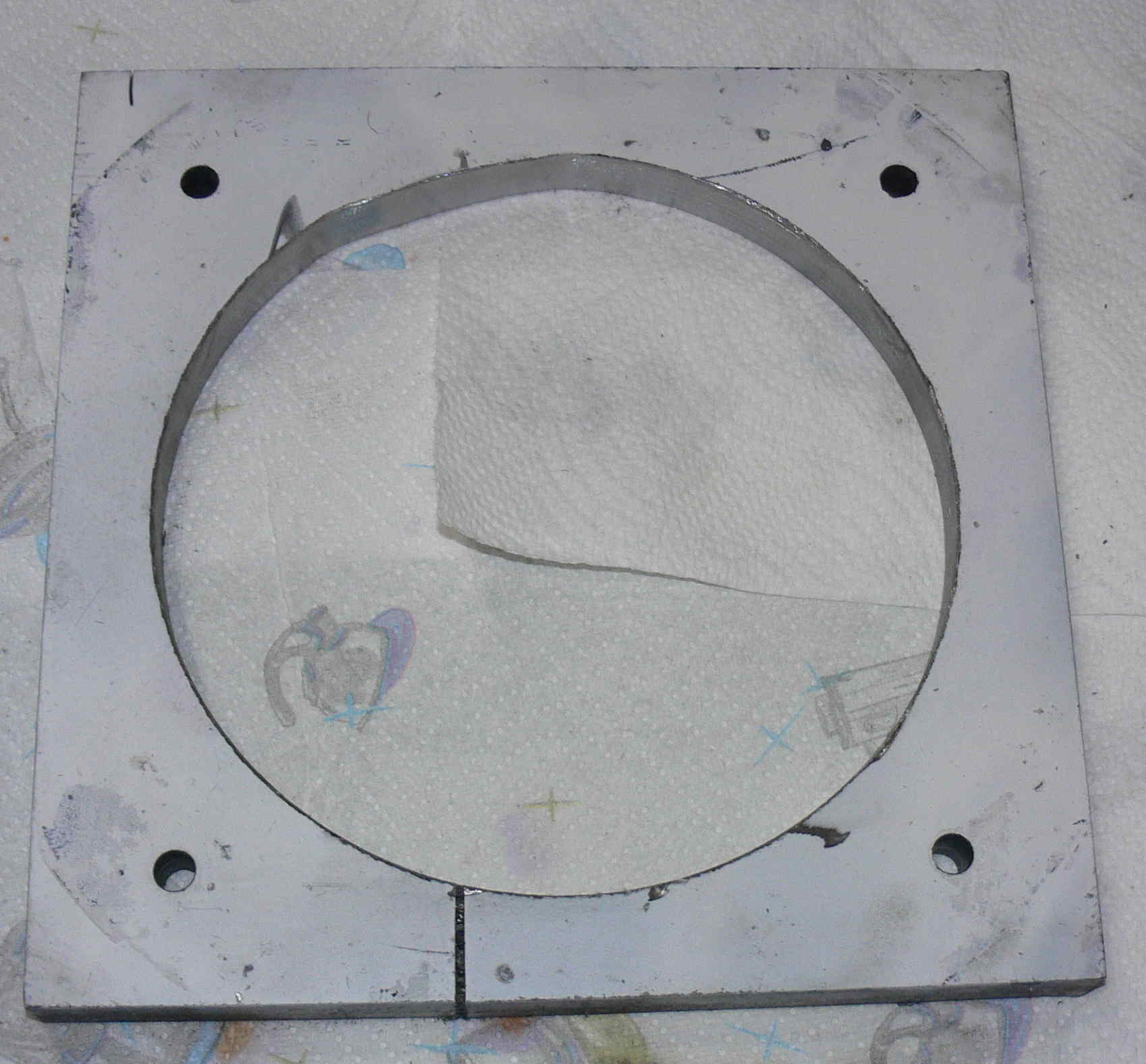
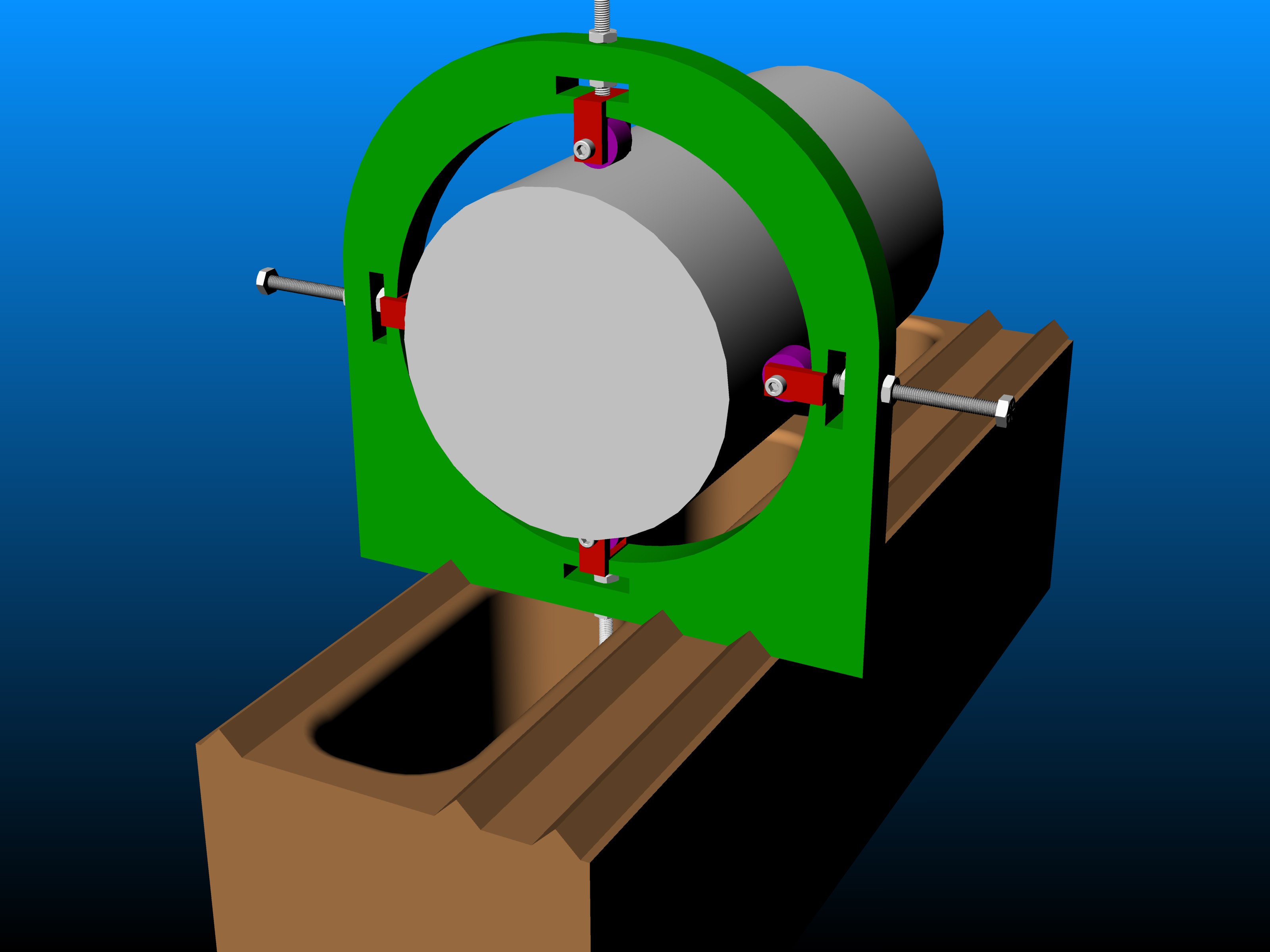
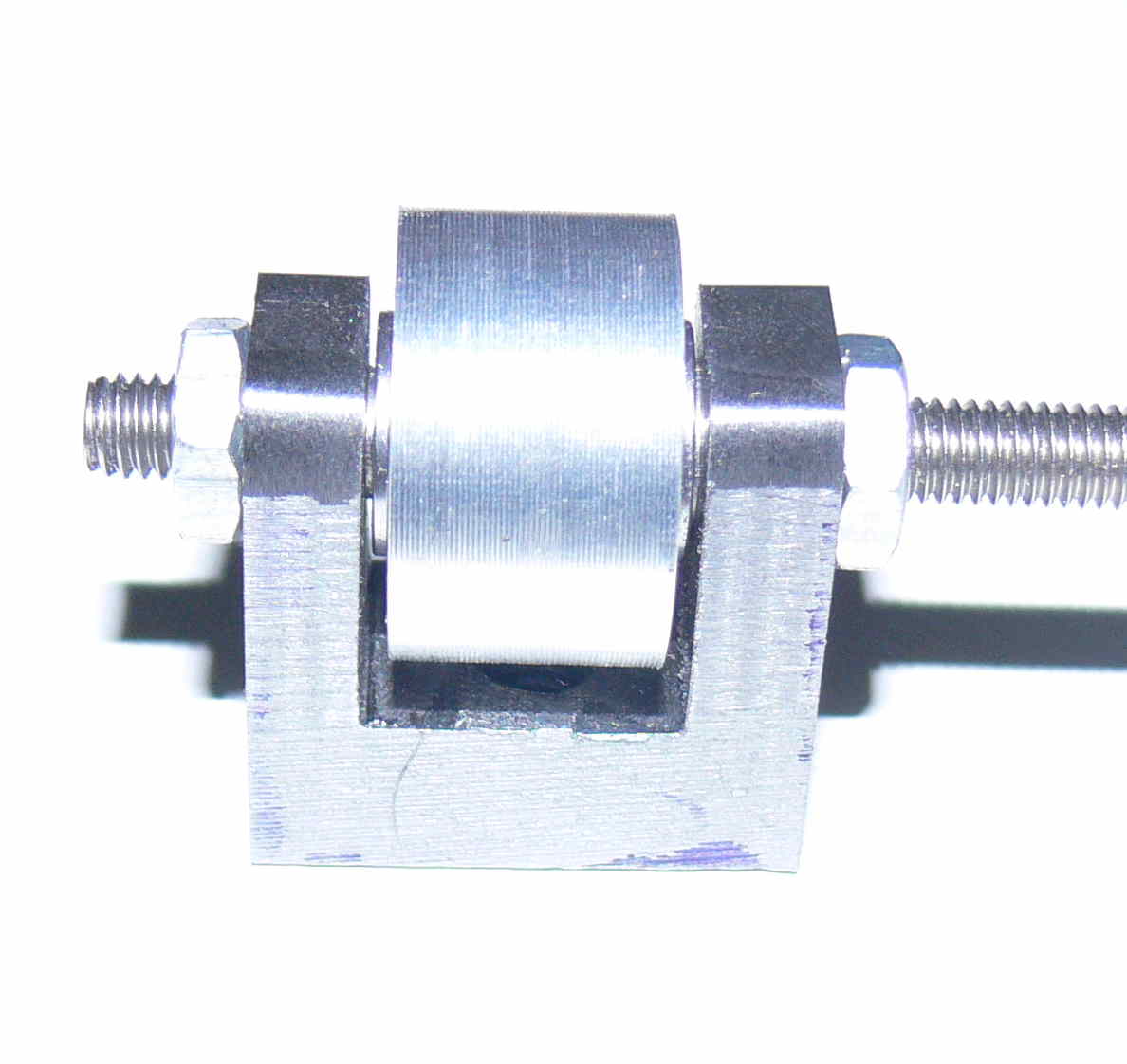
I have the steady rest frame bolted to my rotary table.
I have two roughing end mills. The big one shown and some 3/8 on the
way. I broke a 5/16th already.
Roughly speaking, is it better to run the cutter at high RPM when
cutting these sever discontinuities or low RPM?
Big cutter or small cutter?
I would like to keep the chatter down.
Paul Lamar
Since this is such a big opening, I suggest you go with a tool no
smaller than .75 Two or Four flute will work, Spindle RPM is figured
by this formula:
RPM = (3.82 X SFPM) / Dia (for ball part Rpm's)
Depending on the steel you are using, for 1020/1040/1018 I use 100
for the SFPM
so if you go by using a .75 tool, 3.82 x 100=382/.75= 509 Rpm's
Here are the basic formulas, they work so use them.
RPM = (3.82 x SFPM) / Dia SFPM = (RPM X Dia) / 3.82 CL = IPM / (N x
RPM) IPM = CL x N x RPM IPM = IPR X RPM RPM reamer = 50% RPM corner
radius cutter = 33% RPM chamfer cutter = 33%
works for lathes or mills
Now if you want to be exact then you get the chipload info from the
manufacture and use the CL formula
Oh and I do highly recommend a Machinist Calculator, has all the
built in formulas and more. The ones I have in my shop are called the
Machinist Calc Pro....I think it was $80, I have four of them, one at
each machine and I love them.
For what you are doing this is fine. For a cutter I recommend a .75
cutter by Niagra, here is the link to that cutter at MSC
https://www.mscdirect.com/browse/tn/Milling/Square-End-Mills?searchterm=niagra&navid=4287924598#navid=4287924598+4288247917+4288247595+4288247839&searchterm=niagra
I know alot of people will say 4 flute for steel, but two flute will
work fine, alot will say get a carbide mill, also a mistake, it will
chip in the manual mill (you have to have almost 0 play/backlash to
keep from chipping your carbide mill bit)
After I got our of school for machining, I did what most people do,
followed what I was told in school. Luckily my good friend I made in
school, his dad owns a machine shop that rebuilds pumps and electric
motors. I don;'t mean little ones either these are extremely large.
He also owns the largest dynamic spin balancer in Northern
California.
I was lucky enough to get to hang out and learn from this man who
built his shop from nothing to a very successful shop that is always
slammed with work. I also help out by taking care of their CNC
machines. Anyway he changed the way I was taught and think about
cutting steel. His way works, I ruin less tools and get a much longer
tool life. Experience counts and his is alot of great experience.
David Mikesell San Jose, CA
Thanks David. It is a real old CC mill drill the RPM goes from 230
to 2120 RPM.
I have a one inch 4 flute cutter in there now.
Material is cold rolled steel .75 inch high(thick).
So I will keep it on the slow side. No real cooling. Not like an NC
in a sealed cabinet :-)
I will work on building a cabinet for the Kasuga. It has cooling
system but the entire shop gets wet :-)
Paul Lamar
Dumb question: Wouldn't you want to weld the cut you made into
the void? Say start at the outside and stop ~.5" from the void so
that you don't cause the mill bit some problems.
I'm thinking, if you end up using this a lot, that you would not
want any flexing. Yes, that would be a "side load", but sometimes
strange things get done you weren't originally planning on.
Regards,
Steve Thompson
Yes That will be done.
But steel is stiff and that would hardly affect the problem as the
chatter is everywhere. Not just in that area.
Paul Lamar
The hard part is done. If I had it to do over a 12 inch rotary table
would have helped
a lot. My 8 inch just did not have enough mass to damp the vibrations.
Maybe it would have gone smother with a one inch finishing mill instead
of the hogging mill. I did not have one to try it. Since this is a one
off I did
not want to spend a lot of money on it.
The total time doing this on the rotary table was about six to eight hours.
It probably would have been better to just cut it out on the CC DoAll
band saw
and live with the blemishes :-) I can see why steady rest are all made
from iron
castings.
The next step is put the T slots in it to hold the rollers.
Then I can get back to working on the PSRU housing.
Paul Lamar
The Rotary Engine free News Letter. Powered by Linux. If you want off
the list PLEASE let me know and I will remove you. ACRE NL web
site.
http://www.rotaryeng.net You Tube
http://tinyurl.com/beqqxas
Copyright 1998-2017 All world wide rights reserved.