It looks like a K&L wedge diffuser will work best for my
application. I am working the cowl design and I am trying to determine
the optimum opening area for inlet air. I have your book but I cant seem
to find the answer. Some time back there was some discussion about this.
If I remember correctly the consensus was 15 percent of rad area was too
much. Is this correct. If so, what is a good area for inlet air?
Paul Shamlian
I suspect it depends on the thickness of your core.
What are the dimensions of the core you plane to use?
I suspect if the core is large in area and thin 10% might work.
Large area thin cores have lower cooling drag.
The other factor is movable louvers aka cowl flaps. If you can
close the louvers,
assuming the engine is cooling adequately, the drag of an overly
large opening, say 20%, is reduced by external diffusion.
If the core is thin 10% might work.
It is a good idea to use louvers or cowl flaps in any event.
Also it is a good idea to have the opening in the prop slip
stream so it will cool waiting to take off.
We are still over cooling the 650 HP TTC with 20% opening
on the ground no less.
The cross counter flow heat exchanger consist of two .75" cores
20" by 30" back to back. No cowl flaps but a very nice set of
curved louvers.
Start with 20% and see what happens. Design the opening so it can
be closed down later. Maybe you can run it with out the final cowl.
Do you have any recent pictures of your Bear Hawk patrol Paul?
Is the core on the cool side of the engine? Does it exit through
the side of the cowl?
Paul Lamar
The radiator I am looking at has a core that is 17 X 14 with a thickness
of 2.7 inches. 642 cubic inches. I am only measuring the core, not the
overall dimensions. The best source I could find for radiators was
Summit racing. They are the same radiators we use in circle track
racing. I am modeling the firewall forward in Rhino and trying different
arrangements. There isnt room on the cool side to make it work without a
large boxy nose bowl. The rad fits under the engine nicely and maintains
a nice cowl. There isnt enough room to have both the oil cooler and rad
under the motor so the oil cooler has neen moved to the cool side. The
plan is to try to build louvers on the bottom of the cowl for the
radiator. Not yet sure how to exit the air from the oil cooler.
Hopefully just an exit duct but might be a cowl flap
Paul Shamlian
That is not going to work well. First a core that size full of water is
very heavy.
Second the air has a hard time going through a core that thick. Most car
racers
have not caught on yet. Dodge and Honda are the leaders in cooling
efficiency.
You have a engine weight problem already unless
you are going to aluminum end housings.
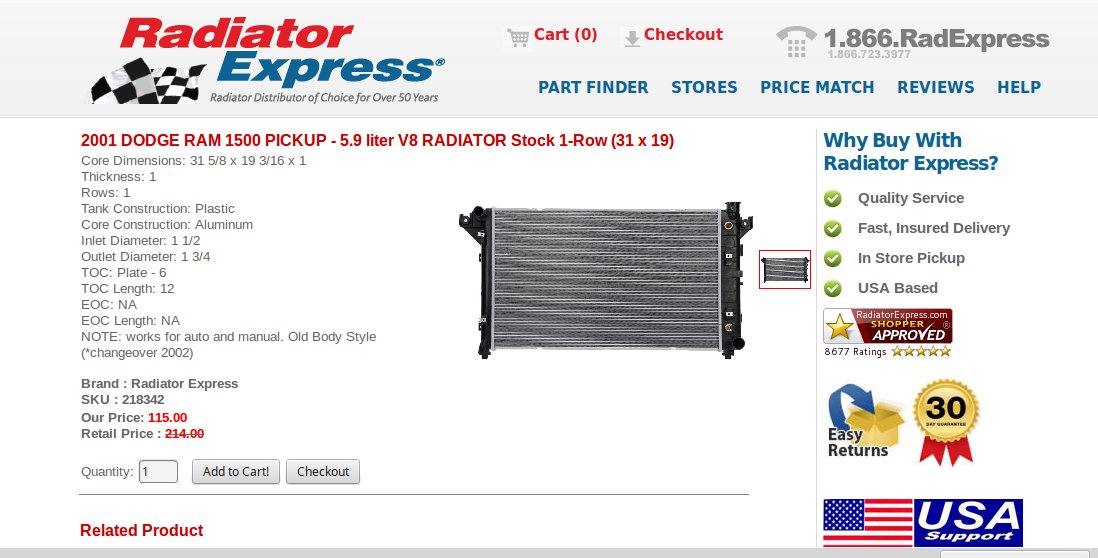
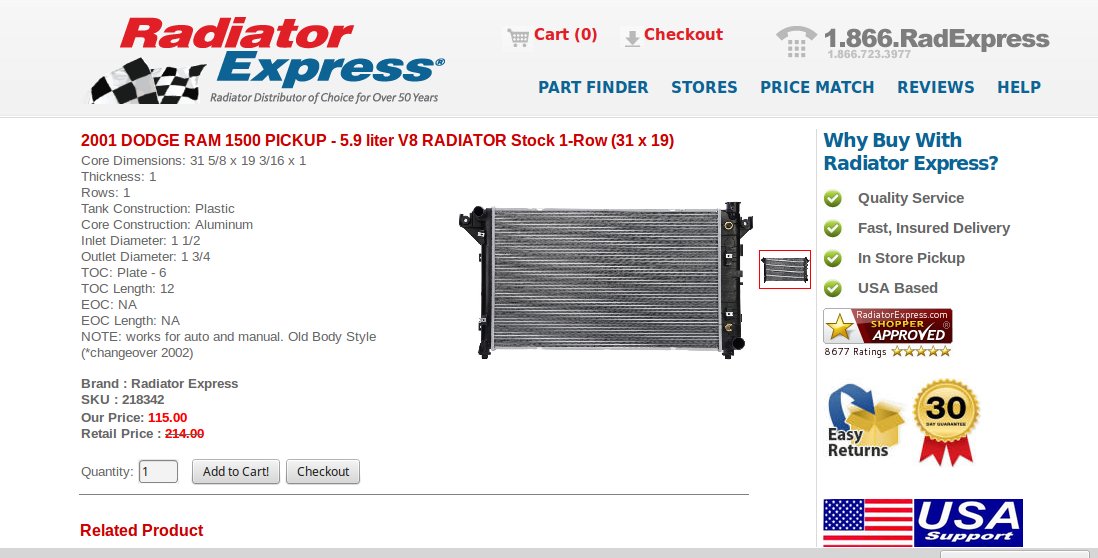
Shop this company by rad size.
https://www.radiatorexpress.com/category.asp?cat_id=R026
Here is the 20" by 30" by 3/4 inch thick Dodge truck rad underneath
Bear Hawk Patrol 3D's. It is always harder to fit the 13B in a tandem
airplane. The RV4 is even narrower than the 32 inch wide Bear Hawk Patrol.
I'll get the year and make so you can order year and make.
It will be about $130.
Where are you Paul?
Paul Lamar
-----------------------------------------------------------------------------------------------
Hear is the core to use Paul. You may need to weld on new header tanks.
You may get away with as little as a 10% opening.
Paul Lamar
The Rotary Engine free News Letter. Powered by Linux. If you want off
the list PLEASE let me know and I will remove you. ACRE NL web
site.
http://www.rotaryeng.net You Tube
http://tinyurl.com/beqqxas
Copyright 1998-2017 All world wide rights reserved.