How many people are building airplanes?
Paul Lamar
Hello Paul, I am slowly working on the rebuild of Zenair CH250 and
Bede BD4. Both were damaged in landing accidents. I bought the
airframes without engines or instruments. G-RAYS is the Zenair.
Everything is a learning curve for me.
I have put both these aircraft in steel jigs .Just coming to grips
with the best way to remove the pop rivets in the areas requiring
repair is of interest to me right now. Some rivets seem much tougher
than others like there is a variation in the type used especially in
the BD4. I have been punching out the steel centre shaft first . Some
don't want to budge and there is only so much force I can use. I have
then drilled in with a 1/8 drill bit but some seem to slip from the
centre especially when the core steel is still in it. This can easily
lead to damage to the surrounding area which is fine when I can't
reuse the skin anyway but I would like to be bang on so I don't cause
damage when I come to peel open the wing skins for a good inspection
inside on the Zenair . Once I have drilled in just below skin surface
depth or sometimes all the way through I knock the top of the rivet
off with a small chisel.
Any hints or advice would be appreciated.
Although I have collected a number of different automotive engines
including the Subaru, Rover V8 and Corvair my gut feeling is the
Mazda RX8 (of which I have got three) gives me the best solution. The
Mazda has the best ability to produce a high power to weight ratio.
However the Zenair at least has a recommended max firewall forward
weight of 300lbs and I would really like to be well under this . It's
for this reason I am looking at ways to reduce the Mazda basic weight
and find your discussion of alloy end plates most interesting. I am
waiting on a chance to get together with a friend who is going to
machine down a couple of end plates to see what I have to play with .
I am thinking along the lines of milling the end plates down to about
half an inch thick then making up a water jacket a bit like the oil
sump.
Water pump from a v6 ford is a self contained item so that can be run
by belt and I am looking for a dry sump oil pump.
You were also talking at one time of electric points being run on
the crank shaft. What I don't yet know is how many times the points
on the Mazda need to fire per revolution of the crank. Could you help
me on that one?
One other question I have is regarding superchargers or turbo
chargers. Sometimes I read how an automotive turbo charger is not
ideal in an aircraft as it runs at a high capacity for long periods.
Is this truly a problem and if so what sort of turbocharger should I
be looking for?
My work away from home as a live in carer (although it is only 15
weeks or so a year) and the fact that I have to go from England to
France as often as possible to maintain my home there means work on
my planes is sporadic . I wish I had started on pursuing my true
interest many,many years ago and I have a lot of catching up to do.
I would like to take this opportunity to once again thank you for
allowing me access to your vast knowledge and experience by way of
the internet. Regards Mark Dillner UK
Thanks Mark.
Q1 "You were also talking at one time of electric points being run
on the crank shaft."
Each Wankel rotor fires once per revolution of the e-shaft so a very
simple inductive ignition is all you need. In aircraft use there is
no real need for ignition advance. Set the advance to 22 degrees
BTDC.
One set of points for each rotor. One cam for each rotor. The points
are closed for 90% of the time. When the points open the coil fires
the plug. Since the Mazda has two plugs per rotor wire two coils in
parallel.
Now you need a second set of everything for the second rotor. Mount
the second cam 180 degrees away from the first cam.
That is all there is to it. A super simple ignition system two rotor
ignition system. Highly reliable. Check the wear on the points from
time to time and replace as necessary.
RX8 coils and a lot of others these days have solid state switches
built in so the points no longer carry a lot of current.
Q2 "automotive turbo charger is not ideal in an aircraft"
That is true. Use as large a turbo as you can get and use a blow
off valve on the intake manifold set to what ever boost or HP you
want.
The reason for this is you don't need rapid spool up for the turbo
charger and a large turbine is more durable at the 1800 F exhaust
temperatures involved.
You can use a by pass hole in the exhaust manifold venting the
exhaust system to the atmosphere.
No real need for a waste gate. About a inch and a quarter hole is
about right. Make it larger for less boost. I would say at this
point 80 inches of Mercury will give you about 650 HP at 8000 RPM in
a two rotor with a very effective intercooler. You control this with
the blow off valve,
Keep the manifold air temperature below 150 degrees Fahrenheit. You
might need water injection for take off power if your intercooler
does not do the job..
More like 40 or 45 inches of mercury is about right for most
experimental aircraft. You will get something like 300 or 350 HP max
take off power.
With Iannetti silicon nitride apex seals the life of the Mazda rotary
is unlimited in aircraft use.
Paul Lamar
Thanks Paul
Mark Dillner
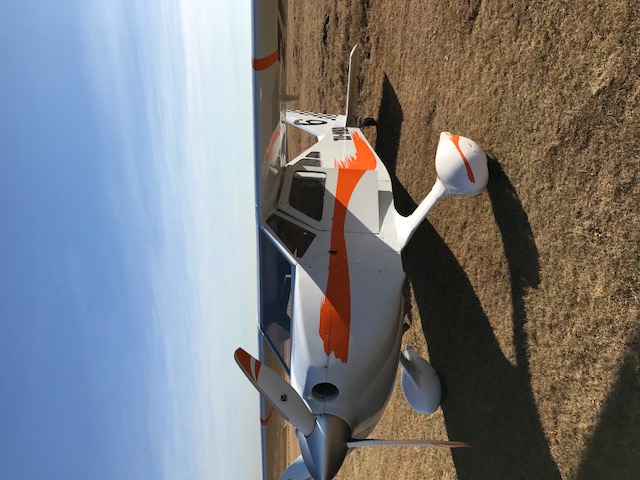
Hi Mark included a photo of the first completed BD4C aircraft in the
world. I helped a friend Marcel Viljoen, the ownerbuilder on the
project.We finnished the BD in 2011
A remarkable aircraft and design by Jim Bede.As you will see
the fuselage is a airfoil itself and contribute to lift.Very clever
We flew this past weekend in the Presidents Trophy Airrace in South
Africa and again the plane amazed me.Maybe not so soft on the eyes but
very efficient and fast.If you put the nose down slightly it pick up
speed immediately. It has a lycoming IO390 and 3 blade Catoprop
Le Roux Breytenbach
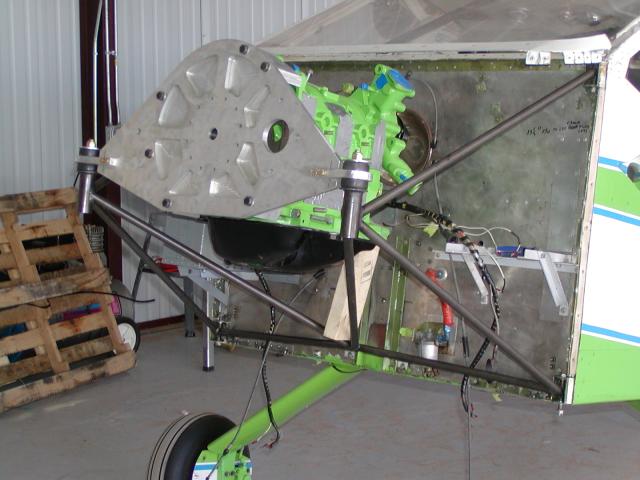
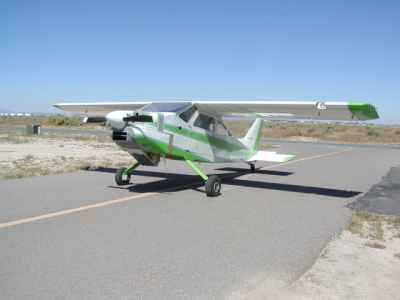
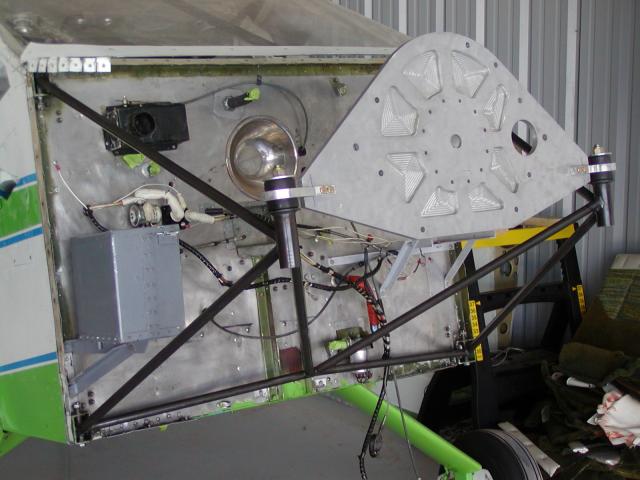
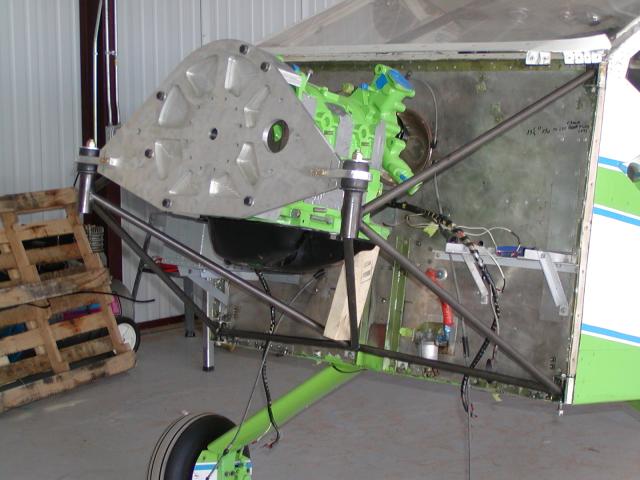
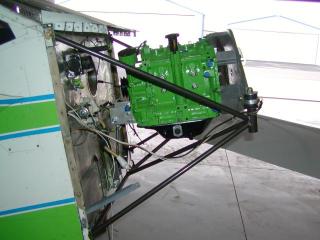
People have put rotaries in them and flown them. Here are some pictures.
The cooling system on this one is not the best.
Paul Lamar
The Rotary Engine free News Letter. Powered by Linux. If you want off
the list PLEASE let me know and I will remove you. ACRE NL web
site.
http://www.rotaryeng.net You Tube
http://tinyurl.com/beqqxas
Copyright 1998-2017 All world wide rights reserved.