I agree with the heat issues, because we found the 2 cycle
engines needed hot plugs to keep from oil fouling.
Paul, do I understand correctly that there is a certain amount of
oil injected or mixed in, for lubrication purposes? Is that oil
going past the plugs so fast that it is not a factor with regards
to oil/soot fouling?
I'm just trying to get my head wrapped around how differently the
combustion works with a rotary engine so I can understand the
physics a bit better.
Steve Thompson
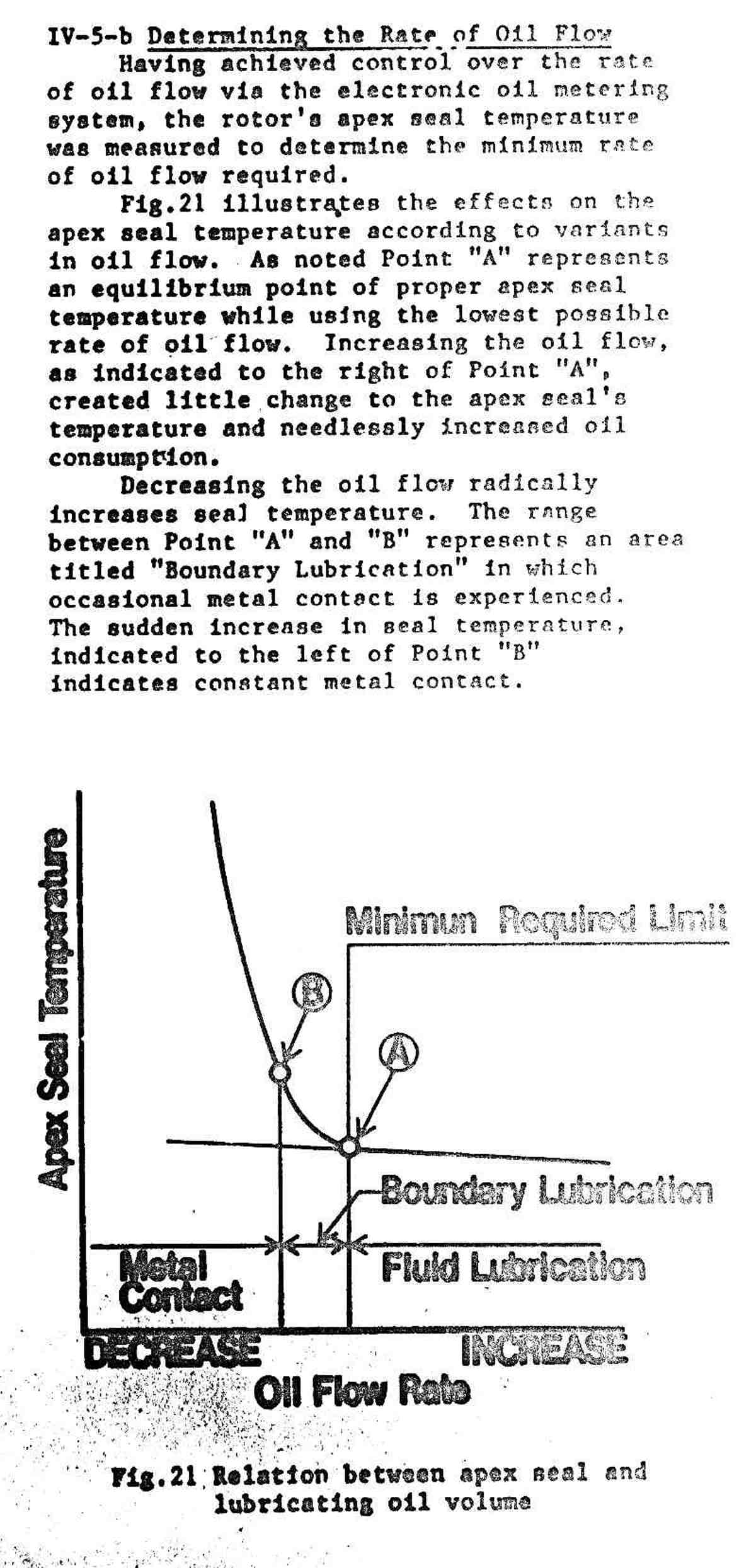
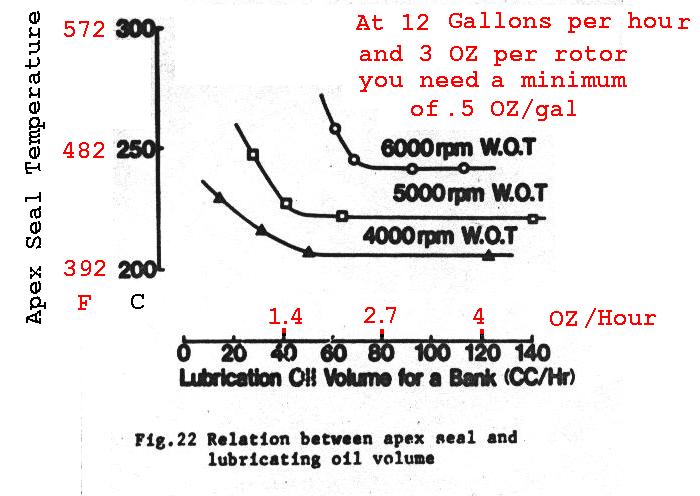
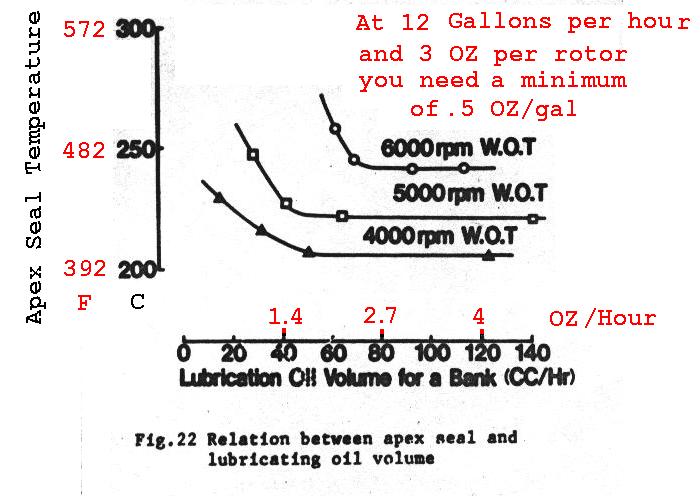
Normally it is only one or two ounces per gallon. No noticeably affect.
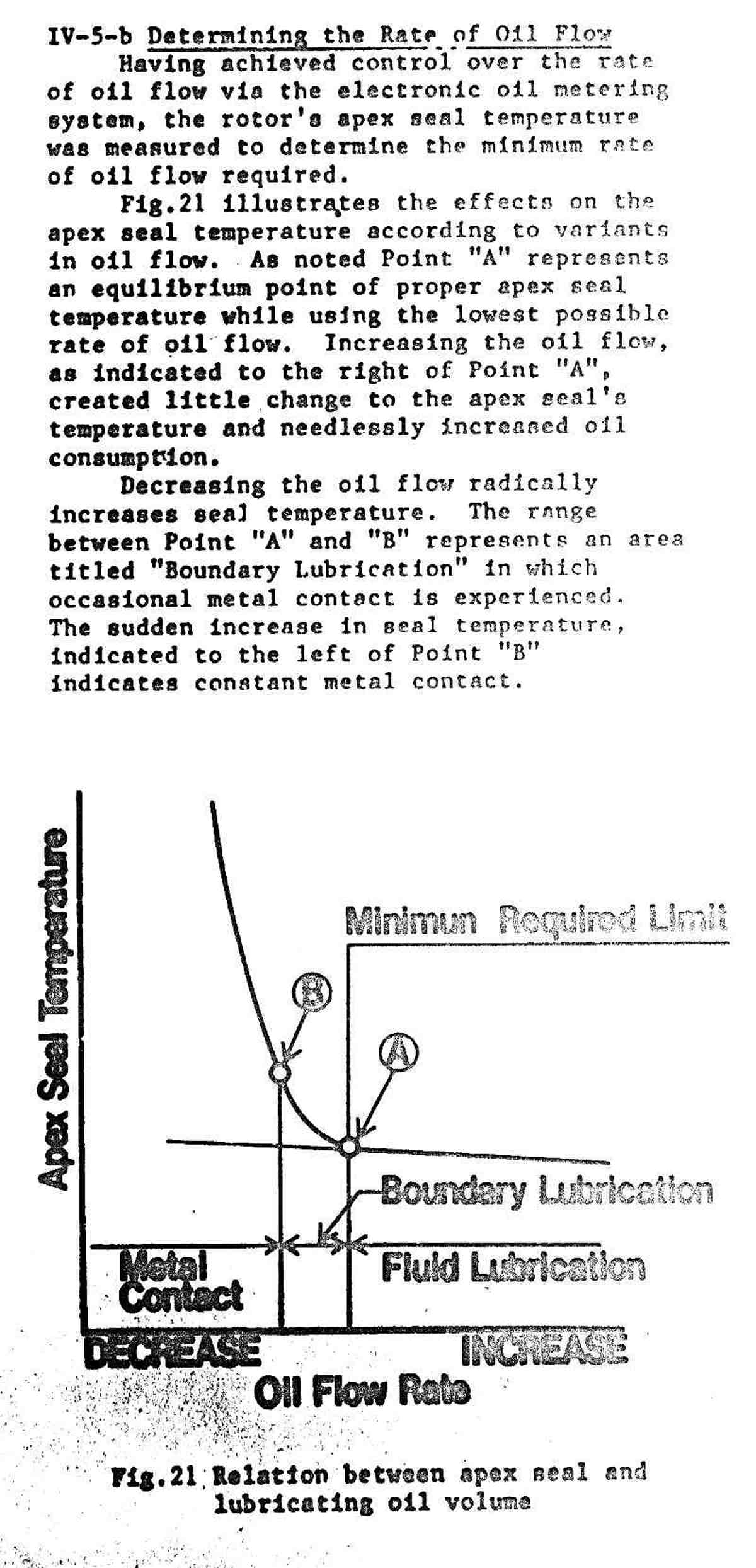
Up to 4 ounces per gallon is OK. Surprisingly cooling is the main concern.
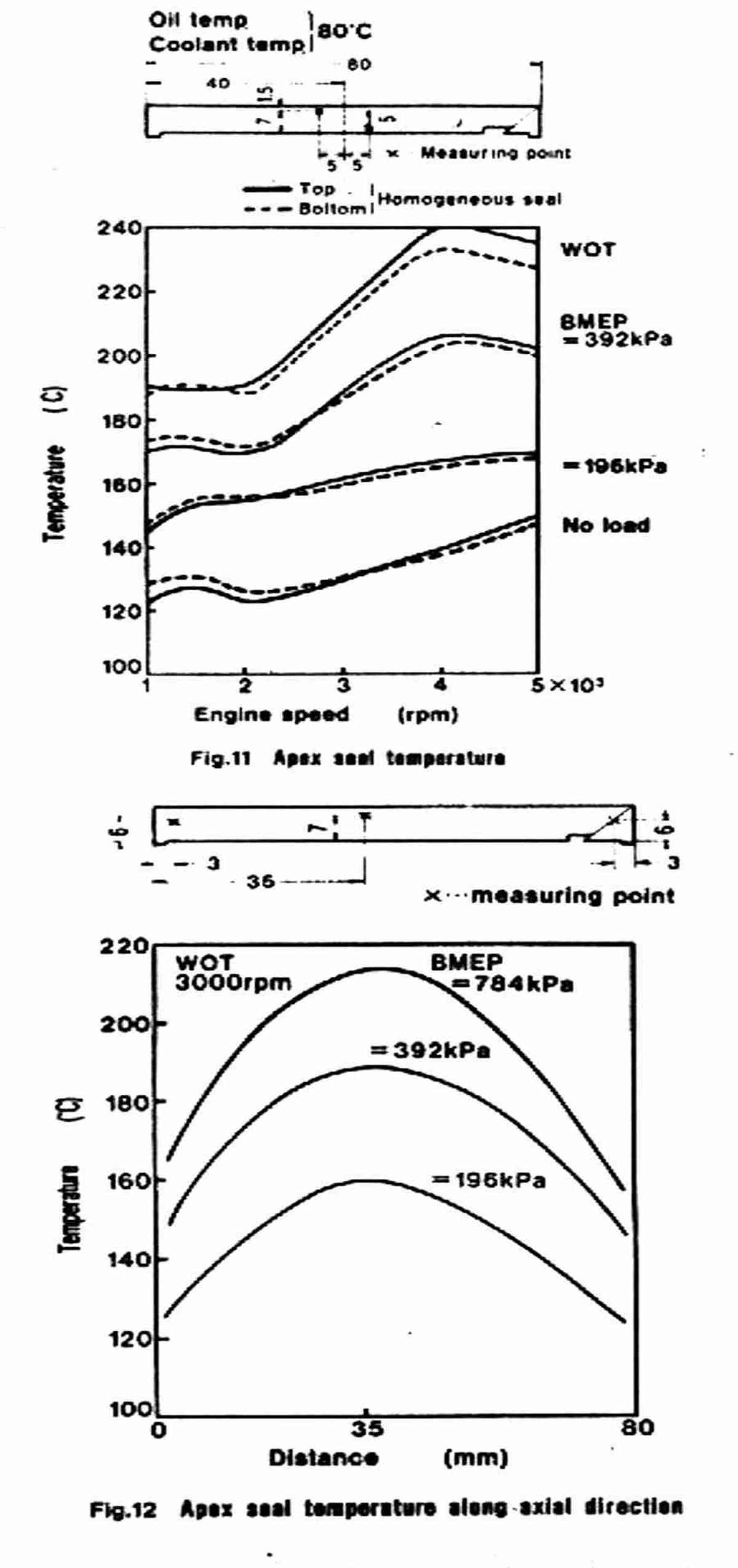
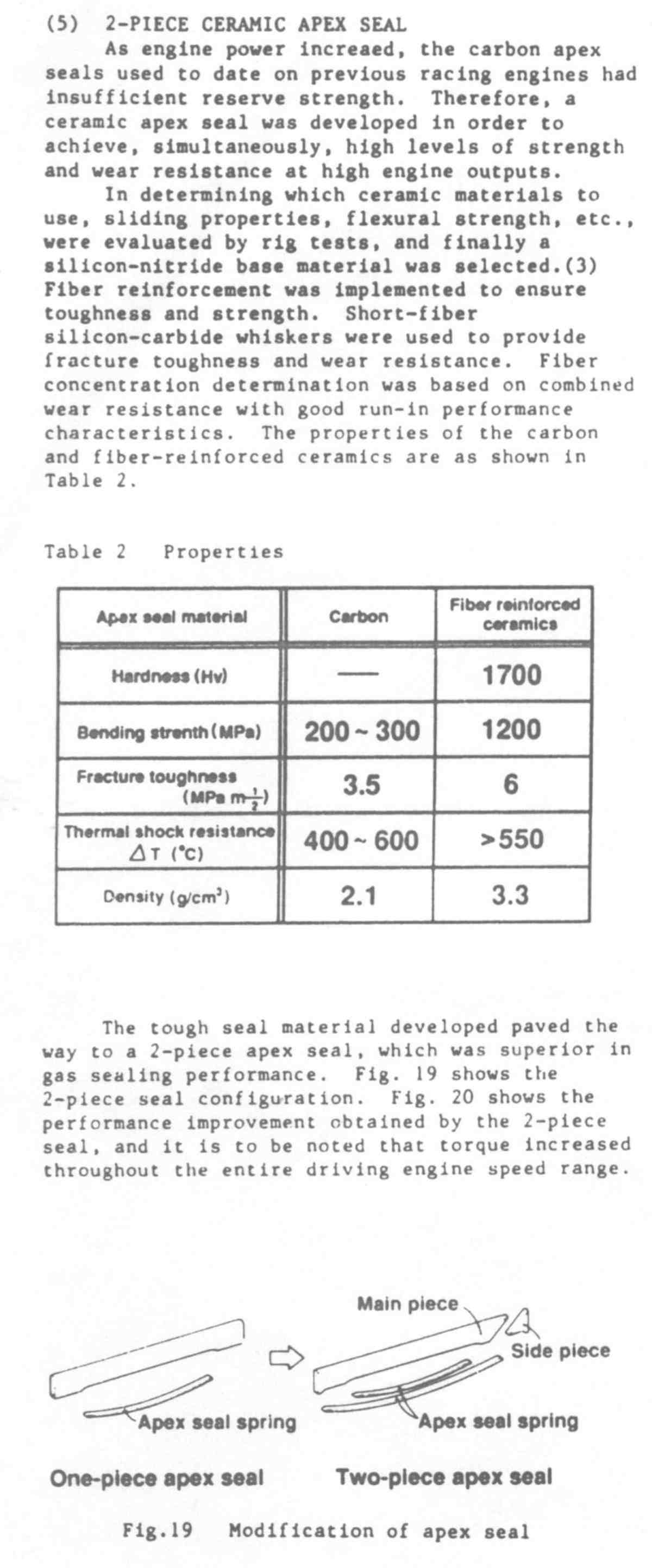
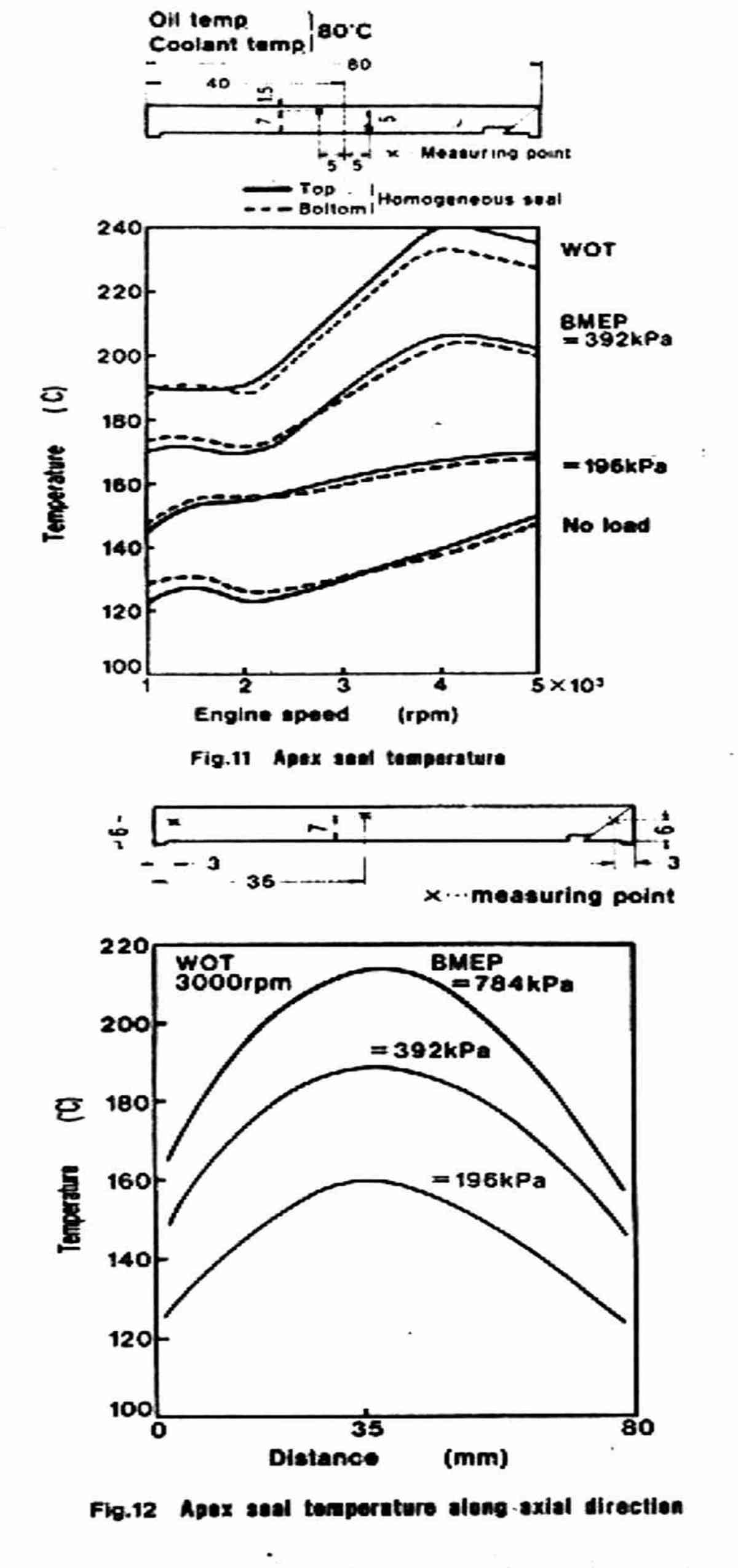
This chart is for the old cast iron seals. There is some R&D going on in
the UK
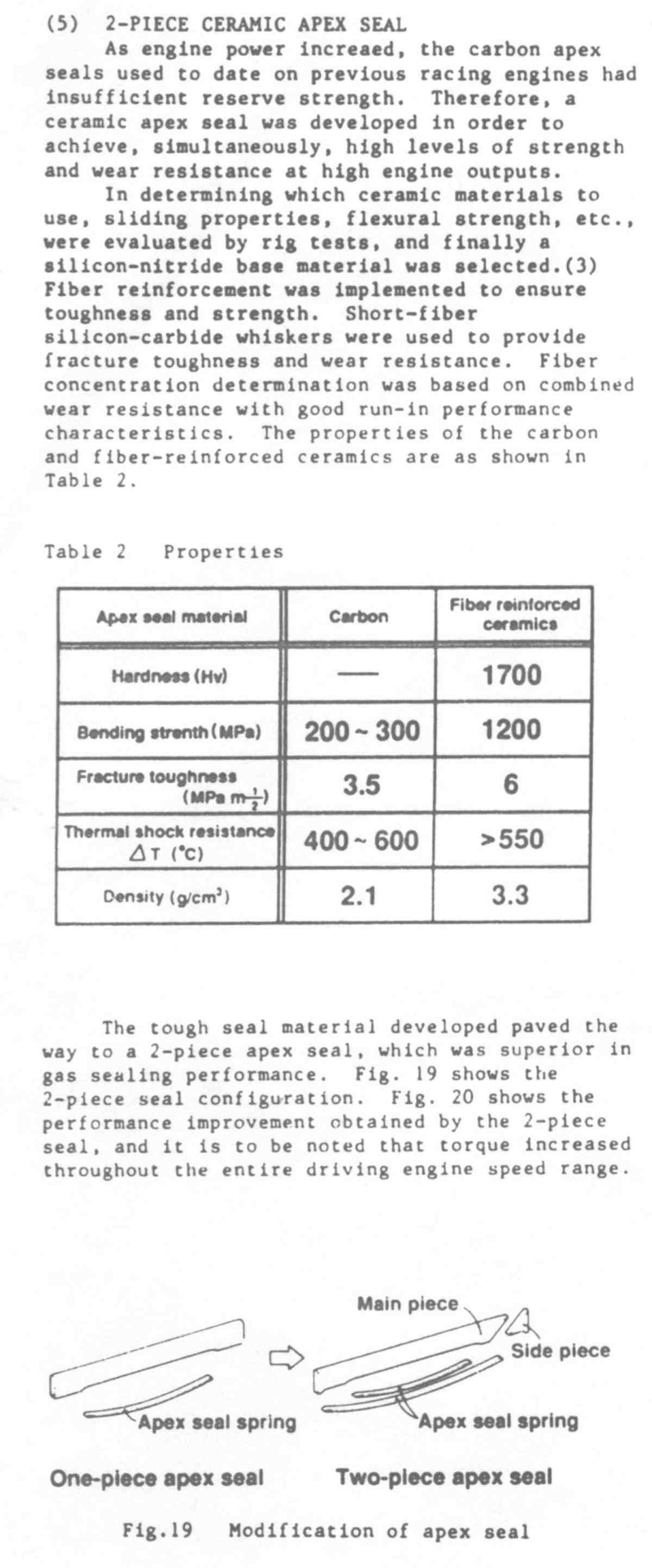
with no oil mixed for Iannetti silicon nitride apex seals. The fuel is
the only lubricant.
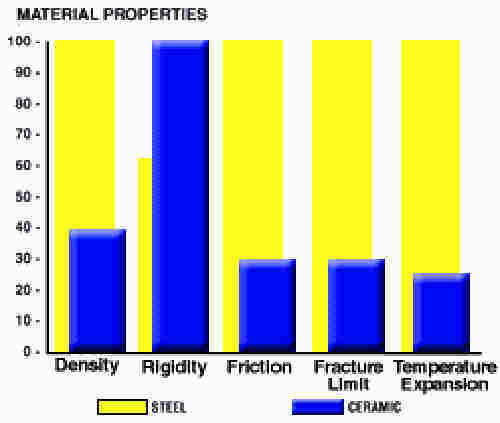
They are normally good to 1000 F while cast iron is limited to 500 F.
Mistral did everything they could think of to fracture them but
they were unable to damage them. Detonation and the whole nine yards.
We have Iannetti silicon nitride seals in the time to climb engine.
They are about $200 each and you need six.
There are some turbo charged rotary engine builders in the world that
still do not understand
this and they are trying to use steel apex seals. Steel is hard on the
chrome
coating while the projected life of the Iannetti silicon nitride seals
is 20,000 hours.
Not 2000 hours! 20,000 hours.
The Austro Wankel engine used in motor gliders have no TBO. Unlimited life.
I have no doubt they are Iannetti silicon nitride seals.
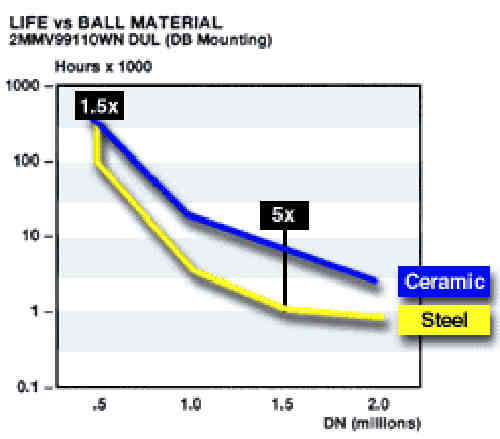
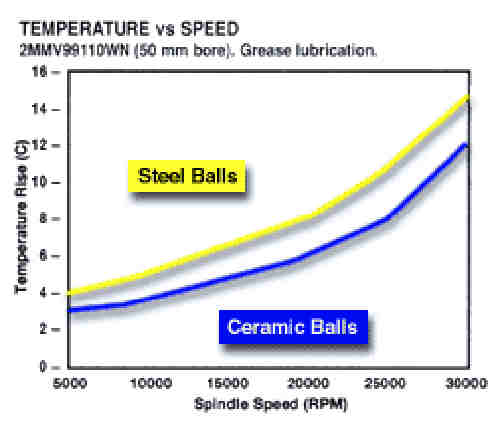
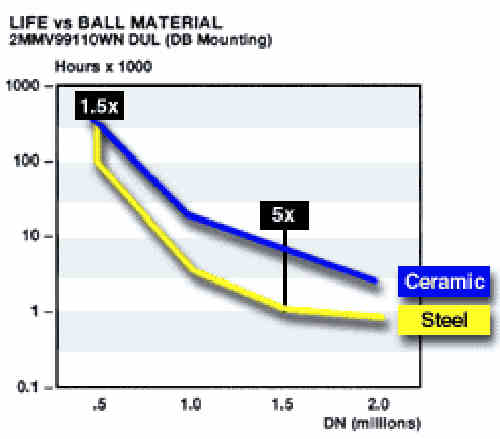
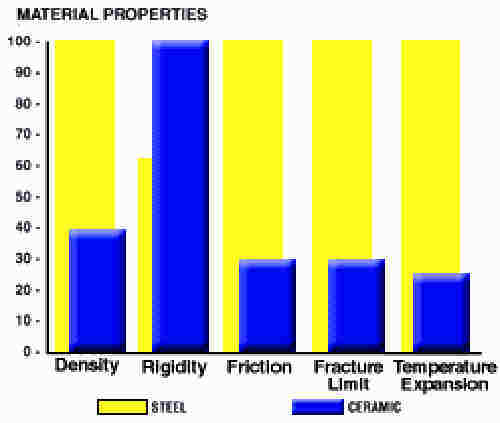
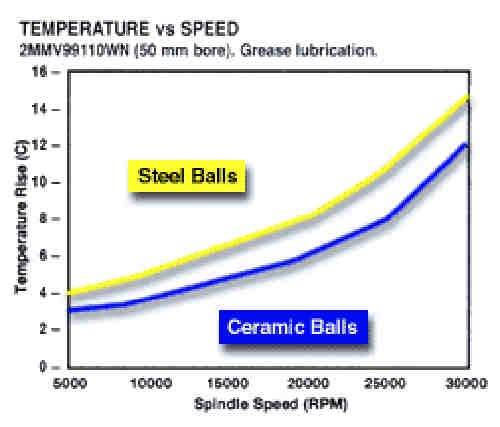
Silicon nitride ball bearings are widely used in F1 engines.
Here is a bunch of specs on the ball bearings.
Paul Lamar.
Hi Paul, You mentioned that the TTC engine uses Ianetti ceramic seals. I
have been researching that topic, a little bit. Some people indicate
that they are good for NA engines only, of detonation being a real
problem. Can you enlighten me and the group on your take, turboed versus
NA.
Steve Carlisle
There are a lot of people out there with opinions.
What are their names, what is their education and what have they done?
We have data to support their durability.
Try 85 inches of manifold pressure.
Paul Lamar
Paul, your achieves are not in question, I am trying to understand the
physics behind the
controversy of ceramic versus std apex seals, and detonation. This
controversy shows up
in the rotary racing world. I have only one aviation related source to
help me understand that issue.
Steve Carlisle
It is simple. At high boost and high temperatures iron seals tend to
fracture.
Especially if pre ignition occurs. High intake temperature can cause
pre ignition.
There are people out there that are anti rotary. They will spreed any
false rumors they can.
Fake news!
Paul Lamar.
I was under the impression that high intake charge temp was " detonation"
Steve Carlisle
I think detonation is not a good description. I think it is really
ignition before it's proper
time. In other words before 22 degree BTDC. At this point the combustion
chamber is still shrinking. The
fire is starting too soon and builds high pressure that conflicts with
the shrinking
combustion chamber. The result sounds like a hammer blow. It takes time
for the normal
fire to start and build pressure. That is why it is started at 22 BTDC.
That gives the normal
torque and pressure build up. If you fire it too soon that will generate
negative torque for a brief period
and sound like metal impacting metal..
This can happen unless you cool the air coming out of the compressor on
the turbo
charger. The fuel air mixture self ignites before the spark plug is
fired. This is very destructive
to a piston engine. A turbocharged P38 in WW II had an air temperature
limit of 147 degrees F.
A rotary will tolerate it if you have a strong apex seal.
A steel seal rather than the stock cast iron seal will work for awhile
but it tears
up the chrome plating on the rotor housing. The Iannette seals on the
other hand have a wear rate that allows 20,000 hours of LIFE!!!!
The stock cast iron seal is chosen for it's long life compatibly with
the chrome plated rotor
housing. In fact the cast iron piston ring has been used for 100 years
for the
same wear reasons in piston engines. All naval radial engines in WW II
used chrome
plated cylinder walls with cast iron piston rings.
http://www.rotaryeng.net/seals.html <http://www.rotaryeng.net/seals.html>
http://www.rotaryeng.net/history.html
<http://www.rotaryeng.net/history.html>
The Motec can be programmed to delay ignition if the air gets too hot.
It is not the total answer but it helps.
The reason the diesel works is the compression ratio is so high and the
the air is so hot in the
combustion chamber as soon as fuel is injected the fire starts with out
a spark.
Any time you compress air it adds heat.
Here are the physics gas laws. It is not just a good idea it is the LAW!
Paul Lamar
Thanks for that opinon, I found another opinion, from people we already
know,
https://www.nopistons.com/rotary-engine-building-porting-swaps-55/why-apex-seals-break-73325/
Steve Carlisle
No disrespect to Barry and Lynn but the key to the durability of the
apex seal is the oil mixed
with the fuel and how much? Or was it just the metering pump? Were all
the nylon lines functioning?
It is extremely important to cool the apex seal. That is what the oil
does.
Did Barry mix oil with the fuel and if so what kind was it? How much did
he mix?
It must be some sort of synthetic oil as the seal runs at 500 F. As you
heat steel or cast iron it gets
weaker. 500 F is the limit for steel ball bearings.
Only synthetic oil will function at 500 F. Mazda makes a big mistake by
not specifying Mobile One.
Chevrolet has no qualms about specifying Mobile One for the Corvette.
In Japan Idemitsu synthetic rotary engine oil is available and in the
US. It was used in the Le Mans winning engine.
I have used synthetic in most of my seven rotary powered cars some with
over 300,000 miles.
This is also important for the apex seal springs. Yes the seals are
known to jump over the hump
but I don't think that is cause for the seal to crack or fail. Perhaps
the springs were weakened
by heat.
The stock cast iron seals are really actually cast and there may be
flaws in individual stock seals that are invisible
to the naked eye and where not found by Mazda quality control. One
cracked seal is proof of nothing.
BTW there is another factor that affects oil temperature. You need to keep
the temperature of the oil down. Cooler oil cools better.
Using hot engine oil is not the best way to cool the apex seals.
Mixing oil with the fuel or using one of Richard Sohn Oil Metering Pump
Adapter
is a better way.
The intake air going into the p-port cools the rotor some what.
The cooling oil squirter then impinges on the back of the rotor face.
If the rotor is 800 F then the oil will absorb more heat than if the
rotor was 500 F.
This drastically increases the engine oil temperature.
Lynn told me it also affects the power the engine will generate.
My guess on that is the hotter the rotor the lower the volumetric
efficiency.
The oil cooling in the rotary is one third of the total cooling.
In a piston engine it is more like 10%.
Of course Iannetti seals have nothing to do with any of this info.
If your going to turbo use Iannetti silicon nitride seals that will
operate at
up to twice the temperature of cast iron.
Paul Lamar
The Rotary Engine free News Letter. Powered by Linux. If you want off
the list PLEASE let me know and I will remove you. ACRE NL web
site.
http://www.rotaryeng.net You Tube
http://tinyurl.com/beqqxas
Copyright 1998-2017 All world wide rights reserved.