12
Hey Paul,
Based on your book and our many discussions, it looks like the
largest water radiator I can practically fit in front of the engine
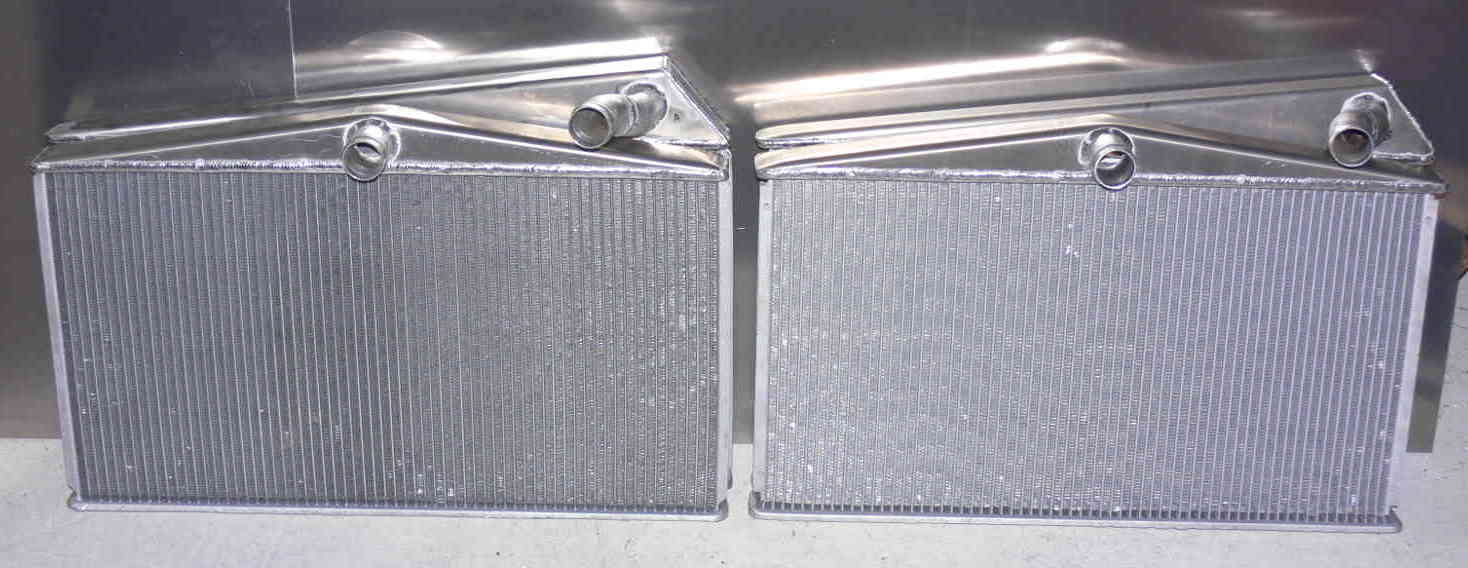
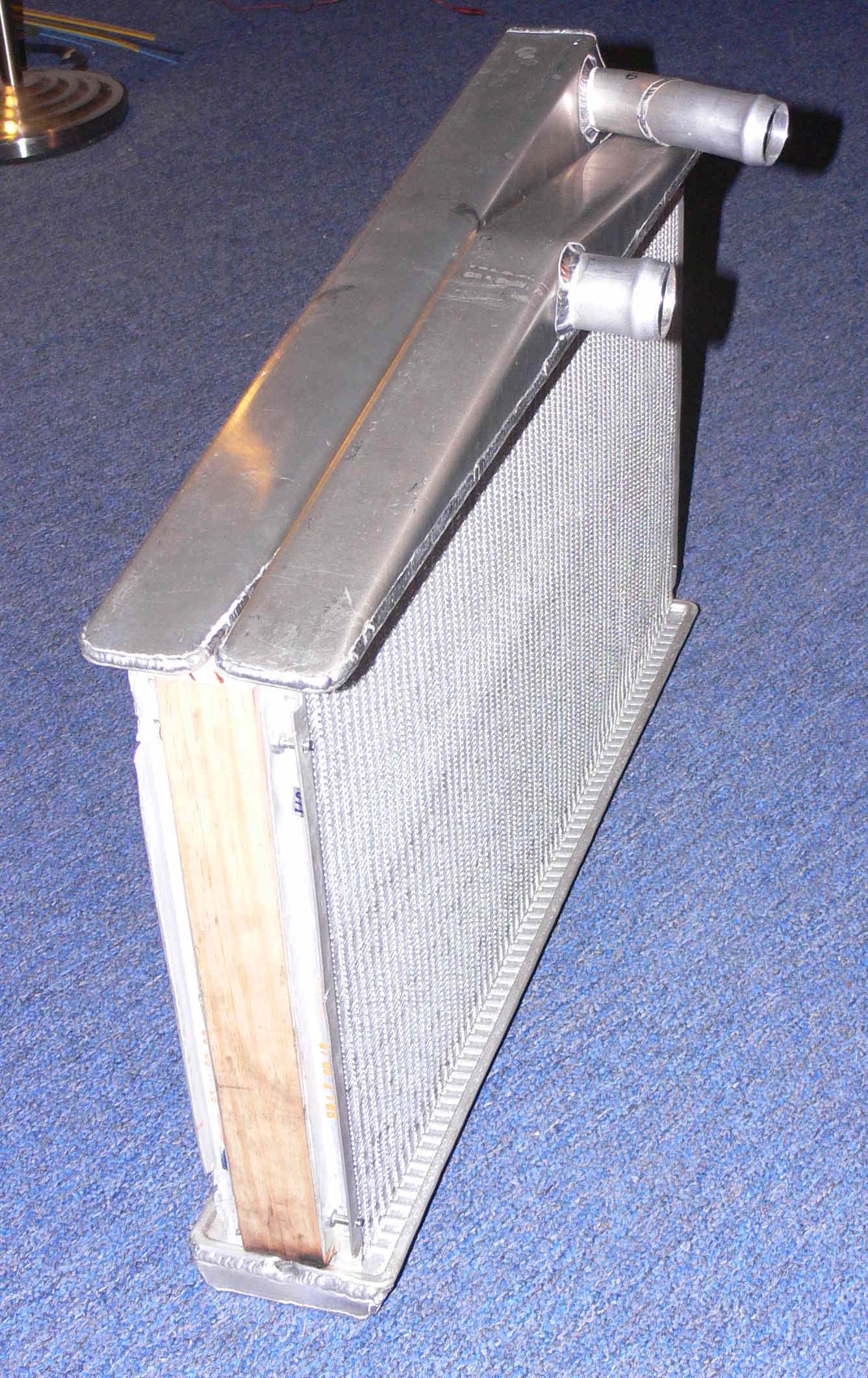
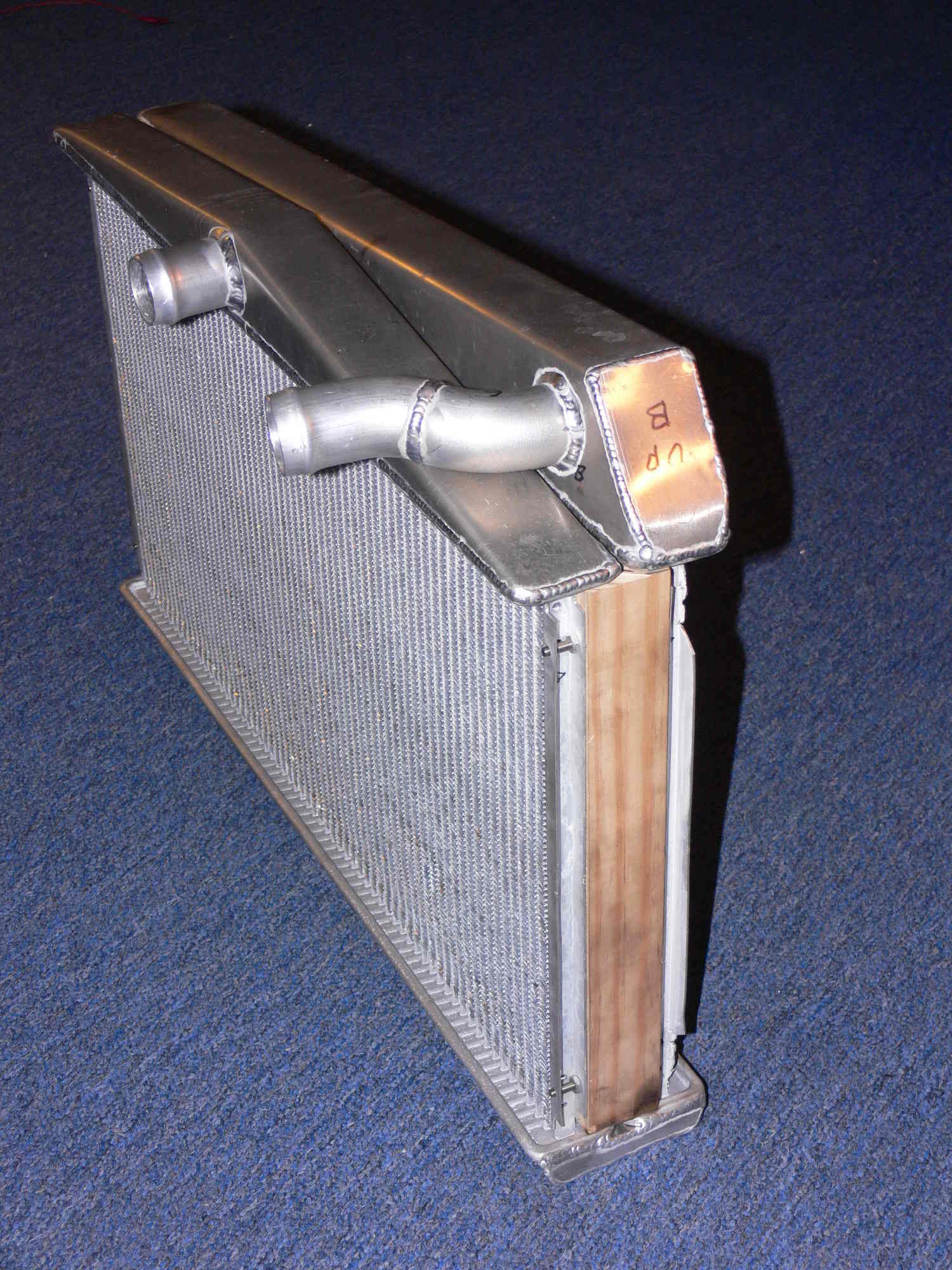
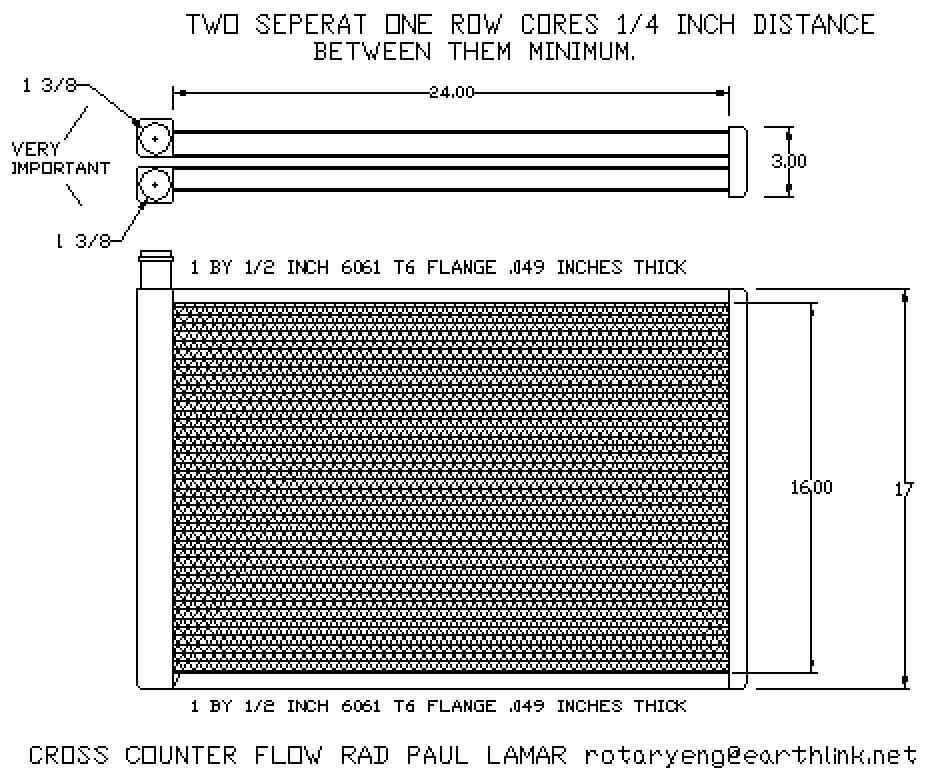
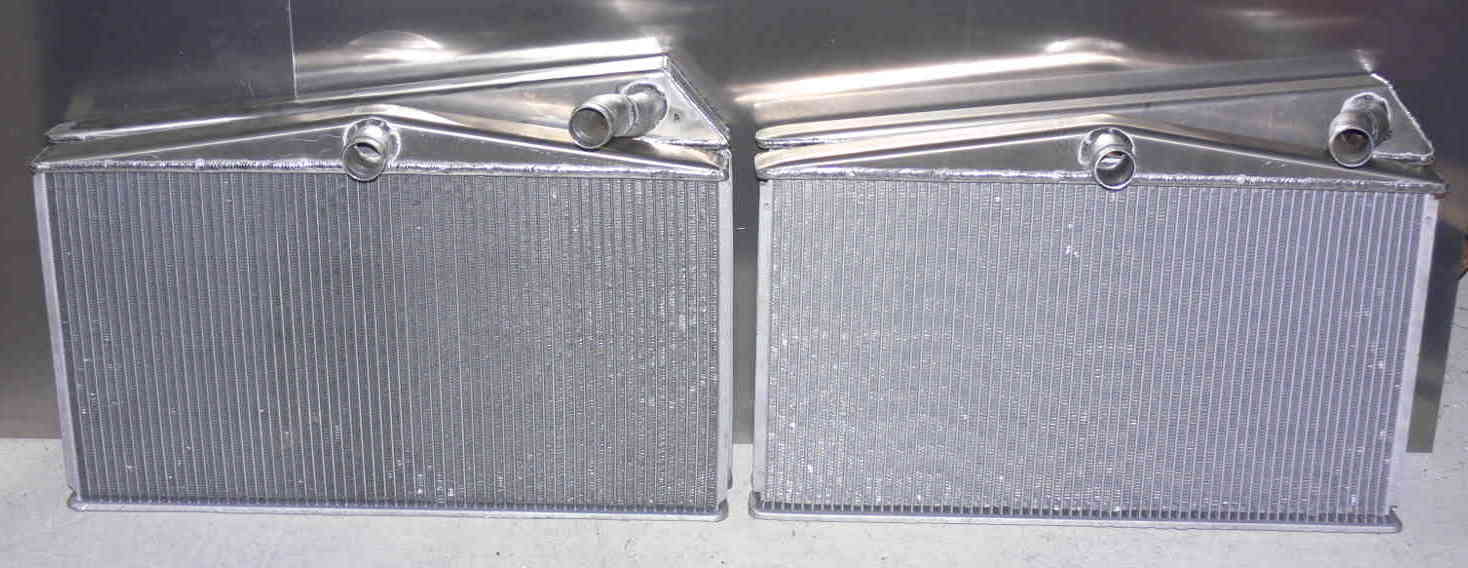
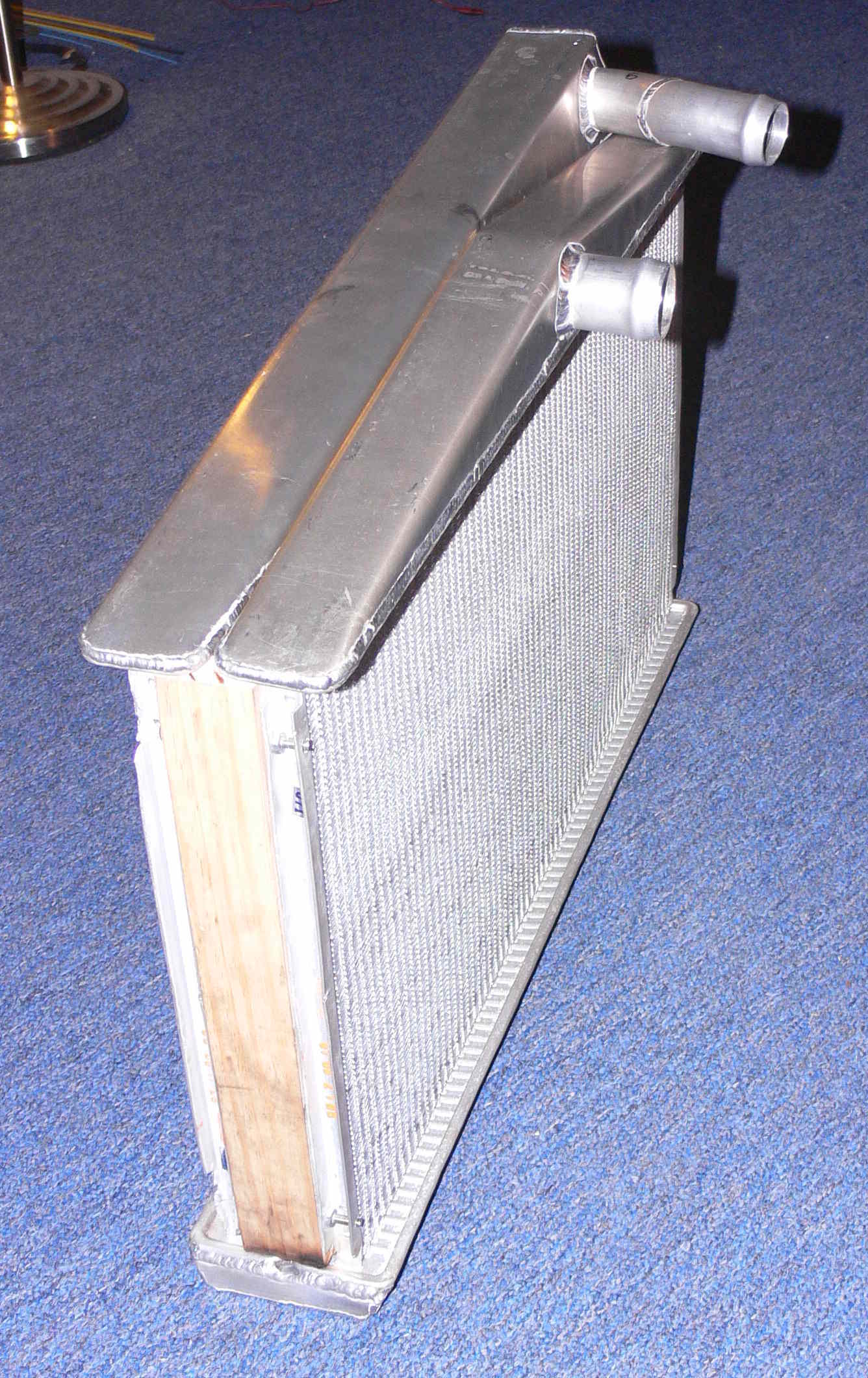
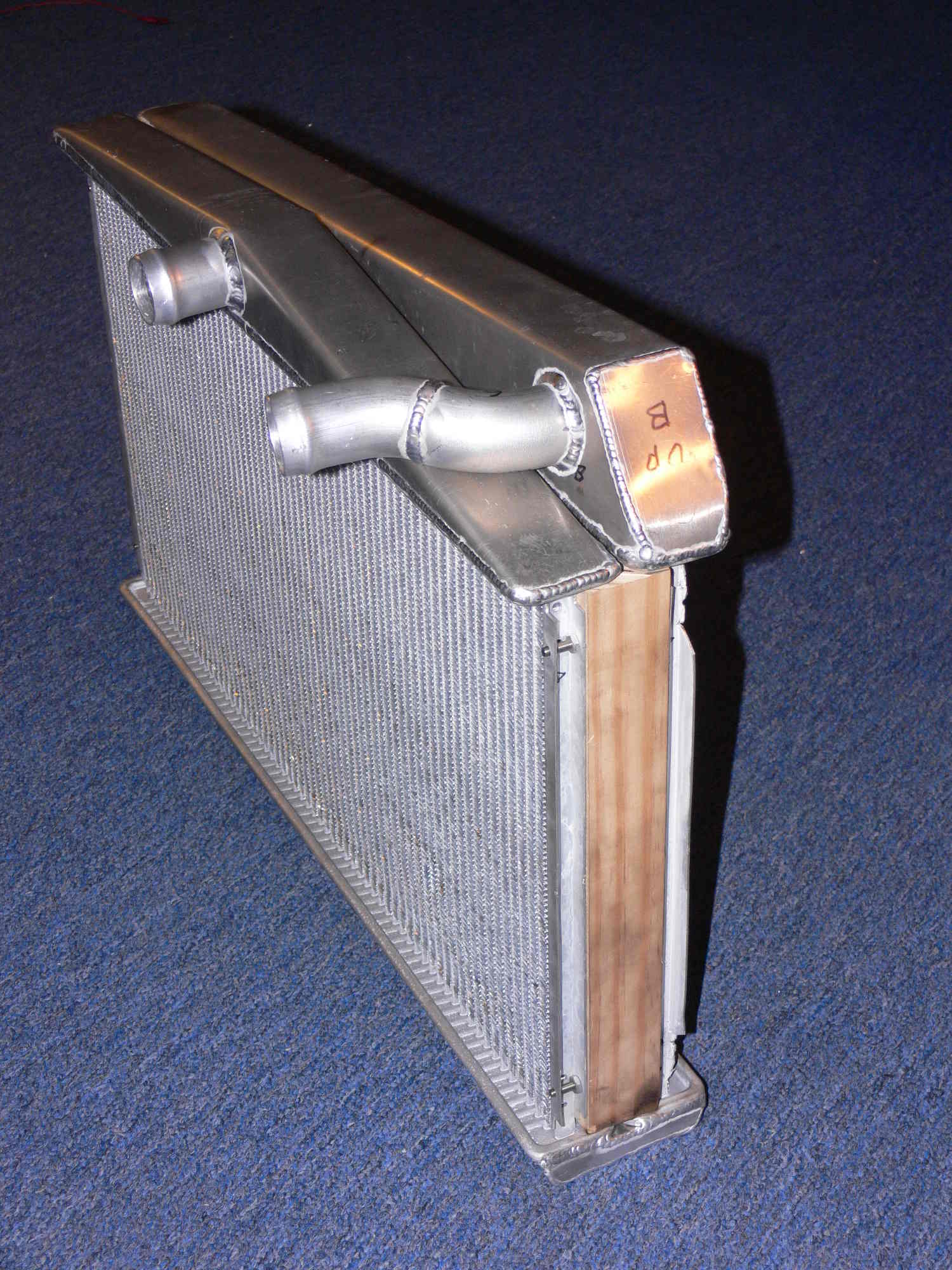
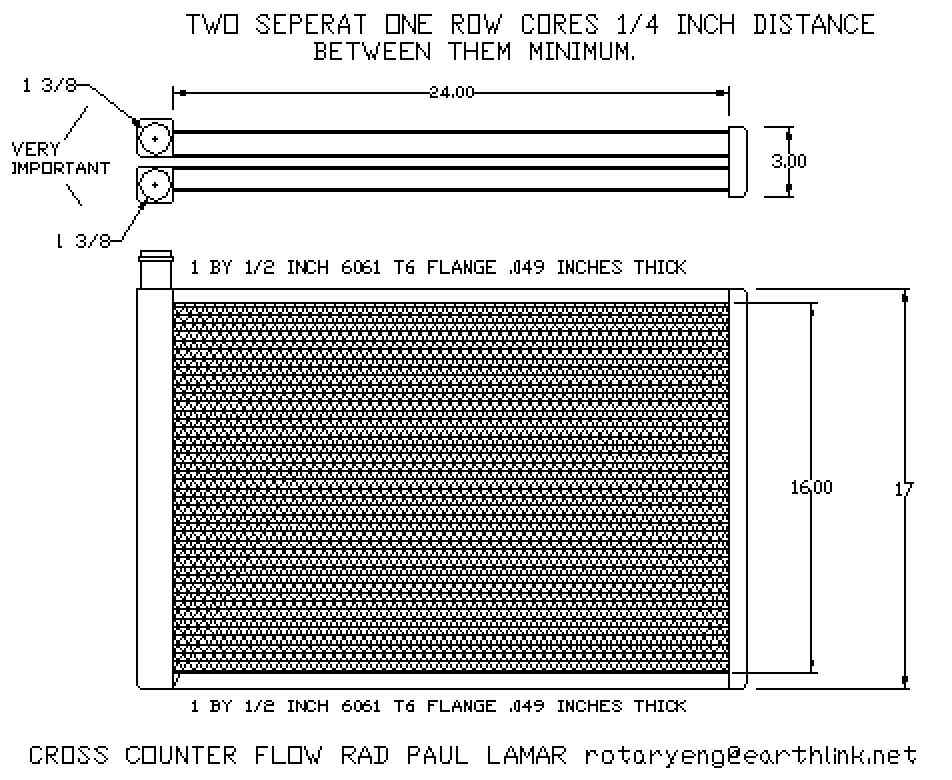
will be a pair (cross-counterflow) of about 20x16” radiators, using
a 45 degree mounting angle. The plumbing is feasible in this
configuration.
The stock RX8 radiator is 17.5x26x2”, with a core area of 14.5x25 =
362 sq inches of frontal area. It is about 1.5” thick. Total
cooling volume is 543 cubic inches, but this is way too wide to fit.
The Neon radiators are 24.7x14.7x2”, with a core area of
23.5x11.7x1.5”. This is 274 sq inches and 411 cubic total volume.
They use a 1 3/8” fitting as does the RX8. However they are still
too wide. If I cut 4-5 inches off one end of the neon radiator to
make if fit, I would have about 20x11.7 frontal area of core. This
is 234 sq inches or 351 cubic inches. Two of these would total 468
sq inches and 700 cubic inches. The two of these together will be
have more frontal and volume area compared to the stock radiator.
My questions are: Will reducing the radiator size (each will have a
volume of 64% of stock), plus having twice as long of a fluid path
through 2 radiators, possibly present a significant resistance to
water flow?
I assume we are still looking at intake ducts of about 15% of the
frontal area, which in this case would be 35 square inches. This
would allow ducting for other functions (air intake, cooling tube
and oil radiators). I have a couple of decent options for the oil
coolers, and should be able to have larger areas and volume than
stock.
Should we be using smaller main pulleys to under drive the water
pump and alternator due to a target RPM of about 7,000?
Thanks,
Scott Gettings
Your core thicknesses are off. The Neon is only about 1 inch thick or
less. Some modern rads are 5/8th inch thick. The old rule of 600
cubic inches does not apply anymore. The Kays and London wedge or
even better S shaped diffusers are far more important.]
The Kuchmen and Weber will work if the duct is long enough. It is
now more like 450 cubic inches.
Which of these configurations are most like what you have in mind?
Mounting the rads back by the gear box is a good idea using the Kays
& London wedge looks like the best. The ducts can be quite thin
alongside the engine. The prop can suck some air out.
Paul Lamar
Hey Paul,
The side configuration will work OK for the oil coolers, but the water
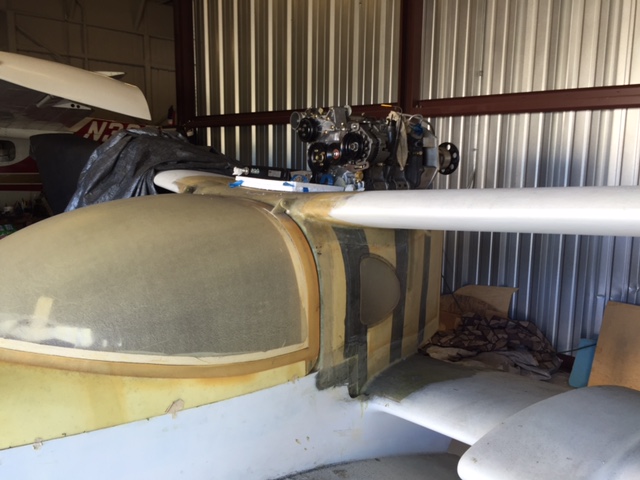
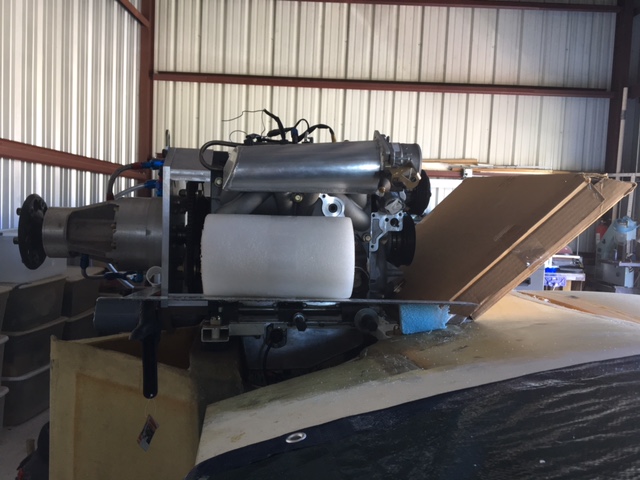
radiator(s) needs to be upfront for a variety of reasons. I can duct
around the sides of a front radiator if it is not too wide, on the order
of about 20 inches. So a K&L duct should be feasible for the side or
rear oil coolers, as per your drawing. With the front rads angled at
45degrees, the duct up front would obviously be very short: just a few
inches on the top and about 15” on the bottom.
Do you think that a pair of Neon radiators (plumbed in serial as a
counterflow) cut down to about 20”wide will work from a water
flow/pressure perspective?
Do you have a recommendation regarding the main pulley size? Stock or
under Drive?
Thanks
Scott Gettings
Wide? Do you mean along the length of the tubes? I don't think that is
possible.
However there are companies out there that make furnace brazed rads from
scratch.
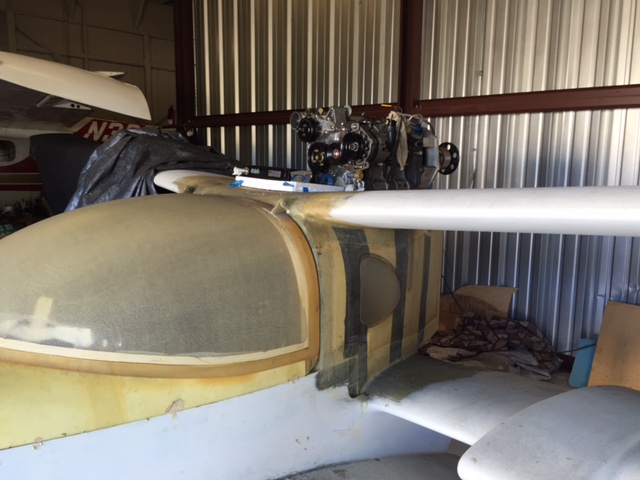
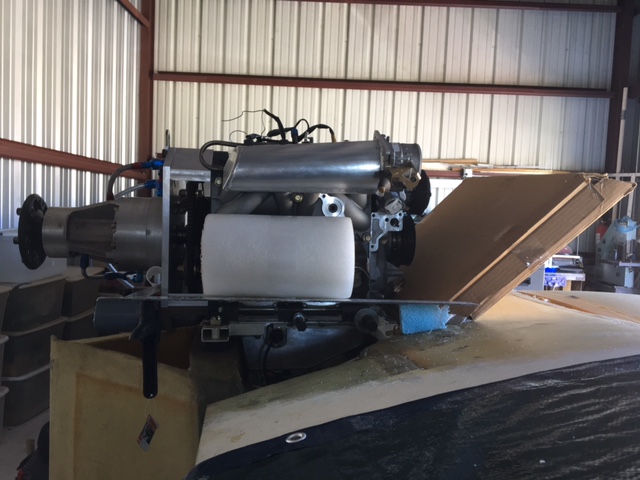
Send me a sketch of what you have in mind. I take it you are planing on
mounting
them on the cabin roof in front of the engine.
There is nothing wrong with a bit of plumbing :-)
Stock pulley is fine. You will not turn 11,000 RPM :-)
To cut down the width of those cross counter flow header tanks
is going to take a tig welding pioneer :-) I suggest a lot of wet rags
up under the headers. As it was we had a leak in the TTC cross counter flow
due to tig welding.
Those rads are brazed at only 1100 F.
Ideally the headers should be designed for cross counter flow before
they are brazed.
Paul Lamar
The Rotary Engine free News Letter. Powered by Linux. If you want off
the list PLEASE let me know and I will remove you. ACRE NL web
site.
http://www.rotaryeng.net You Tube
http://tinyurl.com/beqqxas
Copyright 1998-2017 All world wide rights reserved.