12 f
Hi Paul,
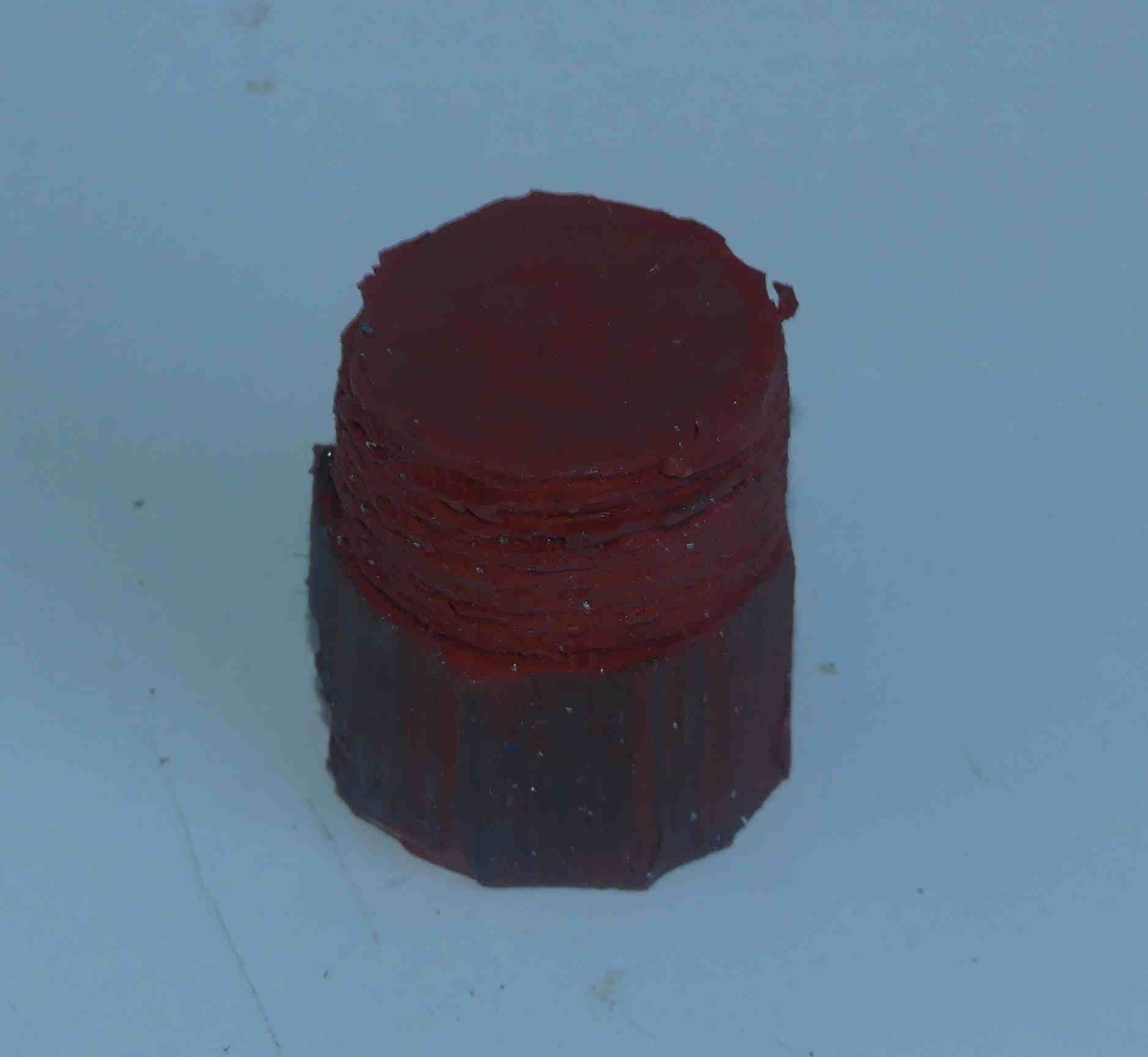
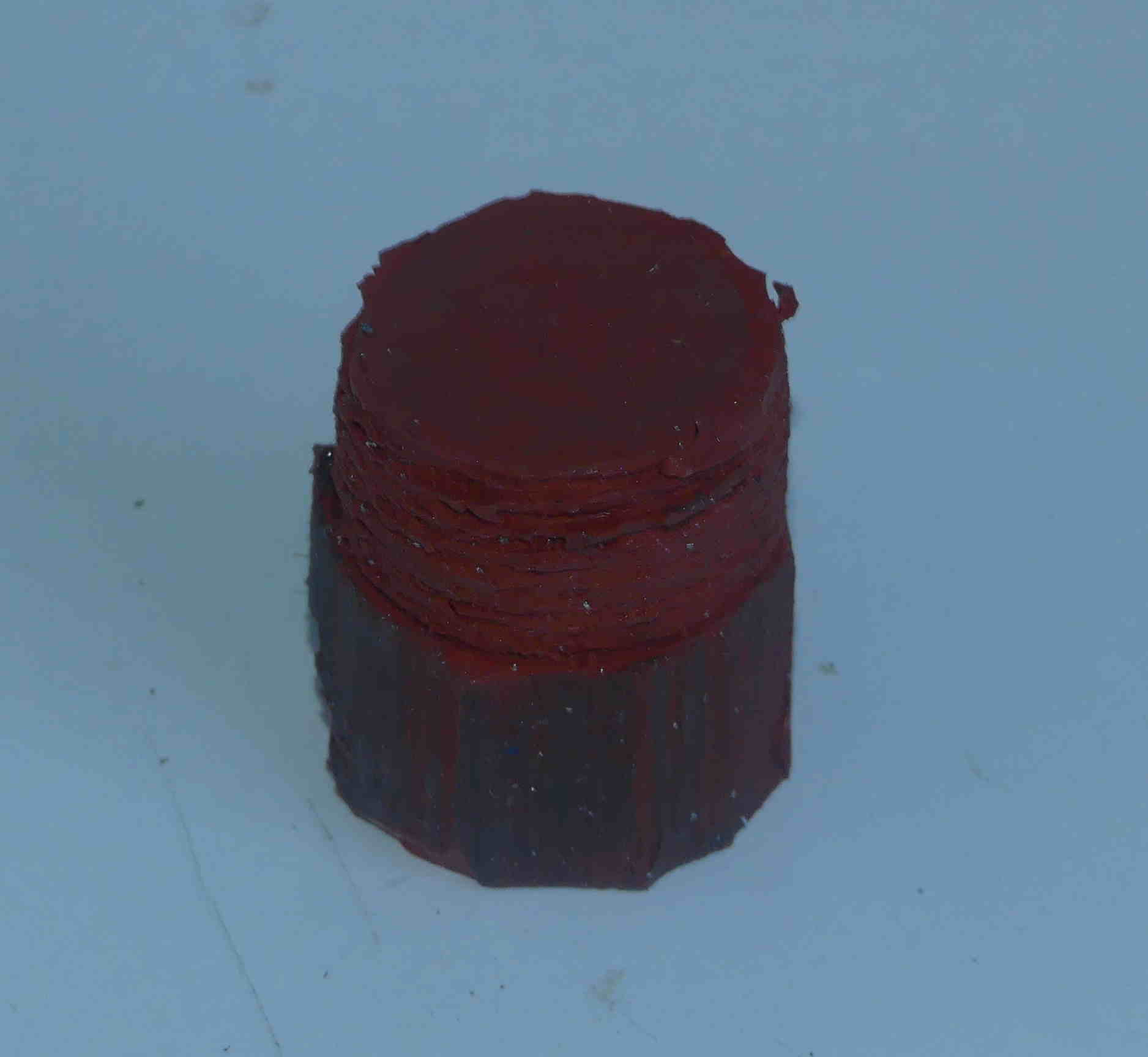
This is the cush drive I have built for my single rotor.
It is machined out of 6061T6 billet on an old lathe and cheep Chinese
mill. The diameter is approx 4.7 inches, the inserts are urethane rod
at 1.25 inches in diameter. I am going to start with the green
urethane which is the lowest Shore hardness available here. the photo
shows a yellow grade which is slightly harder. The rod cuts well with
a sharp tungsten blade on a drop saw.
I have also had a new flywheel machined from billet 4140, as I was
not happy with the flex plate. The whole assembly has been
dynamically balanced.
Andrew Campbell.
Yes. That looks like it is going to work. Good idea. You should use
silicone rubber. Good to 500 F. There is a certain amount of energy
going into those dampers.
Urethane is only good to about 200 F.
Paul Lamar
You will need a sleeve or something around the outside of the
inserts. After they have deformed a little they will no longer be
contained and will fly out.
Bill Bradburry They will have to deform a great deal before that
happens , if this becomes a problem I will use a slightly harder
compound. I don't really have the machine tools for production but I
am happy to supply a drawing. Andrew.
Andrew, What format can you support with the drawing? I would be
grateful for a copy. I have Rhino.
Craig Smith
Hi Craig, I machined this from a sketch, I don't have any cad
drawing programs so the best I can do would be a drawing with
dimensions. I am going to do some torque measurements shortly to
decide on the Shore hardness that I will be using . Bill had a valid
point, I am only going to produce 130hp max at 7500 rpm so the torque
will be in the region of 91ft/lbs. this can be applied with a torque
wrench no problem. I will then be able to measure the deformation of
the compound and know the most appropriate grade to use.
If urethane does not hold up in this application and I suspect that
the way the compound is being loaded, it will, then I will look at
other materials.
The product is readily available in NZ so if you have a problem with
sourcing it I would be happy to ship it to you.
I will do a Drawing and post it, might take a few days. The
dimensions are able to be modified to suit your particular set or
conditions, the only thing to bear in mind is the way the rubbers
are captured. The two halves are identical. The only thing that may
vary would be the height and bolt fixings. The overall outside
diameter could be increased and more rubbers inserted for higher
torque requirements. As the rubbers are held in close contact with
aluminum I am expecting a good rate of cooling on the compound.
Andrew Campbell.
The torque pulses are severe in a one rotor so urethane is not going
to work for long. Our TTC coupling is working great with up to 650
HP. Most power so far has been 500 HP. That is 500 degree Fahrenheit
silicon rubber you see in the pictures.
Paul Lamar
Are the most current versions of the CAD drawings available to share?
We have lots of CNC and fabrication resources here on the Space
Coast. I could get estimates on some small volume production runs.
Scott Gettings
The exact design depends on the gear box input shaft. Here is the
jpg and iges drawings for the design.
Paul Lamar
Andrew,
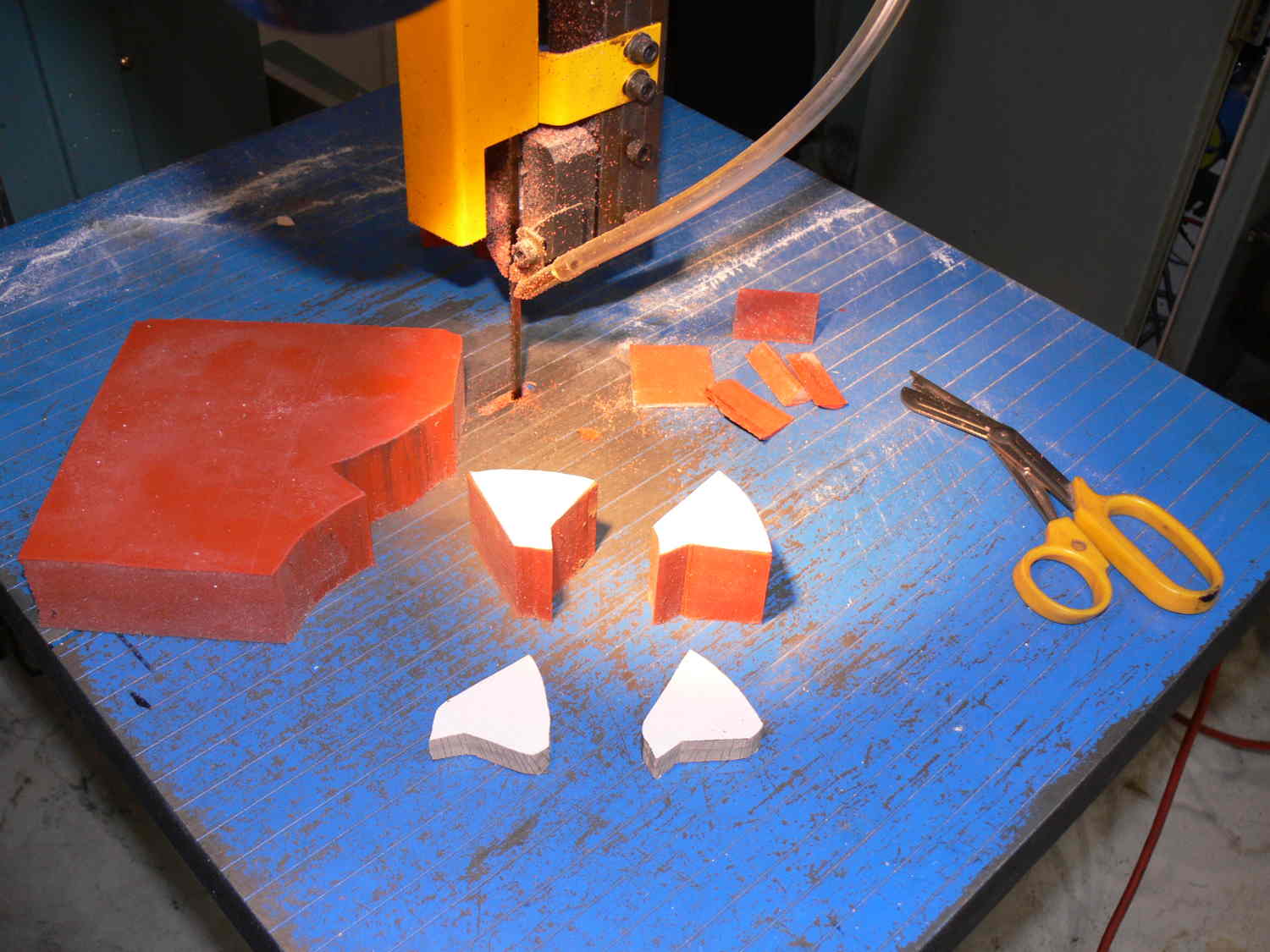
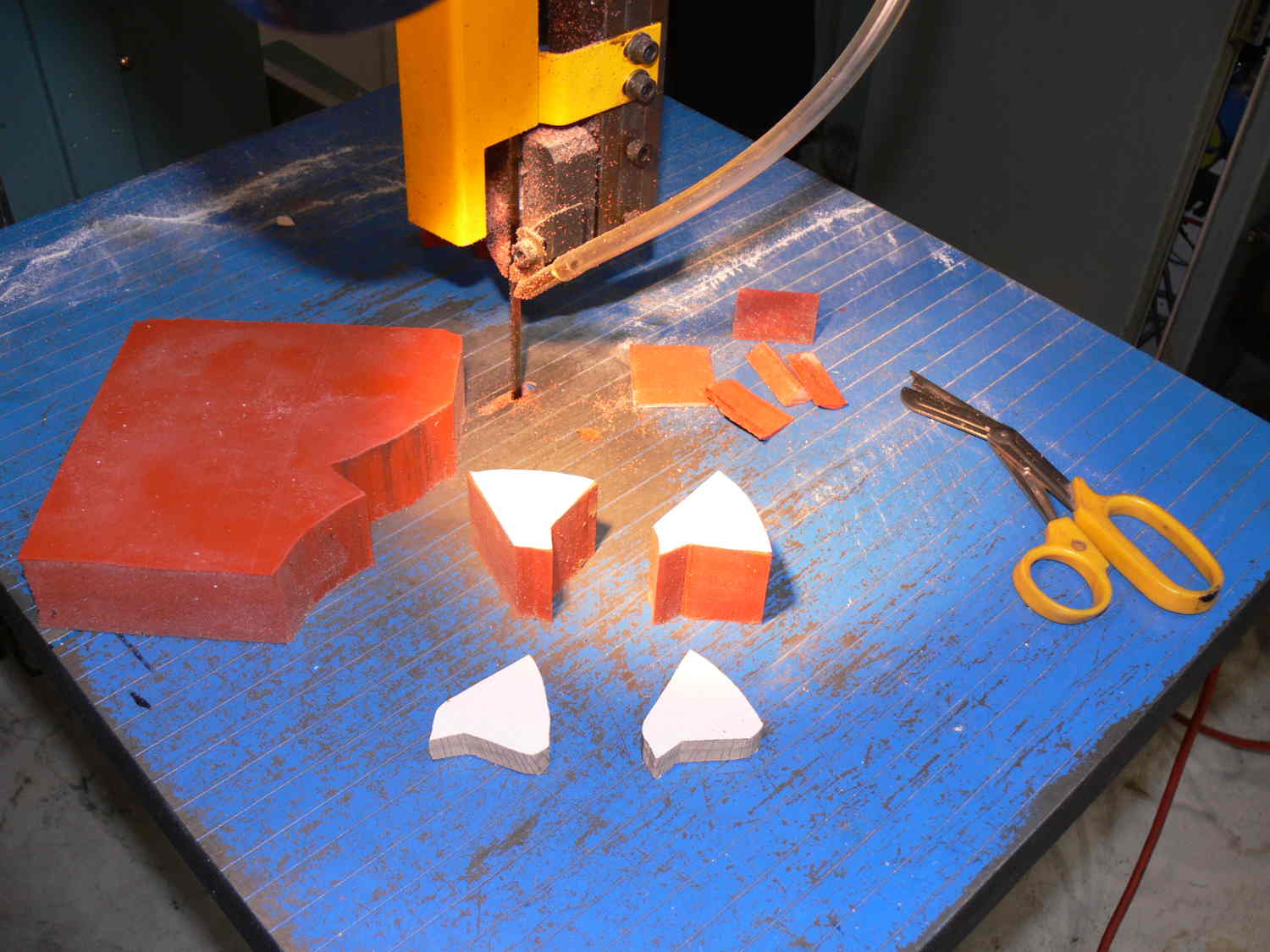
Here is some round silicone rubber rod you may be able to use from
McMaster. If you cannot have it shipped directly to NZ I can buy it
for you and ship it to NZ Let me know what lengths you need to cut
the cost of shipping.
Paul Lamar
Hi, from [Andrew] your photos; I would radius the inside and outside
corners of the
metal pockets for the elastomer rods. In one of the charts that Paul sent
you can see that the peak torque of a single rotor is at least twice
that of average
torque. The elastomer has to deform to work and sharp metal edges will chew
the rods up in short order.
Murry I. Rozansky
Thanks Paul. The diameter needs to be 1.25" I hope to be able to
have the complete spider cast here. A spider is a term we give to the
rubber component if the individual components are held together as a
complete casting, a bit like a spiders web. This allows the
unit to hold together by overcoming the problem of centrifugal effect. I
am about to tests on the rubbers that I have to better determine the
Shore hardness that I need.
I remember now that the diagram on torque pulses was posted some
time ago. I will let you know how I get on.
Murry,
Yes absolutely the unit is still a work in progress.
Andrew Campbell.
Unfortunately 1.25 round is not available. One inch is the largest.
If made from a block it does not turn well on a lathe. It band saws much
better.
Paul Lamar
------------------------------------------------------------------
Please add your questions or comments at the end of the thread.
Not the beginning.
I am going to enforce that rule. If people don't do that it will not
be forwarded. My ISP changed the rules.
The Rotary Engine free News Letter. Powered by Linux. If you want off
the list PLEASE let me know and I will remove you. ACRE NL web
site.
http://www.rotaryeng.net You Tube
http://tinyurl.com/beqqxas
Copyright 1998-2017 All world wide rights reserved.