12 g
Does anyone have a rd1c installation guide or advice. I want to
check before bolting the psru back up for engine runs. Wasn't there a
viton seal recommended to seal the bearing/thrust washer stack
against the motor mount plate? Alex Molteno Yes but I recommend
Teflon. Paul Lamar
I will see if I can dig up my RD 1C manual and email it to you
directly. Scott Gettings.
Alex, The teflon disc goes between the input gear and the inner
surface of the planetry reduction to stop metal to metal when you
pull power and the input shaft can be drug forwards. The prop shaft
goes through the center of the teflon disc. Bearings go against the
plate, and make sure you have a low pressure seal in the plate. A low
pressure seal has one lip only, a high pressure, two or double lip.
Little pressure in the housing so the low pressure seal does a much
better job of sealing as is more flexible.
Neil Unger.
Ok thanks Neil,
Alex Molteno
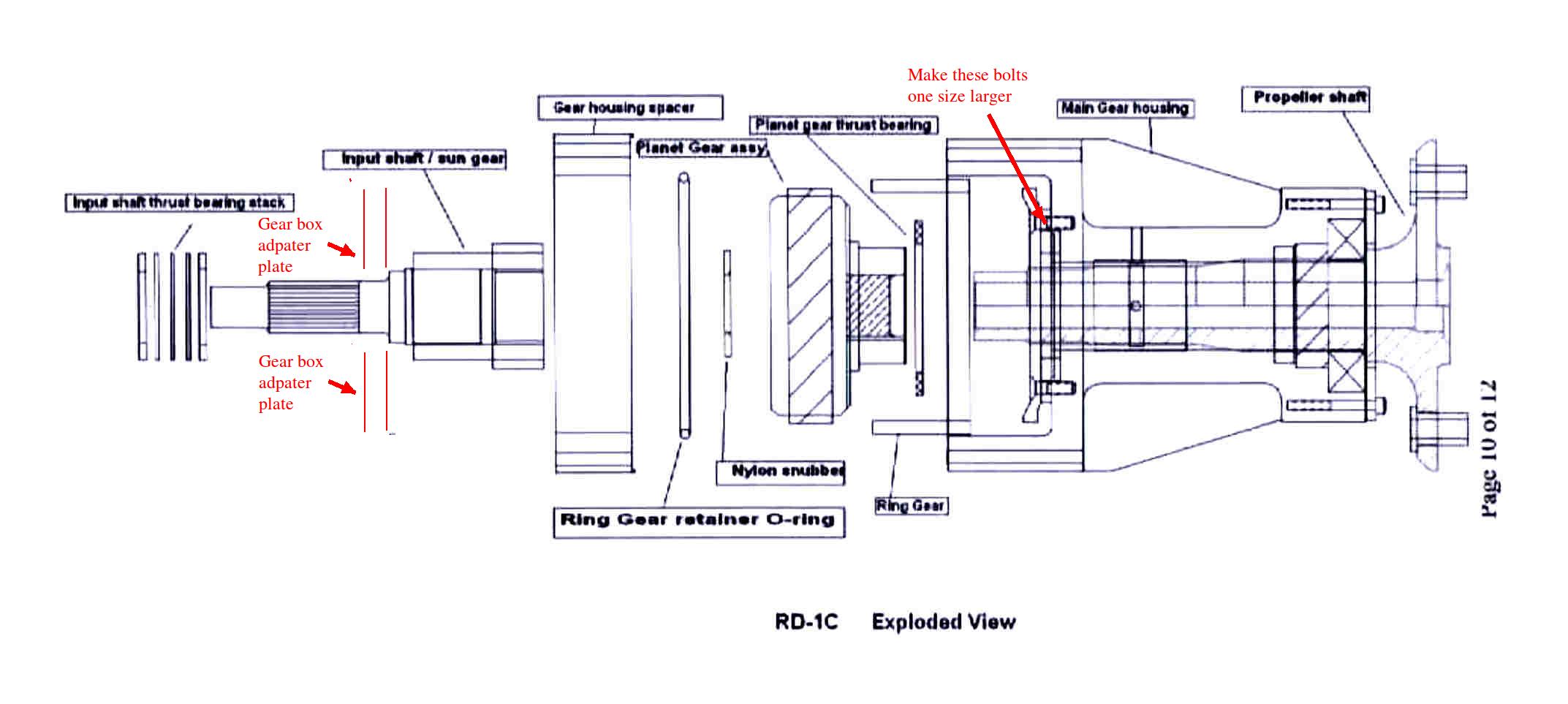
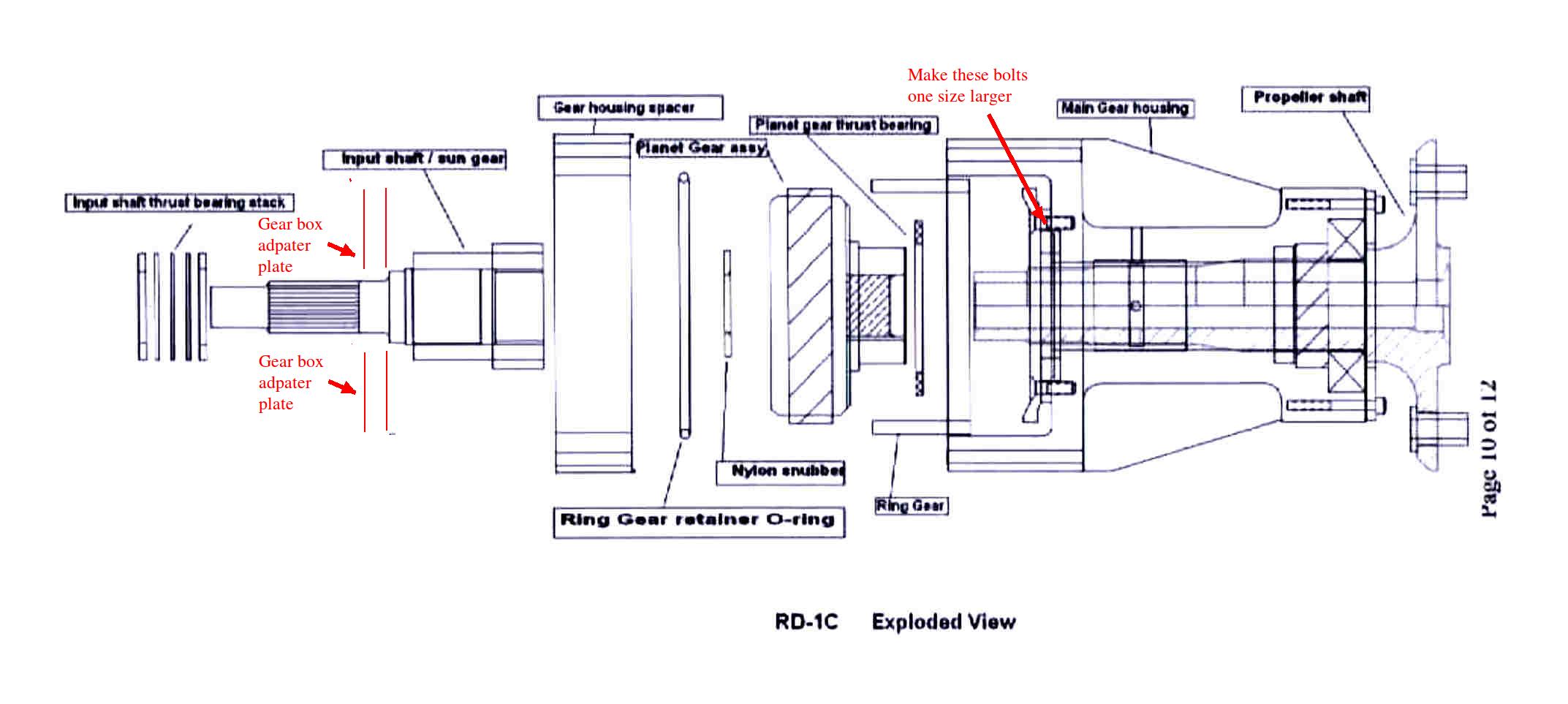
Hi Neil, do you have an illustration or picture to show the location
of the discs on your drive. My engine has run time on a stand for
about an hour when it belonged to Milo Burroughs and there is a
slight bit of wear on Tracys motor mount plate at the rear of the
drive. I initially figured thats what you were talking about when you
said it needs the teflon disc, to stop any metal on metal rubbing
when the shaft is not being pulled forward, for instance when the
prop is driving the engine on steep descent,
but as i understand it, you recommend to put another disc at the
opposite end too for when power is applied and the shaft is pulled
forward to metal on metal contact
So 2 discs needed then. Do you remember what thickness you are using
for the forward disc, so it doesn't tear it up?
Alex Molteno
That is kind of surprising as those are thrust roller bearings. They
should not need teflon.
Paul Lamar Alex,
There is one nylon or teflon disc only,
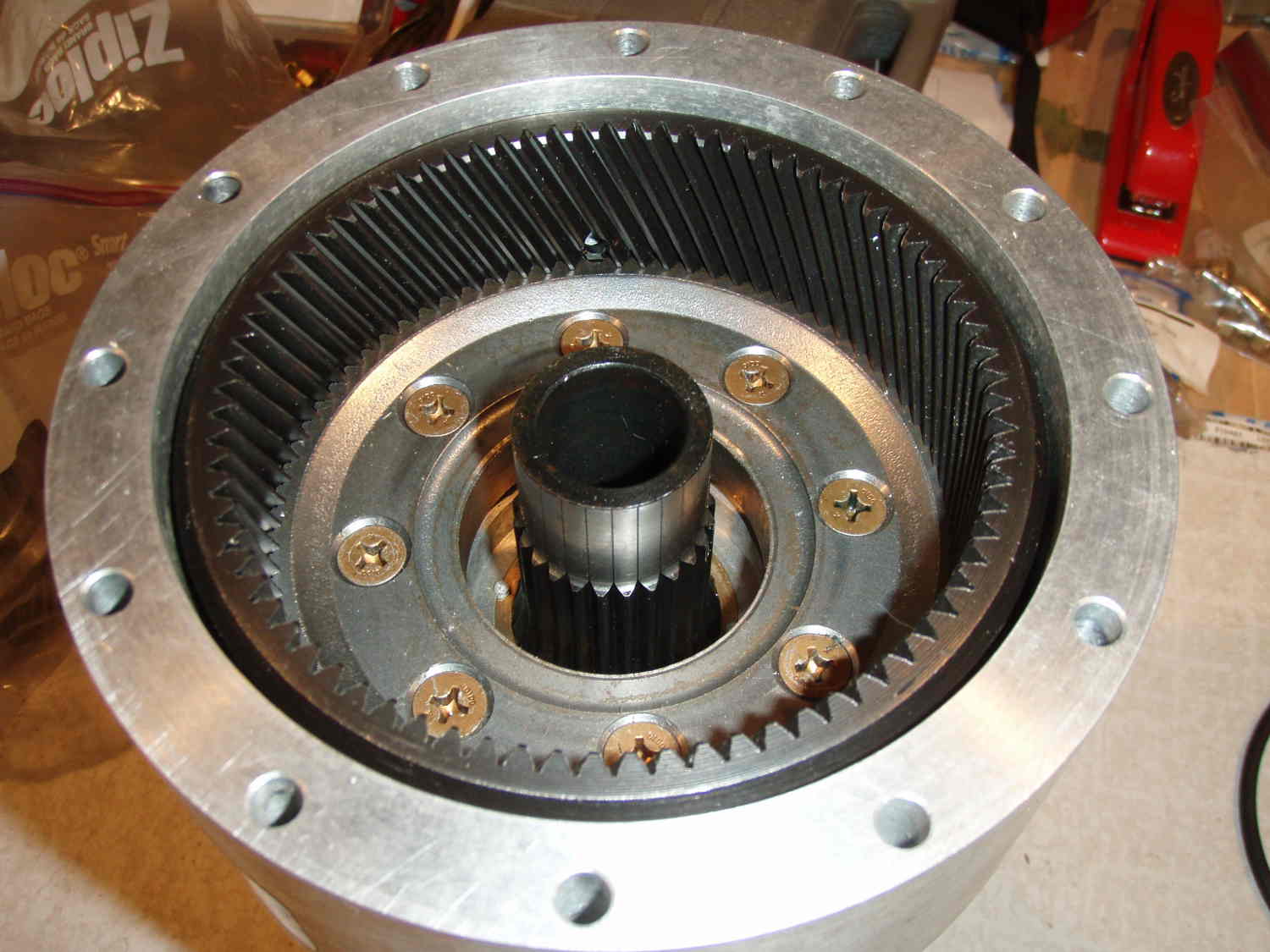
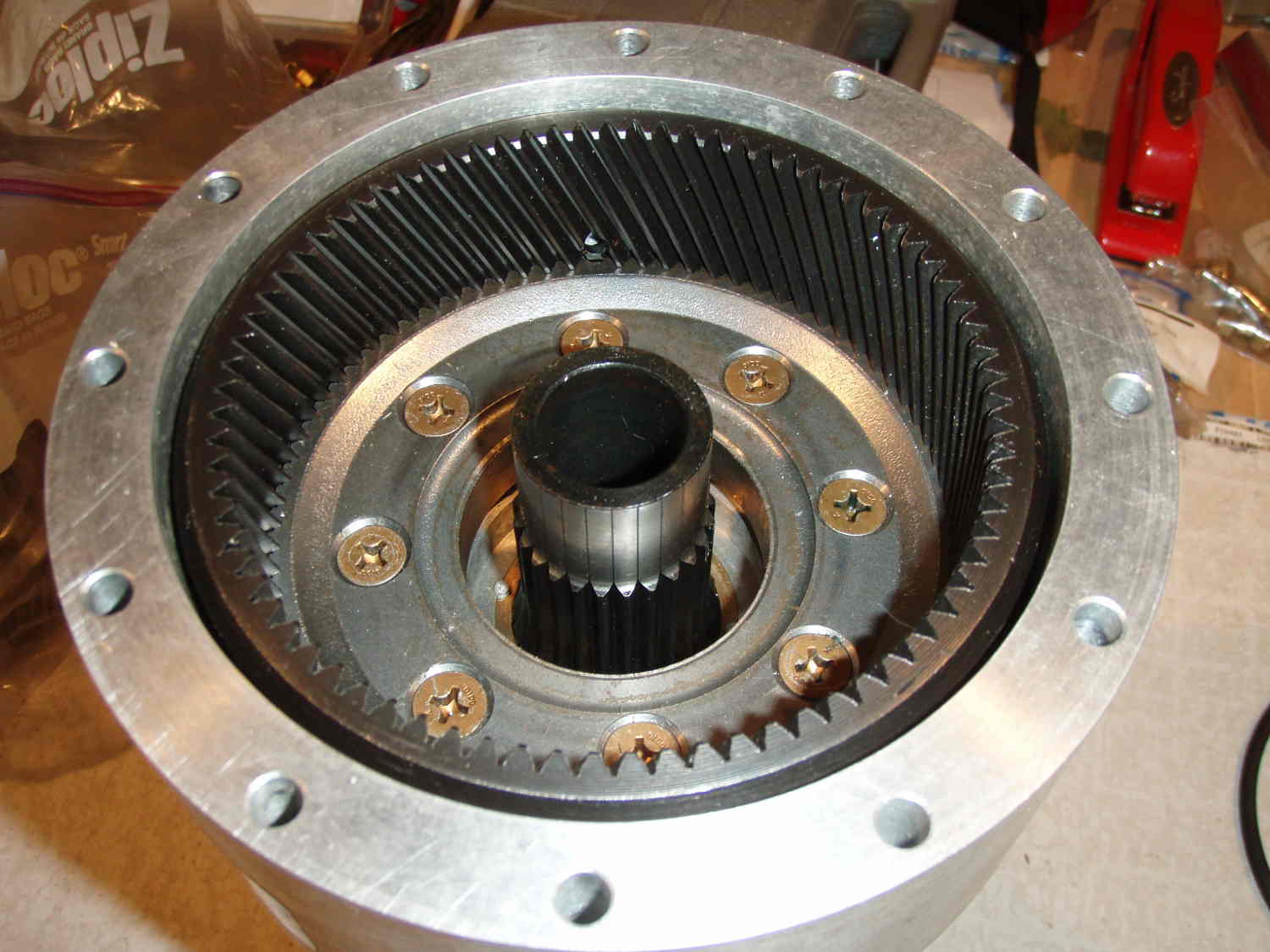
not two. The Nylon disc which tracy called the "snubber" bearing goes
between the front face of the gear on the input shaft and the inner face
of the planetry. The prop shaft comes through the front of the planetry
(splined) and then through the "snubber" disc with the polished end of
the prop shaft then finishing up inside the center of the input shaft
which has a brass bush pressed into it. THis makes both the prop shaft
and the input shaft almost rigid. The bearing stack which consists of, 2
thick thrust washers which are each end of the bearing stack, a pin
roller thrust bearing (2 of) fits inwards of each thick washer,(one each
end) with a thin thrust washer going in the middle of the 2 pin roller
bearings. (middle of stack) The bearing stack has a thick thrust
washer-- a pin roller bearing -- the thin center thrust washer --
another pin roller bearing and then another thick thrust washer.
The bearing stack slides onto the back of the input shaft. The
bearing stack sits directly onto the Tracy plate and the rear thick
washer should not turn at all. Each thick thrust washer at each end of
the bearing stack should not turn. The rear washer is stationery on the
mounting plate and the front washer turns with the input shaft. The
turning is done by the 2 pin rollers and thin intermediate thrust washer
only. You say there is wear on the mounting plate--- Make sure that the
rear most thick washer is not binding on the input shaft. It must be
free to turn without binding on the input shaft under any circumstances.
Clearance is checked by standing the PSRU on the prop shaft
vertically, removed from the mounting plate. It may be best to remove
the thick rubber O ring that holds the ring gear of the planetry in
place while you do this as the 2 halves of the PSRU must be in full
contact with each other to not give a wrong clearance reading. 2 clamps
will do the same thing just so long as there is nil gap between the 2
halves.
Remove the input shaft and bearing stack. Drop the nylon
snubber washer over the prop shaft that protrudes from the planetry
assembly. Then drop the input shaft down so that the protruding prop
shaft is inserted inside the gear (brass bush inside) and resting
firmly on the nylon "snubber" washer. (this is the one and only nylon
washer). Place the bearing stack over the end of the input shaft and
they should just clear a straight edge put across the PSRU housing that
is to bolt onto the mounting plate.
I work on a min of 5 thou, but is
not that critical, just so long as there is clearance. If the bearing
stack is proud of the housing, the nylon washer is to be thinned down,
or replaced with a thinner one until the bearing stack is clear of the
afore mentioned straight edge. (I use a steel ruler as it is not all
that critical, just has to clear)
Under load the input shaft rests on the bearing stack due to the
helical cut of the gears, (rearward force). Pull the power so that the
prop now drives the PSRU and the gears (helical) will pull the input
shaft forwards. The nylon snubber washer takes up any forward thrust
pressure preventing metal to metal contact.
Probably clear as mud?? Ask me for clarification where necessary.
Neil Unger
------------------------------------------------------------------
Please add your questions or comments at the end of the thread. Not
the beginning.
I am going to enforce that rule. If people don't do that it will not
be forwarded. My ISP changed the rules.
The Rotary Engine free News Letter. Powered by Linux. If you want
off the list PLEASE let me know and I will remove you. ACRE NL web
site.
http://www.rotaryeng.net You Tube
http://tinyurl.com/beqqxas
Copyright 1998-2017 All world wide rights reserved.