12
I have heard from a long time rotary flier where an
apex seal failed. Perhaps he forgot to mix apex seal
oil with the fuel. The other possibility it was an inferior after market
seal was installed. The engine did not stop. It was just down
on power.
This is a very rare occurrence and it is the first time
I have heard about it in 30 years of running the news letter.
At Mazda car duty cycles this does not appearer to be a problem.
I have owned 7 rotary powered cars starting with a brand
new RX2 in 1973. Several had over 300,000 miles when I sold
them.
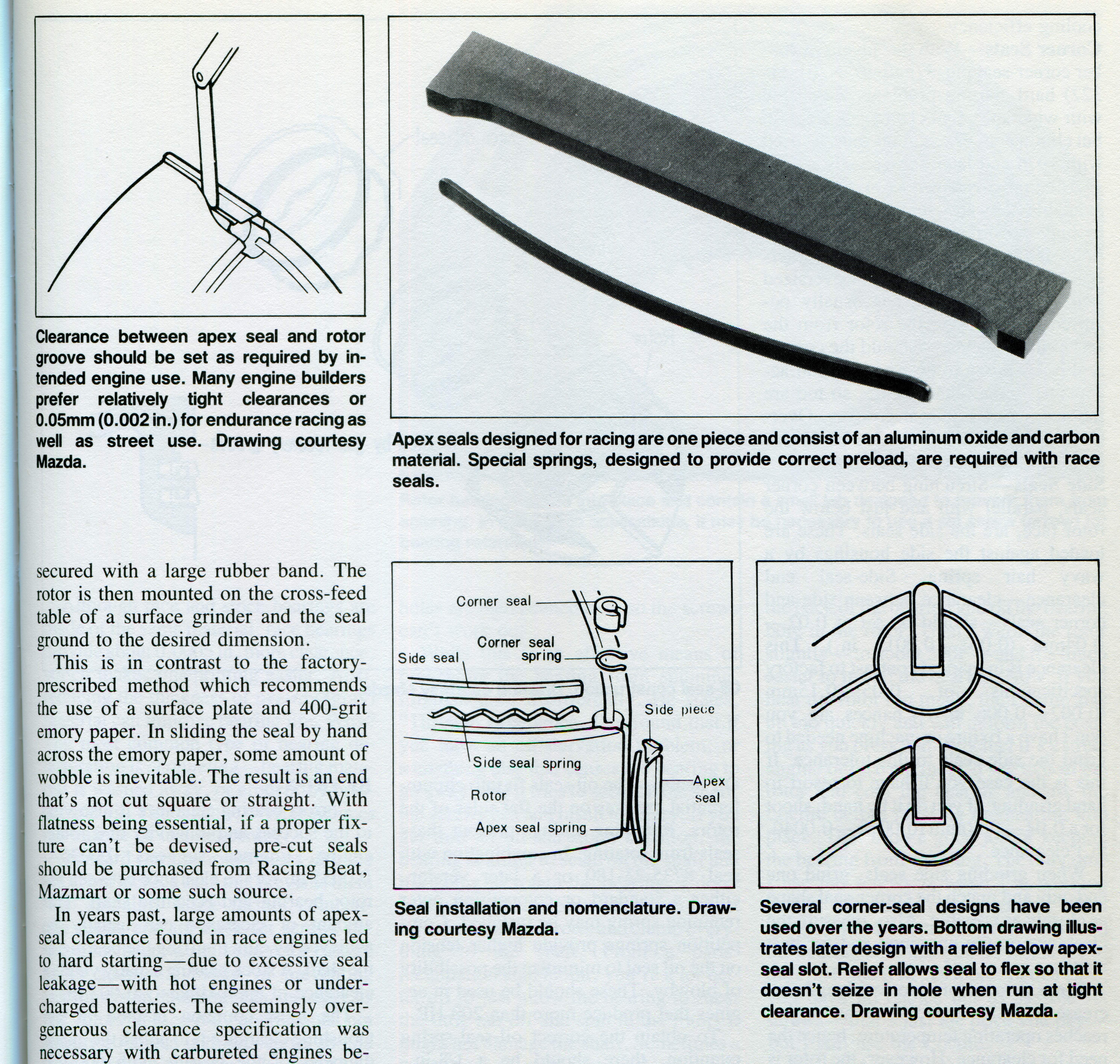
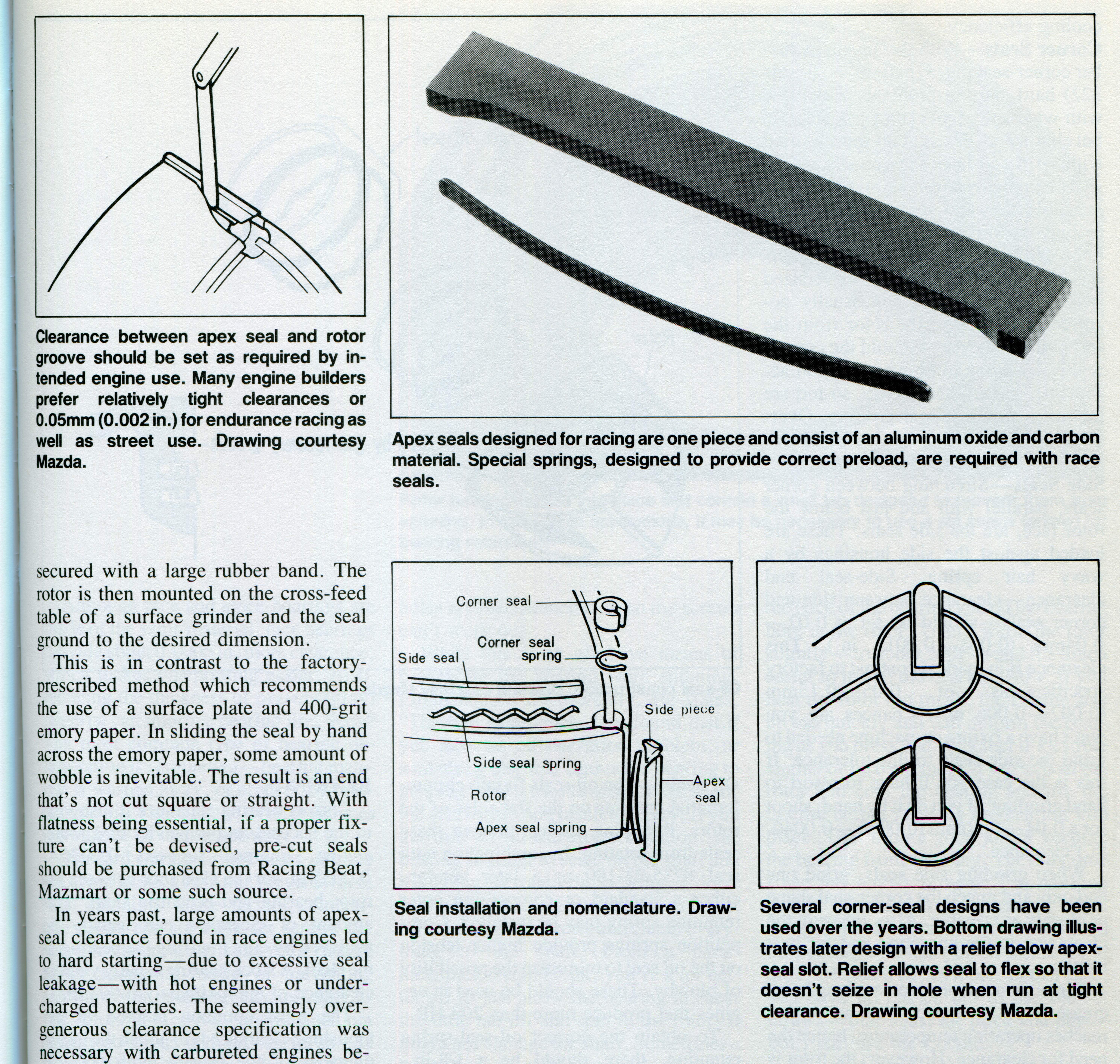
The stock apex seal oil system
uses nylon lines. These can get old and hard and crack
after about 10 years. If that happens you can get seal failure.
Bad idea to keep them. They can be replaced by
small diameter steel lines. Best to mix 2 cycle oil with the fuel.
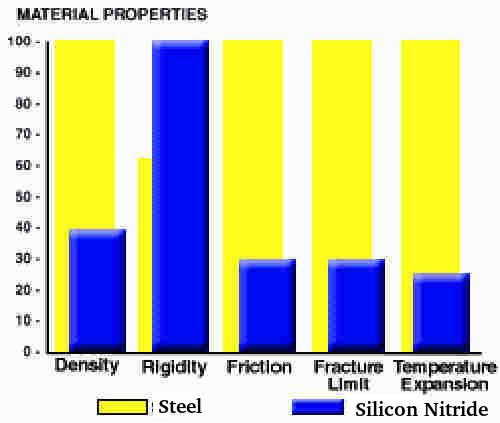
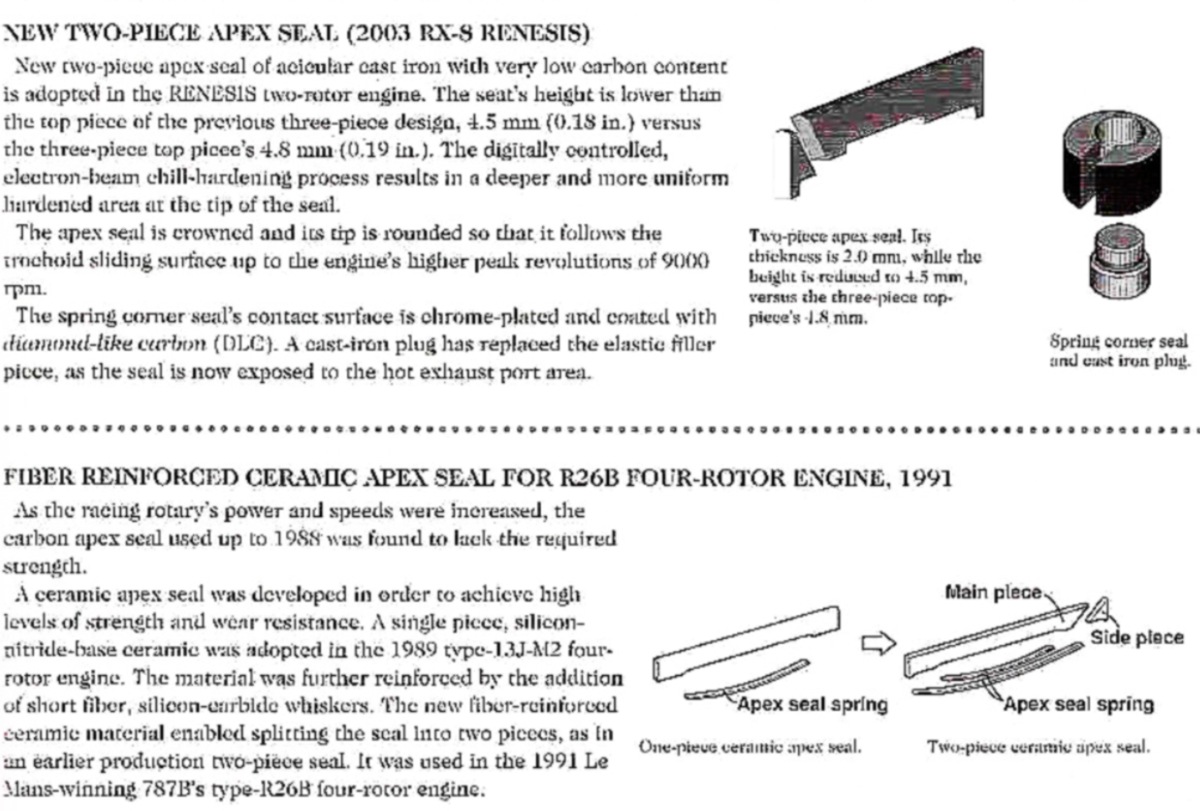
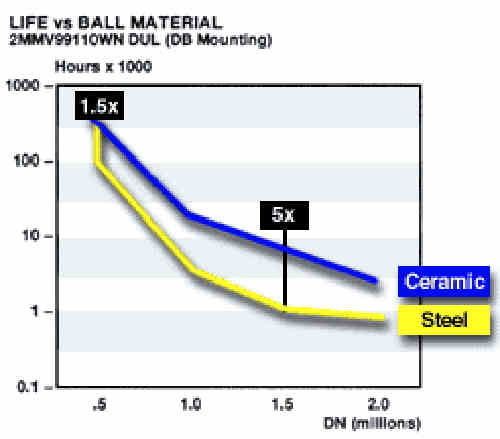
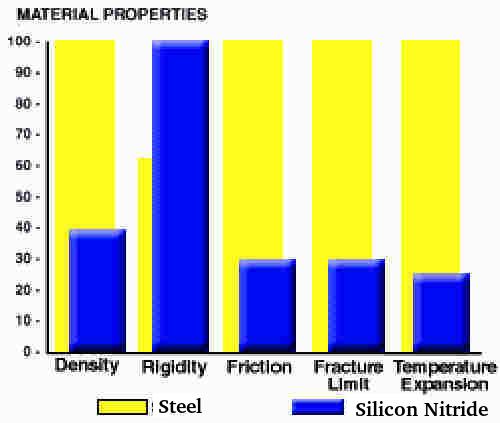
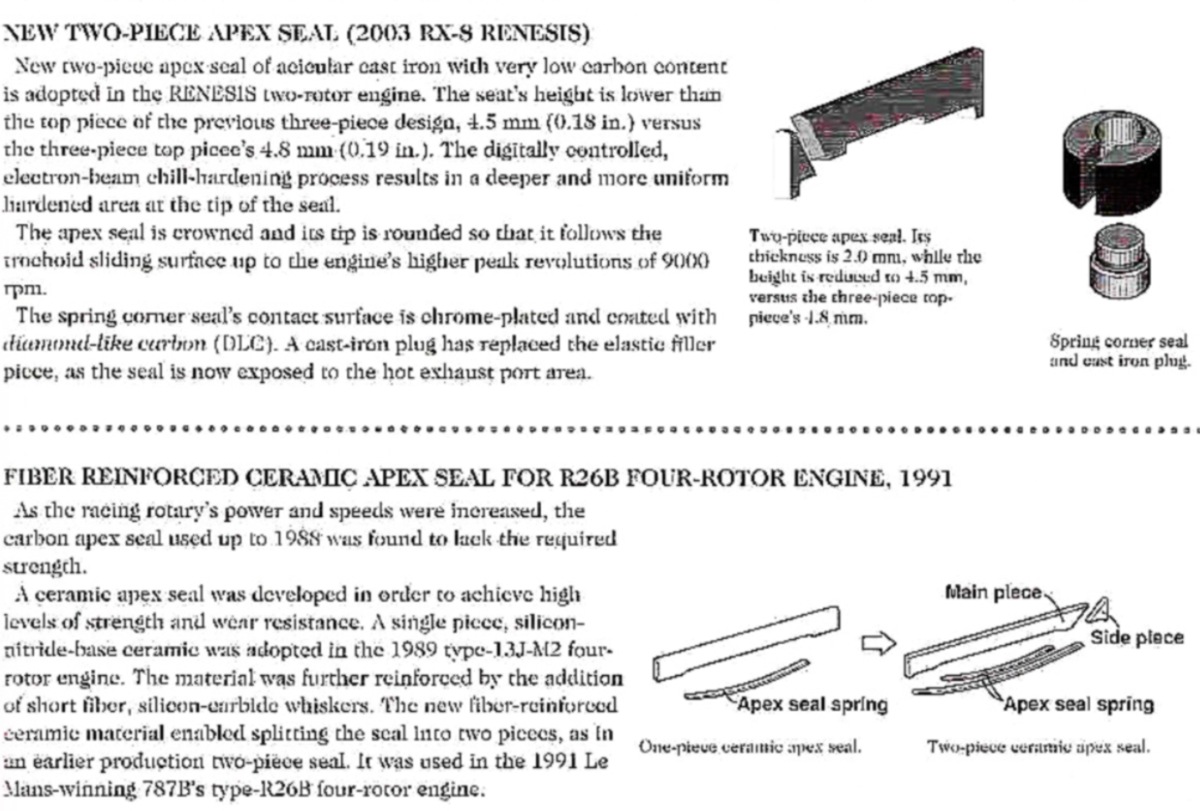
The best thing to do is replace the stock or after market
steel or iron with silicon nitride seals. Especially important if you
are using a turbo engine. The stock 1993 and later turbo RX7
had this problem in spades. If you upped the boost the apex
seals would fail. A lot of people did it and had seal failure.
The 650 HP Time To Climb engine ran at 83 inches of HG for hours with no problem.
That is like 45 psi of boost or 3 atmospheres . Show me a
piston engine that will do that? Especially one that weighs just 200 pounds.
We used silicon nitride seals in the time to climb record engine.
Mazda choose not to do this on the turbo 3rd gen RX7 for some reason as they
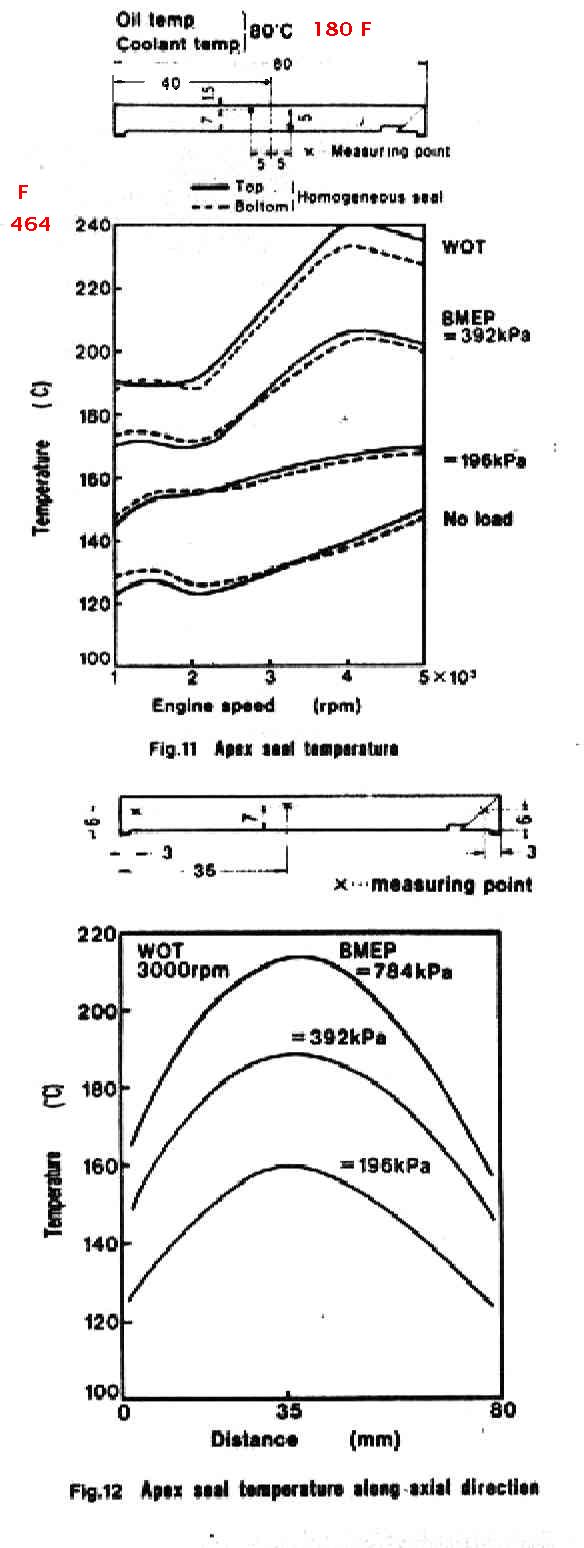
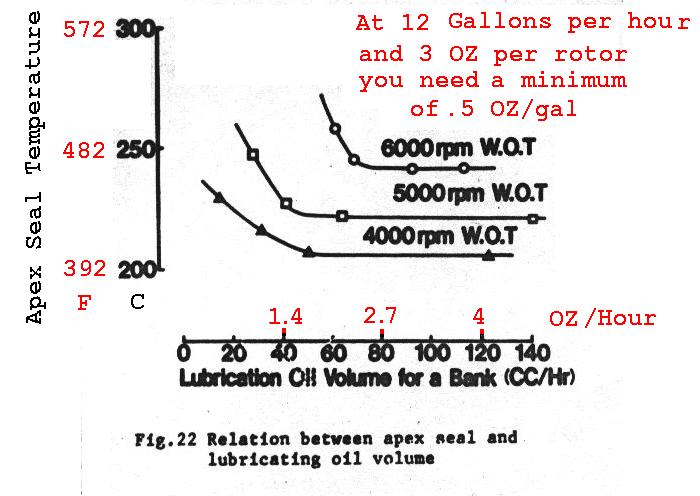
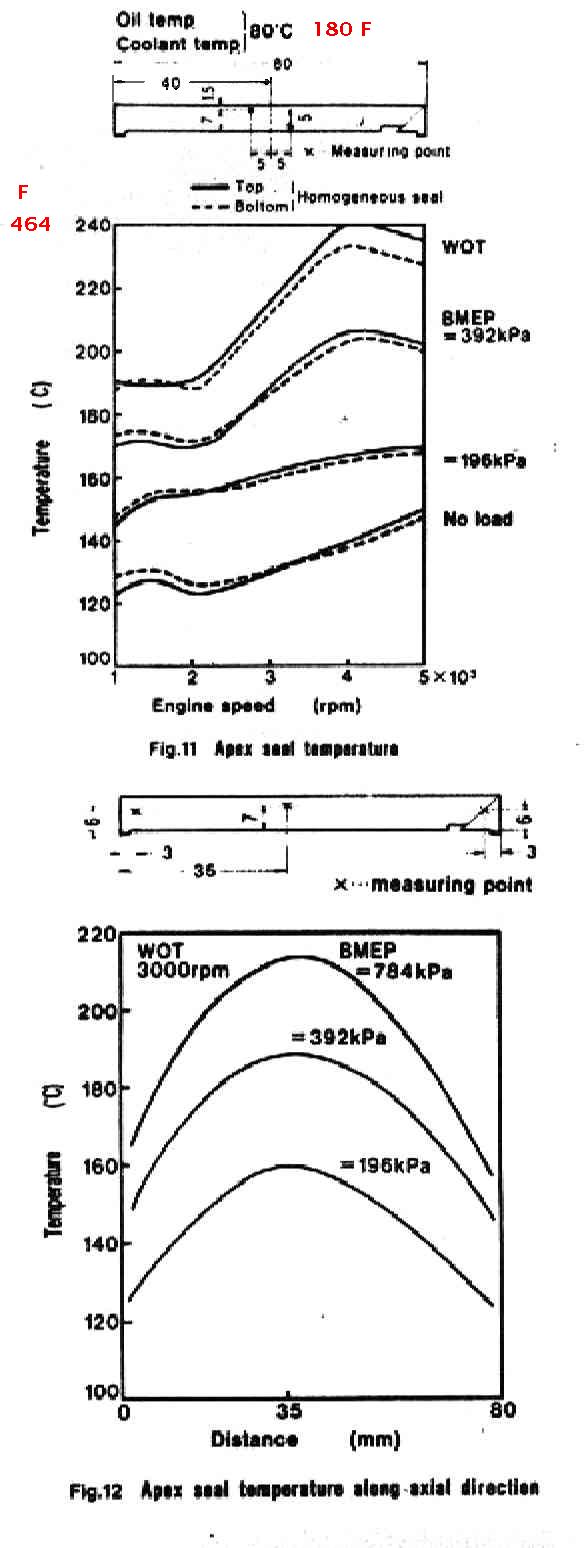
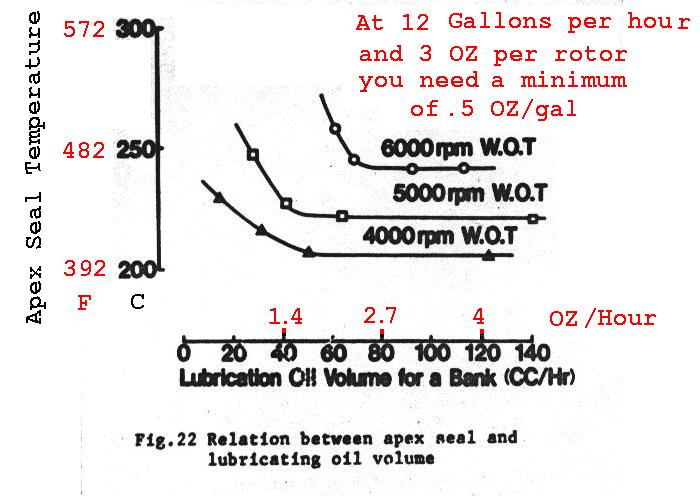
knew that steel or cast iron seals were adversely affected by heat over 500 F.
Steel or cast iron is only good to 500 F.
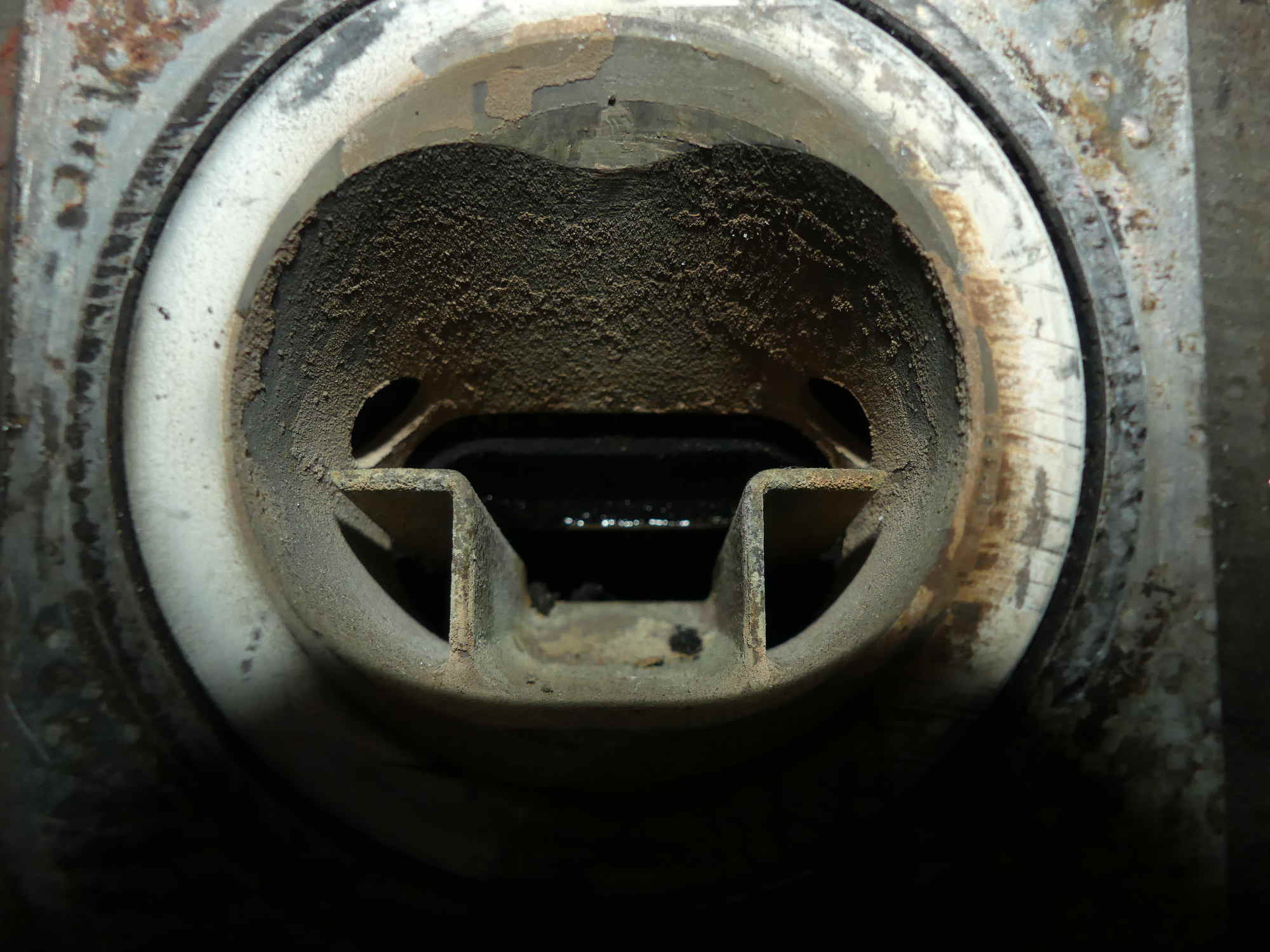
When the exhaust port opens the seals are subject to
well over 1000 degrees F as the hot gases flow out
the P-port.
Paul Lamar