Paul, what make is the rotary in the gyroPlane ?
Thanks, Steve Carlisle
for all you guys building your own PSRU here is a company selling
drive train parts.
http://www.drivetrain.com/parts_catalog/axle_shafts/axle_shafts_cars_and_pickup_trucks.html#FORDTRUCK
Paul Lamar
Hi Paul. Do you think motorcycle drive chain can take 6000rpm? What
is your opinion simple to make chain drive PRSU? I appreciate your
help.
Luke F WINGS.
It might work. I think a late model Harley cog belt would work
better. Chain and belt drives take up more room in the cowl not
leaving enough for the cooling system. You also need an extra bearing
on the outside of the small e-shaft pulley.
Paul
Paul, what make is the rotary in the gyroPlane ?
Thanks, Steve Carlisle
It was a Rotomax charged cooled unfortunately. Charge cooled
rotaries are not going to fly for long on over about 70% power.
Also something failed in the rubber coupling, the gear box or the
drive shaft and the test Vampire aircraft crashed. The rubber
coupling shown had a 5000 RPM rev limit.
The company then went bankrupt.
http://lightsportaircraftpilot.com/sadler_vampire_ultralightaircraft/index.html
I spent a lot of unpaid time trying to fix the many problems but I was
pretty much ignored.
They had a well equipped factory but it turns out all the machine
tools were borrowed or leased. The debtors got little.
Paul Lamar
We tried a motorcycle chain drive for a prop reduction on the Aixro
as we had the clutch and everything off the karting engine anyway. I
was never really aware how much noise and vibration the chain makes
until that day. Later a customer tried the same thing. We told them
it's pointless, but they tried anyway - and ended up with the same
result.
As Paul says, a (Harley) cog belt - with a torsional damper - would
be a better choice if you want to go down that route.
Just to comment on charge cooling: Charge cooled engines are good if
know what you do and set them up to run them within their limits.
They will not be as powerful as air/oil cooled rotor engines, but in
return they are smaller and lighter. So really it depends on what you
need and what you do with the engine, and the problem with Rotamax
was surely not charge cooling as such, but things like understanding
the limitations, getting everything right - and not listening to
Paul's advice ;-)
Poul Woelfle
ph.woelfle@woelfle-engineering.com
Very funny Poul :)
Oil cooled rotor, rotary engines have no stinking "limitations" :)
Jim Mederer at Racing Beat is getting 650 HP for a minute and a half
out of the Mazda 13B.
Quote from the AIXRO manual :) I think you wrote this Poul :)
-------------------------------------------------------------------
1.2. General Safety Instructions
The XR50 is made exclusively for kart racing. Using the engine in
other applications is strictly prohibited without our express written
consent. Race the XR50 on designated karting tracks only, so you
never run the engine at full throttle for more than 10 consecutive
seconds.
------------------------------------------------------------ End
quote.
Rotomax, Austro Engines and Norton had classic problems with the
needle bearings mandatory in charge cooled rotors. OK for road
racing as you never spend more than a few seconds at max power. At
first Rotomax claimed well over a 100 HP and that steadily came down
over time.
This pdf describes the problem and soutions in a nutshell.
http://www.rotaryeng.net/Wankel-CC-paper.pdf
BTW Poul, I will be in Germany the first week in January and will
bring the ignition stuff with me. I know I am crazy to go to Germany
in the winter time but I will be in New York for Christmas so I am
half way there :)
Paul Lamar
Hi Paul,
Looks like we are going "off topic" for chain drive PSRU. Oil cooled
rotor engines do have "stinking" limitations. One is cost - obviously
not so much if you compare a mass-produced Mazda against a small
production engine like ours.
Others are weight and size. If you want to tie the engine to your
back and go flying, build a small unmanned aircraft or build a 120kg
plane, it does make a difference if you need the extra oil system and
can accommodate the different geometry required for an oil cooled
rotor.
Besides this, even Jim Mederer's engine will have limitations. If
you run it at 650hp for 1 1/2 hours rather than 1 1/2 minutes, dry
ice cooling of the spark plugs may reach some limitations, and some
other bits may get a little hot as well. Not that any other engine of
that size and weight could supply so much power for so long, so I
highly respect the achievement and will keep my fingers crossed for
the climbing record. But the point I am trying to make is that there
are always priorities and limitations. And with decreasing engine
size and weight and/or increasingly dynamic load intervals (like in
karting), charge cooling does make sense - even if it's not the most
powerful option.
You quoted the karting manual by the way. The karting engine is set
up for karting, where we can run the engine up to 11000 rpm. As you
say, the engine never spends more than a few seconds at max power.
For continuous load the engine will only run to 6500rpm and supply
35hp (close to the 65% shown in the SAE paper). If Rotamax should
have initially claimed the highest number they saw on the dyno it
was their problem, not ours, and not a problem of charge cooled
engines in general.
Send me your schedule when you know it. We have not had much snow
over the last years anyway. Global warming, you know ;-)
Poul
I'll yield on the cost :) True for the back pack weight is critical.
I am not completely ever sure as we fly stand by.
All the snow is falling over here before it gets to Europe :)
I have both heaters working.
Jim has not gone the dry ice route yet. Plain old water injection is
working. It is more a limitations of the spark plugs and not the
engine. The steel liner in the Mazda is not in distress yet. Colder
plugs are just not available.
Paul Lamar
With reference to the spark plug life problem, have they tried
surface gap plugs? They are basically "indestructible".
Gary Knutson
Yes. Jim told me in his experience they foul too easily. That my be
true because the gap is set for an inductive ignition and not a CD
ignition. I have one and I will try it with my ignition.
Paul Lamar
Hi!: again, I'd like having your feedback on the use of MoS2
additives as a solid lubricant,
a German Brand, LiquiMoly, proposes adding in RCEs 1 cc of their
product for every liter of oil/gasoline mix,
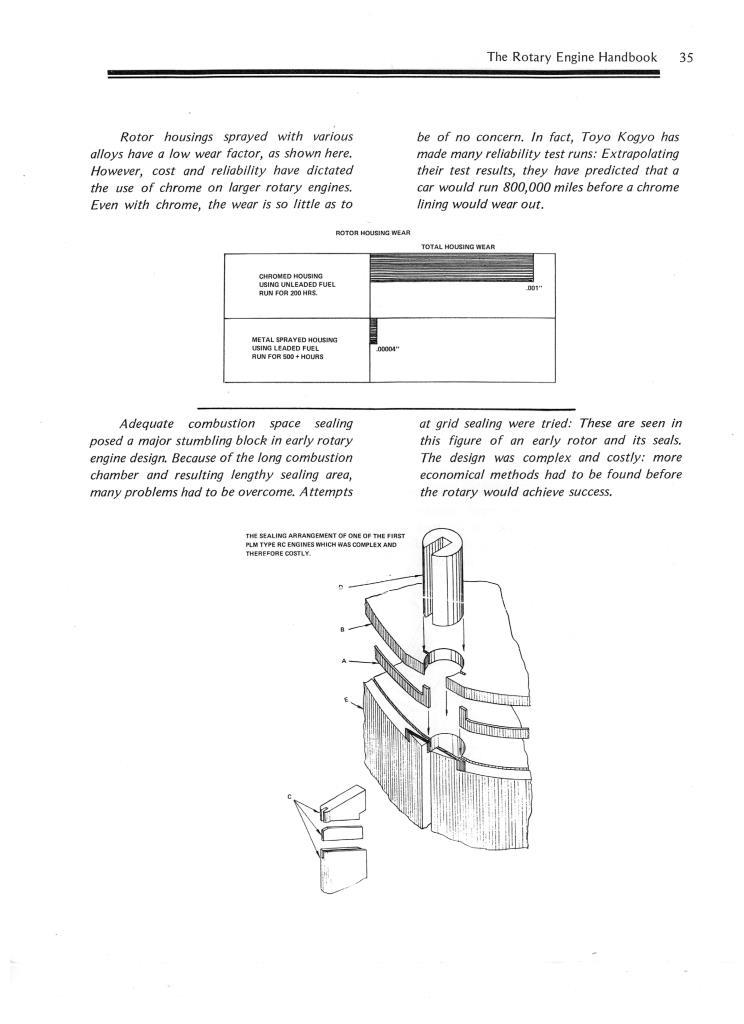
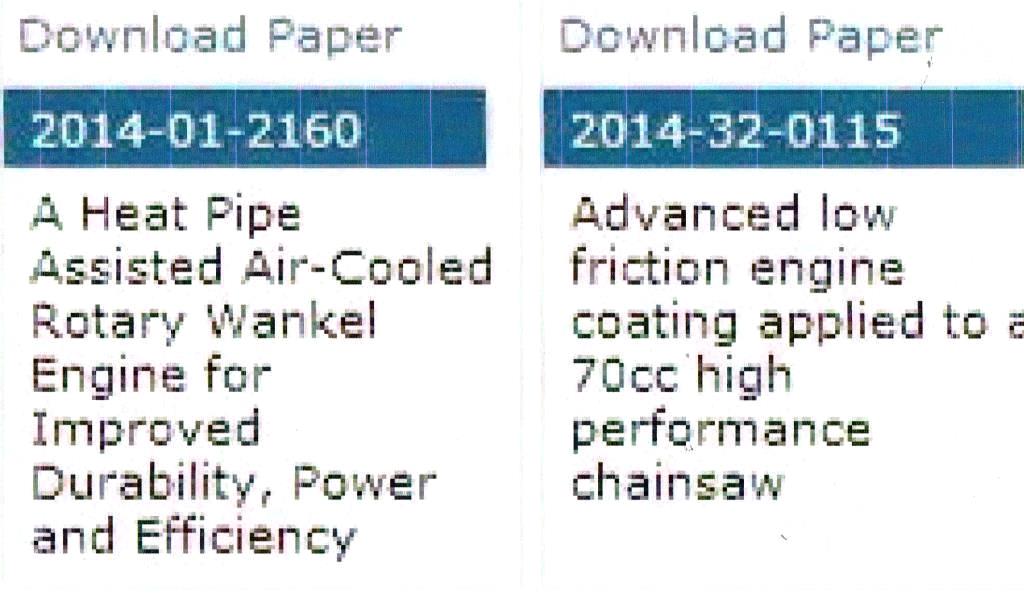
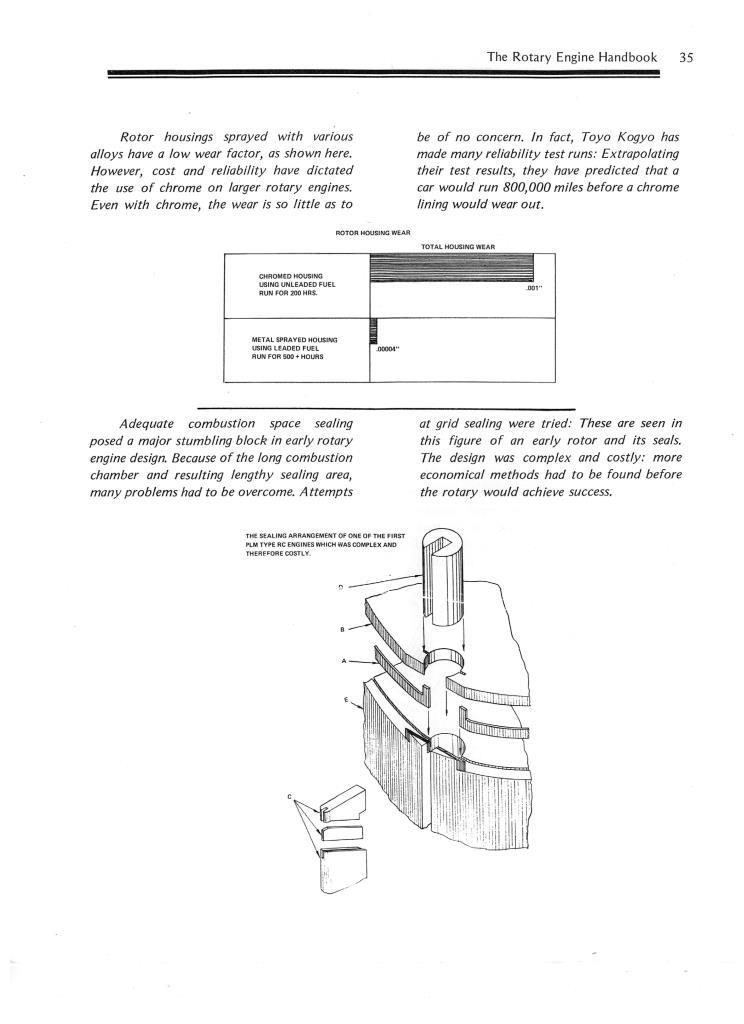
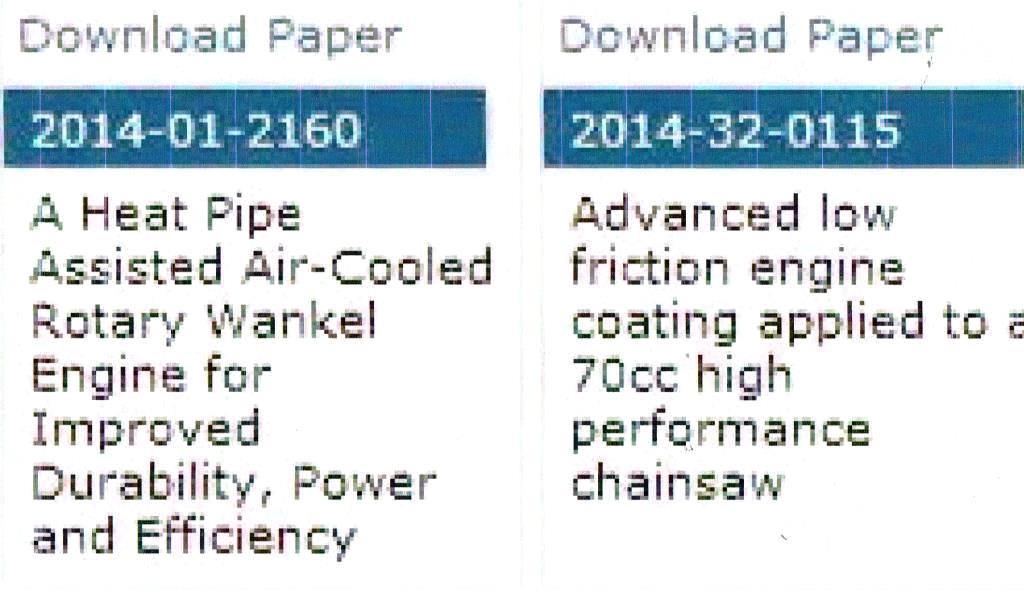
but the recent SAE paper by Husqvarna on a piston coating to reduce
friction, tested in a 70 cc
chainsaw, points problems with the mix of Molybdene and some
lubricating oils, I read in the 70s in an Spanish automobile
magazine about a car engine losing all its oil but being able to
arrive to the next gas station thanks to
the Molybdene oil additive they had put before, then the only one
was Molykote, by Dow-Corning, and this is a solid lubricant
that withstands much higher temperatures than common oil, the Wankel
News magazine indicated they
had to prime Sachs KC-27 engines bearings by hand with oil, in order
of not having it stuck when the engine was used for racing,
Molybdene additives perhaps will do this task equally well or
better, and my only doubt is about plug fouling, but in
this regard, Molybdene shouldn't be worse than the Lead in old
gasolines, that acted also as lubricant, reducing
seals and trochoid wear, I attach the chart again.
Many heavy duty parts in cars and trucks use Molybdene based
greases for lubrication, even in some cases,
as closed forever, no servicing needed grease box, so Molybdene
could be good for lubricating Wankel RCEs too.
I was a bit surprised when I knew that the science studying
lubrication is called: 'Tribology', from the Greek: 'Tribos':
'To Rub', in the end, both words look/sound as cognates.
The French Language Site: 'Rotativement Votre', points that
ordinary motor oil losses all its lubricating power
above 130º C, also some SAE papers discuss in detail the oil and
fuel requirements of RCEs, I remember
having seen an image of the working part of a housing plenty of
small flat holes to which a Molybdene solid
lubricant was added, as a means to reduce seals and trochoid wear rate,
but I can't retrieve the reference now.
Thanks, have a good season. Best regards. Salud †
Jose Gros-Aymerich
Madrid, Spain
The Rotary Engine News Letter. Powered by Linux. ACRE NL web site.
http://www.rotaryeng.net You Tube
http://tinyurl.com/beqqxas
Copyright 1998-2014 All world wide rights reserved.